Categories
Issue 11

Vote Banking the Temple Beautification Drive

In March 2021, Odisha’s Chief Minister Naveen Patnaik tabled a resolution for the early completion of the development project of the world-famous Jagannath Temple in Puri. The ₹3200 crore Jagannath Heritage Corridor project, he claimed, “is not only for the government or the temple administration but also for 4.5 crores Odiyas”. In order to provide much more access and convenience to the pilgrims visiting the Jagannath Puri Temple, the Project is aiming to create a buffer zone around the periphery of the temple. This area would then serve as a multi-level car parking space, integrated command centre and recreational park. Several other famous temples have also been allotted massive budgets to keep up with the trend of beautification of temples, which include but are not limited to the Lingaraj Temple, the Sun Temple and Maa Samaleswari Temple. 

It is interesting to note the uncanny resemblance between the plans and resolutions for temple beautification projects in Odisha(that first came up in January 2021) and the Uttar Pradesh government’s 2019-20 Budget Plan for Kashi Vishwanath Temple in Varanasi. Prime Minister Modi laid the foundation of this ₹1000 crore project in 2019. The project is spread over 5 lakh square feet and is expected to be completed by August of 2021. It entails the renovation of 63 temples, along with the construction of 24 new buildings. The Kashi Vishwanath Corridor is part of the beautification drive of 14 major religious cities (Varanasi, Mathura, Ayodhya, Allahabad) of Uttar Pradesh by the government. Given the scale of these  projects,  it’s perhaps important to question the intentions behind the beautification of temples and what role they play in the larger scheme of things. 

The 14 major cities beautification project launched by the UP government aligns with BJP’s party tactics to mobilize support by playing the religion card. Moreover, the beautification of these major religious cities especially their temples also follows the unprecedented Ayodhya verdict of 2019. In the Hindu majority state of Uttar Pradesh, (an important state in national politics), a multi-city temple-beautification drive not only guarantees a clear win but also strengthens the support for BJP through religious politics.

Similar actions by CM Patnaik in Odisha, however, raise concern because of lack of his involvement with religion before this incident. Never before has the CM been involved in religious politics. With the growing support for the BJP by the Hindu population all over the country, the current CM Naveen Patnaik aims to mobilize the Hindu population of Odisha in his favour. Patnaik has served as Odisha’s Chief Minister since the 2000s and the temple beautification drive is a way to preserve his seat in the next state elections. Odisha’s Hindu population accounts for 93.6% of the total population, with Christians and Muslims at 2.77% and 2.17% respectively. Thereby, appealing to the Hindu population for votes then becomes a counter tactic against the BJP for Naveen Patnaik and his party.

The temple beautification and development drive primarily is a tool for different political parties to influence votes in their favour to win elections and form a majority government. However, these temples also play other crucial roles, which contribute to the economy of the country. With its diverse range of religions and religious practices India, becomes one of the major religious tourist destinations in the world. Coincidentally or not so coincidentally Uttar Pradesh and Odisha along with Maharashtra and Andhra Pradesh attract the most pilgrims on an annual basis

To facilitate this religious tourism the Government of India, Ministry of Tourism in 2014-15 came up with “National Mission on Pilgrimage Rejuvenation and Spiritual Augmentation Drive” (PRASHAD). It must, however, also be taken into consideration that Religious Tourism entails the process of going  on a pilgrimage and does not involve staying overnight. Due to this definition, the statistics related to the number of pilgrims might be skewed,  resulting in a flawed analysis. 

Another study also shows that out of top the 10 tourism sites in India, eight were pilgrimage sites, attracting a total of 64% of travellers of the total travellers visiting different sites in India (Pg.61). Religious tourism is continuously being chosen by the younger generations of the country, breaking the age-old assumption of only the older population making travel plans to visit pilgrimage sites. This is because pilgrimage sites are no longer constricted to being places of worship and are continuously evolving into recreational spaces for the whole family around the country. For the rising interest of the younger population in religious tourism and pilgrimage sites, temple beautification and development becomes a major move of the government to continue to maintain this involvement. With the pandemic hitting the tourism industry the most, religious tourism for India may prove to be a saving grace for the economy. 

Though different governments are attempting to lure in the youth through their temple politics, it becomes imperative to know the youth’s response to the government’s strategies. The government has been promising settlement packages for the residents that own land that is being appropriated for temple development in both Odisha and Uttar Pradesh. Nonetheless, several people living in rental houses, working their business from here are not happy with the evacuation, since they have to bear the brunt of finding new homes with no compensation. Decade-old houses, with much history of different families, also lie at the vulnerable position of being completely washed away due to the rigorous development and beautification taking place in almost every corner of the city. 

Places of worship that promise a shelter and roof for one and all have themselves become responsible for the homelessness of a vast number of people. By temple beautification, the government is aiming to create and write history like never before, at its heart lies the clearing and erasure of many individual and familial histories that have been intertwined with these temple spaces for decades.

Picture Credits: Hindustan Times

Author’s Bio: Muskaan Kanodia is a junior at Ashoka University, double majoring in English and Sociology. When she is not drowning in books, you can find her drawing and smiling at strangers on the ghats of Banaras.

We publish all articles under a Creative Commons Attribution-Noderivatives license. This means any news organisation, blog, website, newspaper or newsletter can republish our pieces for free, provided they attribute the original source (OpenAxis).

Categories
Issue 11

Assam Assembly Election: Litmus Test for CAA and BJP

Out of the four poll-bound states, BJP is trying to put its best foot forward in the two states where its main battles are — Assam and West Bengal. In Assam, it is hoping to retain its power as it has paved its way towards gaining power in other northeastern states, while in Bengal, it’s aiming to consolidate its power to capture the “final frontier” after being on the sidelines for decades. In both states though, it has adopted different strategies around one issue — CAA-NRC.

On a roadshow in West Bengal’s Medinipur, Amit Shah said that “Once we are in power, the first meeting of our Cabinet will announce the implementation of the Citizenship Amendment Act.” Citizenship Amendment Act will allow citizenship to Hindus, Christians, Buddhists, Parsis and Jains who came to India from Pakistan, Bangladesh and Afghanistan. However, in Assam, the BJP is silent on implementing the Act.

Similarly, in Assam, BJP’s manifesto included “corrected National Register of Citizens (NRC)”  as a promise if it came to power, while in West Bengal, it was interestingly silent on implementing NRC, fearing that doing so could impact Hindu migrant voters from Bangladesh and Matuas of south Bengal who makes for a significant voter base. Today, as per a rough estimate, Bangladeshi Hindu immigrants are a significant presence in 75 Assembly constituencies – making up for a fourth of the state’s seats. These differing positions with regards to CAA-NRC to appeal to different voters further show that electoral politics and calculation is always a critical part of the NRC-CAA exercise.  It takes into account the voting potential of those who will be left in – especially the Hindus of the north, where the BJP has had support while excluding mainly Muslims through the instrument of CAA, who don’t traditionally vote for the party. 

However, in Assam, the only place so far where NRC exercise has been carried out, it led to an unintended outcome — of the 1.9 million people not in the Register, a vast majority were Hindu.  The BJP in an attempt to guard its predominant Hindu voter base is now set to revise the NRC, as evident from the electoral promise of “corrected NRC” to protect “genuine citizens.” This, along with the implementation of CAA, would mean that BJP could bring back Hindus in the ambit of its voters while excluding Muslims from the list. However, contrary to BJP’s expectation, the implementation of CAA in Assam led to a huge uproar as violent protests erupted in Assam in December 2019. 

CAA-Protest in Assam

Soon after the passing of the CAA bill, Assam saw massive and almost spontaneous protests against the CAA, especially in the upper region. These anxieties have been fueled by concerns regarding socio-political and cultural marginalisation and by the burden over state resources with the problem of language alienation, unemployment and limited job opportunities.

Source: https://www.wikiwand.com/en/Citizenship_Amendment_Act_protests

The Assam protest against CAA must be contextualised against the anti-foreigner sentiment that has been running consistently in the state. After the anti-foreigner movement in 1975-85, Assam Accord came about. It was a Memorandum of Settlement (MoS) signed by the All Assam Students Union and the Union Ministry of Home Affairs (MHA).  Clause 6 of the Assam Accord asserts constitutional safeguards for the Assamese people and states that the “Constitutional, legislative and administrative safeguards, as may be appropriate, shall be provided to protect, preserve and promote the cultural, social, linguistic identity and heritage of the Assamese people.” With the implementation of the CAA, the Assam Accord would be rendered ineffective, thereby, threatening the very linguistic, cultural and social identities of the Assamese people that were guaranteed by this very Clause.

Thus, this led to widespread discontentment as several indigenous groups took to protest the legislation. In spite of the huge electoral gain secured by the BJP in the previous election in 2016, they had not anticipated the intensity of public opposition against CAA. In an attempt to placate the protesting groups, BJP in a departure to its religious nationalism agenda recognised the long-awaited demand of ethnic groups for inclusion in the ST list. It led to the creation of autonomous councils for three of the six communities demanding ST status, in the aftermath of anti-CAA protests. However, will the fulfilment of demands of ethnic groups truly assuage the fears unleashed by CAA and will BJP be able to recover from the widely expressed discontentment in Assam?

Ongoing election in Assam

After less than 18 months of violent agitation against CAA, Assam is poll-bound again. In the ongoing election, while BJP has been tactfully silent about CAA, opposition parties like Congress have made it an issue to campaign against BJP. Releasing the manifesto that has a promise to nullify CAA legislation, Rahul Gandhi said, “We are aware that the RSS and BJP are attacking diverse cultures of this nation. Attacking our languages, history, our way to thinking, and our way of being. So this manifesto provides a guarantee that we will defend the idea of the state of Assam”. He also promised that Congress will uphold the Assam Accord, which was signed during his father Rajiv Gandhi’s tenure in 1985.

The anti-CAA agitation has also led to the birth of two regional parties: Assam Jatiya Parishad, led by All Assam Students’ Union leader Lurinjyoti Gogoi, and Raijor Dal, led by Akhil Gogoi, who was arrested in the agitation in December 2019.  It is reportedly backed by seventy ethnic groups — opposing the changes to the citizenship law.

This clearly indicates that despite BJP’s aversion to putting CAA as an agenda for election, CAA is already on agenda, as evidenced by opposition parties’ manifesto and mobilisation of voters based on anti-CAA sentiment. Thus, the outcome of the assembly election is set to not just decide the future of BJP in the entire northeast but could be a litmus test for CAA-NRC as policies. This particular election for the state is likely to have ramifications beyond who wins or loses. It might very well settle some of the issues that have come to dominate recent politics in the State.

Picture Credits: Live Mint

Author’s Bio: Ridhima Manocha is a final year English and Media Studies student at Ashoka University and has authored the book, The Sun and Shadow

We publish all articles under a Creative Commons Attribution-Noderivatives license. This means any news organisation, blog, website, newspaper or newsletter can republish our pieces for free, provided they attribute the original source (OpenAxis).

Categories
Issue 11

Electric Vehicles in India: Focus on the Consumer, not the Car

After speculations for years on the launch of Tesla in India, Elon Musk finally came through on his tweet in October last year. In January Tesla registered its Indian arm in Bengaluru, under the name Tesla India Motors and Energy Pvt Ltd, putting auto-enthusiasts, India’s Elon Musk fans, the government and the media in a frenzy. Union Transport Minister Nitin Gadkari had initially stated in December 2020 that Tesla will start operations first with sales and then maybe look at assembly and manufacturing based on the response to the cars. However, upon registration of Tesla Motors in India, Gadkari was quick to announce that India is willing to offer incentives to the car manufacturer so that “their cost of production would be less than that in China.”

Even though the launch of Tesla and the GoI’s subsequent move to offer incentives to the car manufacturer is a move in the right direction, questions about India’s capacity to support the Tesla project, and to convince consumers to shift from purchasing conventional vehicles to electric vehicles (EV) are matters of concern.  

Even if Tesla were to consider that Gadkari would be able to deliver on his offer to guarantee lower production costs than China, there remain other factors on the demand and supply sides that may not seem appealing to Tesla. According to Reuters, in 2020, electric vehicles accounted for just 5,000 out of a total 24 lakh cars sold in India. In comparison, China sold 12.5 lakh electric vehicles, of the total sale of 2 crore cars, accounting for a third of Tesla’s sales across the world. Even as the world goes through an electric vehicle revolution, there still remain challenges that need to be tackled if the project of electrification of vehicles is to be successful in India. 

Tackling most of these challenges would mean requirements from the government to play a more proactive role in pushing the project to a wider market. Policies that introduced tougher emission rules for carmakers were introduced last year, but in its efforts to tighten fuel efficiency rules, the government is also set to introduce a new set of policies by April 2022. According to industry executives, this may compel some automakers to add electric or hybrid vehicles to their portfolios, but the COVID-19 pandemic has slowed this process down. The production side of the policy is showing potential with stringent regulations, incentives to cut down barriers to entry and innovative schemes for public transport electrification, but there is still a lack of access to the market for consumers.

Around the world, the electric vehicle revolution has been made possible by focusing on the consumer. According to the ICCT (International Council On Clean Transportation) report, nearly 50% of the world’s electric vehicle sales are concentrated in 25 global cities, called the EV capitals of the world. “They all have comprehensive policy packages that include mandates in addition to financial incentives for consumers, funding for infrastructure development, and consumer-awareness initiatives,” says the report.  

When it comes to financial incentives, the GoI already provides several incentives that include “funding through the Faster Adoption and Manufacturing of Electric Vehicles (FAME) scheme, reductions in goods and services tax (GST) rates on EVs and charging, and discounts on third-party insurance.” State governments are also jumping on the bandwagon to sweeten these deals with waivers for registration fees for EVs alongside steep hikes in fees for conventional vehicles. On the infrastructural development aspect, schemes such as the National Mission on Transformative Mobility and Energy Storage, aim to localize the entire EV value chain in a phased manufacturing program for battery manufacturing at a “giga-scale”. The goal is to have a large-scale integrated cell manufacturing capacity in India by the fiscal year 2021–22. Similarly, as stated by the report, “guidelines and standards for charging stations have been published, as have amendments to model documents that assist states and local bodies in urban areas with incorporating adequate charging infrastructure into buildings and urban master plans.”

However, even after the introduction of multiple incentives like these which are aimed at consumer concerns about cost-convenience of EV’s, charging and range (distance covered by EV’s) anxiety of consumers, there is a lack of awareness about the availability of these schemes. The Delhi Government recently adopted the self-proclaimed title of “Electric Vehicle Capital” for Delhi upon passing a bill that mandated the replacement of nearly 2000 state vehicles with EV’s. While this was a much-needed mandate, consumers still lack clarity on the benefits of switching to electric vehicles. 

India is the 5th largest auto market in the world and is expected to grow by 11.3% from 2020-2027. Consumer awareness is then by no means a small-scale project, even though car ownership in comparison to countries like China is not that high. Cost-consciousness is high amongst consumers, and the luxury segment accounts for only 1% of the passenger vehicle market. Unless the government makes an effort to inform consumers about the schemes and facilities available for EV’s in India, it is going to be difficult to convince the consumers to shift from conventional vehicles to EV’s. The key lies in supporting and marketing manufacturers like Tata, Maruti Suzuki and Mahindra which offer EV’s at a price range that is much more affordable than what Tesla is speculated to offer. Apart from this, showcasing working infrastructural models that offer flawless support when it comes to charging stations, and the availability of these across cities can go a long way in lessening consumer anxiety. If stringent regulations are imposed on the purchase (and not just production) of conventional vehicles, consumers will explore alternatives and consider studying the incentives offered for EV’s by the government. Without these much-needed changes, it would be difficult for the government to attract players like Tesla that could spearhead the electrification of vehicles in India.

Picture Credits: The New Indian Express

Author’s Bio: Rohan Pai is a Politics, Philosophy and Economics major at Ashoka University. In his free time, you’ll find him singing for a band, producing music and video content.

We publish all articles under a Creative Commons Attribution-Noderivatives license. This means any news organisation, blog, website, newspaper or newsletter can republish our pieces for free, provided they attribute the original source (OpenAxis).

Categories
Issue 11

Exploring Crevices in Global Healthcare Systems: An Analysis of Health Beyond COVID-19

An article published in the New England Medicine Journal in April 2020 describes the plight of a nurse whose husband died of cardiac arrest when New York hospitals were met with one of the worst public health emergencies in recent times. While the nurse, a medical professional would have ideally rushed her husband to the hospital, she struggled to take a decision for fear of exposing her spouse to the Covid virus. This incident makes one consider the story of the ‘untold toll,’ which the pandemic is forcing on non-covid patients and medical resources across the world. 

When the pandemic hit, the first response of national governments was to impose lockdowns, fund research for the study of the virus and increase hospital intakes for rising coronavirus cases. But most institutions, both governmental and medical, within this rush to curb the coronavirus spread, overlooked other illnesses that had already been affecting people. As a result, all public health funds, research, hospitals and professionals only focused on the potentially deadly virus, while special hospital wards for other diseases were either completely shut down, converted to Covid-19 isolation centres or restricted patients from entering their premises. 

news report published by Al Jazeera in April 2020 covered the impact that Covid-19 had on non-covid cancer patients in the past year, describing how a breast cancer patient was unable to continue treatment and struggled to get her check-ups for fear of getting the virus. Another report from India highlights how cancer patients within the national capital struggled because of postponement of surgery dates owing to pandemic lockdowns. And as one tries to study the scope of this ‘untold toll’ in covid times, one is introduced to articles not just of cancer patients but patients wanting to get a dialysis treatment, women struggling to get abortions and a myriad other such cases.    

 In April 2020, a  report by the Wire analysed how Covid-19 had affected the already struggling public health system in India. As a projective report, the article analysed how patients suffering from cardiac issues, kidney diseases, mental health concerns and other non-covid medical health concerns would be affected by the lockdown. The article further explored how already existing high tuberculosis cases within the country were going to be left untreated in a pandemic world, owing to bad medical health infrastructures within the subcontinent. While there is not enough data available to prove the validity of these reports and the extent to which these predictions were proven correct last year, news reports quoted above give us a glimpse of the situation being close to what this report had predicted. With shutting down of  emergency wards, closure of special wards and the conversion of medical centres into quarantine facilities, it is no surprise that the overall health and well-being of non-covid patients underwent a significant blow. 

While it is no surprise that these ‘temporary pauses’ in healthcare impacted non-covid patients significantly and put the larger health of the public at risk, this situation also brought to the fore the crevices in public health systems the world over. It was not just Indian cancer patients who struggled to get treated, the situation in the UK and the US were similar. The question that this situation raises is that if the healthcare system could not absorb non-covid patients along with new covid patients in the past, will it be able to do it this time? A year after the previous covid scare, the cases have significantly spiked again, with a much stronger, mutated strain of the virus resurfacing in the world. 

The response to this second wave of the virus is yet again lockdown impositions, curfews, shutting down of hospitals, conversion of these spaces into temporary covid wards, thereby imposing a halt on other medical services. while the question remains – can we sustain our healthcare systems in periods of crisis? And can we afford to interrupt other ‘essential’ medical services in times of a pandemic like Coronavirus?

Places like Pune’s Yashwantrao Chavan Memorial Hospital has already become a dedicated covid hospital. The emergency wards in several Uttar Pradesh hospitals have already started shutting down, owing to a spike in Covid-19 cases. Similar reports are expected to be coming from different parts of the country. 

Given the data and policy analysis from last year, one is forced to ask whether the response to the current rise in covid-19 cases will result in the same medical conundrum the country and world witnessed in 2020? Or will our past experiences fill the fissures that were made visible by a global health emergency?

Saman Fatima is a third-year History Major at Ashoka University.

We publish all articles under a Creative Commons Attribution-Noderivatives license. This means any news organisation, blog, website, newspaper or newsletter can republish our pieces for free, provided they attribute the original source (OpenAxis).

Categories
Issue 11

Has Mercedes Slowed Down F1 Revenue Growth?


If you are unfamiliar with F1, here is a primer with all the full forms you need that will help you! Note that all $ values are in USD. (Cover Image Credits: Mercedes-AMG)

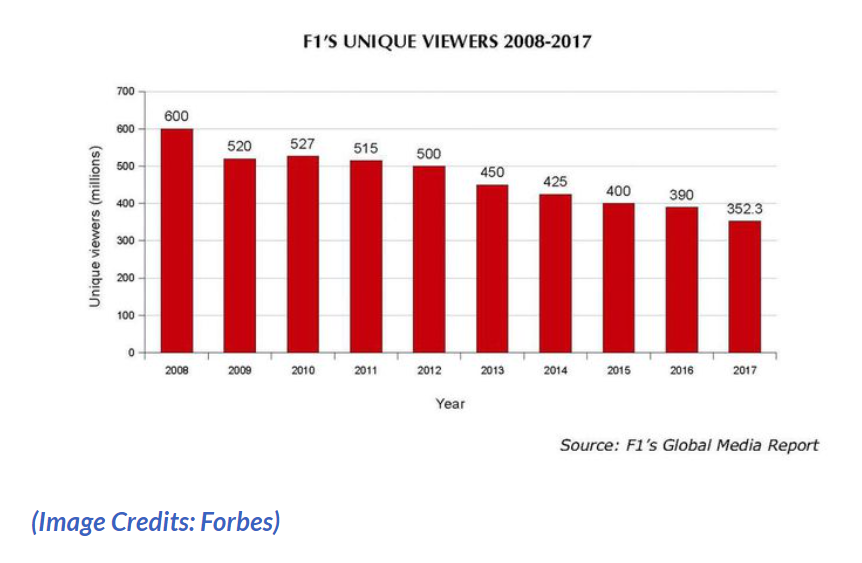
The FIA Formula One World Championship has been a temple to technology, speed, and most importantly, money, since its inception in 1950. It has been badly hit by the Covid-19 pandemic with the turnover from the WCC falling from $2.02 billion in 2019 to $1.14 billion in 2020 However, the sport’s problems with money cannot be attributed solely to the pandemic. F1 has lost 129 million viewers since 2008, resulting in sponsors losing their incentive to use F1 as a way to advertise. What is it about the sport that has led to this loss – and what implications does it hold for its future?

Sponsorships are one of the primary sources of revenue teams and the FOG, which makes viewership incredibly important. Constructors like Mercedes rarely realise a profit, instead using the sport to advertise their road cars. Due to the public nature of the sport, F1 has a very high level of technological transparency and it is difficult to hide and patent innovation in the field. The cars tend to co-evolve according to specifications described by the FIA (English: International Automobile Federation) as the diffusion of knowledge occurs through observation. To prevent the stagnation of the sport in old technology, the FIA signs the Concorde Agreement with the FOG and the constructors every 6 years or so to lay the foundation for technical development. The agreement creates a cycle in which some teams are able to develop better technologies in years subsequent to signing the agreement while other teams catch up before the next agreement. However, a crucial flaw was exposed in 2013 which (re)introduced the era of the 1.6-litre V6 turbocharged hybrid engines put in place in an effort to be sustainable (Motor racing! Sustainable! Ha!). Mercedes developed a ‘monster’ of an engine that was so powerful that it left the other cars unable to offer any competition. 

Many fans have emphasized that one of the worst problems F1 faces is the lack of competitiveness on the track. The uncertainty of outcome (UoO) theory was put forth by Rottenberg in 1956, and it propounds that, ceteris paribus, the demand to watch a sport is directly proportional to the uncertainty of the outcome of the sport. Other academics have related this principle to F1 citing that a balance between the level of performance or a ‘competitive balance’ must be maintained between teams to maintain the uncertainty of outcome. 

Several empirical studies have concluded the significance of technical specifications of each car, funding from sponsors and investors, the drivers, the crews, and the suppliers as some factors that contribute to the outcome of the championship. When these factors interact to create a balance in the performance of cars across the grid, a competitive balance is achieved. A lack of competitive balance tends to make races boring and predictable and discourages viewers from buying tickets, watching races, or doing anything that generates revenue for F1. The teams earn revenue from sponsors, investors, and Formula One Management (FOM) payments, and the FOM in turn, earns from GP ticket sales, hosting fees, broadcasting fees and more sponsors. Consequently, Budzinski and Feddersen outline three kinds of competitive balance that I find relevant to these revenue streams. 

The first of these is the competition within each GP as it is important for the sale of tickets and track sponsorships. As fan surveys show, tracks like Sochi are unpopular with audiences due to the high predictability of the races. As per UoO, this negatively affects the sale of tickets and per race viewership. The second involves competition within a season, which can affect the average viewership and cause sponsors to drop out due to reasons cited before. This impacts sponsorship payments to the FOM and subsequently, the payout teams receive from the FOM at the end of the season. The third kind of competition, that which exists over seasons, largely influences the number of viewers of the sport, as a new viewer is only enticed to begin watching a sport when it is entertaining, and it is entertaining only when there is an uncertainty of outcome. For example, a viewer that has seen or heard of Mercedes dominate F1 for six years is unlikely to expect something different to happen in the seventh, discouraging them from watching the season at all. 

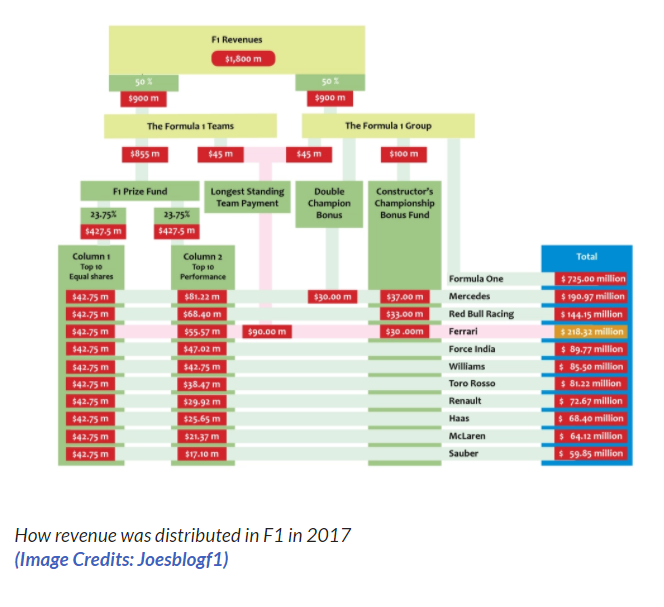
The question remains, what exactly is causing the gap in performance? Many attribute it to the gap in budgets as some teams receive bonuses from the FOM that are not directly related to their performance in the championship, making their funding considerably bigger. To address the same, budget caps of $175 million and $145 million have been placed on the development of technology in 2021 and 2022 respectively.

Considering the budget cap and assuming a utopian clean slate, we can say that the factors influencing the championship would be driver ability and any differences caused by technological innovation. However, a clean slate is an assumption one cannot afford to make. In 2013, Mercedes started with the best car on the grid, a good crew, good drivers, and good suppliers, which gave them good results. Before the next season started, they were able to build on their already dominant car while other teams struggled to catch up. Their good results attracted sponsors and investors who funded R&D and allowed them to hire better crew and better suppliers who were more willing to associate with a successful team. This propelled them forward and helped them produce even better results.

Conversely Williams Racing and Haas F1 had a string of bad seasons due to poor cost management and developmental barriers, which caused a struggle to find good drivers and sponsors. This is clear with Haas making a bizarre move by employing Nikita Mazepin, an arguably average F2 driver. The struggle to find a good sponsor is evident when one learns that Uralkali, Haas’ new title sponsor, just happens to be owned by parent company Uralchem in which Dmitry Mazepin, Nikita’s father, has a majority stake. 

Positive feedback loops keep old and rich teams dominant while causing poorer and newer teams to toe the line of bankruptcy as the benefits of good results and the damage of bad results accrue over time. So the task at hand for the FIA is not to ensure the equal distribution of opportunities to develop new technologies – regulations and policy already do that – but to ensure that the gap between the teams does not get wider.  

The Mercedes dominance has revealed shortcomings of F1 regulations that threaten to topple the sports’ promise of being the frontline of innovation as well as the financial foundation that it is built on. As the competitive balance between teams reduces and the uncertainty of outcome decreases, F1 stands to lose its major sources of revenue and audience, which is already steadily decreasing. By placing budget caps and testing restrictions (see picture) on teams, measures have been undertaken to ensure that this does not happen, but only the upcoming seasons will tell whether or not it has been effective.

Kavya Satish is a second-year Economics and Finance student at Ashoka University.

We publish all articles under a Creative Commons Attribution-Noderivatives license. This means any news organisation, blog, website, newspaper or newsletter can republish our pieces for free, provided they attribute the original source (OpenAxis).
Categories
Issue 11

E-commerce Platforms and The Continued Mistreatment of Delivery Personnel

With tech giant Amazon being involved in a slew of Twitter battles over the past week, it has unravelled multiple issues which demand immediate attention. In a bitter response to Senator Elizabeth Warren’s tweet that accused Amazon of using “armies of lawyers and lobbyists” to evade taxes, the Amazon News account was quick to respond with jabs at the senator. 

Dave Clark, CEO of Amazon’s consumer operations, responded in a similar fashion to Bernie Sanders’ visit to Bessemer to support the workers’ union drive. Sanders didn’t reply to the tweets directed at him, but Rep. Mark Pocan, a Democrat from Wisconsin, responded by charging Amazon with union-busting and worker mistreatment. Pocan pointed out reports that workers had to pee in bottles to keep up with their workloads.

While the battle ended in an apology from Amazon, the fashion in which the corporation took digs at these politicians was “uncharacteristically spiteful and petty”. This raises questions about how powerful these big corporations are, and their ability to openly suppress looming complications surrounding workers’ mistreatment and tax evasion.

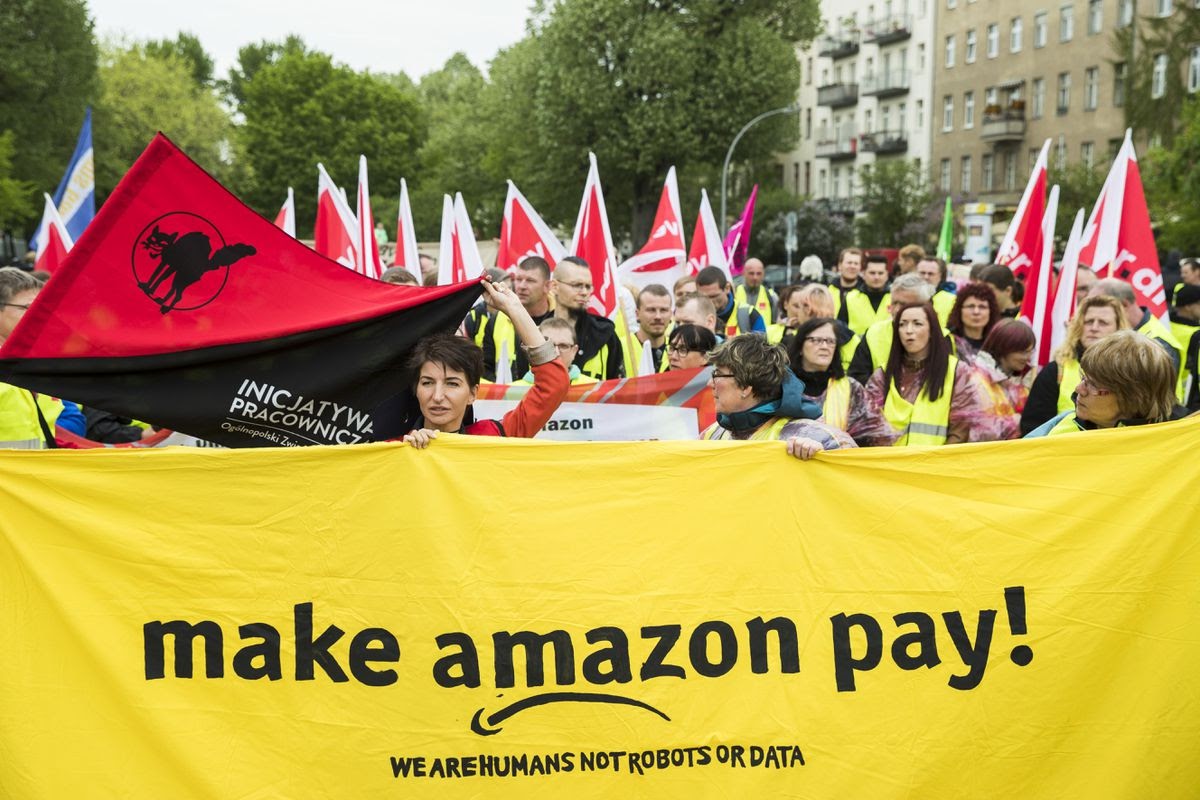
However, workers and unions across the world are protesting relentlessly for their rights, leaving Amazon no choice but to shift priorities from winning Twitter battles to taking serious action on the ground. Whether it is workers in the USA, Italy, Germany or India, they have all demanded better working conditions, which they claimed have worsened over the course of the pandemic.

Indian Federation of App-based Transport (IFAT) workers said in a press note released on Wednesday that delivery staff of Amazon were making around INR 20,000 a month before the national lockdown last year, but that earning has now dropped to INR 10,000 following updated payment structures, which pay them INR 15 per delivery as opposed to the previous commission of INR 35.

In Bengaluru, a few delivery partners reported that they were not given protective equipment like masks, during the pandemic. Balaji (name changed), a 26-year-old delivery partner for Amazon, says “Amazon has not given me a single mask or sanitiser this year. I had to buy the mask myself. Doing work for them is very risky.” Meanwhile, Amazon continued to express how they “prioritise the health and safety of [their] delivery partners.”

However, these issues regarding workers’ mistreatment are affecting delivery personnel across firms. As acknowledged by Amazon in their recent blog post which was a response to Rep. Pocan, they mentioned how poor working conditions are “a long-standing, industry-wide issue” which are “not specific to Amazon”.

“Before the lockdown, I would earn around Rs 900 a day, by delivering about 60 parcels. During the lockdown, I earned nothing,” said Ramesh (name changed), a 40-year-old ‘delivery partner’ for Myntra. Unfortunately, Ramesh reflects the story of several delivery workers across India, who have faced severe income losses after the COVID-19 lockdown in March of 2020.

Since most of these delivery workers are ‘independent contractors’ who work for digital platforms like Amazon, Myntra and Swiggy, they are legally not considered as employees of the firms. They are not entitled to minimum wages and other benefits like insurance and pension which are offered to workers within the firms. Over these stated concerns, delivery workers like Ramesh have to pay for fuel and bike repair costs out of their own pockets, pulling down their actual incomes below minimum wage. According to a recent study by the National Law School of India University, this figure stands at Rs 65.80 per hour in Karnataka.

Bhavani Seetharaman, a policy researcher studying labour and technology, explains how the protests by Zomato workers in Bengaluru, in September 2019, successfully brought this issue to the state’s notice. “These protests specifically led to the labour department in Karnataka attempting to create legislation for gig workers in the state.” The issues covered under the legislation include health insurance in the event of accidents and fair wages. 

Seetharaman continues, “While this was the start of a much-needed legislation, post the pandemic these dialogues have stopped.” 

Needless to say, post the pandemic is when this legislation was needed the most. 

Ajit (name changed), a 36-year-old delivery partner for Swiggy, points out how Swiggy has reduced the per-delivery rate since March. “Earlier, I used to get Rs 15 per delivery, and now I get paid Rs 12.” He explains how this change has immensely impacted his finances. “I can’t afford to pay for my children’s school fees this year. It doesn’t make sense to pay Rs 3000 for 4 hours of online class a month, when we need that money for food and rent.”

When workers try and speak up about such issues, they face harsh consequences from their employers. Ramesh explains, “Myntra has cut the per-delivery rate from Rs 15 to Rs 11 this year. When some workers tried to complain about this [to their managers], they were assigned fewer deliveries in a day. Few others were even fired.” This points towards a larger issue of lack of agency, that most gig workers are subjected to. 

While the platforms tout delivery work as ‘flexible’, implying that their ‘delivery partners’ can choose the number of hours they work, this is often not the case. Ramesh continues, “The per-delivery rates are so low, we are forced to accept any and all orders that we are assigned, at any time of the day.” Despite this, Ramesh still falls short of the income needed to pay rent and other utilities. This has led him to take up a second job as a delivery partner for Amazon.

The platforms also deny their delivery partners other benefits like health insurance and pension. While Swiggy has promised insurance to its workers in case they test positive for COVID-19, Ramesh seems sceptical. “We did not sign any contract for this, nor were we told about how much money we would get [in the event of testing positive for COVID-19.]” 

To address these issues, Seetharaman says that the way forward is “To define gig workers as workers of the formal economy.” This would give them the same protections as workers in other sectors, such as minimum wages and health insurance.

She points out that the recent Code on Social Security is a starting point for such legislation. This is because it has at least begun to define gig workers, and discuss their need for social securities. However, the Code does not make it compulsory for platforms to provide these social securities to their workers.

As the size of the gig economy (delivery services) continues to increase during the pandemic, and cases of wage slashing continue, there is an imminent need for stronger labour legislation. As Ramesh puts it, “Without us [delivery workers], these companies cannot continue to function. How is it fair that they get richer this year, while we struggle to survive?”

Image credits: Forbes

Samyukta is a student of Economics, Finance and Media Studies at Ashoka University. In her free time, she enjoys discovering interesting long-form reads and exploring new board games.

Rohan Pai is a Politics, Philosophy and Economics major at Ashoka University. In his free time, you’ll find him singing for a band, producing music and video content.

We publish all articles under a Creative Commons Attribution-Noderivatives license. This means any news organisation, blog, website, newspaper or newsletter can republish our pieces for free, provided they attribute the original source (OpenAxis).

Categories
Issue 11

Examining India’s Falling Rank on the World Happiness Index

Sydney J. Harris rightly said, “Happiness is a direction, not a place” and today all economies in the world are struggling to walk in this direction. A step to achieve this was taken in the UN Sustainable Development Solutions Network in 2012 when they adopted resolution 65/309: Happiness: Towards a Holistic Definition of Development. This was done to invite the 149 member countries to measure the level of happiness among their population and use these numbers to guide public policy. Although the World Happiness Reports have been based on a wide variety of data, the most important source has always been the Gallup World Poll, which is unique in the range and comparability of its global series of annual surveys.

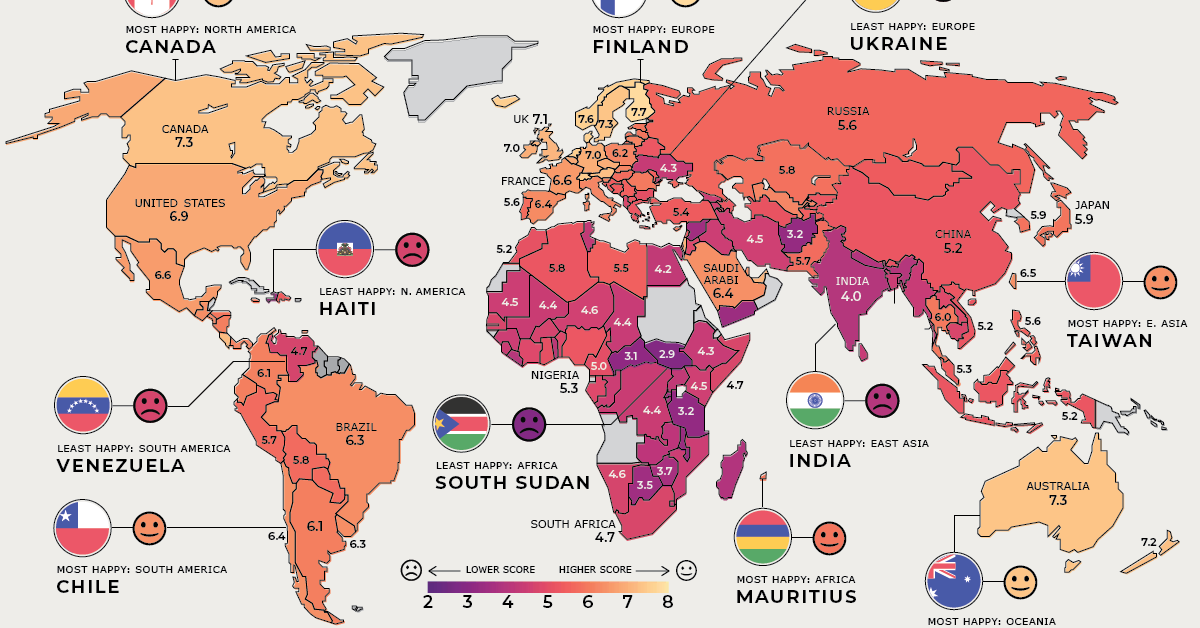
Finland has been ranked number 1, being the happiest country in the world for the past few years. India has always been very low on the happiness index, averaging around 125th. In fact, in 2021, India was ranked 139 out of 149 countries. The results of the happiness index are correlated with a lot of factors including GDP, social security, personal freedom, life expectancy and opinions of residents among others. 

As former President, Dr Pranab Mukherjee commented, “Despite our country’s economic progress, India is constantly going downwards in the happiness index. This indicates a lack of a holistic approach towards development.” According to him, the best step that the policymakers of the country should take is to adopt the ‘triple bottom line’ accounting framework. It focuses on all essential aspects of holistic development of individuals including social, ecological and financial development. This also implies that happiness is weakly correlated with wealth and the economic growth of a country. 

According to the economist and author Jayshree Sengupta, India has been ranked poorly on the happiness index due to various reasons. Some of these are rapid urbanization and congestion in cities, concerns about food security and water safety, rising costs of healthcare, women’s safety, and environmental pollution, which itself is linked to poor mental wellbeing. These conditions have worsened over time and were amplified due to the Covid-19 crisis. 

The ever-growing inequality between the rich and poor of the country is another crucial reason for the chronic unhappiness. During the Covid crisis,  India reportedly added 40 new billionaires to the global list while about 57% of the working class in the country were on the verge of losing their jobs. This growing pay gap in the population has worsened the mental wellbeing and hence the happiness of the population. 

A statistical exercise using variables like GDP per capita, social support, healthy life expectancy, freedom to make life choices, generosity, perceptions of corruption and dystopia was done to understand the relationship of these indices with the happiness index. It found that all these variables are statistically significant and thus have  significant explanatory power. They  illustrate that on average richer countries fare better on subjective evaluations of life circumstances, as do nations with more social support, lower levels of corruption etc. 

Why India, despite its high level of economic growth ranks so low is because it ranks very low on some of these indices. For social support, India is ranked 142nd out of 149 countries. However, if we consider Pakistan’s ranking on all of these individual indicators, it is very similar to India and worse in some cases. According to this, India should be ranked one spot above Pakistan but that is not the case. Pakistan is ranked 105 while India is ranked at 139. This points out to predictive anomalies that this model has. 

One reasonable explanation for this could be that people in India have higher expectations and thus also have greater disappointment. This is one of the very crucial reasons for the low happiness ranking in India in addition to the increasing income inequality and feelings of injustice and unfairness because of the structure of the society and its history. Thus, better political leadership and public policy framework in India are essential for improving the happiness index of people in India. 

Picture Credits: Visual Capitalist

Aanya Poddar is a third year undergraduate student at Ashoka University. She is pursuing a BSc. (Honors) in Economics and Finance. She is the President of the Ashoka Economics Society.

We publish all articles under a Creative Commons Attribution-Noderivatives license. This means any news organisation, blog, website, newspaper or newsletter can republish our pieces for free, provided they attribute the original source (OpenAxis).
Categories
Issue 11

The Frailty of Quasi-Federalism in India

The Rajya Sabha reverberated with staunch opposition to the approval of the Government of National Capital Territory of Delhi (Amendment) Bill, 2021 (GNCTD Bill) on 24 March, 2021 . The Bill contains amendments that would bolster the powers of the Lieutenant Governor (LG) of Delhi and further limit the administrative powers of Arvind Kejriwal’s AAP government.

In stark contrast to the earlier-vested powers of the elected government to take independent decisions on most administrative matters, the bill  mandates  LG’s approval prior to every executive action. CM Arvind Kejriwal called it a “sad day for democracy,” while Congress MP Abhishek Manu Singhvi called the bill “the most pernicious and the most unconstitutional bill the Rajya Sabha has ever received.”  Having received Presidential assent amidst opposition walkouts in the Rajya Sabha, it has yet again resurrected debates on the current government’s commitment to federalism in India. This is not the first time that the government has come under scrutiny for passing heavily opposed legislations jeopardizing constitutional federalism. The recent GNCTD Bill, along with certain other highly controversial moves like the stance on “one nation one election”, the abrogation of Article 370, the CAA & NRC and the passage of the farm bills, all in the face of incessant criticism and opposition within and outside the Parliament, has brought the BJP under question. So, how do these contentious bills get passed despite such strong opposition? One could consider the role of India’s “quasi-federal” structure and its compatibility with the Bharatiya Janata Party’s longstanding agenda of attaining a unitary state with an overly dominant Centre. The larger debate that these legislations highlight is the inadequate checks that India’s quasi-federal structure presents to a government with a parliamentary majority. 

“Federalism” refers to the constitutionally allocated distribution of powers between two or more levels of government; one at the national level, other at the provincial, state or local levels. The principal feature of federalism is that the various levels of governments operate within their own constitutionally-defined jurisdictions with substantial independence from each other. A key tenet of the federal concept is the voluntary compact between several independent states that agree to become a part of a nation and are required to submit an integral part of their power to the Centre.

However, in most federal countries, the difference in power between the central and state governments is not as substantial as it is in the case of India. The herculean challenges faced by postcolonial India in terms of cultural, religious, and ethnic diversity have contributed extensive powers to the Centre. The disunity and secessionist tendencies that postcolonial India witnessed in the form of linguistic nationalism in the South, accession of the Princely States, the Kashmir conflict, and regional rivalry with Pakistan, among others, led the members of the Constituent Assembly to advocate for a strong Union government. This was deemed necessary to ensure  political stability  for India’s survival as a unified nation-state amidst enormous cultural heterogeneity and national security threats. 

Unlike other federal countries such as the US, the Parliament in India has the power to admit new states, create new states, alter boundaries and their names, in addition to establishing unity between states or dividing them. Further, there are various provisions in the Constitution that allow the Centre to override the powers of the states; the power to make laws within fields that have not been specified within the Constitution lies solely with the Centre. Additionally, on fiscal matters, states have limited capabilities and are quite heavily dependent on the Centre. Thus, the Constitution of India was drafted with strong centralizing tendencies that confer maximum powers to the central government and is thus referred to as “quasi-federal.”

BJP leaders have been pushing for the idea of “one nation one election” in various public platforms ever since the agenda reserved its space in the party’s 2014 election manifesto. In fact, as recently as in December 2020, BJP conducted roughly 25 webinars propagating the idea. . This agenda will further affect the limited autonomy of  regional parties that contest to form  state governments across India. This centralized control of state legislatures and state governments adds to the longstanding goals of the BJP to attain a unitary state. Further, advancing the abrogation of Article 370 that granted a special status to the state of Jammu & Kashmir bypassed the citizens of the state. Moreover, on 12th December 2019, the Parliament passed the heavily contentious “Citizenship Amendment Act,” which is widely considered an “anti-muslim” law. And the farm bills of 2020, which continue to see protests, received Presidential assent to become a law in September 2020.

Despite opposition parties protesting against these anti-federal legislations, the BJP has been able to enforce them majorly due to their absolute majority in the Lok Sabha and a substantial standing in the Rajya Sabha. The BJP has 305 legislators in the Lok Sabha, which is more than enough to pass any bill without the support of allies. In the Rajya Sabha, the BJP has 82 members (38 short of the simple majority of 120), but it’s allies  take the  tally to 107. Additionally, various regional parties such as the BJD, Shiv Sena, the YSRCP, the TRS and the NPF (total of 19 members) registering their votes  in BJP’s favour, gives them the required number – above 120.

Complementing such  a majority, the powers vested in the Centre under Article 256, 365 and 356 allow the BJP to enforce any law that would strengthen its hold over the states. Article 256 says that all states are obligated to enact laws passed by the Parliament, whereas Article 365 states that if the States do not comply, then the President may hold that a situation has arisen in which the government of the State cannot be carried on in accordance with the Constitution. Resultantly, Article 356 authorizes the President to remove State Governments and dissolve state assemblies if they cannot run in accordance with the Constitution.

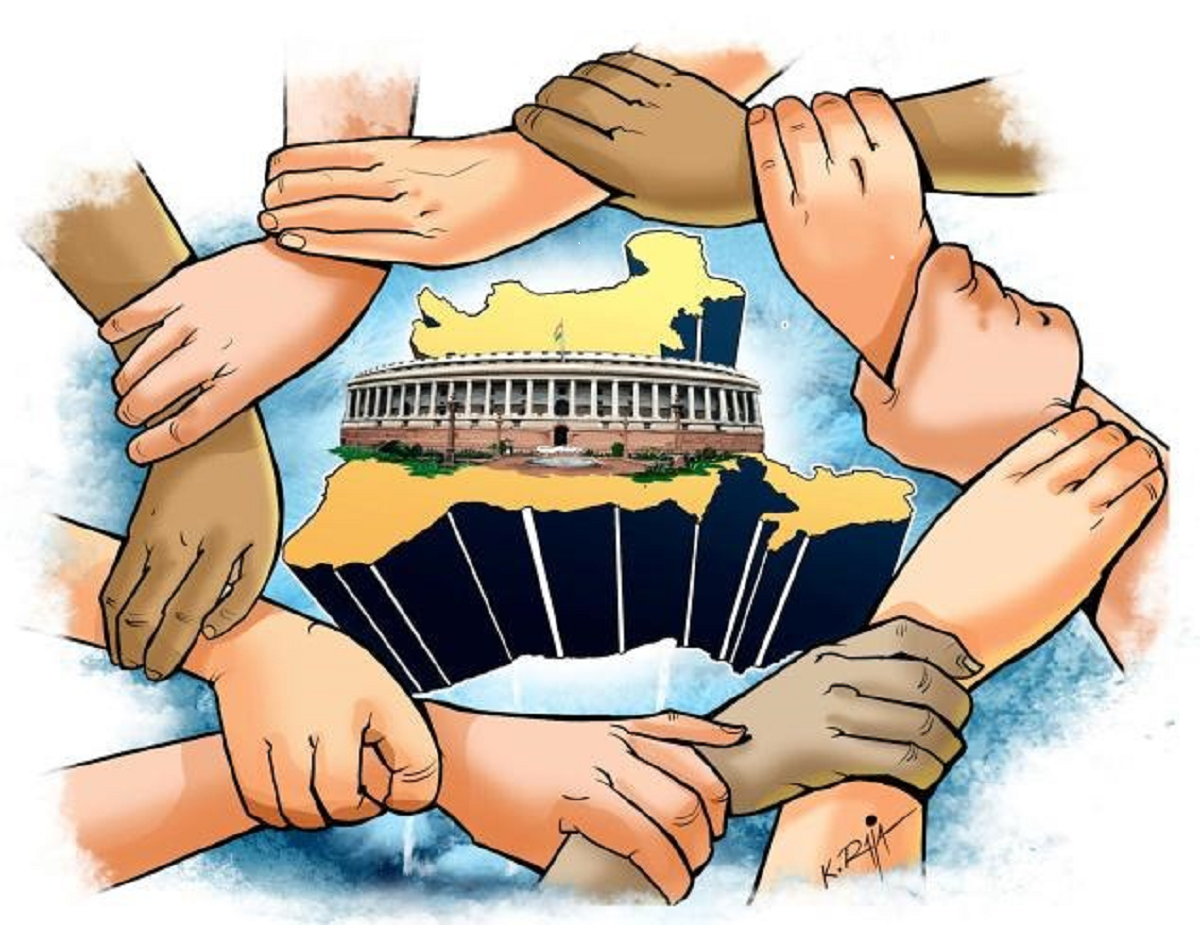
As political scientist Philip Mahwood argues, culturally diverse and developing countries like India require federalism not just for administrative requirements, but for the very survival of the nation. However, the centralized structure of federalism adopted by India to tackle post-independence challenges appears to be compatible with the unitary agenda of the Central government. Additionally, the BJP’s majority forming the Centre and their recurrent tendencies to bypass state governments and its citizens pose an extreme danger to federalism, which is one of the basic features of the Constitution and must be protected at all costs. 

Picture Credits: Ipleaders

Saaransh Mishra is a graduate of Political Science and International Affairs. He is deeply fascinated by geopolitics, human rights, the media and wishes to pursue a career in the confluence of these fields. In his spare time, he watches, plays, discusses sports and loves listening to Indian classical fusion music.

We publish all articles under a Creative Commons Attribution-Noderivatives license. This means any news organisation, blog, website, newspaper or newsletter can republish our pieces for free, provided they attribute the original source (OpenAxis).

Categories
Issue 11

The Cost Of Peace in Afghanistan

For over three years, there have been substantive efforts by the U.S., its allies and the Afghan government to negotiate peace deals and end the war in Afghanistan. What began in 2001 as a U.S. operation against the Taliban in Afghanistan, soon spiralled into a protracted war involving regional as well as international actors. The war in Afghanistan was largely against the Taliban – an extremist Islamist militant group that controls large parts of the country and has links with local and international terror outfits such as the Al Qaeda and Daesh. Since the beginning, the justification that the U.S. provides for waging the Afghan War is that it is a part of their Global War on Terror – the Taliban was harbouring terror groups and it needed to be stopped at all costs. 

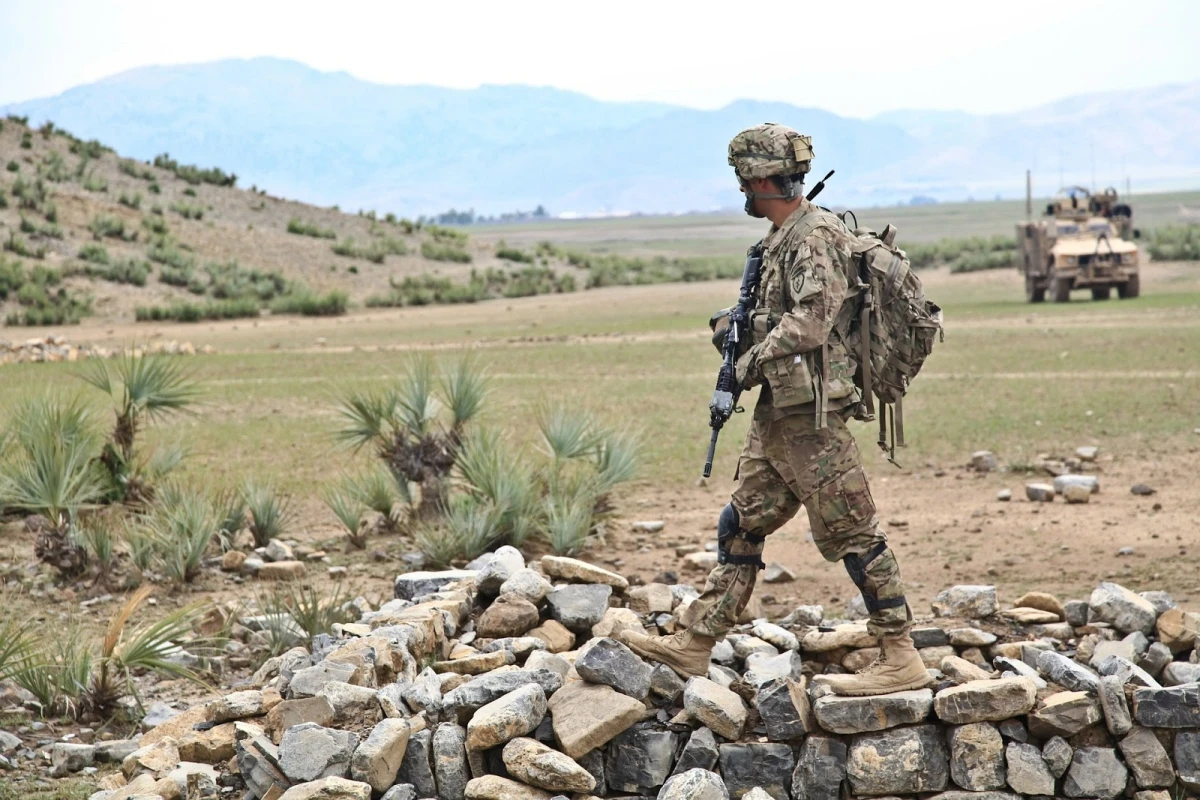
As the war progressed, however, so did the U.S.’s perception of terror and their ability to counter it. For a long time, the goal was to drive the Taliban out of power in the regions that it controlled, and ensure it does not provide a base for terror outfits in Afghanistan. However, over the past decade, there has been a decided shift in America and its allies’ response to the Taliban – instead of total defeat, there have been attempts to negotiate a power-sharing deal with the Taliban. Currently, there is a conditional peace deal with the Taliban that was signed in February 2020 announcing that U.S. troops would be out by 1st May, and talks are scheduled in Turkey this month involving regional actors to finalise the peace process. While there is no doubt that both the Taliban and the U.S. want to hasten the end of the war, the power dynamics in the country after the troops leave remain worrisome. Power-sharing with the Taliban essentially depends on the moderation of its ideology, and a firm agreement ensuring peace in the region. The rising violence by the Taliban in the past few weeks raises pertinent questions about its moderation and commitment to peace, as well as the U.S.’s priorities in Afghanistan. Should the U.S., in its haste to end the war, agree to a deal that will leave Afghanistan at the mercy of the Taliban, it would be detrimental to all actors involved. 

There are three main reasons why the current peace treaty to withdraw from Afghanistan by May 1st would likely provide an edge to the Taliban to take over the country. The first reason is the history behind the treaty itself, which was signed in February 2020. Under President Donald Trump, the focus was on ‘bringing back the troops from America’s 18-year long war.’ The negotiations between the Taliban and the U.S. government began with demands for power-sharing between the Taliban and the Afghan Government, an end to the Taliban’s support for terrorist organisations, a cease-fire declaration by the Taliban and the withdrawal of American troops. However, the final peace treaty that was signed just required the Taliban’s guarantee that it would not allow terrorist groups against the U.S. “on Afghan soil.” The number of concessions given to the Taliban displayed U.S.’s impatience with the war. The second reason has to do with the role of the Afghan government. The first treaty in February 2020 did not involve Kabul or President Ashraf Ghani in any way. While talks were held later in September that year involving the civilian government, the government and the Taliban still hold differing views on fundamental issues. Unless the talks between Kabul and the Taliban are conclusive, U.S. withdrawal of troops will only add to the chaos. The Afghan government needs the military backing of the U.S. if it is to exercise any sort of leverage against the Taliban, or it could potentially lose power the minute troops are withdrawn. The third and most important reason why the Taliban would likely have an edge in Afghanistan once U.S. troops leave is because of its understanding of its position. Experts and scholars both agree that there has been “little to no change” in the Taliban’s extremism, even after ceasefires and peace talks with other actors. The Taliban is aware that the withdrawal of U.S. troops would leave Kabul unprepared to take on its attacks. After the February 2020 deal with the U.S., the Taliban visibly reduced its attacks on U.S. troops. At the same time, it increased the number of attacks on the Afghan National Defense and Security Forces, according to a report by the U.S. Special Inspector General for Afghanistan Reconstruction. The relentless nature of the Taliban in dealing with the Afghan government is a fairly clear indicator of their strive for total control. 

The three-way negotiations between the U.S., Taliban and the Afghan government make it highly unlikely for peace to emerge in the region anytime soon. The Biden government’s actions in these crucial months before the May 1st withdrawal need to reflect not just the U.S.’s counterterrorism priorities but also the larger stability and prosperity of the region. Any narrative of the Taliban’s moderation falls short of living up to the ground reality in Afghanistan, and the U.S. needs to consider the same. The role of international and regional stakeholders also comes in here. For sustainable peace, diplomatic talks between the Taliban and the Afghan government need to be moderated by countries that are invested both in the internal security of Afghanistan and the region in general. China, India, Russia and Pakistan are all key players in the conflict and have vested interests in Afghanistan. If the U.S. prioritises ending the war over safeguarding Afghanistan for the future, other players should be brought in to mediate and bring about conclusive peace in the region. 

Akanksha Mishra is a student of political science and international relations at Ashoka University. 

We publish all articles under a Creative Commons Attribution-Noderivatives license. This means any news organisation, blog, website, newspaper or newsletter can republish our pieces for free, provided they attribute the original source (OpenAxis).
Categories
Issue 11

The World ‘Wild’ Web and Why It Is No Place for A Woman With An Opinion

The 2019 election of the five women ministers in Finland set a historic feat for equality in political leadership. However, a recent report found that these women were facing coordinated online “misogynistic abuse attacking their values demeaning their decision-making skills, and questioning their leadership abilities.”

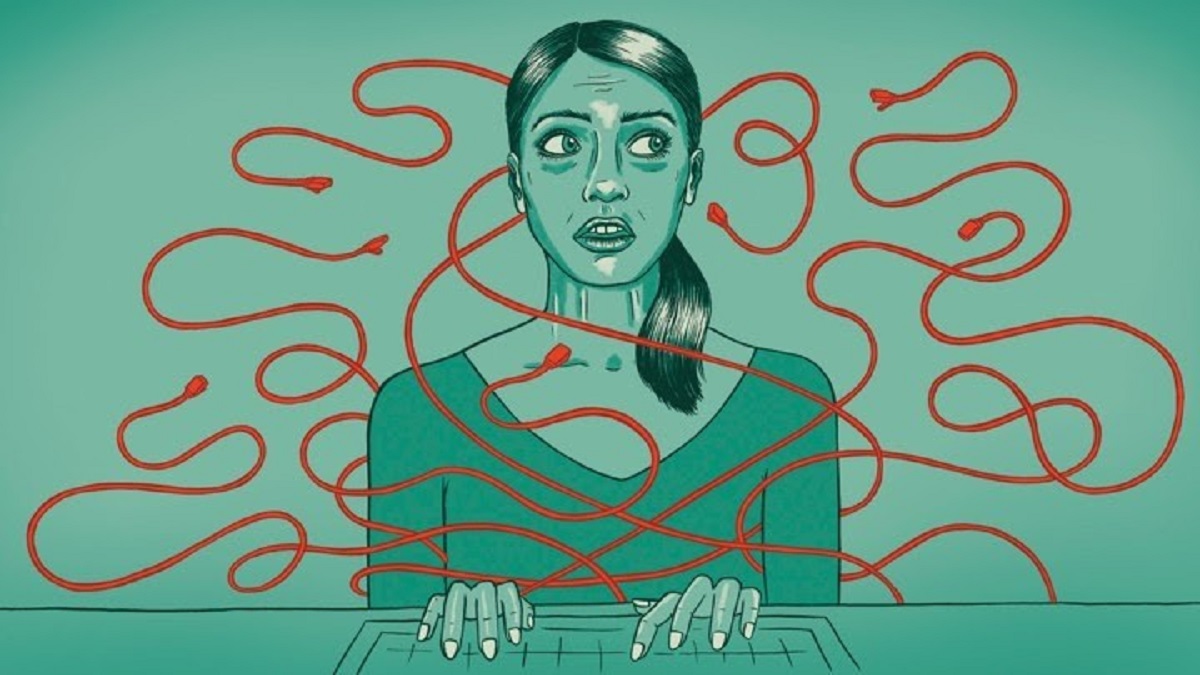
This is not the first case of the deep-rooted trend of violence and hate against women spilling over into online spaces. Women who use social media as a part of their jobs, such as politicians, journalists, activists, academics, celebrities and artists, routinely face harassment for openly expressing their views online. The pandemic further pushed these professions online, and “online trolling and misogyny” consequently increased

Closer to home, journalist and author Rana Ayyub is frequently on the receiving end of online death and rape threats for her critique of the ruling government. The abuse reached its peak when UN Human Rights experts called on her to be protected in light of an online hate campaign. To what extent is online harassment, in its volume and content, different for women than for men? What are the impacts of it on women, their work and freedom of expression?  

How is Online Harassment Different for Women? 

A study, using two population surveys in Norway, found that men are in fact “more likely than women to have experienced both unpleasant or patronizing and hateful comments”. However, this claim can be challenged as more men can openly express their opinions online while women may actively refrain from doing so. It is likely that targeted women become more cautious than targeted men in expressing their opinions publicly upon receiving hate, due to the nature of the threats. Looking at India, only 29% of internet users are women and only 28% own a mobile, highlighting a gendered technological divide, thereby not providing women with the same starting point.

The above study also found that men reported receiving more hate based on their arguments or political views whereas more women pointed to receiving hate directed towards their gender. It’s common for this hate to devolve into sexual and violent threats alongside unsolicited sexual messages and images. It was also found that this gendered harassment is more likely to silence its recipient than attacks on the contents of their argument. In fact, there is a compound effect wherein women may choose not to share their opinions online after seeing the kind of harassment that other women face. 

When Online Threats Go Offline

This demeaning treatment transcends social media and turns into offline threats. While research shows that both men and women face doxxing—it’s been found that women, and especially those from minority groups, are more likely to have their private information circulated online. For example, journalist Neha Dixit had her number and address leaked online, witnessing repeated instances of stalking and intimidation. Online threats are not “harmless” as they have turned into physical violence, as with Patricia Smith, editor of the Shillong Times, when her house was attacked with a petrol bomb in 2018. 

What Is the Message Behind the Hate?

What does this online violence, turning into offline incidences, represent? The targeted backlash against a woman expressing her opinion has been defined as the adverse consequence against challenges to the status quo to help protect existing gender inequity. In places where it’s not the norm for women to freely express their opinion, the same is reflected on social media where it’s easier to silence them behind anonymity and the ability to call on hordes of ‘trolls’ to harass someone. 

Group-based harassment doesn’t only target the individual, but their background, identity, religion or community. For example, Ayubb recalls insults with “almost everything that has my religion and religious identity linked to it”. The aim of this form of online abuse is to remind groups that they do not “belong”. Online harassment that is gendered is an instance of this, while adding more layers of identity-based attacks would only fuel the silencing of minority women. 

Disregarding Female Voices and Threats to Journalism

This can have profound impacts on not only the well-being of women but on their career and freedom of expression as well. As seen in most of these examples, women journalists, in particular, are subject to more online and offline threats. The significant personal costs of the mental duress and lack of personal security can deter them from effectively doing their jobs. It may also discourage their social media presence, which is a platform for them to gauge reader feedback and build a strong footprint that can be leveraged in their career. 

Dixit stated that once her #OperationBetiUthao report on the trafficking of 31 girls broke, all the attention was turned away from the story and directed towards shaming her. Women are unable to cover certain topics without compromising their safety, which then sidelines important stories and can erode the freedom of press. Last year, Indian politician, Mahua Moitra was falsely accused of plagiarizing her speech and was trolled for it which she stated was a “clear attempt to obfuscate the real issues”. As Malini Subramaniam, a freelance journalist stated: “not reporting is not really an option” or in Moitra’s case: not voicing her views in parliament is not an option, as that is exactly what the trolls want. 

“Just ignore it” Is Not a Solution 

Asking women in the public eye to “ignore” the online hate or to “grow a thick skin” are reductive answers. While in an ideal world it shouldn’t but since it does come with the job, then the onus also lies with newsrooms, for example, to build on resources to both physically and psychologically support its journalists on and off the field. It’s also important for women to support other women, or at least keep from adding to the online hate. A study found that women are almost as likely as men to use derogatory and misogynistic insults on Twitter, and direct them at other women. 

The online harassment faced by women is less about their arguments and more about their identity, which makes it more severe and puts them at risk of physical harm. The increase in gendered online abuse is a lesser talked about fallout of the pandemic. It can mean self-censorship and withdrawal for women from sharing their work and opinions online, which further discourages other women. When women are openly discredited online, there is no ‘democratic’ and ‘equal’ expression of opinion in question. 

Picture Credits: Illustration by Jackie Lay, The Atlantic

Author’s Bio: Devika Goswami is a student of Economics and Media Studies at Ashoka University.

We publish all articles under a Creative Commons Attribution-Noderivatives license. This means any news organisation, blog, website, newspaper or newsletter can republish our pieces for free, provided they attribute the original source (OpenAxis).