Categories
Issue 11

Examining India’s Falling Rank on the World Happiness Index

Sydney J. Harris rightly said, “Happiness is a direction, not a place” and today all economies in the world are struggling to walk in this direction. A step to achieve this was taken in the UN Sustainable Development Solutions Network in 2012 when they adopted resolution 65/309: Happiness: Towards a Holistic Definition of Development. This was done to invite the 149 member countries to measure the level of happiness among their population and use these numbers to guide public policy. Although the World Happiness Reports have been based on a wide variety of data, the most important source has always been the Gallup World Poll, which is unique in the range and comparability of its global series of annual surveys.

Finland has been ranked number 1, being the happiest country in the world for the past few years. India has always been very low on the happiness index, averaging around 125th. In fact, in 2021, India was ranked 139 out of 149 countries. The results of the happiness index are correlated with a lot of factors including GDP, social security, personal freedom, life expectancy and opinions of residents among others. 

As former President, Dr Pranab Mukherjee commented, “Despite our country’s economic progress, India is constantly going downwards in the happiness index. This indicates a lack of a holistic approach towards development.” According to him, the best step that the policymakers of the country should take is to adopt the ‘triple bottom line’ accounting framework. It focuses on all essential aspects of holistic development of individuals including social, ecological and financial development. This also implies that happiness is weakly correlated with wealth and the economic growth of a country. 

According to the economist and author Jayshree Sengupta, India has been ranked poorly on the happiness index due to various reasons. Some of these are rapid urbanization and congestion in cities, concerns about food security and water safety, rising costs of healthcare, women’s safety, and environmental pollution, which itself is linked to poor mental wellbeing. These conditions have worsened over time and were amplified due to the Covid-19 crisis. 

The ever-growing inequality between the rich and poor of the country is another crucial reason for the chronic unhappiness. During the Covid crisis,  India reportedly added 40 new billionaires to the global list while about 57% of the working class in the country were on the verge of losing their jobs. This growing pay gap in the population has worsened the mental wellbeing and hence the happiness of the population. 

A statistical exercise using variables like GDP per capita, social support, healthy life expectancy, freedom to make life choices, generosity, perceptions of corruption and dystopia was done to understand the relationship of these indices with the happiness index. It found that all these variables are statistically significant and thus have  significant explanatory power. They  illustrate that on average richer countries fare better on subjective evaluations of life circumstances, as do nations with more social support, lower levels of corruption etc. 

Why India, despite its high level of economic growth ranks so low is because it ranks very low on some of these indices. For social support, India is ranked 142nd out of 149 countries. However, if we consider Pakistan’s ranking on all of these individual indicators, it is very similar to India and worse in some cases. According to this, India should be ranked one spot above Pakistan but that is not the case. Pakistan is ranked 105 while India is ranked at 139. This points out to predictive anomalies that this model has. 

One reasonable explanation for this could be that people in India have higher expectations and thus also have greater disappointment. This is one of the very crucial reasons for the low happiness ranking in India in addition to the increasing income inequality and feelings of injustice and unfairness because of the structure of the society and its history. Thus, better political leadership and public policy framework in India are essential for improving the happiness index of people in India. 

Picture Credits: Visual Capitalist

Aanya Poddar is a third year undergraduate student at Ashoka University. She is pursuing a BSc. (Honors) in Economics and Finance. She is the President of the Ashoka Economics Society.

We publish all articles under a Creative Commons Attribution-Noderivatives license. This means any news organisation, blog, website, newspaper or newsletter can republish our pieces for free, provided they attribute the original source (OpenAxis).

Categories
Issue 11

The Frailty of Quasi-Federalism in India

The Rajya Sabha reverberated with staunch opposition to the approval of the Government of National Capital Territory of Delhi (Amendment) Bill, 2021 (GNCTD Bill) on 24 March, 2021 . The Bill contains amendments that would bolster the powers of the Lieutenant Governor (LG) of Delhi and further limit the administrative powers of Arvind Kejriwal’s AAP government.

In stark contrast to the earlier-vested powers of the elected government to take independent decisions on most administrative matters, the bill  mandates  LG’s approval prior to every executive action. CM Arvind Kejriwal called it a “sad day for democracy,” while Congress MP Abhishek Manu Singhvi called the bill “the most pernicious and the most unconstitutional bill the Rajya Sabha has ever received.”  Having received Presidential assent amidst opposition walkouts in the Rajya Sabha, it has yet again resurrected debates on the current government’s commitment to federalism in India. This is not the first time that the government has come under scrutiny for passing heavily opposed legislations jeopardizing constitutional federalism. The recent GNCTD Bill, along with certain other highly controversial moves like the stance on “one nation one election”, the abrogation of Article 370, the CAA & NRC and the passage of the farm bills, all in the face of incessant criticism and opposition within and outside the Parliament, has brought the BJP under question. So, how do these contentious bills get passed despite such strong opposition? One could consider the role of India’s “quasi-federal” structure and its compatibility with the Bharatiya Janata Party’s longstanding agenda of attaining a unitary state with an overly dominant Centre. The larger debate that these legislations highlight is the inadequate checks that India’s quasi-federal structure presents to a government with a parliamentary majority. 

“Federalism” refers to the constitutionally allocated distribution of powers between two or more levels of government; one at the national level, other at the provincial, state or local levels. The principal feature of federalism is that the various levels of governments operate within their own constitutionally-defined jurisdictions with substantial independence from each other. A key tenet of the federal concept is the voluntary compact between several independent states that agree to become a part of a nation and are required to submit an integral part of their power to the Centre.

However, in most federal countries, the difference in power between the central and state governments is not as substantial as it is in the case of India. The herculean challenges faced by postcolonial India in terms of cultural, religious, and ethnic diversity have contributed extensive powers to the Centre. The disunity and secessionist tendencies that postcolonial India witnessed in the form of linguistic nationalism in the South, accession of the Princely States, the Kashmir conflict, and regional rivalry with Pakistan, among others, led the members of the Constituent Assembly to advocate for a strong Union government. This was deemed necessary to ensure  political stability  for India’s survival as a unified nation-state amidst enormous cultural heterogeneity and national security threats. 

Unlike other federal countries such as the US, the Parliament in India has the power to admit new states, create new states, alter boundaries and their names, in addition to establishing unity between states or dividing them. Further, there are various provisions in the Constitution that allow the Centre to override the powers of the states; the power to make laws within fields that have not been specified within the Constitution lies solely with the Centre. Additionally, on fiscal matters, states have limited capabilities and are quite heavily dependent on the Centre. Thus, the Constitution of India was drafted with strong centralizing tendencies that confer maximum powers to the central government and is thus referred to as “quasi-federal.”

BJP leaders have been pushing for the idea of “one nation one election” in various public platforms ever since the agenda reserved its space in the party’s 2014 election manifesto. In fact, as recently as in December 2020, BJP conducted roughly 25 webinars propagating the idea. . This agenda will further affect the limited autonomy of  regional parties that contest to form  state governments across India. This centralized control of state legislatures and state governments adds to the longstanding goals of the BJP to attain a unitary state. Further, advancing the abrogation of Article 370 that granted a special status to the state of Jammu & Kashmir bypassed the citizens of the state. Moreover, on 12th December 2019, the Parliament passed the heavily contentious “Citizenship Amendment Act,” which is widely considered an “anti-muslim” law. And the farm bills of 2020, which continue to see protests, received Presidential assent to become a law in September 2020.

Despite opposition parties protesting against these anti-federal legislations, the BJP has been able to enforce them majorly due to their absolute majority in the Lok Sabha and a substantial standing in the Rajya Sabha. The BJP has 305 legislators in the Lok Sabha, which is more than enough to pass any bill without the support of allies. In the Rajya Sabha, the BJP has 82 members (38 short of the simple majority of 120), but it’s allies  take the  tally to 107. Additionally, various regional parties such as the BJD, Shiv Sena, the YSRCP, the TRS and the NPF (total of 19 members) registering their votes  in BJP’s favour, gives them the required number – above 120.

Complementing such  a majority, the powers vested in the Centre under Article 256, 365 and 356 allow the BJP to enforce any law that would strengthen its hold over the states. Article 256 says that all states are obligated to enact laws passed by the Parliament, whereas Article 365 states that if the States do not comply, then the President may hold that a situation has arisen in which the government of the State cannot be carried on in accordance with the Constitution. Resultantly, Article 356 authorizes the President to remove State Governments and dissolve state assemblies if they cannot run in accordance with the Constitution.

As political scientist Philip Mahwood argues, culturally diverse and developing countries like India require federalism not just for administrative requirements, but for the very survival of the nation. However, the centralized structure of federalism adopted by India to tackle post-independence challenges appears to be compatible with the unitary agenda of the Central government. Additionally, the BJP’s majority forming the Centre and their recurrent tendencies to bypass state governments and its citizens pose an extreme danger to federalism, which is one of the basic features of the Constitution and must be protected at all costs. 

Picture Credits: Ipleaders

Saaransh Mishra is a graduate of Political Science and International Affairs. He is deeply fascinated by geopolitics, human rights, the media and wishes to pursue a career in the confluence of these fields. In his spare time, he watches, plays, discusses sports and loves listening to Indian classical fusion music.

We publish all articles under a Creative Commons Attribution-Noderivatives license. This means any news organisation, blog, website, newspaper or newsletter can republish our pieces for free, provided they attribute the original source (OpenAxis).
Categories
Issue 11

The Cost Of Peace in Afghanistan

For over three years, there have been substantive efforts by the U.S., its allies and the Afghan government to negotiate peace deals and end the war in Afghanistan. What began in 2001 as a U.S. operation against the Taliban in Afghanistan, soon spiralled into a protracted war involving regional as well as international actors. The war in Afghanistan was largely against the Taliban – an extremist Islamist militant group that controls large parts of the country and has links with local and international terror outfits such as the Al Qaeda and Daesh. Since the beginning, the justification that the U.S. provides for waging the Afghan War is that it is a part of their Global War on Terror – the Taliban was harbouring terror groups and it needed to be stopped at all costs. 

As the war progressed, however, so did the U.S.’s perception of terror and their ability to counter it. For a long time, the goal was to drive the Taliban out of power in the regions that it controlled, and ensure it does not provide a base for terror outfits in Afghanistan. However, over the past decade, there has been a decided shift in America and its allies’ response to the Taliban – instead of total defeat, there have been attempts to negotiate a power-sharing deal with the Taliban. Currently, there is a conditional peace deal with the Taliban that was signed in February 2020 announcing that U.S. troops would be out by 1st May, and talks are scheduled in Turkey this month involving regional actors to finalise the peace process. While there is no doubt that both the Taliban and the U.S. want to hasten the end of the war, the power dynamics in the country after the troops leave remain worrisome. Power-sharing with the Taliban essentially depends on the moderation of its ideology, and a firm agreement ensuring peace in the region. The rising violence by the Taliban in the past few weeks raises pertinent questions about its moderation and commitment to peace, as well as the U.S.’s priorities in Afghanistan. Should the U.S., in its haste to end the war, agree to a deal that will leave Afghanistan at the mercy of the Taliban, it would be detrimental to all actors involved. 

There are three main reasons why the current peace treaty to withdraw from Afghanistan by May 1st would likely provide an edge to the Taliban to take over the country. The first reason is the history behind the treaty itself, which was signed in February 2020. Under President Donald Trump, the focus was on ‘bringing back the troops from America’s 18-year long war.’ The negotiations between the Taliban and the U.S. government began with demands for power-sharing between the Taliban and the Afghan Government, an end to the Taliban’s support for terrorist organisations, a cease-fire declaration by the Taliban and the withdrawal of American troops. However, the final peace treaty that was signed just required the Taliban’s guarantee that it would not allow terrorist groups against the U.S. “on Afghan soil.” The number of concessions given to the Taliban displayed U.S.’s impatience with the war. The second reason has to do with the role of the Afghan government. The first treaty in February 2020 did not involve Kabul or President Ashraf Ghani in any way. While talks were held later in September that year involving the civilian government, the government and the Taliban still hold differing views on fundamental issues. Unless the talks between Kabul and the Taliban are conclusive, U.S. withdrawal of troops will only add to the chaos. The Afghan government needs the military backing of the U.S. if it is to exercise any sort of leverage against the Taliban, or it could potentially lose power the minute troops are withdrawn. The third and most important reason why the Taliban would likely have an edge in Afghanistan once U.S. troops leave is because of its understanding of its position. Experts and scholars both agree that there has been “little to no change” in the Taliban’s extremism, even after ceasefires and peace talks with other actors. The Taliban is aware that the withdrawal of U.S. troops would leave Kabul unprepared to take on its attacks. After the February 2020 deal with the U.S., the Taliban visibly reduced its attacks on U.S. troops. At the same time, it increased the number of attacks on the Afghan National Defense and Security Forces, according to a report by the U.S. Special Inspector General for Afghanistan Reconstruction. The relentless nature of the Taliban in dealing with the Afghan government is a fairly clear indicator of their strive for total control. 

The three-way negotiations between the U.S., Taliban and the Afghan government make it highly unlikely for peace to emerge in the region anytime soon. The Biden government’s actions in these crucial months before the May 1st withdrawal need to reflect not just the U.S.’s counterterrorism priorities but also the larger stability and prosperity of the region. Any narrative of the Taliban’s moderation falls short of living up to the ground reality in Afghanistan, and the U.S. needs to consider the same. The role of international and regional stakeholders also comes in here. For sustainable peace, diplomatic talks between the Taliban and the Afghan government need to be moderated by countries that are invested both in the internal security of Afghanistan and the region in general. China, India, Russia and Pakistan are all key players in the conflict and have vested interests in Afghanistan. If the U.S. prioritises ending the war over safeguarding Afghanistan for the future, other players should be brought in to mediate and bring about conclusive peace in the region. 

Akanksha Mishra is a student of political science and international relations at Ashoka University. 

We publish all articles under a Creative Commons Attribution-Noderivatives license. This means any news organisation, blog, website, newspaper or newsletter can republish our pieces for free, provided they attribute the original source (OpenAxis).

Categories
Issue 11

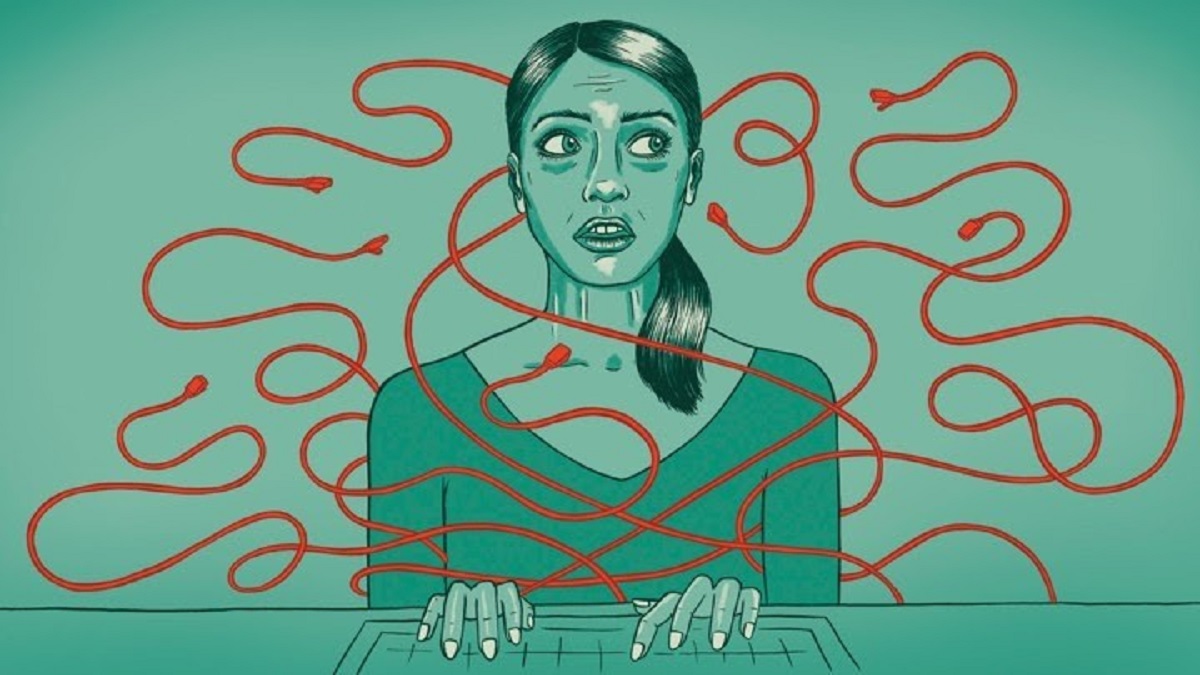
The World ‘Wild’ Web and Why It Is No Place for A Woman With An Opinion

The 2019 election of the five women ministers in Finland set a historic feat for equality in political leadership. However, a recent report found that these women were facing coordinated online “misogynistic abuse attacking their values demeaning their decision-making skills, and questioning their leadership abilities.”

This is not the first case of the deep-rooted trend of violence and hate against women spilling over into online spaces. Women who use social media as a part of their jobs, such as politicians, journalists, activists, academics, celebrities and artists, routinely face harassment for openly expressing their views online. The pandemic further pushed these professions online, and “online trolling and misogyny” consequently increased

Closer to home, journalist and author Rana Ayyub is frequently on the receiving end of online death and rape threats for her critique of the ruling government. The abuse reached its peak when UN Human Rights experts called on her to be protected in light of an online hate campaign. To what extent is online harassment, in its volume and content, different for women than for men? What are the impacts of it on women, their work and freedom of expression?  

How is Online Harassment Different for Women? 

A study, using two population surveys in Norway, found that men are in fact “more likely than women to have experienced both unpleasant or patronizing and hateful comments”. However, this claim can be challenged as more men can openly express their opinions online while women may actively refrain from doing so. It is likely that targeted women become more cautious than targeted men in expressing their opinions publicly upon receiving hate, due to the nature of the threats. Looking at India, only 29% of internet users are women and only 28% own a mobile, highlighting a gendered technological divide, thereby not providing women with the same starting point.

The above study also found that men reported receiving more hate based on their arguments or political views whereas more women pointed to receiving hate directed towards their gender. It’s common for this hate to devolve into sexual and violent threats alongside unsolicited sexual messages and images. It was also found that this gendered harassment is more likely to silence its recipient than attacks on the contents of their argument. In fact, there is a compound effect wherein women may choose not to share their opinions online after seeing the kind of harassment that other women face. 

When Online Threats Go Offline

This demeaning treatment transcends social media and turns into offline threats. While research shows that both men and women face doxxing—it’s been found that women, and especially those from minority groups, are more likely to have their private information circulated online. For example, journalist Neha Dixit had her number and address leaked online, witnessing repeated instances of stalking and intimidation. Online threats are not “harmless” as they have turned into physical violence, as with Patricia Smith, editor of the Shillong Times, when her house was attacked with a petrol bomb in 2018. 

What Is the Message Behind the Hate?

What does this online violence, turning into offline incidences, represent? The targeted backlash against a woman expressing her opinion has been defined as the adverse consequence against challenges to the status quo to help protect existing gender inequity. In places where it’s not the norm for women to freely express their opinion, the same is reflected on social media where it’s easier to silence them behind anonymity and the ability to call on hordes of ‘trolls’ to harass someone. 

Group-based harassment doesn’t only target the individual, but their background, identity, religion or community. For example, Ayubb recalls insults with “almost everything that has my religion and religious identity linked to it”. The aim of this form of online abuse is to remind groups that they do not “belong”. Online harassment that is gendered is an instance of this, while adding more layers of identity-based attacks would only fuel the silencing of minority women. 

Disregarding Female Voices and Threats to Journalism

This can have profound impacts on not only the well-being of women but on their career and freedom of expression as well. As seen in most of these examples, women journalists, in particular, are subject to more online and offline threats. The significant personal costs of the mental duress and lack of personal security can deter them from effectively doing their jobs. It may also discourage their social media presence, which is a platform for them to gauge reader feedback and build a strong footprint that can be leveraged in their career. 

Dixit stated that once her #OperationBetiUthao report on the trafficking of 31 girls broke, all the attention was turned away from the story and directed towards shaming her. Women are unable to cover certain topics without compromising their safety, which then sidelines important stories and can erode the freedom of press. Last year, Indian politician, Mahua Moitra was falsely accused of plagiarizing her speech and was trolled for it which she stated was a “clear attempt to obfuscate the real issues”. As Malini Subramaniam, a freelance journalist stated: “not reporting is not really an option” or in Moitra’s case: not voicing her views in parliament is not an option, as that is exactly what the trolls want. 

“Just ignore it” Is Not a Solution 

Asking women in the public eye to “ignore” the online hate or to “grow a thick skin” are reductive answers. While in an ideal world it shouldn’t but since it does come with the job, then the onus also lies with newsrooms, for example, to build on resources to both physically and psychologically support its journalists on and off the field. It’s also important for women to support other women, or at least keep from adding to the online hate. A study found that women are almost as likely as men to use derogatory and misogynistic insults on Twitter, and direct them at other women. 

The online harassment faced by women is less about their arguments and more about their identity, which makes it more severe and puts them at risk of physical harm. The increase in gendered online abuse is a lesser talked about fallout of the pandemic. It can mean self-censorship and withdrawal for women from sharing their work and opinions online, which further discourages other women. When women are openly discredited online, there is no ‘democratic’ and ‘equal’ expression of opinion in question. 

Picture Credits: Illustration by Jackie Lay, The Atlantic

Author’s Bio: Devika Goswami is a student of Economics and Media Studies at Ashoka University.

We publish all articles under a Creative Commons Attribution-Noderivatives license. This means any news organisation, blog, website, newspaper or newsletter can republish our pieces for free, provided they attribute the original source (OpenAxis).

Categories
Issue 11

To Have Loved and Lost

Trigger Warning: mentions of death, mental health issues

“Grief is a most peculiar thing; we’re so helpless in the face of it. It’s like a window that will simply open of its own accord. The room grows cold, and we can do nothing but shiver. But it opens a little less each time, and a little less; and one day we wonder what has become of it.”  

Arthur Golden, Memoirs of a Geisha

Death is inevitable. Ultimate. Irreversible. As the fundamental truth of life, we are bound to encounter death. Unfortunately, to grieve is a matter of privilege; to allow yourself the time to break down and build back up again is a luxury not many can afford. In the past, people have returned to the workplace after demises, pushing against the inner storm of despair. Barring the few designated days of mourning, grief never became a strong reason for seeking paid leave, thereby, forcing employees to resume work within days of such life-altering tragedies. 

New Zealand recently became the second country to implement miscarriage bereavement laws — granting women and men the right to paid leave after miscarriages and stillbirths. India already had a similar legislation in place that entitled women to a six-week paid leave under the Maternity Benefit Act, 1961, in such cases. These governments have recognised the soul-crushing pain experienced by parents by passing such legislation. Hence, these acts are symbols of our humanity; our understanding of life and loss. 

While they are certainly socially evolved and humane, given their intrinsic link to the labour market, these laws provoke questions about their economic impacts. The impact of grief on productivity and employment raises some important questions: What are the economic consequences of paid leaves? Is grief a good enough reason for granting days off work? 

Productivity Pause

Grief is more than just a fleeting emotional state — it is the source of psychological and physical stress that can range from depression to anxiety and hopelessness. In fact, a medical side effect of bereavement is an impaired immune system. Since mental and physical health are integral parts of human capital, when emotions and grief run wild, productivity takes a severe hit. 

Despite realising their inability to work, workers feel the pressures of presenteeism.  If you have ever been to work even though you did not feel up to it, you understand presenteeism. A recently studied phenomenon, it refers to employees still habitually working long hours/attending work even though they are not fully functioning well (mostly due to medical reasons and even other concerns) ultimately leading to lower productivity. Workers who are insecure about their jobs often display presenteeism.

Presenteeism is harming businesses as the illusion of efficiency prevents managers from planning better. When six  workers are on the job but two are working at reduced capacity, information asymmetry prevents the manager/owner from efficiently allocating the workload because presenteeism is not apparent. Hence, the quality of output suffers and average efficiency is dragged down. In contrast, if the unproductive workers were on leave, the reduction in team size and efficiency would be glaringly visible and the managers would be able to better plan the tasks knowing fully well that they are working with a smaller, but productive team. 

Given that long bereavement breaks are not normalised, and their medical impacts are not understood, many workers feel insecure about their job status while considering taking time off work. Hence, employees are ultimately faced with the unfair choice of either resuming work with a diminished ability to perform or quitting the labour force. 

Workers deciding to quit the labour force would imply forgoing a source of income. The absence of financial stability can further reinforce any depression or anxiety felt by the employees. They might also lose out on new skills by being out of work for long periods which, in turn, would reduce their human capital relative to the rest of the workforce. With lower human capital, their employment prospects would further decrease. These consequences for workers translate into bigger problems for the economy as unemployment leads to wastage of resources and lower economic output. 

In this lose-lose situation, data estimates the economic cost of bereavement in the UK workplaces to be nearly £23bn a year. This renders a loss in tax revenue estimated to be around £8bn a year. Behind these massive figures, the study indicates that “the majority of the economic cost arises from lost productivity in the workplace (presenteeism), rather than from time away from work.”

A viable solution? 

Neither declining productivity nor workers’ exits from the labour force are optimal cases for the economy. Therefore, a solution would include retaining workers or preventing productivity dips. By providing paid bereavement leaves, firms ensure that workers have the option of staying employed. In a way, paid leave lifts the pressure of ‘showing up’ at work and allows workers to recuperate emotionally without worrying about economic welfare and finances. Once workers do finally return to work, they are relatively more emotionally stable and will be able to perform better, preventing any problems caused by presenteeism. Paid leaves also foster a stronger attachment to the labour force with workers more committed to working and staying in employment. With a more dedicated and stronger labour force, the national output  is expected to increase. 

Understanding the merits of paid leaves, the miscarriage bereavement laws passed by the New Zealand government are a giant leap forward. They recognise the significant emotional implications of stillbirths and miscarriages — losing a child has been ‘classified as one of the most extreme stressors a human can face’ which causes the parents’ productivity to reduce to a quarter of what it was before. Most importantly, these laws standardise access to paid-leave and propagate equality. Given that all workers do not have the financial background to quit their jobs, the legislation ensures that despite varied working conditions, workers have the ability to avail the option of paid leaves. Hence, it fosters an environment of equality while prioritising workers’ welfare. 

At its core, such laws recognise that workers’ welfare need not be at odds with the economic well-being of the country. Workers are 13% more productive when they are happy. Hence, it is difficult to isolate economic growth from the emotional welfare of the workforce. By providing adequate time and opportunity for employees to process their loss, these paid leaves act as a safeguard for the interests of the workforce against the tragedies of miscarriages and stillbirths. 

Picture Perfect? 

Despite their merits, these laws come with strings attached. Paid leave is a controversial issue amongst employers since they are paying the employees for essentially no work. Some firms might prefer workers showing up at offices despite the recent deaths of loved ones. By availing paid leaves, a worker’s contribution to output is zero. By using the logic of ‘something is better than nothing,’ employers would still prefer to enforce their older methods. 

Paid leaves for parents after stillbirths or miscarriages are certainly a social issue. However, the effects of grief on productivity make it an economic issue in tandem. This gives the opportunity for inclusive legislation that can improve economic conditions and boost economic growth. The unpredictability of death makes it all the more important to recognise the various losses humankind shares and subsequently address them in legislation. Because let’s face it, for someone still reeling from the shocks of the death of their loved ones; for someone still braving that gush of grief blowing through the window in that frigid room; even a few days off work mean everything. 

Advaita Singh is a second-year student of Economics at Ashoka University. She is also the President of the Economics Society at Ashoka. 

We publish all articles under a Creative Commons Attribution-Noderivatives license. This means any news organisation, blog, website, newspaper or newsletter can republish our pieces for free, provided they attribute the original source (OpenAxis).

Categories
Issue 11

The Curious Case of the Electoral Calendar

When the Election Commission of India first announced dates for elections to four major state assemblies in February 2021, the announcement caused quite the stir. While every other state went for a single-phase polling, West Bengal’s electoral contest was staggered into 8 phases, spanning 23 days. Moreover, several districts have been split into blocks, with voting occurring over multiple phases in the same district. 

Several political leaders decried this decision. West Bengal Chief Minister Mamata Bannerjee immediately came out to say that the ECI is trying to convert the state of West Bengal into a football ground, and it is a deliberate attempt to “upset communal harmony” and polarise the electorate. 

Yet sidestepping the allegations of overt politicisation, there lies the question of what this means from the perspective of organising elections. For many years, the ECI has been heralded for its adeptness in the swift conduct of arguably the largest democratic exercise in the world. They have definitely come a long way – from the several months it took to conduct the first general election in 1951-52, to wrapping them up in a month. The 2019 general elections with more than 900 million voters, for instance, were held in 7 phases and took roughly close to a month. Moreover, even the 2017 state elections in much larger Uttar Pradesh were wrapped up in 7 phases. 

What is also interesting is not just that larger and equally sensitive states wrapped up elections quicker, but also that the previous election in West Bengal itself needed only 6 phases. Therefore, the fact that the state of West Bengal requires 8 phases in the ongoing election begs the question: did the ECI not have the capability to complete the West Bengal elections in a shorter time frame? 

Organisational Capabilities and Ambition

Several efforts are required to be undertaken to ensure the smooth conduct of the democratic process. From security deployments to requiring officers for managing booths in remote areas, the task is quite uphill. As Chief Election Commissioner Sunil Arora pointed out in his press conference, they had to accommodate not just for adequate force deployments, but also had to take into account the festival season and the COVID-19 pandemic, while scheduling the electoral calendar. 

While these extra efforts do highlight the ECI’s commitment to peaceful and stable polls, there are questions to be raised. For one, as Indian Express points out, several districts, especially in South Bengal, have been split across phases – something that has never happened before. This implies that the sealing of inter-district borders (to prevent miscreants from other districts to disturb poll-bound districts) will be tough to execute. Even the fact that the polling dates in several Muslim-dominated districts coincide with Ramzan will prove to be a challenge for voters and polling officials in these areas. Moreover, parties are effectively required to campaign for longer because of the electoral schedule. Given the en-masse flouting of any sense of social distancing in political rallies, the increasing exposure of such a large congregation can be a genuine health hazard for the entire populace. 

Even beyond the larger logistical challenges of this election alone, there is a larger principled challenge – that of the current government’s ambition to realise a vision of simultaneous elections in states and the centre (titled “one-nation, one-election”). Fundamentally, if the aim of the one-nation, one-election, as Prime Minister Modi says, is to reduce the amount of monetary and human resources spent on holding several elections, then such a prolonged contest goes precisely against the idea. Moreover, if one agrees to the logic that such a large election would need security force deployment to shift regions quickly with phases, then the staggered nature of the electoral contest as demonstrated by West Bengal (with the same district split across phases in some cases) is incompatible with realising this vision.  

It is paradoxical to, therefore, try and advocate for “one-nation, one-election,” but at the same time consider the constraints of resource deployment as an explanation for prolonging elections. The fact that the ECI has conducted swifter elections in much larger states with equally (if not more) complicated situations, should refute any claims that they are not capable enough or do not possess the required resources. The fundamental question then is not that of the ECI’s capability, but of its prerogative.

Ultimately, it is the political parties, who are the main players spending their energy on the campaign trail. For some, this issue of electoral dates may just be parties crying foul when they are disadvantaged. There are, for instance, certain democracies such as the United Kingdom that formally gave the Prime Minister some form of power over calling for elections, until the Fixed-term Parliaments Act was passed in 2011. On the other end of the spectrum is the United States, where general election dates are constitutionally pre-determined. India however, has always sought a balance by reposing its faith in its Election Commission to conduct elections in consultation with all key political players. 

It is in this light that accountability becomes necessary, and it is worth asking that despite its capability to conduct these elections swiftly, why would the Election Commission choose to have a prolonged election in West Bengal? Even if the answer is ensuring security and stability, the fact that several major parties, especially Trinamool, decried the ECI’s decisions so vociferously, makes one wonder whether a neutral body such as the ECI perceives a tradeoff between achieving security and stability and having a multi-party consensus? One wonders what that would mean for democracy.

Picture Credits: scroll.in

Vaibhav Parik is a fourth-year student at Ashoka University, majoring in Political Science and minoring in Economics. His interests range from electoral politics and foreign affairs to tennis and aviation. 

We publish all articles under a Creative Commons Attribution-Noderivatives license. This means any news organisation, blog, website, newspaper or newsletter can republish our pieces for free, provided they attribute the original source (OpenAxis).

Categories
Issue 11

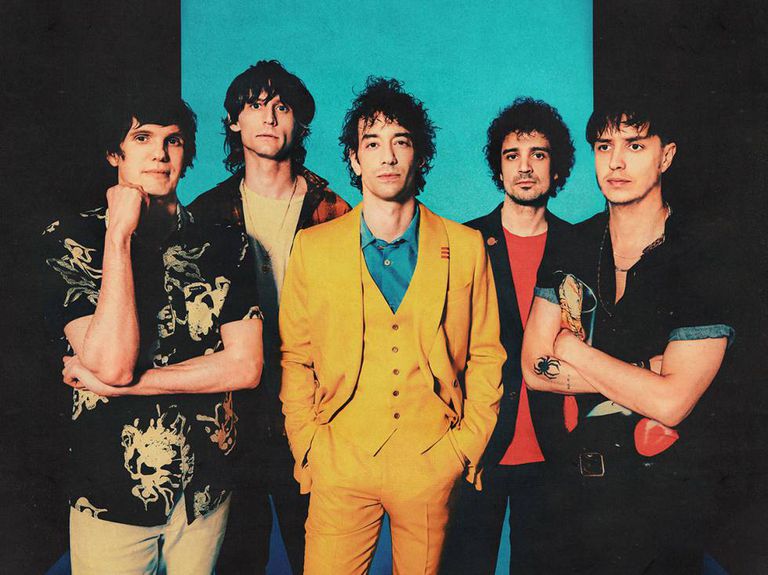
The New Abnormal by The Strokes

The latest album by New York-based rock band The Strokes generated a lot of buzz and excitement, both among fans and critics. After a gap of almost seven years, The New Abnormal was released on April 10, 2020, through Cult and RCA Records. Critical appreciation for the album peaked when it won the 2021 Grammy Award for the Best Rock Album of the Year. Like most of The Strokes’ discography, the album falls in an indie rock or alternative rock genre. Singer-songwriter Julius Casablancas received a lot of critical appreciation for the development of his lyrics, as well as his singing style, with a special improvement in his falsetto as we see in a number of songs in the album. The reason The New Abnormal should be on your list is because it is both a classic form of The Strokes’ music as well as packed with new elements that make it stand out amongst other indie rock albums. The singles “The Adults Are Talking” and “Eternal Summer” received praise for the mature lyrics addressing issues such as the generation gap in American society, and forest fires in light of global warming. The music is quintessential to the band, with duelling guitar riffs and an 80s-rock vibe throughout the album. Through the seven-year hiatus, fans witnessed Casablancas and other band members pursue individual projects that they seemed more invested in. However, the band finally got together for The New Abnormal and were even credited for sounding “more in cohesion”. With last year’s unprecedented turn of events due to the global pandemic, The New Abnormal is apt for listening not just because of the relevance of its name but also because of its ability to capture the uncertainty of our times. 

Picture Credits: Twitter

Akanksha Mishra is a student of political science and international relations at Ashoka University. 

Categories
Issue 11

The Hamartia of Human Reasoning: Why Do We Deny Climate Change?

Prior to the pandemic, the conversation surrounding anthropogenic climate change had captured global attention like never before – aided by the global platform attained by the School Strike for Climate movement. Though the Covid-19 pandemic has led to an increased concern about human interactions with their environment, the discourse on climate change has not radically changed how populations tend perceive the real threat it poses. This problem is not new – despite broad scientific consensus about the realities of anthropogenic climate change, why are human beings so bad at accepting that it is a real phenomenon? What does this denial indicate?

Individual Processes

The first set of explanations for climate change denial pertain to the nature of the problem itself – a phenomenon that is diffused across time and space, disruptive to existing global socio-economic systems and threatens human existence. 

Construal Level Theory

The construal level theory describes the relationship between psychological distance – the cognitive separation between the self and other entities, such as other persons, instances, areas, etc. – and individuals’ degree of abstract or concrete thinking. This theory holds that as the object in question moves closer to the individual in terms of psychological distance, it is thought of in more concrete terms as opposed to abstract terms. The nature of climate change – a gradual phenomenon, spanning large expanses of time and differentially impacting spaces – inherently tends to be thought of in an abstract, distant fashion instead of approached as a concrete, real-time phenomenon. Thus, this thought mechanism can lead to, and encourage, denialist tendencies of climate change.

Worry, Fear and Control 

The theory of finite pool of worry holds that people have a limited capacity for worrying about multiple issues at once. As worry for a particular kind of risk increases, the ability of individuals to be concerned about other kinds of risks lessens. Building from the logic of the construal level theory, it becomes apparent that individuals tend to worry about issues that are closer to them in time and space – e.g., prioritizing short-term stresses such as finding a job, over concerns about the long-term, diffused problem of climate change. 

Terror management theory indicates that since climate change is a bitter reminder of their mortality, individuals may resort to denying it. Moreover, it has also been indicated that when people believe that they have no control over climate change, they feel encouraged to deny the problem

Risk Perception 

Individuals process information through a model consisting of two systems. The ‘affective’ system – which is quick, automatic, and intuitive – processes adverse and uncertain aspects of the environment into emotional, or affective responses (e.g., fear). The ‘analytical’ system uses algorithms and rules for information processing, is slower and requires conscious awareness and control. It does not come into operation automatically, rather has to be learnt to be used (e.g., long division).

These two strands of information processing interact with one another to assess the risks in an individual’s environment. The issue of climate change presents a case where there is disconnect between the outputs of the affective and analytical systems – due to a lack of emotional response to climate change caused by insufficient personal experience with it. Since the efficacy of analytic reasoning is hindered without the assistance and guidance of emotions, this results in an inadequate level of concern about the phenomenon. Thus, for some individuals – especially those who are not personally exposed to the effects of climate change – climate change is not perceived to be a risk. 

Group Processes 

Placing individual tendencies for information processing in a social context provides for an extended understanding of the psychology of climate change denial.

System Justification Theory

The system justification theory states that people tend to defend themselves, their group and the social, economic and political systems on which they depend. Thus, individuals – especially those who enjoy comfortable lives within their social structures – find it difficult to confront the environmental consequences of their lifestyles, which are upheld by the larger global political order.

Identity-protective Motivated Cognition 

Identity-protective motivated cognition causes individuals to process information in a way that aligns with their membership in ideologically or culturally defined groups rather than relying on scientific evidence to make their judgements. Identity-protective motivated cognition can influence individuals belonging to groups that do not believe in climate change to overlook scientific evidence and align with their group’s views on the matter. 

Attribution 

Attribution theory has indicated that individuals decide the causes of the same phenomena differently depending upon whether the actor is perceived to be a member of an in-group or out-group. This effect was demonstrated in a study, where American participants were shown evidence of excessive energy use by fellow Americans (in-group) versus the Chinese (out-group). The experiment indicated that the participants were more likely to attribute climate change to natural, rather than anthropogenic causes – i.e., dismissing the responsibility of the issue from their group, likely due to the role of attribution in their perception of the problem of climate change.

Differential Impacts and Climate Change Denial

Groups that are disproportionately affected by the impacts of environmental hazards tend to show higher levels of climate related concern and are motivated by equity concerns when approaching the question of climate change. A US study found that non-white participants consistently expressed more concern about climate change than their white counterparts. This effect also extended to gender identity; opinion polls conducted in the US indicated that women tend to display more environmental concern than men

This effect is attributed to the fact that white males in the US may feel less vulnerable to the effects of climate change, partially due to the privilege they wield in society. It was also found that white men in the US were more likely to deny the reality of climate change when compared to other demographic groups. Hence, it can be inferred that inter-group power dynamics have the potential to influence levels of climate change denial in society. 

At a macro level, different countries also vary in levels of climate change denial. Individuals in developing countries display higher levels of concern about climate change, than those in developed nations. This effect is assumed to be due to the fact developing countries tend to experience higher climate vulnerability – which affects personal commitment to mitigation, and support of mitigation policies.

Climate change denial poses a unique problem to human existence. It reveals human limitations to address threats that are diffused across time and space, are disruptive to the functioning of existing socio-political and economic systems and can come into conflict with individual and group values. Though scientists have successfully identified the existential problem of climate change and highlighted efficient solutions for its mitigation, it is the fallacy in common judgement, – the hamartia of human reasoning – guided by individual and group processes, that hinder its resolution as time runs out.  

Author’s Bio: Aarohi Sharma is a Psychology student at Ashoka University. Her academic interests primarily focus on the intersection of politics and psychology in society.

We publish all articles under a Creative Commons Attribution-Noderivatives license. This means any news organisation, blog, website, newspaper or newsletter can republish our pieces for free, provided they attribute the original source (OpenAxis).

Categories
Issue 11

What makes the News?

The past year has been a bizarre one. Besides the turmoil and anxiety caused by the ongoing global pandemic, there were a lot of other overwhelming events that happened consecutively, causing an overload of information and news all around. Before one could even grasp and process one thing, it felt like the world had moved on to another thing.

In a world that is so fast paced and ever dynamic, it feels like newsrooms and media houses are always a step ahead, in trying to keep up with what is happening everywhere. But, from the plethora of information available,  how do the media outlets decide what news to prioritise and what to leave behind? Who decides what makes the news? 

For starters, the factors that go into deciding the news-worthiness of any piece of information are things like relevance, interests of the target audience , timeliness and prominence of the subject of news. These factors decide not just what makes news but also for how long it stays. 

Certain stories stay in the headlines for longer, sometimes so long that they may feel like they have been there  forever, while a lot of other stories struggle for proper coverage. In our own country we can see how larger issues like that of the farmer’s protests that lasted for months were often sidelined for nitty-gritty details about celebrities’ lives. 

Since it is the media outlets that decide what citizens come to know and also what they talk about, they are one of the most powerful and most controlling organisations of the world. Holding the power to influence narratives and make stories malleable in whatever way they wish to, media houses even have the power to direct how people’s lives play out, with the way they portray them in their pieces. Even when more important issues are covered, they are only relayed in terms of violence — narration of gore and grisliness, leaving out the details, thus making them all sound repetitive and tired in comparison to the celebrity stories which are written in a more attractive manner. On the onset of the Covid-19 pandemic, when lakhs of people all across India were losing jobs and homes, the SC rejected a plea to freeze rent payments. However, this issue, which affected millions of people across the country received less focus and was clubbed as another inconvenience during the pandemic, while multiple stories were being written about how different celebrities were spending their time during the lockdown. 

By producing gossip pieces around celebrities’ like focusing on what they wore for an event, whom they met, or even what they ate, news media corporations commercialise news. The method of reportage, and especially the headlines also change the perspective of the public on a particular story. The  recent Hathras rape case in August 2020 was not only poorly covered, but was also only talked about using vocabulary that conveyed the gruesomeness of the incident. It was also only talked about as an individual case, leaving out many other cases of caste violence that were similar in nature. Similarly, in the coverage of the CAA protests, police firing and lathi charge on the protestors was constantly presented as a “clash” between two sides, heavily influencing the way the audience interpreted it. 

Recurring instances like this prove time and time again that there is a grave problem of monopoly of news in media houses — the media owns the news and the narrative, but who owns the media? In a detailed study under MOM (Media Ownership Monitor) conducted by Reporters Without Borders in collaboration with DATALeads, it was revealed that most of the leading media houses in India are owned by larger conglomerates that are still controlled by their founding families. Interestingly, these bodies invest in a vast number of industries besides media houses, unusually with some business or political affiliation. For example, companies like BK Birla Foundation and Realcon Ltd, associated with the Birla Business group, are one of the major investors and shareholders of Hindustan Times Group, the company that owns and controls HT Media. The Ministry of Corporate Affairs is also listed as one of their major shareholders. 

So many political and business affiliations are often harmful for freedom and diversity of press in the country. Oftentimes political leverage can be exercised in the form of punishment to the media house, like the abrupt exit of editor Bobby Ghosh from the Hindustan Times group, which various news sources hinted at as being a result of Ghosh’s views not aligning with the investor’s interests. Oftentimes, advertisement for or a display of affiliation with political powers is also rewarded heftily. 

This creates a chain of recycled news that lacks diversity and honestly — the whole point of freedom of media is lost if it is constantly living in the fear of producing content that might offend those controlling it. However, this is changing with the rise of the independent media, that is publicly funded, and thus is accountable to no one but the public. Most independent media houses work on the USP that they bring “fresh” stories that the mainstream media fails to cover. Another unsurprising game changer in the circulation of news stories is social media networks and the meme culture that comes with it. Almost half of the world is connected through social media and a large chunk of this population consumes its news on the internet. Memes provide easy access to information coupled with feel-good, sometimes absurdist humour that appeals to a large audience. With the internet and memes at their feet, there is less censorship and thus people do not have to depend on any big media house to pick up their stories — they are their own narrators. Often when these stories get more and more popular on the wireless platforms, bigger publications have no option but to pick them up for their headlines. This however does not last very long  due to the power their investors hold. Very recently, Ashoka University’s professors resigned leading the students to hold protests for the lack of academic freedom in the country. The resignations were linked to the professors being vocal critics of the government. Initially, only independent news outlets like The Print were covering it, but as the story started attracting a wide audience, more mainstream media houses began picking it up and reporting it. 

A variety of factors go into choosing which stories to cover and which ones to leave behind, different news outlets, independent and corporate-owned, are motivated differently to make these decisions, however they all have to cater to the interests of the average news reader. Social media and the lack of censorship is slowly changing this by giving the readers the power to pick the kind of news they want to consume, and the form they want to consume it in. 

Picture Credits: Journalism.org

Author’s Bio: Madhulika Agarwal is a third year English and Media Studies major who is interested in literature by children and for children. When she is not lamenting over her tiktok career that ended before it could start, she likes learning about animals and reading books with good art in them.

We publish all articles under a Creative Commons Attribution-Noderivatives license. This means any news organisation, blog, website, newspaper or newsletter can republish our pieces for free, provided they attribute the original source (OpenAxis).

Categories
Issue 11

Girlhood in Isao Takahata’s Only Yesterday

Studio Ghibli’s Spirited Away became the first non-English-language film to win the Oscar for Best Animated Film in 2003. Ghibli has distributed films in North America since 1985 but refrained from making streaming available until 2019. Spring of 2020 saw Ghibli films coming to Netflix, making the works of this Japanese animation film studio available to audiences in Latin America, Europe, Africa and Asia. These films are marked by humanist themes ranging from family to war to environmental destruction to friendship. While numerous Ghibli films are set in fantastical worlds with spirits, wizard princes and witches, the central conflicts in these films are human. They distil the internal realities of the human experience and show the exploration of not only the self but those unlikely companions who aid that process. 

Only Yesterday, directed by Isao Takahata, is one such ghibli film following Taeko, a 27-year-old working in Tokyo who visits the countryside to help with a safflower harvest. The narrative is a simple, non-fantastical one, characteristic of Takahata, and is interspersed with flashbacks to her ten-year-old self. The film revolves around this centre of girlhood and coming to terms with its complex realities in her late twenties. 

Erik Wecks, in his account of the film, names it “A simple exploration of human inner life and emotions. Only Yesterday is a film which seems to have much more in common to a French art-house film.” Fans of the French New Wave classic The 400 Blows or more contemporarily, The End of the F**king World will find this to be a similar exploration of the less romanticized realities of coming of age. 

Freedom and Femininity

The flashbacks to Taeko’s fifth-grade self reveal the embarrassment faced by the girls when they were educated about menstruation. The girls sitting to the side at P.E were met with revulsion from the boys in class because they believed that they could “catch the period” like a disease. Taeko tries very hard to escape being met with social hostility at school. This flashback stands not only to mark the bizarre social restrictions that come with the onset of menstruation in many cultures but the larger question of the freedom, or lack thereof, afforded to young girls. The ever ongoing debates about the sexualisation of minors through nonsensical dress codes are contextualized through this question. Girlhood is often marked by taking up less and less space because normal parts of the body like shoulders or legs are sexualised and policed, starting from classrooms. Only Yesterday brings this discomfort faced by young girls into the light, illustrating how it remains within the psyche years down the line. The film asks a question of the freedom that derives from masculinity and conversely, the manner in which girls are made to shrink themselves starting at a very tender age.

Watershed Moments of Harshness

Taeko’s father is a stern and quiet man whose word is the final decision on matters concerning the family. When Taeko is approached by a high school theatre group to act for them, her father decides against it even though she has a clear talent for it. This ends all of her dreams about stardom and the world of acting. Seventeen years later, she still remembers the first and last play she acted in and how male authority prevented her from fulfilling that dream.

Another flashback shows her leaving the house without her slippers and her father hitting her across the face. It is a memory that carries with her seventeen years later. Her father’s behaviour dictates how Taeko thinks about the institution of the family as an adult. She equates it with a certain unfreedom where she will not be afforded the comfort that her city job does. Takahata ensures that the feelings of Taeko’s ten-year-old self are not discarded but inform her decisions as a twenty-seven-year-old. He does on the screen what Simon Van Booy did with words when he wrote, “Each year is like putting a new coat over all the old ones. Sometimes I reach into the pockets of my childhood and pull things out.”

The Magnitude of Possibility

This theme is common to many coming of age films, a kind of delight in finding yourself in a world where so much is possible. Takahata illustrates this through very simple scenes like Taeko’s family trying pineapple, an exotic fruit, for the first time or a boy in her class indirectly confessing his love to her. However, Takahata doesn’t indulge in the romanticization of such events, something that is a characteristic of American coming of age films. Wecks asks questions of such portrayals aptly, “The processes which begin in fifth grade for many often remain necessarily incomplete (or rather unprocessed) long into adulthood. How can one understand attraction when facing it for the first time? How can one see the influence of family both good and bad until one has lived for many years on one’s own?” There is a realization in Only Yesterday that girlhood is only a sort of introduction to the world of possibility, not the ending. There are no resolved career or love decisions at the end of Taeko’s youth, not even until the tail end of the film, yet the novelty of these new experiences is weaved into the mundane, something that mirrors real life. 

Only Yesterday is an honest account of the many events that make the coming of age of women anywhere in the world. Through watercolour imagery and an absolute abandonment of pretence, the film “is less concerned with presenting a grand thesis about the nature of being human than it is navigating the heartbreaks, triumphs and regrets that make us.” Crafted in a way that makes it impossible not to question the small things that make up your own world, Takahata’s film breaks away from representing girlhood as a highlight reel and showcases the minor events that permeate lifetimes. 

Picture Credits: Slant Magazine

Author’s Bio: Saadia Peerzada is an English and Creative Writing major at Ashoka University.

We publish all articles under a Creative Commons Attribution-Noderivatives license. This means any news organisation, blog, website, newspaper or newsletter can republish our pieces for free, provided they attribute the original source (OpenAxis).