Categories
Issue 13

Mapping a Movement: Two Activists Tell-All

It is the year 2001. Nitya picks up the landline. His friend from Kodai is calling. Sensing his worry, Nitya asks, What’s happened? His friend lives opposite a factory making thermometers for export. In Tamil Nadu’s hill station, Kodaikanal.

The voice on the other side of the phone call is agitated. Shards of broken thermometer glass have been found in the nearby shola forest and dumped in torn sacks, weighing about 8 tonnes. Mercury waste from the factory is contaminating the Kodai lake and the Gymkhana marshland. The factory owner, Hindustan Unilever Ltd.

Twenty years later, Nityananda Jayaraman, environmentalist, journalist and founder of the Vettiver Collective, is recalling that phone SOS, from inside an autorickshaw sputtering through Tamil Nadu’s capital city. From breaking the news on mercury contamination at that factory in 2001, he is now on his way to give an interview – a task that he has done several times over since the story first broke that made him one of the most prolific journalists in Tamil Nadu.  

A viral video and social media campaign, along with relentless protests, finally brought HUL to the negotiating table.While a case was filed in 2006, it took the company in question 11 years to offer workers compensation. Today, even as activists like him contest that leaching of mercury continues, well above permissible limits.“We’re fighting a losing battle,” he says grimly. 

Nitya, as he refers to himself, cut his teeth in campaign work co-heading Greenpeace’s East Asia’s Toxic Waste campaign. Protesting the dumping of toxic waste by more industrialised nations in Asia, he recalls as, “a great learning experience, as I learned about the elements of campaigning, communication and media. It accepted no money from governments or corporations, which was good.” Leaving Greenpeace in 2004, he kicked off the Anti-Corporation Collective, which morphed into Vettiver (a name which refers to a native grass and, less directly, a collective in Tamil). “[In Greenpeace,] I learnt about making campaigns and relying on science, which I took back to Vettiver. But under it, I found it difficult to work with local communities, which I didn’t like. I didn’t want to do brand campaigning, I wanted to make new spaces that could be taken by communities in the margins.” 

By 2021, the Vettiver collective has grown in and through group work. Many of them are youth-led and autonomous in thinking through their understanding of issues, engagement with local communities and creative protest work – all in support of what Jayaraman simply calls radical values – “When I say radical, I mean values that are extremely different from capitalist notions of how we see society work.” These have included groups such as Reclaim Our Beaches in the early 2000s, and most recently the Chennai Climate Action Group, which led nationwide protests against the EIA draft notification 2020 as well as the Thoothukudi based anti-Sterlite movement

We respond to campaigns where we are approached by members of the community,” says Nitya. “Most of our solidarity is extended by way of time, law, media and arts, in order to visiblise the community’s struggles, the values that they represent and the issues they wish to highlight.” One example of the way in which the arts have helped the goal of the campaign is the song ‘Chennai Poromboke Paadal’, written by Nitya and sung by Carnatic vocalist, T M Krishna in 2017 in order to raise awareness about the need for the restoration of the wetlands of Ennore creek.

Yash Marwah, too, as the founder of the environmental group Let India Breathe does both the read-talk-fight and the sow-grow-roam, as a mix of actionable protest. “Aarey was a big campaign, I was a volunteer for it for over a year, until we actually started the Aarey campaign under Let Mumbai Breathe,” he says. From the Save Aarey movement in Mumbai to representing eco-issues in Greater Nicobar, the trajectory has been transformative, from a Mumbai-based climate group to a pan-Indian environmental organisation. “We started with something called Save Mahim Nature Park, then it was about the wetlands of Mumbai, and then the Aarey campaign of course. We became what we became, because people from Gurgaon, people from Delhi, Bangalore, started reaching out to us,” Everyone brings their own skill and experience to the campaign. But in order to bring out effective change, whether by interrupting a developmental project in the forest dubbed as the ‘lungs of Mumbai’ or lobbying for the protection of adivasi land in the Hasdeo area of Chhattisgarh, it’s important to keep the goal grounded in material improvement. “It takes a certain amount of years and practice to learn how to navigate these things,” says Yash. “It came to me from my one and a half year of experience in the movement [in the beginning], which was all grassroot.”

 LIB made news for their campaign on the draft EIA 2020 notification last July, as one of three organisations whose websites were temporarily blocked by the National Internet Exchange of India. “We see who is the affected community, and the affected biodiversity and natural ecosystem. It could be a wetland somewhere, a mangrove somewhere else, a forest. These two things are the very first things we do,” Yash elaborates. “Then we do a profiling right from species to flora-fauna, similarly indigenous communities if any, otherwise a social profiling because for instance, when it’s about evictions it’s about the SC and ST communities.

But what about activism fatigue? “As you become bigger and more trustworthy, more people want to take your help, it becomes a little difficult to turn some campaigns down at times. So at times you have  to say – I’ll help you out but I can’t take it up. I can make sure your cause gets the right attention, but I can’t drive it,” is his prompt reply.

Still, Let India Breathe officially lobbies for over thirty campaigns from all parts of India, ranging from the Save Mollem campaign in Goa to the Save Aravalli movement in the National Capital Region. A lot of the work LIB does involves keeping open channels of communication between its audience, the network of volunteers and activists on ground, so that simplified factual information can be shared with individuals who then respond to a call to action. “So while we do this, we basically make buckets of people to contact, because none of this can run without allies.” 

Both Nitya and Yash keep the local communities as the focus of the work they do. Donation drives is one thing with allies, but giving voice to what’s getting swept under is the main focus as Nitya reminds, “It’s not like the groups are restricted to local issues, but something like the EIA notification cannot teach you about the politics of social struggles, which work on the ground can teach you a lot more about, like how caste and class and gender interface with issues of development, and so I think it’s important to have a foot in both worlds”

The UN announced its “We the Change” campaign on 27th September of this year with the names of seventeen youth climate activists from India, to lead it. A cohort of young climate-aware Indians are organising themselves into groups, under the looming shadow of climate change and its inequitable impact. So, when asked what he would say to budding environmental activists, Nitya thinks for a moment. 

His reply is self-reflexive. “I’ll just repeat what Chico Mendes said – environmentalism without class struggle is just gardening. If we think of environmentalism as tree planting and solar panels then we are finished. Environmentalism is a social struggle that cannot be resolved without fighting and setting right inequality at all intersectionality. That’s something we need to be careful of, especially people from our kind of backgrounds, where the notion is of aesthetics instead of environmentalism, or cleanliness, beauty, trees, these are things that are filling in as environmentalism. I think it is very dangerous.” 

Isha Pareek is a fourth year student at Ashoka University. She has a BA. (Honors) in History and International Relations, and is currently finishing her Media minor and an ASP thesis.

We publish all articles under a Creative Commons Attribution-NoDerivatives license. This means any news organisation, blog, website, newspaper or newsletter can republish our pieces for free, provided they attribute the original source (OpenAxis).

Categories
Issue 13

The End Of The Zoo: Has The Pandemic Changed The Way We See Zoos?

Yadunandan’s last moments, in all likelihood, were spent in panic. Having accidentally wrung his neck around the rods of the treatment centre at the Bannerghatta Biological Park in Bengaluru, his desperate attempt to extricate himself, saw him twist his neck twice. The male giraffe died within minutes of asphyxiation. According to The Hindu, the staff at the park have launched an inquiry into the lapses that led to the demise of Yadunandan on 19 September. He had arrived in April 2020, as a gift from the Sri Chamarajendra Zoological Garden, Mysore. 

Yadunandan’s unfortunate death may just have been an accident, but it points to a larger issue around animals and captivity, increasingly being highlighted by animal welfarists. The primary site of animals in human captivity – the zoo, they say, needs to be rethought. 

Can we – should we – do away with them altogether?

Absolutely! We need to do away with zoos outright!”, insists a source (who prefers to remain anonymous) who works closely with animal welfare in Bengaluru. “In any case, going to the zoo during and after the pandemic feels like visiting a Covid patient’s home. But it’s not just the loneliness and sense of isolation that the animals feel, there are far deeper problems that exist in zoos in India and the world over.

THE ZOO’S COLORED LEGACY

The practice of keeping animals in captivity started out as a menagerie – which comes from the French word ‘menage’, meaning ‘to keep house’. A menagerie was a private collection of animals, generally owned by the elite, who would put them up on display. Many of these sites were open to the public, but humans and human pride would very much be at the centre of this exercise: as Gary Bruce writes in Through The Lion Gate: A History of the Berlin Zoo, humans captured animals and “put them on display to satisfy our own curiosity.” The first ‘modern’ zoo, with scientific classifications of animals, was set up in Paris in 1794, at the Jardin des Plantes, following which. a zoo was also set up in London’s Regent Park. 

While royalty from Egypt to India were known from ancient times, for taming wild animals and keeping them in captivity, the empires of these European nations used their violent prowess to ship ‘exotic’ animals from Asia and Africa all the way home. By displaying these animals in the zoo to a broader public, these countries would underline their might as imperial forces. Often these exhibitions would display ‘exotic’ human beings to bewildered European audiences as well. 

The shift from menagerie to zoo was an exhibitionist turn that animal captivity as a concept took: zoos were to be more accessible to the general public. They became, “important public places mostly for the lower middle class, labourers, poor people and women,” according to Dr. Mahesh Rangarajan, professor of environmental studies and history and Vice Chancellor, Krea University. This enabled a zoo to be turned into an arena of wildlife education. Common people could now learn about plants and animals, while staying in their own urbanizing areas. 

The World Association of Zoos and Aquariums (WAZA) in 2015 offered a new World Zoo and Aquarium Animal Welfare Strategy, while also clarifying the contours of two centuries of human-animal interaction in the West. “First, in the 1700s and 1800s, at a time when blood sports and blatant acts of cruelty remained common and perfectly legal, reformers sought to stamp out cruelty as part of a broader programme of social progress. This led to the criminalising of deliberate cruelty and the banning of recreations such as bull-baiting and dog-fighting in many countries.”

“Then during the 1900s, with the large-scale institutionalised use of animals in food production and biomedical research, the key problem of animal ethics was perceived not as acts of cruelty, but as the use of animals for utilitarian purposes in ways that resulted in deprivation and curtailment of their freedom”. 

The report continues: “This gave rise to radical ideas, such as animal rights and animal liberation, which opposed all ownership and use of animals. It also gave rise to concerns about the welfare or ‘quality of life’ of animals in human care, and to a combination of scientific and philosophical attempts to understand what constitutes a good life for animals.”

IS INDIA SAYING BOO TO ZOOS IN 2021?

Prosenjit Dasgupta in his book, 10 Walks in Calcutta, mentions a local zoo set up in 1854. Today, with over 150 zoological parks and nature centres across India, from March 2021 -2022, the Central Zoo Authority of India, is currently celebrating 75 zoos, with specific focus on 75 species across India. Their theme: Conservation to coexistence: the people connect. In October 2021 alone, this includes a week each of public outreach activities at three nature centres in Gujarat (Indian fox at Ambardi Wildlife Interpretation Zone, Greater Flamingo at Sayaji Baug Zoo, Bar headed geese/Lesser florican at Indroda Nature Park and the Peafowl at Haryana’s Pipli Zoo) “The education concept is a lie. People don’t come to the zoo for education. Most visitors at zoos are there to picnic, or there for entertainment”, maintains the source from Bengaluru.

A joint report in 2020 by Wildlife Institute of India and the Central Zoo Authority, on Management Effectiveness, Evaluation of Indian Zoos, makes a counter numbers claim, “In India, rough estimates indicate that zoos are one of the highest visited public spaces with over 80 million visitation numbers annually.” A 2020 TERI led case study of the Delhi Zoological park also confirms that 77 % of all earnings are from recreational activities.

WHAT CAN A RETHINK MEAN?

Are private zoos a solution then, akin to the one Reliance is aiming to build in Gujarat’s Jamnagar? Not according to the source, who insists, “zoos are the problem. At least in government zoos, you can file RTIs and find out things. Plus, how will so many species from all over the world survive in the heat and humidity of Gujarat? We can use this pandemic experience to generate more attention among the public, in order to raise awareness on these issues that zoos have.

Zoos anyway need rethinking. The old cage system is out of modesty. Captive collections may not die but need to be rethought”, says Dr. Rangarajan. “In any case, specialist captive collections are not new. Gerald Durrell’s zoo in Jersey bred rare small creatures, and in India, the Sakkarbaug Zoo helped breed Asian lions.” 

The animal welfarist goes one step further. “Going forward, zoos should make a list of animals who can be released into the wild, and then they should actually be released into the wild”. Zoos can, “house injured animals who can’t make it in the wild, and thus also be a site for veterinary practice, because where else can vets be trained for the wildlife but animals in zoos?” 

Perhaps, the 45 year experience of one of the country’s longest volunteer programmes at the Madras Crocodile Bank Trust also points to a middle ground, benefitting both conservation and public connect. Raising several generations of humane volunteers keen to understand animal life, 400, 000 people visited in a year and the fee helped in funding conservation. Not only were they able to bring the croc back from near extinction, but also released 1500 of them in the wild, across India.

The pandemic’s rupture can also mean taking further stock not just for ourselves, but for a new tandem with our fellow species of the planet too.  And that means no more captive Yadunandans dying, by accident or poor design.

Aritro Sarkar is a fourth-year student of history, international relations and media studies at Ashoka University.  

We publish all articles under a Creative Commons Attribution-NoDerivatives license. This means any news organisation, blog, website, newspaper or newsletter can republish our pieces for free, provided they attribute the original source (OpenAxis).
Categories
Issue 13

Deconstructing the NEP: how important is experiential learning in wildlife conservation?

We usually hold turtle walks starting at midnight. Going and searching for their nest, taking the eggs and putting them in a hatchery, until they hatch and then putting them back,” says Manan Chhugani, a first year undergraduate studying Environmental Science at Ashoka University, describing his midnight routine in Chennai. To stay awake, patrol the beach and protect the turtle eggs, from the stomping of possibly careless human feet. 

They are this tiny,” placing his fingers close enough to each other to imply that the eggs are only a few centimeters in size.“You can hold 20-30 of them in your hand. After [the turtle walk experience] I’ve always wanted to pursue hands-on, working with the hands, working with the body,” he continues.

 The turtle walk he went on, continues to be helmed by Chennai Students’ Sea Turtle Conservation Network (SSTCN), a network of school and college students who work alongside the Tamil Nadu Forest Department. But 2020’s National Education Policy gives students the option to take wildlife courses, without making field-based learning compulsory. It makes it mandatory for higher education centres to include environmental education courses and projects promoting “holistic and multidisciplinary education.” 

“The flexible and innovative curricula of all HEIs shall include credit-based courses and projects in the areas of community engagement and service, environmental education, and value-based education.”

Field based learning is indispensable for learning about biodiversity in general and wildlife in particular- there is no doubt about that,” says A. J Urfi, an Environmental Studies professor at Delhi University. So does this hold back the meaning of a “quality higher education” and could keep students from having the upper-hand in looking for jobs in wildlife conservation? This limitation of meaning can be defined by Jacques Derrida’s deconstruction as explained in his essay, “Sign, Structure and Play”.

Not including hands-on work, especially in the field of wildlife, goes against Derridian thought, whose work has been greatly influential in the late twentieth century. Derrida speaks of the “arbitrary nature of a sign,” where a sign refers to a word with its meaning. Therefore, the “arbitrariness” of a sign then means that a word’s letters have no inner relation with the word’s meaning. 

The NEP states that a quality higher education must make “good, thoughtful, well-rounded, and creative individuals” The letters that make up the words “quality education” have no fixed relationship with the meaning of being that it makes quality students. Therefore, giving “quality education” a meaning, limits the possibilities of it, which allows the NEP to leave out field-work for college students, who are otherwise taking courses meant to be experience-based. 

Dr. Divya Vasudev, founder of Conservation Initiatives, chimes in, “If [colleges] do offer field-based courses or internship-based courses for credit, during the summer semester, especially when you have fewer courses to take, it will be quite an enriching experience.You learn a lot when you go to the field, you don’t just learn from textbooks, you learn from experience,” Manan echoes this when asked about his current environmental science courses,“the only thing is you don’t have physical interaction. You can comment on the readings how many ever times you want, but the way you lead your life is always different.”

Derrida speaks of the absence of a centre when talking about the meaning of a word. This can be placed in the education setting, where a quality education can also mean the ability to experience and learn, and not simply learning from theory or research. The removal of the fixed classroom or laboratory-based learning is the removal of a centre which now allows the freedom to define education, or redefine it.

In the wildlife employment sector, Divya adds on, field-based experience “definitely gives [students] an edge, but it’s not the main thing.” While hiring people in her organisation, she says “the things that I look for, are your passion for conservation, because that’s critical.

Sleeping under tarpaulin sheets, using the toilet outdoors, collecting your own water from the nearest sources, travelling often and working with a group of people, are all add on-qualities that wildlife employers look for in the hiring process. Developing these habits, can be achieved by experiential learning in colleges.Equipping students for wildlife job-readiness as well as learn about the outdoors, outdoors. Being flexible is being without a “centre” and allows one to explore all angles of a quality education. 

Yogita Karpate, an engineer turned research consultant at Wildlife Conservation Society-India says, “my knowledge on nature, on various species and their biology is not that great, not as great as my colleagues. I would say you can pick it up when you work.” This shows another aspect of there being no “centre” to education and that learning has no point of origin in the field. 

While relating his experience with the Planet Life Foundation doing otter conservation, Manan Chhugani went looking for otter excreta, to check their movements for a conservation paper. “There are a few places they are likely to [defecate], large rocks, near a stream. I set up a camera trap to catch them doing their business. This is a very basic work you have to do if you want to start conservation.”

“It’s quite a lot of work but it’s a lot of fun. Once you see the product of the work you’ve done for a long time, best thing,” he adds cheerfully. 

Ishita Ahuja is a second year undergraduate student of Ashoka University. She is an aspiring Literature major and Environmental Science minor, with an affinity for the outdoors. She hopes to become an environmental journalist soon.

We publish all articles under a Creative Commons Attribution-NoDerivatives license. This means any news organisation, blog, website, newspaper or newsletter can republish our pieces for free, provided they attribute the original source (OpenAxis).
Categories
Issue 12

An extract from India and Asian Geopolitics: The Past, Present

Chapter 1: page 16-18

“The postmodernists would like us to believe that Indian history is what we make it or are the narratives that we choose to tell ourselves and believe. I beg to differ. History is like a map, an imperfect reflection of a larger objective reality that, over time and with improvements in the historian’s art, becomes clearer and more representative of an objective reality that did exist and certainly seemed to exist to earlier generations in history. That map is important to us in looking at India’s foreign and security policies because we choose, decide, and act on the basis of the map of our own experience, or the history, that we carry in our heads. Perception matters. And when perception does not match objective reality, policy errs or fails.

The problem is that several generations in India have been taught a version of history that ignores that India has for much of its past been well connected to the world and its prosperity and security have waxed and waned in direct proportion to that link. That may be because the regions that undertook these contacts with the rest of the world, what historians call coherent core areas, that is, areas characterized by stable, long-term political and cultural institutions, such as Bengal and Gujarat and the Malabar and Coromandel coasts, have been ignored or downplayed in these historical narratives in favor of the relatively insular Indo-Gangetic plain and the region around Delhi, partly because a version of Indian history written by those loyal to the British empire dominated the field. It is only in the last few years that younger scholars have begun to study these less recognized regions seriously.

The simplistic history written by historians loyal to the British empire legitimized British rule by making Indian history a continuous sequence of alien empires and conquerors. This saga of empires was periodized by religion, and caste was emphasized, disregarding the fact that the ruling elite was always of mixed religious persuasion and origins, and that assimilation and social mobility were both possible and practiced.

It amazes me that some Indians—despite having been shown alternative and more cogent lines of enquiry—persist in this religious characterization and accept the simplified history foisted on us. Certain historians and writers in India still contribute to the misrepresentation of India in history as an autonomous world apart, driven by religion and its own logic, and different from the rest of the world. One has only to look at the practice and the linkages with the world of the Mauryas, Kushanas, Guptas, Delhi Sultanate, and Moghuls to see how misleading this representation is. And these entities were carrying on a tradition of engagement stretching from the Indian subcontinent to the Middle East, the Roman empire and the Mediterranean Sea, central Asia, China, and southeast Asia inherited from the Indus valley civilization in the third and second millennium BCE. India was not “a world apart,” but a complex civilization involved in myriad exchanges—of goods, ideas, and peoples—with the surrounding world.

But this is only one part of India’s true geopolitical inheritance. Kalidasa described the ideal rulers of the Raghukula as asamudra kshitiesanam, or those whose territories extended to the sea shore. The Satavahanas used the title Trisamudrapati, or Lords of the Three Seas. Including the history of the other regions in our consideration gives us a very different historical legacy that forms an increasingly important element of our strategic culture and driver of our policy choices. If you see Indian history as Delhi-centered, you will make the mistake that many of us make, of believing, as K. M. Panikkar said, that “India has, throughout history, had trouble arousing much interest in the world beyond its borders,” which he contrasted to British attentiveness to developments around the Raj. The coastal tradition in India, on the other hand, has seen outward projections of power, influence, and culture throughout its history.

Once you include southern and western India and Bengal and Orissa, the strength of India’s links with the rest of the world, going back to 2600 BCE, become clear. Ptolemy attests to this in the second century CE, while Pliny in mid-first century CE grumbles about gold and silver draining away to India from the Roman empire for luxury goods, a problem that the British also had in the early days of trading with India, until they discovered the uses of opium.

The reach and extent of the soft and hard power of non-Gangetic regions of India in both mainland and archipelagic southeast Asia are visible to this day in the great ruins of Angkor Wat and Borobudur, on the walls of the Vaikuntha Perumal temple in Kanchipuram and in Hampi, and in the living culture of our countries. The Cholas’ activist external policies and willing militarism enabled them to last from the third century BCE to the thirteenth century CE, longer than any dynasty in the Gangetic valley. Their example was actively followed by the Pandyan (sixth century BCE to twelfth century CE) and Pallava (third to ninth century CE) dynasties. The same is also true of the reach and influence of some Gangetic or Indus valley-based political entities like the Mauryas or Kushanas as the spread of Buddhism overland to the Pacific and the Mediterranean attests. Vijayanagara flourished and grew prosperous on its trade with central, west, and southeast Asia. The Mughals, for their part, played an active role in central Asian politics, too. This is a strong, continuous, and abiding legacy of engagement beyond the subcontinent. As long as the Indian Ocean was an open, competitive space, peninsular India was relatively secure. The Mughals punished the Portuguese for piracy by limiting their activity on land, advantaging their competitors, the English, French, Dutch, and Danes. When Britain managed a relative monopoly on trade in the Indian Ocean following the Carnatic Wars with the French, it became possible for Britain to translate maritime control into predominance on land.”

Shivshankar Menon is an Indian diplomat, who has served as the National Security Advisor to the Indian Prime Minister from January 2010 to May 2014. He has previously served as the Foreign Secretary of India (2006-09), High Commissioner of India to Sri Lanka (1997-2000), and Pakistan (2003-06) as well as Ambassador of India to Israel (1995-97), and China (2000-2003). He is the author of “Choices: Inside the Making of Indian Foreign Policy” (2016), and “India and Asian Geopolitics: The Past, Present” (2021). He is currently a Visiting Professor at Ashoka University.

We publish all articles under a Creative Commons Attribution-Noderivatives license. This means any news organisation, blog, website, newspaper or newsletter can republish our pieces for free, provided they attribute the original source (OpenAxis).

Categories
Issue 12

Armed with Phones and Spreadsheets, How These Teenagers Took on the Second Wave

It’s 5 am and the DMs in Dasnoor Anand’s inbox are overflowing — requests for ICU beds in Pune, an enquiry about Remdesivir in Mumbai, search for oxygen cylinders in Lucknow, and many more such please for help. Anand tries her best to reply to everyone. She has only three hours to sleep before it’s time to wake up for online lectures.

This is what April and May 2021 looked like for several teenagers part of student organisation ‘Silence The Violence (STV)’.

With the second wave of COVID-19 slamming into India with an unexpected ferocity, the members of STV have been saving lives while simultaneously attending lectures and preparing for exams. The group consists of girls from all over India, ranging from those in Class 11 to those in first year of university.

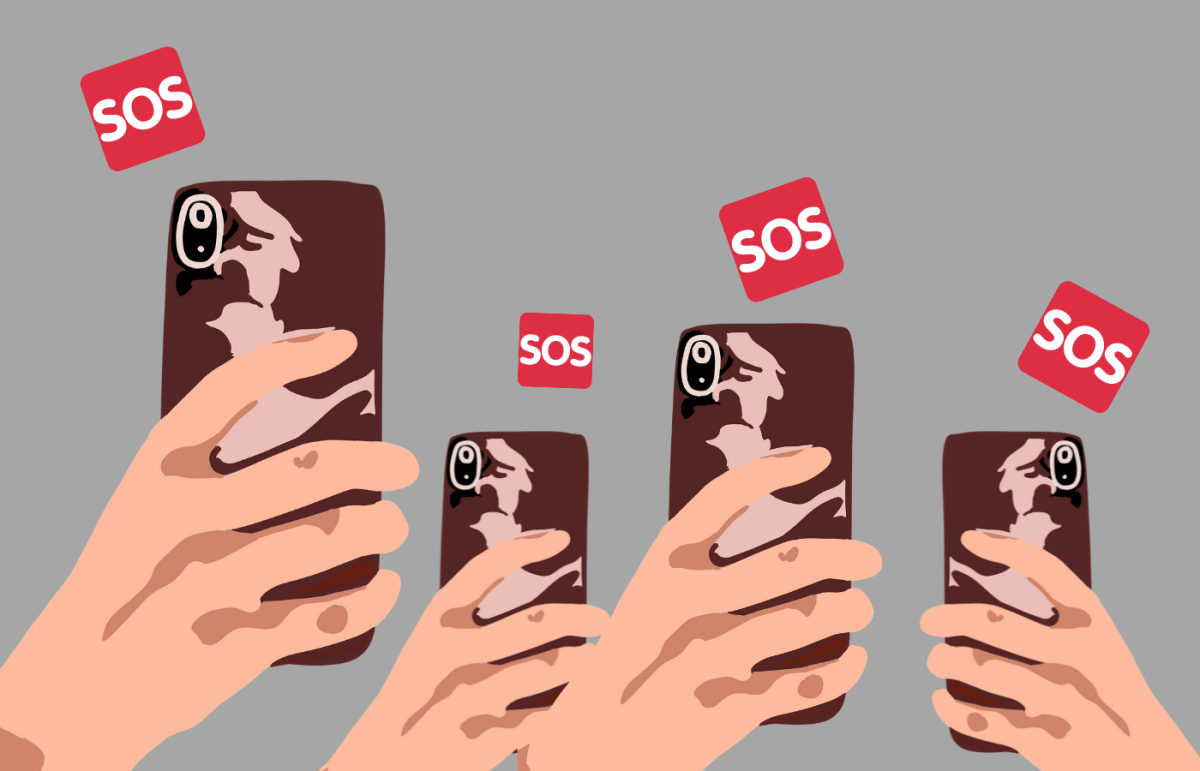
In their bid to help out, STV (@stvorg) amplified the availability of resources like hospital beds, ventilators, oxygen, and even tiffin services on its Instagram account. The team gathered information through Twitter handles, personal contacts and other youth organisations, and grouped resources by city or state. They called each hospital and oxygen supplier personally to verify details before posting it. On a backup account (@stvorg_backup), a colour-coded list of resources was regularly updated – green for hospital beds, grey for ambulance services, yellow for food and blue for oxygen.

The motivation behind this venture? Nandini Nimodiya, 17, a member of the Crisis Team answered, “We are all students stuck at home. Social media is the only power we have.”

The team started with two-hour shifts but had to dial it up to five-eight hours due to the number of requests. Each day, STV got approximately 100 leads for different resources from all over the country. Out of these, half got exhausted by the time they called to verify. But of the remaining 50, STV was passing on 15-20 resources to people messaging for help.

“Even if we’re able to save one life at the end of the day, it makes everything worth it,” said Anand, 19, founder of STV, adding that they managed to help roughly 15 people daily.

The group made use of the latest ‘guide’ feature on Instagram, creating city-wise guides for all essential services. A guide is a collection of posts from various accounts that have information about a particular city’s resources. Followers of STV found this specific and timely. Shreya Joshi, 22, a resident of Pune says, “I wanted to find an oxygen concentrator for my father.  All the contacts I had were busy or switched off. That’s when I found  STV’s ‘Pune Guide’ on Instagram. It directed me to verified suppliers, and I got what I needed.”

STV started making city-wise guides when they realised that residents of small towns did not know whom to contact for resources. They started with major cities like Pune and Delhi but have compiled 12-city guides so far. They have even expanded to state level guides, with over 15 state guides in place, including Chhattisgarh and Uttarakhand.

STV’s expansive list of resources has helped make it a fast-growing account on Instagram. Over the course of five days, the number of followers shot up from 1,200 to 10,000. Currently, they’re reaching 11,100 people via social media.

Since the number of SOS calls has decreased, STV is now devoting time to spreading awareness about COVID-19. This is a major part of its threefold mission statement ‘Action-Advocacy-Awareness’. The volunteers are making informative posts on topics like ‘Covid and pregnancy’ or ‘mental health in Covid’. STV held its first online mental health event ‘Horizon’, where it partnered with certified psychologists to provide three days of free counselling sessions, seminars and workshops. This was followed by an online concert where young artists came together to unwind.

The team consists of 45 members between the ages of 16 and 20. Of the 45, 20 members have been completely devoted to the Covid crisis. Fifty additional volunteers were also roped in to help. Most of the members are from Mumbai and Pune, followed by a few in Andhra Pradesh and the Northeast. Over the past few weeks, STV has also managed to recruit volunteers from Karnataka and Kerala too.

Around 85% of the team is made up of women, with an all-girls core team. A point of grievance for these young girls is that they are often misgendered by people who contact them. They are addressed as ‘sir’ or ‘bhaiyya’. “We tell them we are women led, and that they can call us ‘ma’am’ or ‘didi‘,” says Nimodiya.

Project S.A.F.E (@project_s.a.f.e) is another all-girls organisation that has been amplifying Covid resources, specifically in Pune. This team consists of five girls from the Pimpri-Chinchwad College of Engineering. The girls spent all day finding resources – except from 3 pm-5 pm, as that’s when they were writing their exams! These engineering students collaborated with their friends interning at medical colleges to provide people with accurate information about availability of beds and medicine.

With 20 requests daily, at least 15 patients were guided to the required resources. Devika Chopdar, 20, founder of Project S.A.F.E says, “I didn’t know social media could have such a huge impact. So far, my profile has only been about myself. Seeing people receive life-saving facilities through it is a new experience.”

These local Covid helpers received a request for a ventilator bed at 1 am one night. None of the hospitals were answering their phones. Project S.A.F.E then circulated the request on social media. Within the next one hour, the Pune online community procured a ventilator and passed this information on to the critical patient.

Student communities across the country stepped up to fight the second wave. Delhi University’s Miranda House created a Covid helpline to assist residents of Delhi with quick updates on resources. A group of 22 student artists and poets from all over India came together for a night of music and poetry titled, ‘In The Dark Times There Will be Singing’, and raised Rs 1,47,000. All funds were donated to communities hardest hit by the second wave of COVID-19. Generating finances, even from outside the country. US-based Princeton alumnus Shreyas Lakhtakia and Julu Beth Katticaran, offered career counselling sessions to raise money for Covid charities in India.

The Indian student community that aided the country in its hour of need is here to stay and is only growing stronger. Even the girls of STV are planning more posts, events, and community building in the months to come. All while preparing for the upcoming Class 12 board exams, of course!

Featured image credit: antiopabg/Pixabay; Editing: LiveWire

This article has been republished from LiveWire with permission of the author.

Aditi Dindorkar is a second-year student at Ashoka University. She is pursuing a major in English and Creative Writing, and a minor in Media Studies. This report is written as part of her course, Introduction to Newswriting and Reporting.

We publish all articles under a Creative Commons Attribution-Noderivatives license. This means any news organisation, blog, website, newspaper or newsletter can republish our pieces for free, provided they attribute the original source (OpenAxis).

Categories
Issue 12

Censorship in India and the Abolition of the Film Certification Appellate Tribunal.

On April 4th, the Film Certification Appellate Tribunal (FCAT) was abolished by the Tribunals Reforms (Rationalisation and Conditions of Services) Ordinance, 2021. This Ordinance abolishes several tribunals and hands over their functioning to the High Courts (why anyone would add to the High Courts’ already burgeoning burdens is a discussion for another time). The Ordinance was earlier a Bill introduced in the Budget session of the Parliament this year, but since it wasn’t considered and therefore not passed, the Centre brought it into instant force in this way.

The FCAT, set up under the Cinematograph Act, 1952, was the last stop for filmmakers who did not agree with the decisions of the Central Board of Film Certification (CBFC). Often colloquially dubbed the “Censor Board”, the CBFC’s guidelines and suggestions for cuts have occasionally been met with distaste from filmmakers. If the CBFC’s Examining Committee did not pass a  film, it went to the Revising Committee. And if the filmmaker was dissatisfied with the recommendations or decisions of both bodies, they could approach the FCAT. Generally, it was found, the FCAT ruled quickly and in the filmmakers’ favour.

The ostensible reason for the abolition? To create a smoother process, to save resources spent on infrastructure that wasn’t able to sustain itself. It is true that many tribunals have been suffering from indifferent members and numerous vacancies. But the FCAT’s committee/jury, though headed by a retired judge, consisted of professionals from the film industry as well. This meant that the filmmakers who took their grievances there could be hopeful of being heard by people who knew exactly where they were coming from and had an understanding of film. Sharmila Tagore, who headed the CBFC from 2004 to 2011, had even made suggestions to strengthen the FCAT, hoping that it could also entertain the various film-related PILs that are filed in the courts. But instead, it has been abolished.

The blow, as always, will be felt by the smallest filmmakers with the least resources. The FCAT charged an affordable fee to view the film and to hear both sides of the dispute. Filing a case in the High Court is far more expensive. Additionally, with the number of cases the High Court deals with, it is entirely possible that arriving at a decision will take much longer. While large production houses might be able to afford the delay, it will be death for small films that depend on a quick release to recover their costs.

It is also important to remember that, unlike with the strictly legal High Courts, the FCAT could view the film as a work of art as well. That meant that the jury would also consider how the CBFC’s recommended cuts would affect the film as a whole. It is tough to imagine that in the High Courts such considerations would be made at all. Judgements will naturally be arrived at based solely on legal grounds.

*

In truth, the abolition of the FCAT is being seen as part of a series of efforts on the part of the establishment to restrict filmmakers’ free artistic expression. Since the beginning of the year, two big cases have confirmed this belief.

In January, the release of Amazon Prime Video’s web series Tandav was met with an uproar from several members of the BJP. MP Ram Kadam claimed scenes featuring actors dressed as Hindu gods hurt (his) religious sentiments. Another member of the BJP, Kapil Mishra, angrily said Tandav was “spreading massive hate”; it is useful to point out here that Mishra himself made several hate speeches last year during the Delhi riots. Tandav’s makers and stars were subjected to at least two police complaints, and given increased police security.

In March, the National Commission for Protection of Child Rights (NCPCR) sent a notice to Netflix asking it to stop streaming the series Bombay Begums because of a scene in which a teen is shown taking drugs and then losing consciousness. This move followed two tweets by viewers of the show who claimed the series did not portray children correctly. In their notice, the NCPCR referred to “the inappropriate portrayal of children in the series” as grounds for removing the show from Netflix.

Neither Netflix nor Prime Video took their series down, although promises were made to make cuts to Tandav. For these events to be followed by the dissolution of the FCAT – it becomes clear why it seems like more than a simple coincidence. 

*

Film censorship has long been a contentious issue in India. The current charged political climate has only brought it into greater relief. Most supporters of free speech agree that censorship cannot exist in a true democracy. In January 2016, the government instituted the Shyam Benegal Committee to inquire into the functioning of the CBFC. The Committee’s report recommended a more progressive view on the certification-versus-censorship debate and upheld artistic freedom. However, the report has since been entirely forgotten.

What is worrying is that what were earlier fringe outbursts are now becoming mainstream. In 2016, the CBFC demanded over ninety cuts in Udta Punjab, which it claimed portrayed Punjab and its drug problem negatively. This caused a brouhaha that died down once the Bombay High Court cleared the film with one cut.

In 2015, the CBFC denied certification to MSG: Messenger of God, directed by Gurmeet Ram Rahim Singh, a religious leader since convicted of rape and involvement in murder. Singh went to the FCAT and the High Court of Punjab and Haryana, both of which cleared the film.

In 2017, Lipstick Under My Burkha (directed by Alankrita Shrivastava, who also made Bombay Begums) was refused certification by the CBFC. In a badly written statement, the CBFC – then headed by Pahlaj Nihalani, an open supporter of the BJP – described the film as “lady-oriented” and condemned it for displaying the sexual fantasies of women. Shrivastava took the film to the FCAT, which cleared it with a few recommended cuts. Shrivastava said, “Of course I would have loved no cuts, but the FCAT has been very fair and clear. I feel that we will be able to release the film without hampering the narrative or diluting its essence.”

Shrivastava’s words are clear: the FCAT was a filmmaker’s last resort against the restrictive recommendations of the CBFC. Obviously, the CBFC itself needs to be re-evaluated and have its existence questioned for many reasons (as Varun Grover, who was “absolutely delighted to know about the scrapping of FCAT”, tweeted, “Next logical step, scrap CBFC”). In the meantime, though, it is crucial to note the importance of the FCAT, whose sudden dissolution is both upsetting and dispiriting.

Photo Courtesy: Prime Video

Sahir has a BA in English from St. Xavier’s College, lives in Mumbai and writes about the movies. 

Categories
Issue 11

Examining India’s Falling Rank on the World Happiness Index

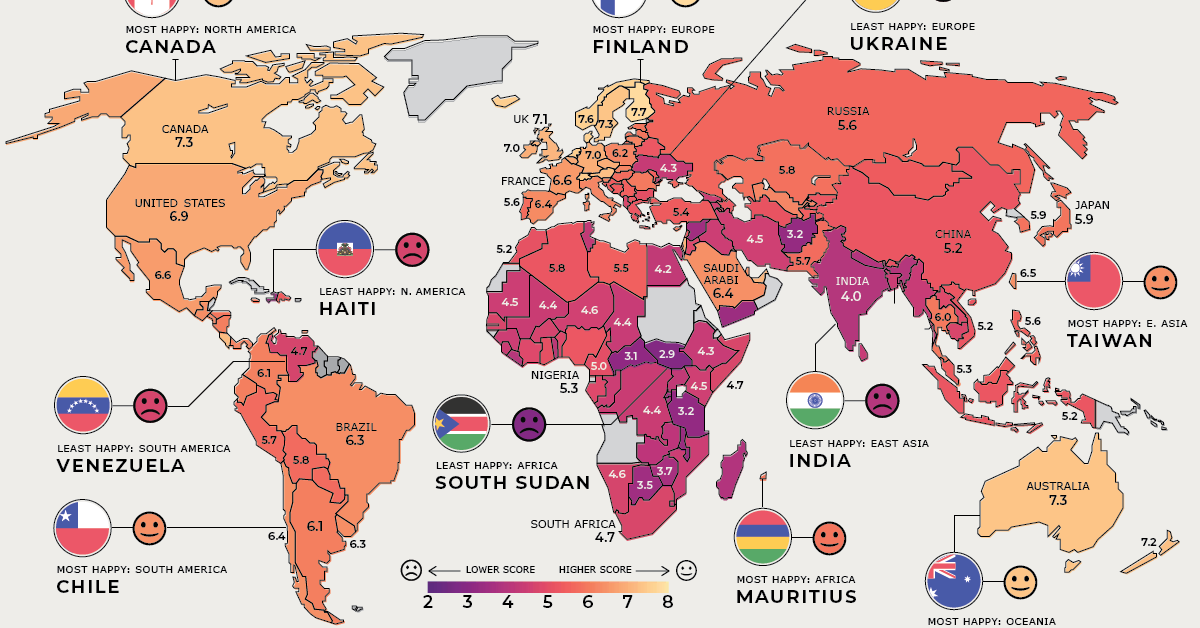
Sydney J. Harris rightly said, “Happiness is a direction, not a place” and today all economies in the world are struggling to walk in this direction. A step to achieve this was taken in the UN Sustainable Development Solutions Network in 2012 when they adopted resolution 65/309: Happiness: Towards a Holistic Definition of Development. This was done to invite the 149 member countries to measure the level of happiness among their population and use these numbers to guide public policy. Although the World Happiness Reports have been based on a wide variety of data, the most important source has always been the Gallup World Poll, which is unique in the range and comparability of its global series of annual surveys.

Finland has been ranked number 1, being the happiest country in the world for the past few years. India has always been very low on the happiness index, averaging around 125th. In fact, in 2021, India was ranked 139 out of 149 countries. The results of the happiness index are correlated with a lot of factors including GDP, social security, personal freedom, life expectancy and opinions of residents among others. 

As former President, Dr Pranab Mukherjee commented, “Despite our country’s economic progress, India is constantly going downwards in the happiness index. This indicates a lack of a holistic approach towards development.” According to him, the best step that the policymakers of the country should take is to adopt the ‘triple bottom line’ accounting framework. It focuses on all essential aspects of holistic development of individuals including social, ecological and financial development. This also implies that happiness is weakly correlated with wealth and the economic growth of a country. 

According to the economist and author Jayshree Sengupta, India has been ranked poorly on the happiness index due to various reasons. Some of these are rapid urbanization and congestion in cities, concerns about food security and water safety, rising costs of healthcare, women’s safety, and environmental pollution, which itself is linked to poor mental wellbeing. These conditions have worsened over time and were amplified due to the Covid-19 crisis. 

The ever-growing inequality between the rich and poor of the country is another crucial reason for the chronic unhappiness. During the Covid crisis,  India reportedly added 40 new billionaires to the global list while about 57% of the working class in the country were on the verge of losing their jobs. This growing pay gap in the population has worsened the mental wellbeing and hence the happiness of the population. 

A statistical exercise using variables like GDP per capita, social support, healthy life expectancy, freedom to make life choices, generosity, perceptions of corruption and dystopia was done to understand the relationship of these indices with the happiness index. It found that all these variables are statistically significant and thus have  significant explanatory power. They  illustrate that on average richer countries fare better on subjective evaluations of life circumstances, as do nations with more social support, lower levels of corruption etc. 

Why India, despite its high level of economic growth ranks so low is because it ranks very low on some of these indices. For social support, India is ranked 142nd out of 149 countries. However, if we consider Pakistan’s ranking on all of these individual indicators, it is very similar to India and worse in some cases. According to this, India should be ranked one spot above Pakistan but that is not the case. Pakistan is ranked 105 while India is ranked at 139. This points out to predictive anomalies that this model has. 

One reasonable explanation for this could be that people in India have higher expectations and thus also have greater disappointment. This is one of the very crucial reasons for the low happiness ranking in India in addition to the increasing income inequality and feelings of injustice and unfairness because of the structure of the society and its history. Thus, better political leadership and public policy framework in India are essential for improving the happiness index of people in India. 

Picture Credits: Visual Capitalist

Aanya Poddar is a third year undergraduate student at Ashoka University. She is pursuing a BSc. (Honors) in Economics and Finance. She is the President of the Ashoka Economics Society.

We publish all articles under a Creative Commons Attribution-Noderivatives license. This means any news organisation, blog, website, newspaper or newsletter can republish our pieces for free, provided they attribute the original source (OpenAxis).
Categories
Issue 10

Menstrual Health in Rural India

The nationwide lockdown that was declared in March 2020 to limit the spread of COVID-19, had a number of social and economic consequences. India faced a massive crisis of reverse migration of labour from urban to rural areas, rise in unemployment and a massive economic slowdown. Amidst this, another setback that became visible only much later was the rapid deterioration of menstrual hygiene, especially in rural and peri-urban regions of the country. Articles published in the first few months of 2021 highlight  how the pandemic has influenced menstrual hygiene, particularly with regards to reduced accessibility and affordability of hygiene products and hence an increase in health problems associated with it. 

The main issue that these articles describe is lack of access to sanitary pads. Government schemes that provide sanitary pads were disrupted at different points along the supply chain, ranging from the unavailability of pads to the closure of schools, which earlier acted as distribution points for these products . Other sources of sanitary pads, namely ASHA and Anganwadi workers, also faced similar shortages  and hence were unable to distribute them as they usually did. Finally, the loss of employment especially in the informal sector left many families with very limited, if any, income to make ends meet , which resulted in sanitary pads becoming a “luxury item” that were abandoned in favour of “essentials”

The  mainstream discourse in India, claims that the main hindrance to menstrual hygiene in India is either the unavailability or the unaffordability of sanitary products by  women in rural areas. This assumption is based on a study conducted by Plan India in 2010 which states that only 12% of all women in India use sanitary pads and the remaining 88% use unsanitary means of managing menstruation. However, not only are these numbers highly contested by multiple studies that have followed, but the assumption that any method apart from the use of sanitary pads is unhygienic is also deeply flawed. The National Family Health Survey (NFHS) data finds that 58% of women use hygienic means of managing menstruation, and a large proportion of these depend on the use of cloth. 

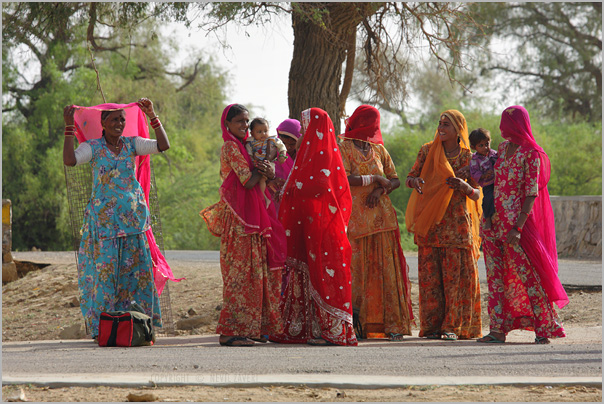
While the need to improve affordability and availability definitely does exist, this is far from being the main barrier to menstrual hygiene in the country. Rather, there are multiple pressing challenges that are far more prevalent and damaging. To begin with, most women do not have access to clean toilets and changing spaces, which is one of the most common reasons for infections to fester. In addition to the lack of infrastructure, social taboos also indirectly contribute to the spread of infection. For cloth to be a hygienic method of managing menstruation, it requires frequent washing and drying in sunlight. However, due to the taboo associated with these clothes being visible to others, many women are either not allowed to or are themselves ashamed to dry them in the open. Instead, they resort to drying them in small hidden spaces that tend to be damp and dark, which rapidly increases the chances of infection due to bacteria build up. 

Government schemes too are based on the assumption that menstrual hygiene can only be ensured through the provision of sanitary pads. Central government schemes such as a the Menstrual Hygiene Scheme and the Rashtriya Kishor Swasthya Karyakram (RKSK), while in theory aim to promote menstrual hygiene as a whole, in practice only promote interventions that “increase awareness of access to sanitary pads”. State government schemes also follow the same trajectory, either by distributing pads or providing funds to buy pads. However, these programs are quite inadequate as data shows that women only receive 5 or 6 pads every month, which is simply not enough as 12 to 20 pads are required to manage a single menstrual cycle. 

The state’s emphasis on sanitary pads above all other forms of menstrual hygiene, without the ability to provide enough, is not only economically expensive and environmentally unsustainable but also weans women away from traditional methods such as cloth without providing a viable alternative. Further, the solution is also ineffective as it does not address larger issues such as lack of infrastructure or restrictive social stigmas, both of which are systemic problems in ensuring menstrual hygiene in India. Any solution that hopes to be effective must take into account and attempt to combat these issues in order to improve menstrual hygiene as a whole should be made. 

While acknowledging the flaws in the social system that we operate within, namely the taboos and stigmas that drive people, it is also equally imperative that one acknowledges and leverages the strengths of the same social system to improve the existing conditions. This could be done in a number of ways. For instance, there are festivals in multiple different cultures across the country that celebrate the start of menstruation for a girl child, such as Mithuna Sankranti in Orissa or Ritushuddhi in Karnataka. Instead of depending solely on logic or scientific rationale to combat existing taboos that view menstruation as shameful or unimportant, drawing on existing cultural traditions that celebrate the process would be an effective method as it is rooted in people’s sentiments and beliefs. 

This process of addressing wider issues of physical infrastructure as well as cultural mindsets rather than limiting the scope of menstrual hygiene to simply promoting the use of sanitary pads can also be extremely beneficial to the environment. If women are provided with clean and private changing spaces and the acceptance to wash and dry their menstrual products, cloth pads can become a safe, hygienic, inexpensive and sustainable method of managing menstruation. 

Further, to make its implementation more successful, environmentally sustainable solutions can be propagated without framing it as such. Cloth pads, for instance, are preferred by women in rural areas due to their low cost, comfort, and familiarity. Studies show that concern for the environment is not a major reason for women preferring cloth. Therefore, if it is propagated as a method of sanitary hygiene in a way that appeals to the users, without necessarily presenting it merely as a sustainable solution, the chances of its uptake increase significantly. 

It must be recognized that both the hindrance as well as the solution to improving menstrual health in India is not limited to access to and affordability of sanitary pads. The problem is a far more systemic one that calls for seeing menstrual health not as a women’s issue but as a public health issue. A solution that employs a multi-pronged approach involving financial, infrastructural, and cultural interventions that are mindful of current social structures can be economically and environmentally sustainable as well as produce better health outcomes. 

Ananya Rao is a fourth year student at Ashoka University studying anthropology, environment studies, and political science. In her free time you’ll find her either painting, writing, or exploring the outdoors

We publish all articles under a Creative Commons Attribution-Noderivatives license. This means any news organisation, blog, website, newspaper or newsletter can republish our pieces for free, provided they attribute the original source (OpenAxis).

Categories
Issue 9

WhatsApp With India’s Travel Plan?


Share the pain

April 1 2020. Within days of India’s first national lockdown, my WhatsApp pinged an ‘RT Action Group’ invite. 

Soity Banerjee, travel journalist and long term lead at Outlook India’s Responsible Tourism Initiative, quickly brought together a pan-India group of hundred members on Whatsapp.  Most were tour operators, running or selling a multi-terrain niche travel business in India, with some attention to responsible travel. A few other invitees were from sectors travel people work with such as craft, heritage, artist collectives, social media influencers, conservation specialists and rural NGOs. Many were e-meeting each other for the first time. The Whatsapp group call was to, “please share any good ideas being tested to help small travel businesses and individuals: for the protection of communities & for the future (when the travellers come back and they will!).”

 After a pandemic announcement that made human touch life-threateningly infectious, this call tried to put a human touch back into this community – one that was not new to handling delays or crises with a smile. This time though, the travel vehicle had braked the hardest, with an all India STOP sign staring it in the face. 

Posts across April on the group tried to reverse that car in spirit, in two ways. All useful media links that eased our uncertainty were shared immediately. I tuned in, perhaps for the first time, to the immediacy of the business side of travel – stranded visitors were trying to head home through cancelled flights, inter-state borders, airports and trains were shutting overnight, varying quarantine and international travel advisories were being meted out. Whether you were a hotel in a mountain valley or a rural retreat, expenses had been hit hard and a hibernation mode had only just begun.

The group shared information from as far as Costa Rica, on how a particular Responsible Tourism initiative put out timely FAQs, using prepaid reservations to pay staff salaries in the short term and let the travellers who had paid know about it. Without displaying any panic, posts on the group also conveyed the stark scale of human and material resource crunch in their own region, both rural and urban.

Secondly, the group displayed an ‘all hands on deck’ energy to aid the people that travellers and tourists meet, but often forget. Singers, artists, camp hands, drivers, cooks, front desk managers, tour escorts were all people currently out of work. The response of the group was specifically to laud and encourage field effort and support them in their time of financial need. 

In the national capital, alongside several initiatives, the team running the popular Café Lota New Delhi ran a free community kitchen for migrants trying to leave Delhi and Gurgaon. On her Instagram, travel influencers like Lakshmi Sharath forefronted ten calls of help, every day. These initiatives were both spontaneous and coordinated, often which ordinary citizens could contribute to.

Building on the NGO Anahad Foundation’s idea to pay 300 statewide rural folk artists for daily live performances on YouTube, the Rajasthan state government started a similar scheme for artistes to upload phone performances from home and earn a one-time Rs 2500 grant.

Within days, Soity led her team in circulating an RT Covid 19 Action Plan document with immediate relief measures, travel-related initiatives and future plans, including perspectives on what post-Corona travel might look like. By now, hotel chains too had begun sharing CoVid 19 protocols and practices.

India’s Ministry of Tourism, in a reply to a Lok Sabha question, confirmed only in December 2020 that foreign tourist arrivals were down 97% from April to December 2020, compared to 2019. But within the first few days of April, the Responsible Tourism community grasped the toll this absence would take and stepped up to support the vulnerable through April itself. 

Adapt and act?

Could a scramble for survival lay the ground for another model of tourism to thrive?

 By May 1, posts began wondering aloud.  Would a tourist now fearful of human contact choose to detour to uncongested spaces? The viral success of Facebook groups like View from my window was reflecting a worldwide human longing to turn to an uncongested view, if not towards nature itself. Webinar meetups with community members from Ladakh to Lakshadweep spoke honestly of rethinking resilience. Meanwhile, the World Economic Forum Forecast was beeping, ‘it could take 10 months for the industry to recover’.

The United Nations World Tourism Organisation, primed with promoting responsible and sustainable tourism, circulated a document Supporting jobs and economies through Covid 19. A World Bank blog post pointed indirectly to the outer circle of managed nature tourism when it suggested, ‘Restoring degraded forestlands and landscapes could create many jobs over the short term while also generating net benefits worth hundreds of billions of dollars from watershed protection, better crop yields, and forest products. In Ethiopia, for instance, the Humbo Assisted Natural Regeneration Project increased local incomes and helped restore 2,700 hectares of biodiverse native forest, boosting carbon sequestration benefits. More tree cover also reduced local drought vulnerability.’

Despite no ‘industry package’ by the Central Government for the travel sector, by mid-September, this RT Action Group had completed a feedback loop and submitted a recommendation to the Ministry of Tourism on its draft National Tourism Policy 2020. By New Year 2020, there was an uptick in self-driven holiday numbers, and for the first time the all India Stop signal was perhaps now on yellow. But was there any evidence that an Indian tourist, fresh from worry and work from home, had hit pause on older ways of travel?

P.S. It will be a year soon since this WhatsApp group came to be. I now habitually check its notification pings. As a media academic, I marvel at how fake-news-free a WhatsApp group can be. When I think of this year I think of the time when nature’s breathing space for species other than humans became too visible, the ongoing loss of human life became too acute, and the claustrophobia of the home-stuck too real. In these times one is reminded not of luxury travel, but of the fact that travel itself has been an unexamined luxury. And now to travel responsibly – luxury or not?

Tisha Srivastav teaches media studies at Ashoka University.

We publish all articles under a Creative Commons Attribution-Noderivatives license. This means any news organisation, blog, website, newspaper or newsletter can republish our pieces for free, provided they attribute the original source (OpenAxis).

Categories
Issue 9

Personal Lives and Private Bodies: The State’s Vested Interest in Heteronormativity

According to the Indian government, there is a uniform model of what a marriage is allowed to look like, and any deviance from this standard is not to be permitted. On the 25th of February, 2021, India’s Central government argued in the Delhi High Court that granting same sex marriage the same rights as heterosexual marriages would be against the Indian ethos, and disturb the “delicate balance of personal laws in the country”. The argument went on to describe the Indian family unit as one consisting  of the biologically born man as “husband”, the biologically born woman as “wife” and the children born out of the union between the two. 

In a poignant scene in Greta Gerwig’s 2019 adaptation of Little Women, Amy is seen telling Laurie that marriage is an economic proposition for women; classical sociologists like E. E. Evans-Pritchard would agree. In the Nuer communities that Evans-Pritchard studied, marriage was a means to consolidate power across families, clans and tribes. Women were exchanged for cattle and other pre-decided gifts which could be returned in the event of a divorce (1951:128). The Central government isn’t wrong when they say that love isn’t part of the equation when it comes to marriage. But the petition is not about classical sociology or kinship structures, it is instead the less-than-radical claim that if heterosexual couples can have their relationships recognized in a court of law, all couples should be accorded the same legality, if they so choose. 

It is unsurprising that Nation-States feel obliged to regulate interpersonal relationships. A State needs citizens over whom to exert power in order to legitimize its own authority. The “Indian family unit” invoked by the government is a necessary model by which social reproduction can take place (Federici 2019). The biological production of children through the union of a husband and a wife will lead to them being raised into systems of citizenry where they unquestioningly abide by the rules of the State. Rules which dictate what kinds of authority cannot be challenged. 

In patriarchal societies, this tends to be the hierarchical power of men. The man performs his role within the structure of marriage in a position of authority over the woman. Titles such as “Head of the family” are easier to attribute when there is a singular man in power. Having more than one man or woman in an affinal relationship destabilizes simplistic divisions of labour and influence. If one’s role and position within a family cannot be determined simply by virtue of the gender they were assigned at birth, patriarchy quickly begins to lose its sheen. When this family structure is undermined, the Indian State, which is deep-rooted in ideas of patriarchy, can also be challenged. 

Another concern put forward by the government was that same-sex marriage was a Western idea that could not be feasibly translated into the Indian context. Apart from being factually incorrect (Advocate Awasthi, who represents the petitioners, was quoted saying that Hindu religious texts contain numerous references to non-binary figures and their conjugal rights), this is not a novel response to LGBTQ+ rights and their representation in the media. In response to Deepa Mehta’s 1996 movie, “Fire”, the then Minister of Culture described lesbianism as a “pseudo‐feminist trend from the West and no part of Indian womanhood”. The RSS added that the “ultra‐westernized elite resort to “explicit lesbianism and perversities to disintegrate the family à la western society,” all while failing to accept “male superiority as a natural course of things” (Dave 2011).

In 1998, peaceful protesters gathered in New Delhi to oppose the RSS’ violence in theatres that screened “Fire”. One particular poster caught the imagination of the nation. A woman confidently held up a sign that said “Indian and Lesbian”. The contention was not with the words Indian nor lesbian, but rather, the little “and” in between the two. It defied the binary of ‘us’ and ‘them’, of ‘Indian’ and ‘Western’, it presented an opportunity to be equally, and fully both. It put members of the community in a position of incommensurability, enabling the question of “What is now possible?”

Image source: AnthroSource- American Anthropological Association

In pursuit of their goal of a Hindu Rashtra, majoritarian organizations such as the RSS have long relied on “queering the other” to further their claims. This is done in order to harbour sentiments of fear and animosity towards these communities. “Muslims, Christians, and Westerners are oversexed; the Congress Party and secularists are eunuchs” (Bacchetta 1999:155). Playing on feelings of safety in familiarity and conformity, labelling your opposition as sexual deviants results in distrust and suspicion of them. These are sentiments that prove invaluable for groups trying to consolidate a vote bank on the basis of a hitherto marginal belief system. The State draws a distinction between the “docile citizen” (typically male bodies, through which traditional masculinity can be performed) and “victims of modern culture” (Alter 1993:57). By codifying which bodies are allowed to interact, and how—the body of the citizen, itself, becomes a theatre of political ideology. 


Rithika Abraham is an alumnus of Ashoka University’s class of 2020, with an Undergraduate degree in Sociology and Anthropology. She is interested in questions of migration, and how people interact with economic institutions around them. In her spare time, she enjoys watching bad romantic comedies, five minute crafts, and has recently taken to baking her own bread, and naturally dyeing fabric.

The author would like to thank her classmates, Mimi Healy and Tarini Monga, for access to the readings and archival sources required for this article.

We publish all articles under a Creative Commons Attribution-Noderivatives license. This means any news organisation, blog, website, newspaper or newsletter can republish our pieces for free, provided they attribute the original source (OpenAxis).