Categories
Issue 15

‘India can be a R&D centre for the poor to be sustainable’: Harish Hande’s decade as a catalyst

2021 marks a decade since Dr. Harish Hande was awarded the Ramon Magsaysay for social entrepreneurship. It also marks ten years since he started SELCO’s first Integrated Energy Centre at busy junctions across India. Excerpt from an Open Axis interview series, focussed on how path-breaking Indians are responding to the climate change challenge. 

Q: Can you please tell us about an innovative project you led in 2021? 

A: The projects we did this year mostly were on the health side, because of the COVID-19 pandemic. So, many of the public health centres in our country got powered by solar, leading to better reliability of electricity for both ventilators and oxygen, and maternal labour rooms. So, I would say those would be the most impactful programs we would have done this year. 
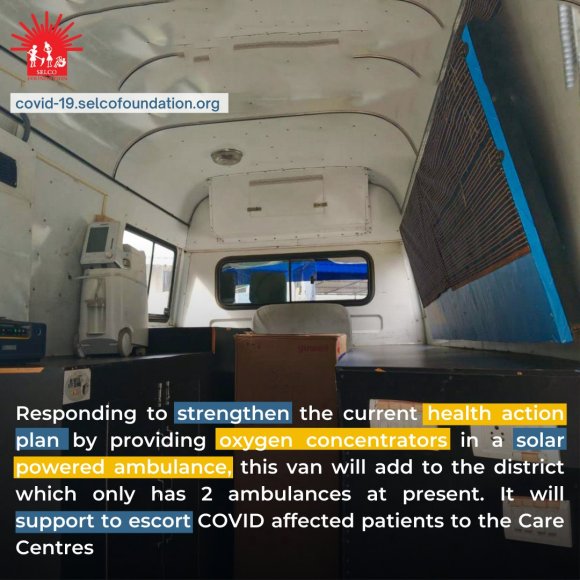
Image credit: SELCO Foundation

Q: In September 2021, SELCO partnered with the Union Ministry of Health, to provide solar health facilities in ten districts across five states. What is your vision for this project?

A: My vision is, the ten districts are just the first pilot phase. Hopefully, with the collaboration between the Government of India, SELCO, and the Government of Odisha, Karnataka, Meghalaya, and Manipur, would lead to at least twenty to twenty-two thousand public health centres in our country with reliable solar power. Moving the needle of sustainability between health and energy. That would lead to more number of centres across the country. So becoming a kind of an example for other countries to follow. Ultimately, we make sure that the 1.3 billion people of our country are able to access health in the most affordable and sustainable manner. So, this project is towards that goal.

(Note: Over the last one year in a range of other COVID-19 support, the Kumbharapada potters of Puri (Kumbharapada means the place the potters stay, in Odia) who made pots for devotees at the Jagannath Temple were stuck with zero-income during lockdowns. From ration kits for the most vulnerable among them and consultations with households on better market linkage, SELCO’s ground teams are also said to have offered quick turnaround to space constraint and resource crunch issues by making ambulances go solar, creating mobile swab vans for testing on the street in Odisha and in areas where there are no public health centres, getting solar hospitals up and running in less than a month.)

Q: Reports say the pandemic has increased inequality and challenges for the poor. What have been some of your observations in the field?

A: Surely, it has. Not only have the poor lost their opportunities, but they also do not have access (Says number one, as if counting mentally, making point by point) first to technology and have no options to work from home. While many of the people who have had the option to work from home, not only got their salaries, but also have reduced their expenses by not going to restaurants or movie theatres. Which in fact led to an increase in their savings. However, for the poor, it has been precisely the opposite because of the dire strait. Many of the poor had to sell their assets like their land or jewelry, because of the hunger in their house. So it has definitely led to an increased disparity. That is what concerns a lot of us more than just the pandemic — How do you make sure the 200 million Indians who went into poverty in the last one year, do have an adequate and equitable chance to come forward?

Q: How do you see the connection between poverty reduction and sustainable energy?

A: The biggest connect is, if we have to decrease poverty in our country, we have to have people get access to better health, better education, and better livelihoods. The most economical and socially sustainable programs are the ones using sustainable energy as a catalyst, to create appropriate access to health to the remotest families and provide ample livelihood opportunities. So that’s where the link is between poverty reduction, sustainability, and climate. How do we make the poor resilient to the climate crisis? A lot of the poor are poor because they don’t have access to essential services. Many of them are poor because of the onslaught of climate change that is happening day in and day out in their particular fields. That is where sustainable energy becomes a catalyst.

Q: You have always emphasised the difference between intellectual poverty and financial poverty. Could you please tell our readers more about this difference?

A: If you look at the farmers who have been farming for many years, who might be poor, but a lot of people do not consider them as Agri-experts. Because our expertise is defined on the education levels that everybody gets. But not on the experience somebody goes into. So a paddy farmer is much more of an expert than an agricultural professor in many ways. A car mechanic, in many ways, is much better than a mechanical engineer per se. 

So how do we define what expertise is in this country – it all depends on the paper education we all get. It is high time we went away from this whole concept of paper degrees and education and where somebody has qualified from. So, I think we need to get away from that competitive race which is not leading our country anywhere. So, how do we give honour and respect to people who actually have the experience, like the cotton farmer, the shop guy, the guy who does the ironing of clothes, et cetera? They are all experts. So…

Q: I wanted to ask you about your collaboration with the Karnataka Vikas Grameena Bank. Out of  615 branches, 170 of them in remote rural areas run on solar power since 2018. Could you please tell us the response of the people who visited the bank and work there?

A: One of the biggest challenges for people at the bank branches who work in the remotest areas is the unreliability of power, which actually leads to lack of linkages to the central database, providing loans to the poor who come to the banks. And number three, the uncomfortableness in the space, for the employees of the bankers, to actually stay there. And also save what was an extra burden on the bank, to provide inverters and diesel generators to these 170.

So they came up along with some colleagues at SELCO, with an innovative solution to provide decentralized solar systems to these banks, leading them to becoming very reliable and making services to the poor accessible. So that the poor did not have to come back again and again, making sure that their cost of transaction with the bank was reduced. Because, many a time, they would go to the bank and there is no power. So I think it is more the well-being of the staff, the reliability increased, there’s better disbursement of loans, leading to fewer hassles for the people and the clients that were coming to these 170 branches. 

Q: Could you tell us how the response has changed over the years?

A: I think not much. Because after that, COVID hit, because of which, the banking sector in the country itself has gone down. But I would say Karnataka Vikas Grameena bank (KVGB) has been innovative right from, not 2018 — but they started working in this from 1995. So they are a pioneering bank who started this whole concept approximately twenty-six years ago. So I would say it’s more than just 2018, and unfortunately, the success of KVGB bank is not very much publicized in India, though it is more known outside the country than in India. It was also the first bank in the world to finance solar, to its end users. 

Q: It has been ten years since SELCO’s first integrated centre was set up. Could you please tell our readers more about what one such centre does? 

A: So the concept of IEC – The Integrated Energy Centre (IEC) came up many years ago, saying that rather than the poor buying the solar panels, is there a way that they could rent out the services per se, right? So we put up IECs in front of temples, churches, mosques, and busier places, where when people stay there, want to go and see the god, takes about five or six hours, so you put your cellphone there and the cellphone gets charged, and there’s a solar water purification system that actually leads to, rather than buying 10 rupees of clean water somewhere, they get it for one rupee. So these are services that integrate energy centres, so you create livelihoods. In the evening, the flower shop owners can rent out the lights and give them back at 10 p.m. In there, there is actually a refrigerator in which the flower pluckers can keep the flowers overnight if they have not been sold.

So how do you create these livelihood centers run by solar, provide essential services to the poor in and around that community so that was the concept of the Integrated Energy Centre. Which could be done in these large floating population areas, whether it is the bus stand or the local markets that used to take place on Thursdays or Wednesdays. That’s IEC…

Q: So is it like a module that can change later to other needs? 

A: Yes, for instance, it can become a disaster room area, after floods. Photostat centre, think any services. It can be turned into a maternity labour room in 24 hours. 

Q: Like the Covid hospital you built?

A: Yes, a hospital can be built in 14-21 days, that’s the beauty of solar, you can get it when you need it.

Q: How is your organization, SELCO’s work, aligned with the global discussion at the Glasgow CoP26 Climate Change conference? 

A: I think (quiet for a moment, nods head and disagrees) I’m not sure it is linked, it may be linked but overall, countries that are contributing to greenhouse gases for so many years have to take more responsibility. We are pushing that India can be an R&D centre for the poor to be sustainable. That’s what SELCO is pushing for development, sustainability, and making the poor climate-resilient, using India as an R&D centre, in a manner that the poor Africans, Latin Americans, as well as Southeast Asians could then replicate what India is doing. Linked to climate change, linked to CoP26. But I think CoP 26 is still not grounded — it still talks about a lot of things in the air.

India is doing a lot more than just creating a grid. India is looking at the health-energy nexus, livelihood-energy nexus, education-energy nexus, gender-energy nexus. It is much more than just providing a solar grid. India is also doing a lot in the agricultural space, animal-husbandry space, resilient micro-business space. There are individual programs happening in different parts of the country, trying their best to make sure that the poor of this country are climate-resilient in terms of getting access to essential services like health, education, and livelihoods.

So I think it is just more than from the supply side that one needs to look at. It is not just about the solar grid. We need to look at it from a demand perspective. I think there are programs in India doing much more than just what the COP 26 is telling, it is more than that.

Image credit: SELCO Foundation.


How access to solar impacts girls and women run home businesses like sewing.
Image credit: Twitter/HarishHande
Image Credit: Twitter/HarishHande.
SELCO’s Integrated Energy Centre, a space to run businesses powered by solar energy.

Q: India plans to put forth its One Sun One World One Grid (OSOWOG) idea at the Glasgow Summit. India aims to have a global solar grid. Since you have been in this sector for many years, do you think this will work? 

A: I would break it into two parts. I think it’s about using the sun, as one source, and the grid need not be one grid per se, but individual people using their own way to do solar. Whether I need a smaller solar panel, he or she or a factory needs a larger solar panel, so, as long as we have one sustainable source, that is equivalent to having one grid, but having it in a decentralized fashion is what I would push for. Because if I have to look at a blacksmith who needs a smaller solar panel, while a silk weaver who needs a different solar panel per se, but they all are using solar energy to provide for their needs, I do not need to connect them by wires. It is like a little more modified way of thinking of mobile and telephones, for example. For example, no wires are connected, but communications are one. So I would push that agenda forward, saying that there is one source: the sun, but very different ways of reaching it out.

Image credit: Twitter/HarishHande
In Devanahalli, Karnataka, under solar-powered lights, mulberry silk production management. 
Image credit: SELCO foundation. 
A blacksmith using solar energy in Assam. 

Q: How can governments or communities change their attitude to decentralised renewable energy? 

A: I think more than the government; individual citizens need to change. We have relied too much saying that the government has to do it. I think what are the individual citizens in this country, especially the middle class and upper-middle-class, they are the biggest polluters, they need to change. They need to be more sustainable rather than living on the subsidies of the poor. I think it is high time that the middle class and above class took responsibility for our country or for that matter any country, and ask what is our goal of sustainability?

The wastage, I think, for example, we should collect garbage from everybody’s house, and they need to pay according to the weight of the garbage they have created. I mean, in a decentralized fashion, pay for what you are doing. You might get water in this Bisleri, but the poor have to pay for the disposal of your bottle.

And that’s exactly why unless every citizen of any country takes responsibility and that can only happen in a very decentralized fashion, where you create decentralization of decision-making and democratization. And one of these solutions is distributed renewable energy. So, you break away from these centralized power structures, including electricity. 

Q: In your Linkedin profile, you have mentioned how you spent 3-5 years trying to get a Masters and a PhD, that you are not sure has come to any use. What kind of courses need to exist in the college curriculum to talk about renewable energy?

A: The first thing is that we should stop the whole concept of exams. Exams make no sense. What are you examining against? 

So I would say, how do you create a program or a project-based or experienced-based education for kids, rather than examination. Do theoretical, theoretical is as important as practical, but do theory on the field. I mean, if somebody wants to study rice paddy, go and do paddy field work for like six months. If you want to study a street vendor, be a street vendor for a year, along with other street vendors. As we study more, we become less useful to society. So, I think our expertise is a fallacy and an absolute waste of time. I would push the youngsters to be on the field all the time, on the roads, on top of the mountains and start doing it rather than writing about it.

I mean, writing is the easiest. I mean Facebook, Twitter, and all that. I mean, tell me how many farmers actually go – I have grown X number of sugarcane. I think it’s a very wrong way of publicizing oneself. So my only question, when people, professors ask me or tell me, or send me their resume, tell me how many people got impacted by one paper that you wrote.

Q: What do you think India is doing right in decentralising energy to end poverty?

A: We are a vibrant democracy. I can actually go to any rural part of this country and work with local banks, local civil societies, local NGOs, local entrepreneurs and enterprises. I think it’s not about what India is doing right or wrong. And I would say, as a country, we offer to the world, enormous opportunities for innovation, right from dry areas of Raichur to the wet areas of Meghalaya, to the terrains of Manipur, to the flat lines of Gujarat to the innovators of enormous options. That is why India is an R&D hub for the world in many ways.

I think that is where I would say citizens and many of the educational universities are not getting it right. We are creating a xerox of all students coming out. We are not teaching the kids to be taking risks, taking to be highly innovative and fail. If India has to get it right, the citizens and the academic institutions need to change and celebrate failures, not one or two successes. 

Image credit: Twitter/Harish Hande
SELCO Pvt. Ltd. and North Eastern Karnataka Road Transport Corporation (NEKRTC) create a mobile restroom for women using an old scrapped bus in early 2021. NEKRTC since July 2021 has become KKRTC. 

Note: The interview was done via a video conferencing tool on October 24, 2021. The order of the questions in this published version has been changed for better readability. Mr. Hande’s responses have not been altered, except the last two have been shortened for brevity. You can read more about his work here.

(Cover image credit: SELCO Foundation)

Cefil is a student of Mathematics and Environmental Studies at Ashoka University.

We publish all articles under a Creative Commons Attribution-NoDerivatives license. This means any news organisation, blog, website, newspaper or newsletter can republish our pieces for free, provided they attribute the original source (OpenAxis). 

Categories
Issue 15

Bittu Sahgal: “Young people want to protect the environment, but don’t have their hands on the wheel”

Institutionalised conservation efforts in India started with the enactment of the Wildlife Protection Act in 1972 and the launch of the Project Tiger – to conserve the apex predator and its habitat – in 1973. The then prime minister of India, Indira Gandhi, had already laid the foundation for these by hosting in Delhi the general assembly of the International Union for Conservation of Nature (IUCN) in 1969 and participating in the United Nations Conference on the Environment at Stockholm, Sweden, in 1972. 

As a young man in the 1970s, Bittu Sahgal, was attracted to conservation from its leaders such as Kailash Sankhala and Salim Ali. He started participating in the Project Tiger activities. Nudged by forester and conservationist Fateh Singh Rathore to do something more enduring, Sahgal started the Sanctuary Asia magazine, which continues to be published even today.

In addition to his schooling by the greats in the conservation field, Sahgal’s exposure to environmentalists and development activists such as Sunderlal Bahuguna, Baba Amte and Shivaram Karanth anchored his social concerns. Thus after years of championing the conservation cause, he talks about the need for conservationists and human rights activists must come together and “stop this bickering.”

To put words into action, Sahgal established the Sanctuary Nature Foundation, and has initiated projects such as ‘Kids for Tigers’ and ‘Mud on Boots’ to initiate the younger generation into conservation.

Mongabay:  I have with me pioneering environment journalist, editor, activist, conservationist, Mr. Bittu Sahgal. You have been publishing Sanctuary Asia since 1984 and environment journalism has gone through lots of changes. How has the environment journalism field changed over the decades? 

Bittu Sahgal: Well, the field has changed considerably, because our knowledge of the biosphere and our knowledge of human nature has suddenly changed. When we started out quite honestly, all we were looking to do was to save the large animals as an excuse to save large spaces. Project Tiger, for instance, it wasn’t the tiger, the tiger was just a metaphor. We knew that. I’ll never forget sitting down in a meeting where Kailash Sankhla was talking to us and said, look, don’t ever count tigers. You just see whether the water that used to dry in the month of November and December continues to run full. The streams run full till January, February, and March. And when they run full till June, then you know that everything is okay, the tigers will come back. 

So in other words, whether it was the tiger or the elephant or the rhino or the xyz or the great Indian bustard, a simple thing was that nature knows best. Protect the biosphere, protect the ecosystems, and everything will look after itself, because human beings are not the best tree planters, we are not the best caretakers, all we can do is be watchful, and just make sure nobody else damages it. And everything will be alright.

But of course, there’s much more to it than that, you know. You can well imagine with Baba Amte and Sundarlal Bahuguna, literally feeding us with news that okay,  we’re human beings. So we must make sure that those people living on the lowest rung are the primary beneficiaries of biodiversity restoration. It was a very complicated time because India had gone on an almost insane spree of destroying ecosystems in order to give human beings, I don’t know, it can’t be called livelihoods.  Everybody’s game then was, the World Bank’s game was, to raise people’s status to above middle class, make them as rich as you are, make them as greedy as you are, if you want to put it that way. And then, yeah, I suppose really what is required is that people like us have to reduce our consumption, not increase it. And people at the very bottom, they had to increase their consumption because they had no consumption. So it was all a very complicated thing, at one level you’re looking to save the biosphere and on another level, you’re looking to protect the communities that exist, who are living at the lowest, lowest levels of survival. 

And the greatest tragedy of my days, if you look at, if you really want to know what the problem was, it was that those fighting for human rights and those fighting for the biosphere, were unable to come together after the passage of the doyens of yesterday. Baba Amte, Sunderlal Bahuguna, Shivaram Karanth, all signed a joint appeal to the then Prime Minister, that said: “Baag Bachao Bharat Bachao” (save the tiger, save India). They knew that saving the tiger meant saving the sources of water, they knew that without saving the forests, the cultures will go. But today things are a little different. We’ve got a lot of work to do. But I’m sure there are many more questions we have to ask.

February 2021 and April 2020 edition of Sanctuary Asia magazine. Covers from Sanctuary Asia.February 2021 and April 2020 edition of Sanctuary Asia magazine. Covers from Sanctuary Asia.

Mongabay: So when you started, I’m sure that there was maybe less awareness. Because as you said, there’s far more awareness and far more feedback loops [today], because we do see these extreme weather events visiting us almost every year. Mumbai gets more than its share of floods almost every monsoon. It should be starting out in a few months now. But I’m sure when you started out and when you started talking about large species, large, charismatic species, did you face the criticism of being elitist? And then how has that transition happened over the decades? How did you sort of convince people of the policy and public impact of the work that you were doing?

Bittu Sahgal: It wasn’t just, I mean, the least of all the criticisms was that we are elitist. You know at one point in one of these meetings where I was playing that near-impossible role of trying to bring two sectors together – the human rights guys, and the guys protecting the biosphere – I was told that “You know, you elitist middle-class guys, you’re looking to protect the tiger.” So I said, look, I am elitist. I am middle class, I am the problem, I am everything. But show me one elitist tiger or one elitist elephant? Don’t you think that those creatures require to be protected because they are the gardeners of Eden? 

So at that time, somehow or the other, the thinking minds understood that it was not just to the economists and policymakers that we would address. We were together when it came to addressing policymakers on the impact or the negative impact of large dams. But we were still … it was my failure. It was my failure. You know, I could not convince people that worshipping the mahua tree makes no sense unless you also worship the moth in the back that pollinates the mahua tree, which the adivasis in Bastar did, they worshipped every creature, they worship the ants! So this whole idea of wildlife becoming elitist, it became elitist, possibly because of the fact that we were poor communicators, that there were very, very tight, sort of positions taken and human egos were very, very large. And let’s put it like this. The bottom line is, as of now, we failed India. My generation failed India.

Mongabay: I think that you’re just being very humble and modest and just saying this. We all know that through the years that you have been running Sanctuary and running campaigns through Sanctuary, you’ve had impacts on the ground, impacts in public perception, impacts in policy and policy level impacts. Do you want to share with our viewers a couple of one or two incidents where the work that you did through Sanctuary had an impact?

Bittu Sahgal: Well, I would say the first thing that happened in the mid-80s was that when we started Sanctuary in 1981, it was at the behest of Fateh Singh Rathore, who said that you city guys are no good. Really, when I asked him that, can you tell me what I can do to save the tiger? He said you guys are no good, go back to Bombay, have a few parties and come back next year, ask the same question. What are you guys good for? So that’s what launched Sanctuary. 

But when we launched Sanctuary, we discovered that there were some people who loved what we were doing, they were the minority. And a large number of people accused me of being a CIA spy. I’ve been accused of being a tiger bone trader by people to whom we were saying, please stop these tiger shows that are taking place in Madhya Pradesh and things like this, because you’re cornering the tiger and so on and so forth. So, there were these splits and divisions. 

But the elitism and the human rights abuses of the earliest protection of wildlife have substance because it was English-speaking people who spoke out largely because of the socio-economic situation in India, where people living in villages had no voice to start with, there was only Doordarshan when we started, there was no social media, no nothing else. So when you talk of environmental journalism at that point, just take the television out of the picture. Because you could only say at that point what Doordarshan agreed to have you say, All India Radio, but the journalists, they were thinkers, they could have used anything. You take Claude Alvares, Vandana Shiva, Medha Patkar, you take all these greats. You know Shivram Karanth used to write poetry. Sugatha Kumari, these were the greats! And journalism at that point of the nature that you spoke off with Claude Alvares.

Traditional journalism really came to its fruition when Dr. Manmohan Singh introduced and opened up the markets in 1990. All these industries that were now being told you can’t now operate because you’re poisoning, you’re killing, you’re doing this, you’re doing that, they all came to India. So we began to focus on them and saying that if you want to bring the capital in, then please bring the checks and balances which include environmental impacts, ecological impacts, allow those laws to be done. And to be fair, at that point, if you look at Indira Gandhi or you look at Rajeev Gandhi, then what you will find is that all the laws, the 1972 Wildlife Protection Act, CRZ Act in 1990, we had the best environmental legislation in the world, bar none. But we had amongst the worst implementation. So we kept on. It was just a question of keeping on. Gopi, it wasn’t a question of our being extra smart. It was a question of us being persistent. And the truth was on our side.

Bittu Sahgal started the publication Sanctuary Asia in 1981, after being involved with India’s tiger conservation efforts in the 1970s. Photo from Sanctuary Nature Foundation.Bittu Sahgal started the publication Sanctuary Asia in 1981, after being involved with India’s tiger conservation efforts in the 1970s. Photo from Sanctuary Nature Foundation.

Mongabay: I know you touched about it just now, how 1991 being one major watershed where, till then environmentalism was one shape – the Chipko, Silent Valley, Narmada, Ferkuva where there were people [protesting] – and then post 1991, it took another shape, because environmentalism itself sort of became a very middle class concern, because urban middle class grew in numbers, and the focus was on urban middle class and middle class concerns. So in one way, middle class was talking about the environment, but in another way, it wasn’t sort of picking up the issues, the real issues, they were picking up issues which they liked  to pick up, so how, how do you think we journalists can sort of try and find this balance in between this?

Bittu Sahgal: Even though there were two ends of the string, you know, real issues and issues that somebody wanted to pick up, the fact is, you pick up any thread, and you reach to the same place if you’re honest on the inside. And if you looked at the Chipko movement, what was the Chipko movement doing? They were saying, look, don’t cut these trees down. Because these trees are our life. These trees are our water, these trees are our forests. But the trees themselves were being looked after, the wildlife which managed to flourish in forests that they prevented from being destroyed. So, in a sense, the Chipko movement was one of the first and finest wildlife movements in India. 

After that came Project Tiger where, by that time already the wildlife trade had become such a huge thing. Tigers were being slaughtered. So there were people moved out, there were human rights abuses, that also became part of the journalists of yesterday, that how can you protect the tiger without abusing the human rights of those people living closest to the forest. 

There were many things, Gopi. It’s impossible to encompass in one interview, but I put it to you like this, that far away from let’s say, not very far away, far away from the heart of let’s say, tiger forests and elephant forests, there’s a place called Dahanu, the World Bank wanted to finance for BSES, a thermal plant of 500 megawatts, and it was heaven. Clean beaches, next to it a great forest, which were amongst the finest in India. And so I had filed a case in the Supreme Court at that point. And it was decided in our favour that the next 500-megawatt plant won’t come up. And that was the birth of the Eco Sensitive Zonation because around Dahanu, 25 kilometres came the order from the Supreme Court saying that for 25 kilometres, no other polluting industry, no mining but you could run chakkis, you could run cycle factories, you could do all the small things. 

Everything is sort of in upside down waves, and there are many, many more things than this, the CRZ, as I said, the Coastal Regulations Zone. In the 90s, we knew what was going to happen with carbon accumulation in the atmosphere. And we said the tides are going to get worse. And at that point, they allowed the legislation to go through primarily because I think not too many people were affected by that legislation, not too many large industries were affected. And then the tourism industry came in and said oh, we want to be right here, we want to do this, and we want to do that. So today, of course everything is being watered down. But all these things that were born in the 70s, 80s and 90s, at this point, the realisation has come in not because of any great thing we have done. But because of the hard evidence, a cyclone here, a flood there, a tsunami, an earthquake; because the reservoir-induced seismicity is a reality when large areas have flooded, we don’t know what’s happening or the Himalayan landslides that are taking place. 

So the shift of the younger generation and 50% of India is under 30 years old. So I think that they have greater investment and they have greater legitimacy to ask for a better future. And I’m not being humble. I’m being really sad and sorry; my generation was born doing nothing for freedom. And now we are colonising our children. And we are calling it development. And it’s not because people have got fangs and they want blood. It’s just that they don’t understand, they have not read the book, they have not understood that the economy is a wholly owned subsidiary of the environment. They have not understood this. 

So every time they go in and take a mangrove patch away from Mumbai or Thane Creek, they’re making sure that deep draft ships won’t come into the Mumbai port because of siltation. Every time they build roads, which should not be built in the Himalayas, they are going to destroy tourism because mudslides are going to take place.. Every time they put 100,000 crores of rupees into building large dams under the Himalaya. They’re stranded assets before they’ve even started or being finished. Because that the glaciers have melted, the river run data has changed, and so on and so forth. I think that like, you know, Gopi, evolution takes place, there’s evolution of minds, there’s evolution of purpose. And at some point, there will be an evolution of human beings who are called Homo sapiens, but I would call them Homo stupidus right now. Very stupid.

Mongabay: But are you seeing promise in the young generation? Because we are seeing climate action by very young people asking inconvenient questions, questions which the older people find unnecessary, irrelevant. But then these are the other questions that they need answers for. Because they’ll be facing the consequences of our actions in future.

Bittu Sahgal: I said earlier as well, the young people have the legitimacy to ask for a better world. And we run a programme called Kids for Tigers, which reaches out to a million people, we’ve been running it for 20 years. It’s a very butterfly touch. All we do is we say that, look, you can’t save the tiger, if you don’t save the forest, you save the forest, you’ve saved the water sources of more than 500 Rivers. And in the process of doing this, every time a bird drops a seed or an elephant drops seeds, and when they grow, then they’re pulling carbon down from the atmosphere and we are controlling climate change. We’re controlling floods, we are controlling droughts, and we are giving fertility to farms. 

So these connections, the young people understand but the young people don’t have their hands on the wheel right now. They’re just passengers sitting at the back. And their elders are taking the rear-view mirror out and saying, why are you looking back? They’re taking the brake out and saying why are you stopping progress from moving forward? And the young kids are saying, look, there’s a cliff over there, the car’s headed straight down, stop it, but their voices are not listened to because there’s glass between this young generation and my very arrogant, very ignorant, very avaricious, and very apathetic generation.

Bittu Sahgal with children in Pench National Park in central India. Projects such as ‘Kids for Tigers’ initiated several children into the natural world and conservation. Photo by Gaurav Shirodkar.Bittu Sahgal with children in Pench National Park in central India. Projects such as ‘Kids for Tigers’ initiated several children into the natural world and conservation. Photo by Gaurav Shirodkar.

Mongabay: But the hope is that at least some of the seeds that you have sown will bear fruit in decades to come. And it’s already [happening], there’s already voices coming. But I want to ask you about, a good amount of your work was on protecting species and that has borne fruit in the past few decades. But we keep hearing of a whole range of conflicts where humans have got into areas where there was wildlife, or wildlife is outside into areas where they were not there earlier. So how do you sort of see this bridge? Because I’m sure as an editor, much of the story ideas you get, would be on human wildlife conflict. And I mean, how do you look philosophically at this?

Bittu Sahgal: Well, I look at it as simple as this. In India, we say: “naa rahe baans naa baje bansuri” (if there is no reed there will be no flute). Young India will have to understand that it has no future unless and until it manages to restore the ecosystems, which gives the subcontinent life, all our cultures, all our music, all our dances, all our religions, all our medicine, it all came from nature. And unless we make sure that nature is supreme, everything else will be washed away, like matchsticks in a flood. So I would say to you right now that here is the situation. 

Project Tiger clearly had human rights abuses in the 1970s. I came into the picture in the mid-70s. But the fact of the matter is that there is no human right more essential and centric to survival, than the right to clean air, clean water, and safe food and soils that can produce food. So what the world is asking of us right now, and of young people are asking of this more so is that to stop this bickering, human rights and biosphere defenders must come together. And that is the only way we will change policy tomorrow. 

This reality is not just a question of young people and us talking, we’re talking to the economists. And we’re saying your natural capital is vanishing. It’s like “ameer baap ke ameer bete” (the rich sons of the rich father). They’re selling all the gold and diamonds and jewels and thrones and saying this is economics. This is not economics. A mangrove is an infrastructure. A forest is an infrastructure. A river is an infrastructure. A wetland, which is dry in summer and wet in the monsoons, is an infrastructure. Unless we accept it, unless the economists and planners and politicians and businessmen understand that you cannot destroy one infrastructure to build another, which is by any measure less valuable, then the economy of India is at the brink of collapse. 

There is no water left in India, there’s no water left in India, our aquifers are being poisoned, they’re being emptied, our glaciers are melting, our coastal aquifers are getting salinized because we are building too many dams and there is not enough water pressure to keep the salt water out. So at one level, there is this. But I don’t want to leave you, your generation and the generation after you with this world is coming to an end because the world will not come to an end, the world will not come to an end because nature is self-repairing. 

Unlike the Titanic, which sank even as people were playing Blue Danube in the stateroom. And even as the people in the boiler room were shouting, stop, stop, there’s something wrong, we got to do this. And on the deck, there were people who were let’s say, you know, the lifeboats were being washed away. The Titanic could not repair its own hull. But nature can repair everything. A dirty river will come back, a forest even while it is being cut, the bees and the birds and the monkeys are replanting. Everything will be alright. The only thing is that we’re making it very uncomfortable for the next generation. And I do believe that human beings will find the wisdom to stop doing what they’re doing now. But the carpet bagging that is going on in the name of it, economics has to stop, you cannot have infinite growth on a finite planet.

Mongabay: And we saw some impacts of what you said, you know, nature rebounding during the first lockdown though it was not intended. It was not an intended consequence. But we did see a whole lot of benefits – people seeing the mountains, people seeing animals, which they hadn’t seen, etc. But we have sort of realised that systematically government policies have been diluting forest laws, wildlife laws, environmental impact assessment safeguards. In fact, in Mongabay, we have a series which we call Hewing the Regulatory Tree, you know, where it’s like a tree that’s being locked branch by branch. How do you think we as environment journalists can sort of work to protect this?

Bittu Sahgal: I think environmental journalists now need to be the glue between people who have the power to stop this misunderstood notion of what development is. It is time for human rights and social groups to come together. It is time for you, as a journalist, to explain to both groups who are today only slinging arrows at each other and they’re not sitting down and talking, that look, if we had Project Tiger that succeeded in protecting dry deciduous forest here, a rainforest there, you know a temperate forest here, then, outside that temperate forest, there are people living. It’s about time that those people’s lands that have been devastated by coal, by lignite, by iron ore, by all manner of destruction, it’s about time that we got together and told those people to call a halt. If we unite, then I can promise you this, it will not take 20 years, it will take four to five years. And India cannot only change policies, but the ecology of these places, the actual ecosystems can come back to life, the grasses, the bushes, the trees, it can come back to life. 

Let’s give a specific example. India is one of the world’s largest large dam builders, but almost to a dam they’re all dying early; their cost-benefit ratios were never fulfilled. Instead of relieving us from floods, they’re causing floods. Very often in places like Marathwada, at the end of the monsoon, even then, two months later, the reservoirs are empty. Why are they empty? They’re empty because a dam and its catchment forests are like your teeth and your gums. There’s no point doing orthodontia if you’ve got gum disease, which is going to cause your teeth to fall out. 

So what we need to do is to put back, look at what’s happened, more people have migrated away from cities to their villages, than migrated during independence. Now those people need jobs. Those jobs need to be to restore ecosystems of the catchment areas of large dams. So that floods are controlled, so that the reservoirs are filled, so that we can get agricultural supply and water supply. If we do this, please believe me, we don’t have to go planting trees like toothpicks to save the world. The bees, the butterflies, the moths, the fruit-eating bats, these are the ones. The elephants, the tigers; even the tiger plants grass, the grass seed gets onto the side and he goes and he plants, the grass that his prey eats and he depends upon it. Nature will fix itself. 

But we have to understand that this whole delusion that GDP will trickle wealth down. People don’t get wealth trickled down, they’re getting trickled on. And its better that we have people getting jobs to restore ecosystems. So that GDP begins to bubble up from down up. And people living close to the biodiversity that is still extant in India need to become the first beneficiaries of that biodiversity. 

I’m a Punjabi so I can say this. I don’t want a fat Punjabi contractor to come with a helicopter, drop some cement and say I run an eco lodge. I want that eco lodge to be owned by the people outside the protected area. These protected areas remaining in India are like the temple forests of yesterday. They are the vanarais (sacred groves). There they are the places where our ancients used to say, don’t go, don’t even walk through here because the spirits of our ancients will be disturbed. Treat them as temples now. And in the process of doing this, please believe me, dahi jamane ke liye jaman chahiye, abhi aap jaman ki lassi banayenge toh kya fayda? (to set curd, you need a starter, there’s no use making lassi with this starter).

The fact is, we should not lose hope. There are enough people even in my generation who understand. We need the unity to make sure that we talk rationally, and not be afraid of saying I love nature. All is born of love. But nature is also our protector. And this is the lesson we teach children. And we are now running an adult literacy programme. Each One, Teach One. Each child teaches an adult what the real priorities of life are, and we shall prevail. Mongabay will help us to do that.

Mongabay: How did the idea of the Mud on Boots project, where you’re supporting the grassroots environmentalists, evolve? Do you want to tell us?

Bittu Sahgal: That idea evolved from the mind of a young 11-year-old girl who turned 28 or 30 and said that we must form bridges between those protecting nature and those living with and close to nature, Mud on Boots are literally people who have got mud on their boots, they live on the ground. And so Cara Tejpal conceived a programme called Mud on Boots where we took different people from all over India, and we supported them in very small ways. 

Sajal Madhu, a Mud On Boots project leader, documenting details of an elephant attack in a village of Chhattisgarh in central India. Mud On Boots is a programme designed to empower on-ground conservationists across the country for biodiversity conservation and community engagement. Photo from Sajal Madhu/Sanctuary Nature Foundation.Sajal Madhu, a Mud On Boots project leader, documenting details of an elephant attack in a village of Chhattisgarh in central India. Mud On Boots is a programme designed to empower on-ground conservationists across the country for biodiversity conservation and community engagement. Photo from Sajal Madhu/Sanctuary Nature Foundation.

Sanctuary is not a large organisation, but we got donors to give us small grants. Those grants allowed one person to look at the ibex, another person to look at mangrove forests, a third person to try and reduce elephant-man conflict in Chhattisgarh, a fourth person to sit and look at the fishing cat somewhere in West Bengal. And like this, we went all over. And right now we are actually going to Kashmir. And in Kashmir, there are beautiful trekking routes. And there are people who know those forests there, they are Gujjars. So we’re working with the Gujjar families to say that look, just take an idiot like me to cycle up there and he will pay you enough money and thank you for introducing your beautiful mountains to him. In the process, you might see a bear, you might see the flowers of blue Poppy, we don’t know. So we want them to become the primary beneficiaries of biodiversity restoration. And if we do that, that’s Mud on Boots. It’s the Kaveri in one place, wonderful, wonderful people living there. And their message is simple. While Karnataka and Tamil Nadu fight over the waters of the Kaveri, who’s protecting the source of the Kaveri? And that source is being maintained by the wildlife of the Western Ghats. So we are trying to create those bridges. And we will create those bridges, and young people will do it. So this 11-year-old girl called Cara, who is now heading this project, she has at least another 1000 people like her, and we will soon be phased out. And all will be well again.

Mongabay: Yes. And that’s a very nice message to the future, and the future generation. The very last question I want to ask you about is that after the Covid-19 pandemic, impact on overall finances and economy of not just India but you know, everywhere. And that’s made an impact on environment journalism, and the space is shrinking, opportunities are shrinking. But there are a lot of environment journalists who still want to continue because they are there because of a certain agency and a certain drive. What’s the message you would like to give them, a message of endurance you would like to give the environment journalists?

Bittu Sahgal: I would give environmental journalists the message of endurance that says basically, that you’re on the right side of history. As far as this pandemic was concerned, they need to understand, they need to study they need to understand and not spout forth, and opinions that came second and third and fourth hand. Here is the truth with this pandemic. The pandemic was a direct result of the illegal wildlife trade in the world, which was something like USD 20 billion, or USD 30 billion. It was linked to human trafficking. It was linked to narcotics, it was linked to arms, and the operators were common. It started with a bat. 

There’s a man called David Quammen who wrote this in 2012. He said this is going to happen. The virus in the bat spilled over, he wrote a book called Spillover. It spilled over and then the largest traded mammal in the world today is the pangolin, the chances are that the virus spilled over into the pangolin. The pangolin was boiled and eaten. And virus came into the much larger host Homo stupidus – Homo sapiens. 

And the fact is that we lost USD 40 trillion in one year. USD 40 trillion dollars of global economy because we didn’t think it was important enough to staunch the wildlife trade, in combination with the staunching of all those other misunderstandings that I can take an entire valley and drown it so I can grow sugar cane, or I can take an entire area and completely obliterate it so I can build a new Collectorate for a city or like they are planning to do in Uttarakhand now. Destroy the elephant reserves so that we can expand an airport. 

Now, these are big boys with big toys, you know, they’ll be taught a lesson. But in the process, they might trample us. So I’m sorry, my truth is never something that comes out all sweet and nice. But whether you’re a human rights activist, whether you’re an economist, whether you’re an environmentalist, or a writer or a poet, you are dependent upon wild nature. And once we understand that you are dependent upon wild nature, you will also understand that whatever happened is cyclical. You know it’s cyclical, and things will come back to normal again, but a few people will be hurt. I would rather that people on the top get hurt, because they had been milking the system and playing, gaming the system for the last 50-100 years. And let the people at the bottom rungs of the ecological ladder become not only the repairers of, but the beneficiaries of restored ecosystems. 

We are going to win this battle. When I say we are going to win this battle, I am not talking of Homo sapiens, I’m talking about me as being a bumped-up monkey, which is all that I really am. I’m just an animal. And the system will survive. But it will break those who disobey. If we don’t adapt, then we are destined to die. Darwin said this a long time ago in different words. And it’s a good message for the corporate sector. It’s a good message for economists; it’s a good message for politicians. If you don’t adapt, you will be made irrelevant, which is sometimes worse than dying itself.

This article was originally published on Mongabay India 

Managing Editor, Mongabay-India. S. Gopikrishna Warrier (Gopi) is an environment journalist with years of experience in communication in Asia and Africa. Before joining Mongabay, he wrote environment stories for publications such as the India Climate Dialogue, Nature India, The Hindu, Frontline, Times of India, etc. He has been a media trainer and handled communication for international agricultural research organisations such as ICRISAT and the Africa Rice Center. He has earlier worked with The Hindu Business Line newspaper and Down to Earth magazine, and also a few national environmental NGOs.

We publish all articles under a Creative Commons Attribution-Noderivatives license. This means any news organisation, blog, website, newspaper or newsletter can republish our pieces for free, provided they attribute the original source (OpenAxis).

Categories
Issue 15

A Litigating Life: Meet the Indian environmental lawyer who won the Alternative Nobel 2021

‘Between January and June 2021, the Standing Committee of National Board for Wildlife considered a total of 62 proposals in four meetings, out of which 29 proposals were for diversion within protected areas.’ This is from a vigilant status report published by LIFE (Legal Initiative for Forest and Environment), an Indian environment law non-profit. Timely status reports and policy briefs offering accessible legal analysis on the workings of national environmental institutions is a part of their initiative. Winning a landmark case against the British mining company Vedanta in Odisha, the Supreme Court of India reiterated that consent of the local community is key, LIFE has also been instrumental in the setting up of the National Green Tribunal in India. In September 2021, LIFE was awarded the Right Livelihood Prize ‘for innovative legal work empowering communities to protect their resources in the pursuit of environmental democracy in India.’ Meera Anand speaks to Ritwick Dutta, one of the two founding environmental lawyers of LIFE, on a 15-year journey, in providing judicial access to Indians at the climate change frontlines.

Part of Issue 15 of Open Axis, which focuses on interviews with path-breaking Indians responding to climate change challenges.

Video: 15 min

Meera Anand is a third year undergraduate student from Ashoka University. She is currently pursuing Economics as a major and Media Studies as a minor.

We publish all articles under a Creative Commons Attribution-Noderivatives license. This means any news organisation, blog, website, newspaper or newsletter can republish our pieces for free, provided they attribute the original source (OpenAxis).

Categories
Issue 15

Issue XV: Editor’s Note

Adapt to restore ecosystems and protect communities. Mobilize major climate finance. Collaborate and accelerate actions that keep the 1.5-degree target within reach. These are the COP 26 focus areas at Glasgow’s UN Climate Change Conference (COP26), between October 31 – November 12, 2021. As global leaders discuss the doable, we feature interviews with doers. Ordinary Indians responding with urgency to climate change. Each of them has worked on one particular aspect of environmental consciousness in India for over a decade and in some cases, decades. All of them with one thing in common – a can-do spirit that is creative, resilient, and inclusive. Meet them in Issue 15 of Open Axis.

In a 15 min video chat with Right Livelihood 2021 Award winner, environmental lawyer Ritwick Dutta, Meera Anand’s interview helps us understand what social justice means in the spirit and letter of the law. With some granular details of cases fought by him that might leave you bemused.

For Mongabay – India, S. Gopikrishna Warrier interviews conservationist and environmental journalist, Bittu Sehgal, the founder of Sanctuary Asia, a leading magazine for wildlife science and conservation.

Ramon Magsaysay Awardee and social entrepreneur Harish Hande, since the 90s has been implementing ways in which sustainable energy and poverty reduction can speak for each other. Cefil Joseph Soans catches up with Harish to ask about his effort during the pandemic, what SELCO Foundation’s first Integrated Center is doing after a decade and the possibilities of solar.

After 5 years of community conservation with rural youth across the 8 states of the North-East, the Green Hub fellowship programme is in Madhya Pradesh in 2021. Devanshi Daga in a video interview with award-winning wildlife filmmaker and Founder Green Hub, Rita Banerji, finds out how this empowers youth from far-flung areas.

From animal rights to mining bans, activist, lawyer, and co-founder of the eco-action group, Goa Foundation, Padma Shri Norma Alvares speaks with Ishita Ahuja on climate change and a growing animal rights movement.

Rohan Chakravarty mixes green humour, with his love of films, in a new book: Naturalist Ruddy: Adventurer, Sleuth, Mongoose. But how did he come up with it during the pandemic? In a video chat with Devanshi Daga, he opens up about his artistic journey, a love of birds, and drawing people to the wild.

With heatwaves and floods, water shortages, and power cuts, India’s cities are witnessing governance challenges in the time of climate change. Rishita Chaudhary speaks to Pradip Krishen, who has led eco-restoration projects on degraded urban landscapes, working also with municipal corporations in state capitals. The latest one, opened just this October to the public. 

Linking climate change and culture through youth-led action, Vinod Nambiar has been leading a revival initiative from his village home in Kerala. This includes potters, percussionists, and an ongoing film festival on vanishing cultures. Anushree Pratap chats with him to understand the links

Science administrator and biologist Dhriti Banerjee, speaks to Mongabay-India on becoming ZSI’s first woman director. The 105 yr. old Zoological Survey of India is the nation’s premier taxonomic research organization.

Sonal Dugar’s interview with Probir Banerjee inaugurates the Open Axis Podcast. With more beaches receiving the “blue flag” certification in India as a mark of cleanliness and safety, he talks about his work in environmental management and protecting clean water in Pondicherry.

Paromita Roy, an urban planner who has worked across continents and state governments, talks to Aritro Sarkar about her experience working on making our streets more pedestrian and renewable energy-friendly. Until recently, she was also helping lead the transformation of India’s railway stations.

– Devanshi Daga, Meera Anand, Ishita Ahuja, Rishita Chaudhary 

Categories
Issue 14

From Zurich to Wayanad, Can The Data Modelling Highway Restore Farmer Science and Soil?

20 farmers, 18 male and 2 female, in crisp mundu and sari respectively, arrive in small groups by 9.30 a.m. at Thanal’s agroecology centre in Thirunelly Panchayat, Wayanad, a district in northern Kerala. Arun R S, working in organic and natural farming at Thanal, passes around recycled pencil and paper and says to the group, “We want to be able to learn from each other, let’s start by writing down the problems we face in our fields and we will find solutions for it.” 

Historically an Adivasi district, Wayanad, from Vayal Nadu, implies a paddy field in Malayalam. So farmers here are rice-growers, who also sow cash crops like ginger, cardamom, coffee, tea, vanilla and pepper. Agriculture, mixed with forest and a little bit of tourism, is the economic heartbeat here. But with the rising cost of chemical inputs and constant fluctuation in the international price of produce, farmers’ income and well-being has been greatly affected for decades. Between 2003-2007 alone, Wayanad had some of the highest numbers of farmer suicides in Kerala. In 2004, when 130 farmers committed suicide, Thanal, an organisation focused on environmental awareness, started work alongside farmers to restore income and land. This project in turn became the agroecology centre in Wayanad in 2009. By 2010, a Rice Diversity Block was started with 4 native paddy varieties.

As of October 2021, they have conserved approximately 300+ traditional varieties, out of which 180 are from Kerala. Arun takes the 20 strong groups for a hands-on session to make cow dung-based biopesticide. Workshops like these help rethink biomass quality and focus on the whole agri-lifecycle from seed to soil. Sudha chechi (Malayalam for sister, often used when referring to older women), working with Thanal as a farm caretaker, facilitates communication between farmers and the local tribal residents. Farmers reach out to her with questions like, “what medicine can be used to protect cardamom leaves from worm attacks?” Sudha, with her knowledge of medicinal plants and their uses, tries to provide solutions. 

Thanal confronts micro-queries and shows actual proof of change. What if they also collated data and made it available in a completely different part of the world, useful for conservation research as well? Thanal’s website is rich with information, but what if data modelling can empower each of their farmers to upload data directly?

Restor, a collaborative effort between Google and the Crowther Lab at ETH Zurich, is an organisation collecting data from such micro-movements and locations, to create models. Their website pitch is, “accelerating the global restoration movement by connecting everyone, everywhere to local restoration. Restor connects people to scientific data, supply chains, funding, and each other to increase the impact, scale, and sustainability of restoration efforts.” 

How is this done? The land is mapped using GIS, short for Geographic Information Systems. This allows a user to convert their patch of flat land or agri-field into a beautiful, multi-layered map right from their computer, using GIS software such as QGIS or ArcGIS. 24 year Giacomo Delgado who has been working in Switzerland’s Zurich HQ of Restor as a community and outreach associate for several months now, says, “We are creating state of the art models, as well as pulling best in class models created by other organizations (e.g. Environmental Systems Research Institute (ESRI)’s land cover map).

But is this software accessible to a common farmer or conservationist? “QGIS is being widely used across the country by NGOs and common people. ArcGIS is very expensive and is often only made available at universities,” says Dr. Divya Vasudev, co-founder of Conservation Initiatives, a Guwahati based Indian not-for-profit trust, working towards conservation since 2017. 

An example of a Remote Sensed image of a piece of land. The top image shows a normal picture, the middle image is infrared and the bottom image shows an image with elevation information.

“Visual Remote Sensing” by NOAA’s National Ocean Service is licensed under CC BY 2.0

Advancing Internet access and GIS software becoming more advanced, open access, easy to use and in some cases, free or reasonable, has made it possible for Restor to collect data from 72,500 sites across the globe, as of October 15, 2021. 

Restor went public this October 13, by making its data and tools available to all, for free. Nyguthi Chege, an executive director at Kenya’s Green belt movement, says, “with this tool, we can easily determine which species are native to a region and assess the carbon that different ecosystems can store. Information that is so important to get restoration projects over initial hurdles and realize our vision.”

What can this mean for the Wayanad farmers and the agroecology centre working with them? Arun can now draw a boundary in the satellite map for farms transitioning to organic farming. He can then update the database with their restoration status, ownership and intervention type. Conservationists and farmers across the globe can observe how the farm changes over a period of three years and learn from it.

Is it a whole new world wide web, especially for those individuals and communities isolated by access, distance or movement until now? The politics of data ownership, modelling access and ease of use is unfolding in real-time as case histories. 

The field is yet, open.


Cefil is a student of Mathematics and Environmental Studies at Ashoka University. 

The featured image is by dhruvaraj, licensed under CC BY 2.0

We publish all articles under a Creative Commons Attribution-NoDerivatives license. This means any news organisation, blog, website, newspaper or newsletter can republish our pieces for free, provided they attribute the original source (OpenAxis).

Categories
Issue 13

Mapping a Movement: Two Activists Tell-All

It is the year 2001. Nitya picks up the landline. His friend from Kodai is calling. Sensing his worry, Nitya asks, What’s happened? His friend lives opposite a factory making thermometers for export. In Tamil Nadu’s hill station, Kodaikanal.

The voice on the other side of the phone call is agitated. Shards of broken thermometer glass have been found in the nearby shola forest and dumped in torn sacks, weighing about 8 tonnes. Mercury waste from the factory is contaminating the Kodai lake and the Gymkhana marshland. The factory owner, Hindustan Unilever Ltd.

Twenty years later, Nityananda Jayaraman, environmentalist, journalist and founder of the Vettiver Collective, is recalling that phone SOS, from inside an autorickshaw sputtering through Tamil Nadu’s capital city. From breaking the news on mercury contamination at that factory in 2001, he is now on his way to give an interview – a task that he has done several times over since the story first broke that made him one of the most prolific journalists in Tamil Nadu.  

A viral video and social media campaign, along with relentless protests, finally brought HUL to the negotiating table.While a case was filed in 2006, it took the company in question 11 years to offer workers compensation. Today, even as activists like him contest that leaching of mercury continues, well above permissible limits.“We’re fighting a losing battle,” he says grimly. 

Nitya, as he refers to himself, cut his teeth in campaign work co-heading Greenpeace’s East Asia’s Toxic Waste campaign. Protesting the dumping of toxic waste by more industrialised nations in Asia, he recalls as, “a great learning experience, as I learned about the elements of campaigning, communication and media. It accepted no money from governments or corporations, which was good.” Leaving Greenpeace in 2004, he kicked off the Anti-Corporation Collective, which morphed into Vettiver (a name which refers to a native grass and, less directly, a collective in Tamil). “[In Greenpeace,] I learnt about making campaigns and relying on science, which I took back to Vettiver. But under it, I found it difficult to work with local communities, which I didn’t like. I didn’t want to do brand campaigning, I wanted to make new spaces that could be taken by communities in the margins.” 

By 2021, the Vettiver collective has grown in and through group work. Many of them are youth-led and autonomous in thinking through their understanding of issues, engagement with local communities and creative protest work – all in support of what Jayaraman simply calls radical values – “When I say radical, I mean values that are extremely different from capitalist notions of how we see society work.” These have included groups such as Reclaim Our Beaches in the early 2000s, and most recently the Chennai Climate Action Group, which led nationwide protests against the EIA draft notification 2020 as well as the Thoothukudi based anti-Sterlite movement

We respond to campaigns where we are approached by members of the community,” says Nitya. “Most of our solidarity is extended by way of time, law, media and arts, in order to visiblise the community’s struggles, the values that they represent and the issues they wish to highlight.” One example of the way in which the arts have helped the goal of the campaign is the song ‘Chennai Poromboke Paadal’, written by Nitya and sung by Carnatic vocalist, T M Krishna in 2017 in order to raise awareness about the need for the restoration of the wetlands of Ennore creek.

Yash Marwah, too, as the founder of the environmental group Let India Breathe does both the read-talk-fight and the sow-grow-roam, as a mix of actionable protest. “Aarey was a big campaign, I was a volunteer for it for over a year, until we actually started the Aarey campaign under Let Mumbai Breathe,” he says. From the Save Aarey movement in Mumbai to representing eco-issues in Greater Nicobar, the trajectory has been transformative, from a Mumbai-based climate group to a pan-Indian environmental organisation. “We started with something called Save Mahim Nature Park, then it was about the wetlands of Mumbai, and then the Aarey campaign of course. We became what we became, because people from Gurgaon, people from Delhi, Bangalore, started reaching out to us,” Everyone brings their own skill and experience to the campaign. But in order to bring out effective change, whether by interrupting a developmental project in the forest dubbed as the ‘lungs of Mumbai’ or lobbying for the protection of adivasi land in the Hasdeo area of Chhattisgarh, it’s important to keep the goal grounded in material improvement. “It takes a certain amount of years and practice to learn how to navigate these things,” says Yash. “It came to me from my one and a half year of experience in the movement [in the beginning], which was all grassroot.”

 LIB made news for their campaign on the draft EIA 2020 notification last July, as one of three organisations whose websites were temporarily blocked by the National Internet Exchange of India. “We see who is the affected community, and the affected biodiversity and natural ecosystem. It could be a wetland somewhere, a mangrove somewhere else, a forest. These two things are the very first things we do,” Yash elaborates. “Then we do a profiling right from species to flora-fauna, similarly indigenous communities if any, otherwise a social profiling because for instance, when it’s about evictions it’s about the SC and ST communities.

But what about activism fatigue? “As you become bigger and more trustworthy, more people want to take your help, it becomes a little difficult to turn some campaigns down at times. So at times you have  to say – I’ll help you out but I can’t take it up. I can make sure your cause gets the right attention, but I can’t drive it,” is his prompt reply.

Still, Let India Breathe officially lobbies for over thirty campaigns from all parts of India, ranging from the Save Mollem campaign in Goa to the Save Aravalli movement in the National Capital Region. A lot of the work LIB does involves keeping open channels of communication between its audience, the network of volunteers and activists on ground, so that simplified factual information can be shared with individuals who then respond to a call to action. “So while we do this, we basically make buckets of people to contact, because none of this can run without allies.” 

Both Nitya and Yash keep the local communities as the focus of the work they do. Donation drives is one thing with allies, but giving voice to what’s getting swept under is the main focus as Nitya reminds, “It’s not like the groups are restricted to local issues, but something like the EIA notification cannot teach you about the politics of social struggles, which work on the ground can teach you a lot more about, like how caste and class and gender interface with issues of development, and so I think it’s important to have a foot in both worlds”

The UN announced its “We the Change” campaign on 27th September of this year with the names of seventeen youth climate activists from India, to lead it. A cohort of young climate-aware Indians are organising themselves into groups, under the looming shadow of climate change and its inequitable impact. So, when asked what he would say to budding environmental activists, Nitya thinks for a moment. 

His reply is self-reflexive. “I’ll just repeat what Chico Mendes said – environmentalism without class struggle is just gardening. If we think of environmentalism as tree planting and solar panels then we are finished. Environmentalism is a social struggle that cannot be resolved without fighting and setting right inequality at all intersectionality. That’s something we need to be careful of, especially people from our kind of backgrounds, where the notion is of aesthetics instead of environmentalism, or cleanliness, beauty, trees, these are things that are filling in as environmentalism. I think it is very dangerous.” 

Isha Pareek is a fourth year student at Ashoka University. She has a BA. (Honors) in History and International Relations, and is currently finishing her Media minor and an ASP thesis.

We publish all articles under a Creative Commons Attribution-NoDerivatives license. This means any news organisation, blog, website, newspaper or newsletter can republish our pieces for free, provided they attribute the original source (OpenAxis).

Categories
Issue 13

Issue XIII: Editor’s Note

India’s 67th National Wildlife Week from 2– 8 October, 2021 is focusing on Forest & Livelihoods: Sustaining People and Planet, thematically. Through the 1950s, this commemoration went from a single day Wildlife Diwas to a whole week. Since then annually, Indians shine a torch on understanding what we have, what we are losing and what is shifting, in the life and times of our flora and fauna. What is shifting? This question, a classic axis which simply and directly makes news and animates the world of journalism.

Openaxis, as a student driven publication spearheaded by Ashoka University’s Media Studies Department, puts students in the editor’s hot seat, as well as experiencing what it takes to train as a journalist. Students often bring the academic lens of their Major-ing subject interest from the Social and Life Sciences and ask a timely question. The process of exploring the contours of the question is then answered through journalistic means. By thinking through practice, students get to reflect real-time on, elements of writing an analyses to commissioning stories on a deadline, from understanding copyright law through attribution and seeking permission for images and albums, to grasping balance and objectivity, from slicing through top-down view on issues to grappling with ground realities and trying to write like real people talk. Journalistic writing, meant to be easy to read for a general reader, makes students get to work on their vocabulary, grammar, interview questions, written or audio/video and get the difference between feature writing in print and online. Each class runs on this mix of thinking and doing, discussion and argument and produces issue after issue over a 13-14 week semester. Academic lens and journalistic values, that’s Open Axis in one line.

This is Issue 13. From this one to Issue 17, readers can expect a series of environmental features which grapple with the same question – what is shifting. Issue 13 focuses on ideas of the wild and captive and what it means for several different but uniquely Indian environmental contexts.

In the Openaxis focus on India’s National Wildlife Week, Derrida bumps into NDA’s National Education Policy, as Ishita Ahuja speaks to university students, teachers and employers in India’s wildlife sector, on whether the NEP is looking at the value of field experience in wildlife education

Aritro Sarkar takes us through a short history of zoos. His line of inquiry – in the middle of a generational pandemic, can India rethink its zoological park?

Devanshi Daga brings the findings of two recent global studies done on human attitude to bats and field-insights from an Indian bat-researcher. Can the combo of lab and field research communicate scientifically in a pandemic with the public?

Isha Pareek navigates the journey of two urban Indian eco-activists, as they champion causes and communities, contours and blind spots of environmental justice.

To avoid the trap of the National Wildlife Week being reduced to forced anniversary speeches or school quiz trivia around dates, Issue 13 slices through the perfunctory in the debates and celebrates the theme for 2021, as it is being lived. Each of the stories speaks up for the wild in relation to the people who sustain it. As an idea, as government policy, academic research, activist’s cause and as green humour!

A pandemic’s pause is a bit like the yellow traffic light, do stop by and think with us. Look forward to your feedback.

Categories
Issue 13

Deconstructing the NEP: how important is experiential learning in wildlife conservation?

We usually hold turtle walks starting at midnight. Going and searching for their nest, taking the eggs and putting them in a hatchery, until they hatch and then putting them back,” says Manan Chhugani, a first year undergraduate studying Environmental Science at Ashoka University, describing his midnight routine in Chennai. To stay awake, patrol the beach and protect the turtle eggs, from the stomping of possibly careless human feet. 

They are this tiny,” placing his fingers close enough to each other to imply that the eggs are only a few centimeters in size.“You can hold 20-30 of them in your hand. After [the turtle walk experience] I’ve always wanted to pursue hands-on, working with the hands, working with the body,” he continues.

 The turtle walk he went on, continues to be helmed by Chennai Students’ Sea Turtle Conservation Network (SSTCN), a network of school and college students who work alongside the Tamil Nadu Forest Department. But 2020’s National Education Policy gives students the option to take wildlife courses, without making field-based learning compulsory. It makes it mandatory for higher education centres to include environmental education courses and projects promoting “holistic and multidisciplinary education.” 

“The flexible and innovative curricula of all HEIs shall include credit-based courses and projects in the areas of community engagement and service, environmental education, and value-based education.”

Field based learning is indispensable for learning about biodiversity in general and wildlife in particular- there is no doubt about that,” says A. J Urfi, an Environmental Studies professor at Delhi University. So does this hold back the meaning of a “quality higher education” and could keep students from having the upper-hand in looking for jobs in wildlife conservation? This limitation of meaning can be defined by Jacques Derrida’s deconstruction as explained in his essay, “Sign, Structure and Play”.

Not including hands-on work, especially in the field of wildlife, goes against Derridian thought, whose work has been greatly influential in the late twentieth century. Derrida speaks of the “arbitrary nature of a sign,” where a sign refers to a word with its meaning. Therefore, the “arbitrariness” of a sign then means that a word’s letters have no inner relation with the word’s meaning. 

The NEP states that a quality higher education must make “good, thoughtful, well-rounded, and creative individuals” The letters that make up the words “quality education” have no fixed relationship with the meaning of being that it makes quality students. Therefore, giving “quality education” a meaning, limits the possibilities of it, which allows the NEP to leave out field-work for college students, who are otherwise taking courses meant to be experience-based. 

Dr. Divya Vasudev, founder of Conservation Initiatives, chimes in, “If [colleges] do offer field-based courses or internship-based courses for credit, during the summer semester, especially when you have fewer courses to take, it will be quite an enriching experience.You learn a lot when you go to the field, you don’t just learn from textbooks, you learn from experience,” Manan echoes this when asked about his current environmental science courses,“the only thing is you don’t have physical interaction. You can comment on the readings how many ever times you want, but the way you lead your life is always different.”

Derrida speaks of the absence of a centre when talking about the meaning of a word. This can be placed in the education setting, where a quality education can also mean the ability to experience and learn, and not simply learning from theory or research. The removal of the fixed classroom or laboratory-based learning is the removal of a centre which now allows the freedom to define education, or redefine it.

In the wildlife employment sector, Divya adds on, field-based experience “definitely gives [students] an edge, but it’s not the main thing.” While hiring people in her organisation, she says “the things that I look for, are your passion for conservation, because that’s critical.

Sleeping under tarpaulin sheets, using the toilet outdoors, collecting your own water from the nearest sources, travelling often and working with a group of people, are all add on-qualities that wildlife employers look for in the hiring process. Developing these habits, can be achieved by experiential learning in colleges.Equipping students for wildlife job-readiness as well as learn about the outdoors, outdoors. Being flexible is being without a “centre” and allows one to explore all angles of a quality education. 

Yogita Karpate, an engineer turned research consultant at Wildlife Conservation Society-India says, “my knowledge on nature, on various species and their biology is not that great, not as great as my colleagues. I would say you can pick it up when you work.” This shows another aspect of there being no “centre” to education and that learning has no point of origin in the field. 

While relating his experience with the Planet Life Foundation doing otter conservation, Manan Chhugani went looking for otter excreta, to check their movements for a conservation paper. “There are a few places they are likely to [defecate], large rocks, near a stream. I set up a camera trap to catch them doing their business. This is a very basic work you have to do if you want to start conservation.”

“It’s quite a lot of work but it’s a lot of fun. Once you see the product of the work you’ve done for a long time, best thing,” he adds cheerfully. 

Ishita Ahuja is a second year undergraduate student of Ashoka University. She is an aspiring Literature major and Environmental Science minor, with an affinity for the outdoors. She hopes to become an environmental journalist soon.

We publish all articles under a Creative Commons Attribution-NoDerivatives license. This means any news organisation, blog, website, newspaper or newsletter can republish our pieces for free, provided they attribute the original source (OpenAxis).

Categories
Issue 7

Activity, Art and Activism: Anjali Dalmia’s Experiences as an Environmental Activist

Anjali, why did you choose the environment over everything else that might have come your way?

I have realized over time that this question of why did you choose to work in the environment is actually a privileged way of thinking about it. We are privileged to be apolitical. And it’s the same thing with social or environmental work – social and environmental justice, in general, is very tied together. I would say in that perspective, it’s not a choice, it’s something that we all at this point need to be working towards because it is impacting everyone yet only a handful of people are working for it.

You talked about environmental justice and that brings me to my next question: environmental justice and sustainability are terms that are often thrown around. If you were to define these terms, how would you do so?

I don’t want to say that I have a very strong definition or a complete understanding of either of them. To address them or to start de-tangling them is like reorganizing the entire world from scratch. I think that’s why they are loaded terms. 

The way I have been trying to navigate environmental justice for the past few months has largely been tied to social justice. Who is the justice actually for? What does it mean for different communities? The term justice itself is very subjective – it means extremely different things to different people. For example, certain communities’ rights over the Commons is justice for them, but when you look at it from a caste angle, Commons are a place where there’s a lot of caste discrimination against Dalits. That is not justice in that case.

Overall, if I were to think of the term, it would largely mean local governance and self-determination of how people would like to use their surroundings, their resources and how they would shape their community. Another important part of environmental justice is looking at our economic structure, which is left out very often but it’s very much a root of our behaviours and the way the world functions right now. Looking at human desires and behaviour is also, I think, a very important part of environmental and social justice. That’s how I would begin navigating it, I wouldn’t say that’s a definition. 

When it comes to sustainability, it’s a term that I am trying to figure out because it brings into question – what it means to sustain and at what level does that sustenance happen? Sustenance for different groups of people are different, depending on their socio-economic, cultural background etc. and in many ways, I do feel that sustainability is a large buzzword. For example, sustainable development is another term to make ourselves feel good about the development that we are doing. I am not a hundred percent convinced by the word, so I don’t prefer to use it that often. It’s the bare minimum that we do to feel like we are working towards something, which is also good.. I think sustainability works at a largely individual level to that extent but it doesn’t address the fundamental socio-economic – class, caste differences. 

What motivated you to start Yugma Network? How is it different from other organisations working for environmental justice?

Yugma wasn’t something that any of us ever intended to start. The Environmental Impact Assessment Movement that we undertook is really what set off the plan for Yugma. We worked towards translating information and discussions into local languages with the help of young people in different regions, to have a broader reach. We realized the dearth of environmental organisations in local Indian languages since most of them are in English and only reach a small section of society. We met amazing people that genuinely wanted to contribute to the environmental movement and we decided to continue working even after the EIA movement. For us, the goal is always to bring out the voices of those people who are directly affected by a lot of the projects that are happening. 

To answer your second question, I think it goes back to the model of scaling-up versus scaling-out, not in the sense of within the organizations but as collaborations. I want to move back to doing things smaller within the community, forming strong bonds with people who are also doing related work. That is a value we try to imbibe in Yugma.

Mobilisation by youth organizations to ensure environmental justice has significantly increased over  time. What do you think inspires these movements?

One part of it is the community spirit. Secondly, I think a lot of it is awareness –  that motivates young people, especially because they feel they’re making a difference. The biggest thing for me and a lot of young people is the concern for the kind of world that we are going to grow up in. When you start internalizing it, it does get scary sometimes. There lies this concern for our rights, our present as well as our future, for other humans and non-humans both. Especially in recent times, I think a lot of movements have been shaped by a gradual disappearance of democracy in the country and I think there’s a lot of anger around the way that our rights are slowly being taken away; it has led people to mobilise and act on it. 

Why do you believe people look at the environment as an ‘issue’ distanced from their daily lives?

I think people fail to see the connection between their human conditions and the environment.I think a lot of it is shaped by common discourses, media and marketing in general. 

In people’s minds, cutting a forest is much more of an environmental issue than for example, destroying a wetland. And it’s just because we have grown up seeing the forest or the tree as a symbol of the environment. Even though destroying a wetland may have way more of an impact perhaps on the local ecology of that area. To answer what is an environmental issue, you also have to ask the question of, whose perspective are we looking at? Who is defining this issue? Discourse is shaped by those directly affected by it, and by what the media itself chooses to focus on. 

Yugma Network recently became a member of YAStA (Youth Action to Stop Adani), which had largely declared the week (27th January – 2nd February) as the Global Week of Action. Could you tell us a little bit about how Yugma got involved in the project?

Yugma was part of one of the organizations who conceptualised YAStA. The larger message that we are trying to address is the general corporatisation of our lives, resources and livelihoods. It privatizes a lot of what used to happen out of goodwill or through a community. It ties into the way our economic structure is tied to environmental and social justice because it gives a lot of power to a handful of people who are accumulating a lot of profit and that becomes their main motive to do things. Our reason for joining YAStA was to raise our voices against this injustice and this taking away of our rights. Despite communities not wanting certain projects, corporates go ahead with it. Coming from an urban space, I think we do have the privilege of having access to a lot of resources and tools which we can help to put out a lot of this information.

This Global Week of Action has listed down concerts and webinars as part of the programme. How do events like this and ‘Pass the Mic’ contribute to the movement?

Sessions of music, films, and art are mediums that make it easier for people to engage with issues that might seem daunting  at first.  The other thing is that art and culture bind people together and create a community, just like protests and movements do. 

I think it’s really important to pass the mic to those who are affected by these issues. The point is to let those who are working towards the issue, or are directly affected by it, talk about what they are facing and are working towards. That is largely what we mean by passing the mic. If we have the means to create a platform, we would like to create and share that platform with other stakeholders. 

Why do you think art and activism is the way to go about it when there are already various laws enacted and jurisdictions in the direction of environmental protection and conservation?

I would say the first question to ask is do we even have laws and jurisdiction to protect the environment. When I say environment, I am including communities, people, rights, everything in this. Because if you look at a lot of our laws, for example, the EIA, it is there to assess the impact that something might have on the environment and the local community. But the purpose with which the law was put out was to ease things for businesses. Unfortunately, that’s the case with a lot of laws in India –  they’re poorly formulated, go unrecognised by many, and are rarely upheld by courts. 

The other thing is that a lot of these environmental laws are built within the economic system. So they are looking at how to 5 acres of land so that we can use the 15 over there for something else. This is where art and activism become so important. It’s the way to hold these authorities accountable. I think activism is very often taken in the wrong way that it’s just holding up signs and protesting or marching to places, but I would say that even education is a part of activism, state policies are a part of activism, even having conversations is part of activism. Activism just means being an active citizen. From that perspective, art and activism can bridge that gap in our environmental laws right now. Is looking out for our surroundings and other humans and non-humans, only the states’ job? We can’t just say “it’s in the laws, so everything will run smoothly”. As individuals, we have a large part to play in ensuring that we have environmental and social justice. Even if the laws were good, I would say you still need activity, activism, and art in any community.

Anjali is a co-founder of the Yugma Network, The Project Amara (sustainable menstruation for all), and PLANT: People’s Living Archive of Native Trees. She also works with SAPACC (South Asian People’s Action for Climate Crisis) Maharashtra & Youth and was the Environment Minister of Ashoka 2020-2021.

We publish all articles under a Creative Commons Attribution-Noderivatives license. This means any news organisation, blog, website, newspaper or newsletter can republish our pieces for free, provided they attribute the original source (OpenAxis).

Categories
Issue 6

2020: A year to forget or remember?

2020 was poised to be a landmark year for the global environmental movement. The locus of change was supposed to emerge from the United Nations Climate Change Conference (CoP26), which was expected to reverse the trend of inaction in environmental protection by getting countries to pledge to enhanced emission reduction targets and establish clear frameworks and plans for meeting them. Ironically, this much-awaited (and delayed) meeting of world leaders was shut down by a global pandemic whose roots, we are now told, lie in environmental degradation, particularly dwindling forest cover and industrial agriculture

But one must be wary before equating 2020 as solely the year of the pandemic. From bushfires in Australia to oil spill in the Arctic to the series of flash floods that ravaged the length and breadth of the Indian subcontinent, a flurry of natural disasters have quietly made their appearance in the background, declaring that climate change is here and now.

The past year has shown us just how vulnerable (in all senses of the term) we are to the effects of crises. Not only did pandemic force the world to its knees, it showed us just how much the effects of any disaster will be disproportionately distributed among the global populace. Nowhere could this be more clearer than in India where tens of millions of ‘impoverished essential workers’, a combination to be found only in our times, were the hardest hit from the ordeal.   

But forcing the world to sit at home and question its priorities, it seems, has worked counterproductively. As the world looks to reopen, not by choice but as an inevitable consequence of our economic models which will not allow any break in production, mindfulness and caution will be thrown out of the window.

Countries looking to make up lost money (and time) are already hacking down green barriers and environmental protection laws with increasing ferocity. This trajectory is blatantly obvious in India which unfortunately also happens to be one of the most vulnerable places on earth to the effects of the ecological crisis. Measures to help the country “get back on its feet”, like encouraging greater use of coal, fast-tracked (and often bypassed) environmental clearances and the mindless assault on forests, wetlands and other ecosystems will only serve to ruin us further.

Too little, too late

But despite the extent and seriousness of the crisis, it is staggering how much of humanity and particularly those in power have tended to treat the crisis: unimportant or worse, as non-existent. International negotiations and climate agreements never fail to disappoint. Even if one were to digest the ridiculously conservative estimates and targets set in these pacts, the fact that most are non-binding and do not carry a strong accountability framework demonstrates their seriousness.  

Developed countries or those most responsible for the crisis have failed to pay even half of the annual $100 bn pledged for financing climate change adaptation and mitigation projects in developing countries. This is despite the fact most estimates strongly suggest that we will need to pump in at least twice or thrice as much to make a difference. 

Time and again, the problem of “too little, too late” has been the norm in international climate agreements. It is then hardly a surprise that we have not met (or close to meeting) even a single target set in the last 30 years and have breached almost every limit set by these agreements

Where do we go from here?

What prevents strong mobilization and action towards fixing climate change and the overall ecological crisis? The opposition to the Green New Deal, a pro-environment legislation in America by the Republican party is a strong indicator of what is to come in the coming years. 

Conservative politicians, many of them funded by fossil fuel industries, have gawked at the amount of money required to fix the problems created by these companies in the first place. a climatically unstable world will bring economic damage far worse than the proposed budget. Instead, they have expressed faith in waiting for grand technological solutions that will solve all our problems at the turn of a switch. 

Investing or mobilizing to prevent a full-blown crisis does not make “economic sense” to many. In other words, the present course must be maintained for as long as possible since the crisis is inescapable. 

The problem, however, is that it imagines climate change as a series of apocalyptic and earth-shattering events that we are so used to seeing in popular fiction and cinema. But instead, the effects of climate change will play out in far more complex and perhaps, insidious ways. Its effects will not just be limited to the natural world but will also produce deep schisms in our everyday political, social and economic lives. Further, it puts the lives of billions, mostly the marginalized and the poor at the greatest risk, not to mention the loss of unimaginable amounts of natural, social and cultural capital. In short, hurtling towards a world where natural systems will be fundamentally altered will prove humanity’s greatest folly.

The proposition that climate change is irreversible will be the biggest fight of the environmental movement in the coming years. This fear is reflected in the choice of theme for Earth Day 2021 – Restore the Earth. It draws attention to the fact that enough and more can (and should) still be done to restore the Earth’s ecological balance. Wilfully (and conveniently) ignoring it is to commit an act of grave injustice towards humanity.

A year to never forget

While 2020 has certainly been a long year, it would be a terrible mistake to forget the things it has taught us. For starters, the pandemic has shown our political and economic priorities for what they are: twisted and skewed towards the elite. The climate change movement is gathering momentum and interest around our impact on the environment is at an all-time high. 

Individuals, interest groups, expert coalitions and civil society organizations are finding new ways to think about the crisis, mobilize, generate change and push for sensible, long-term action. Children and young adults, in particular, are finding their voice and seeking answers  to difficult questions in order to secure their future. As with any struggle, there are silver linings, albeit small and scattered. 

The scope for change is massive, but the window of opportunity is limited. As another round of negotiations begin in November 2021, it is up to us to force action and consequently, ensure that by remembering 2020 we do not ever repeat it.

Picture Credit: bertknot

Rohit is student of history and sociology from Ashoka University. Currently he is a Mother Teresa Fellow and working to be an educator at Pitchandikulam Forest Consultants.

We publish all articles under a Creative Commons Attribution-Noderivatives license. This means any news organisation, blog, website, newspaper or newsletter can republish our pieces for free, provided they attribute the original source (OpenAxis).