Categories
Issue 11

100 Days of Biden

It has been over 100 days since President Joe Biden took charge of his administrative duties in the United States. The Biden administration has been highly optimistic by promising to meet an expansive agenda that includes controlling the coronavirus pandemic, enabling economic recovery, revising US climate policy and reviewing their health care system. Biden has also taken active steps to reverse Trump’s isolationist policies and his decisions, alongside  catalysing the process of restoring America’s place in the international community. With only 100 days of his term completed, Biden has taken some notable steps to meet his agendas. 

Within his first few days at the White House, Biden rejoined the Paris Agreement and the World Health Organisation. He rescinded Trump’s Muslim ban, which restricted immigration from a host of Muslim-majority countries. He took the liberty to address US-China relations by getting on a call with President Xi Jinping to discuss climate change, human rights violations, and trade relations. The President has made it clear to the Americans and the world that he plans on restoring America’s position in the global community and that he is determined to get rid of the isolationist policies introduced by his predecessor. 

The Biden administration fulfilled their 100-day promise of providing 100 M COVID vaccinations within its first 50 days. Biden’s timing could not have been better – as infections were peaking and America’s vaccines were coming online because of Trump’s funding of Operation Warp Speed,  Biden utilised the opportunity to play the hero without having to put in all the work. Moreover, he recently announced that all adults in the US will be eligible for the COVID vaccine by April 19th. 

Biden is firing on all cylinders to ensure that repercussions of the pandemic can be contained, singing a $1.9 trillion relief package to fight the pandemic and restore the US economy. The relief package, currently Biden’s top priority, plans to send direct payments of up to $1,400 to most Americans. The bill also includes a $300 per week unemployment insurance boost until 6th September 2021 and steps ahead to expand the child tax credit for a year. The relief plan also allocates $25 billion into rental and utility assistance, and $350 billion into state, local and tribal relief. It puts nearly $20 billion into Covid-19 vaccinations. 

Biden’s plan to reverse Trump’s tax cuts on corporations has been championed by the Left, but the effectiveness of implementing this policy needs to be carefully considered.  Biden’s tax policy wants to raise the top income tax rate to 39.6% from 37% and the top corporate income tax rate to 28% from 21%. This move will allow the government to collect a tax revenue of approximately $4 trillion by 2030. President Biden claims that his administration will ensure American companies  contribute tax dollars to help invest in the country’s roads, bridges, water pipes and other parts of his economic agenda. The plan detailed by the Treasury Department would make it harder for companies to avoid paying taxes on both U.S. income and profits stashed abroad. 

While this move sounds good on paper, its effective implementation has several obstacles. Corporates with major accounting teams and an army of lawyers have continued to find safe havens and loopholes in tax laws to legally avoid paying taxes. A tax hike of this rate also increases the probability of tax evasion and tax fraud, which will undoubtedly lead to the creation of a larger shadow economy. Additionally, in a post covid world that has witnessed large scale unemployment, increasing taxes on corporations and high bracket earners is going to  push firms to cut costs, thereby creating disincentives for hiring. The increase in taxation may also push firms to switch gears and focus more on international markets such as Hong Kong or Singapore that offer lower corporate tax rates. While progressive taxation is ideally the way to go, the Biden government must ensure that its implementation takes into account all the limitations of the current system. 

The Trump administration focused on deregulation in the manufacturing sector to ensure productivity and economic efficiency, whereas Biden  promises to focus on sustainable development. As part of his election campaign, Biden had released a 10-year, $1.3 trillion infrastructure plan. The plan aims to move the U.S. to net-zero greenhouse gas emissions. Biden’s climate change plan in total would cost the US approximately 2 trillion dollars, which he aims to fund by reversing Trump’s excess tax cuts on corporations and putting an end to subsidies for fossil fuels. While Trump focused on short-term economic efficiency, Biden’s plan is for the future. Switching to sustainable means of manufacturing is going to undoubtedly drive up costs for the American economy, but has the potential to  create middle-class jobs and ensure environmental conservation. 

Biden has had over 100 successful days since being sworn in, mainly because the bar set by his predecessor was quite low to begin with, but also because of his constructive policies. He envisions an America that will not be easy or cheap to achieve. While Biden’s plans cease to be as optimistic as “Mexico will pay for it,” they still are overreaching. The policies and infrastructural changes that Biden aims to implement would likely add to the 28 trillion dollar debt, but as long as the economy is developed in a constructive manner, there is hope for Biden’s America.

Karantaj Singh finished his undergraduate in History and International Relations. He is now pursuing a minor in Media Studies and Politics during his time at the Ashoka Scholars Program. He enjoys gaming and comics in his free time. 

We publish all articles under a Creative Commons Attribution-Noderivatives license. This means any news organisation, blog, website, newspaper or newsletter can republish our pieces for free, provided they attribute the original source (OpenAxis).

Categories
Issue 9

All Bets Are Off: Trust and Antitrust Among Large-Scale Corporations

Despite the economic turmoil caused by the pandemic, large companies such as Amazon and Facebook have managed to make sizable profits despite ordinary employees having undergone immense financial suffering. These circumstances have increased public interest in the manner of operation of large firms – and the mechanisms by which they become so large in the first place. Emergent questions pertaining to monopoly problems within economic systems are not new – rather point towards a set of laws that lie at the core of the issue – called Antitrust Laws. What are Antitrust Laws – and why are they so important? 

Antitrust Laws were first introduced by the US Congress legislation in 1890 to reduce artificial barriers in economic competition. The idea behind the laws was to make monopolization of power illegal and to ensure free and open markets for trade. It serves to protect the country’s consumers and smaller companies, ensuring a level playing field for all without the dominance of a few or singular businesses in the market share. This is achieved by regulating how companies manage their operations, and preventing large scale profits being made by a handful firms. 

At its core, the enforcement  of  antitrust laws determines the agency that consumers and small businesses possess within an economic system . The stricter the laws, the more difficult will it be for a giant firm to merge and buy over smaller companies or purchase their  competition. Antitrust  laws, hence,  push companies  to depend on earning profits on the basis of their merit, which can only be done by offering consumers quality products at competitive prices. It changes the focus from a single firm dominating the market to research and development on creating better products and services which ultimately will benefit the economy for the whole. 

From the perspective of small companies, the absence of these laws can have three large scale impacts. Firstly, the large firms interfere in the competitive market by suppressing potential businesses by replicating their ideas. For example, Instagram’s integration of Snapchat’s stories and filters has pushed Snapchat to become a secondary app. Secondly, there is no market stability as the control of the industry becomes concentrated in the hands of a few. Thirdly, the smaller company has two ultimate ends: being bought over by the large firm or having no scope for individuality in the project. There is a loss of the patent ownership, which gave the company a creative edge in the market. But once they can no longer compete with the giant, they have to succumb to being bought over due to the losses or eventually die out. 

On the other hand for consumers, there are three major impacts. Firstly, there is a lack of choice. The parent company owning each and every type of brand presents a false sense of choice to the consumers. Secondly, if a single company controls most of the different avenues of the market, chances are that it also has information over the consumers’ data and creating advertising models that are specifically curated, leaving no room for the privacy of data. Thirdly, these companies have the potential of becoming a means for political agendas to be carried out. As the company becomes powerful  due to the concentration of wealth it has accumulated from every sector, it becomes a potential foundation contributing to the country’s Gross Domestic Product. This can lead to the company wielding political influence over crucial policies, which have a considerable impact on the nation’s progress and development. Extending the previous point of privacy, governments can also feel incentivized to involve private firms within its functioning in a manner that allows the use of this data of its citizens.

When it comes to examining the domestic field, India’s first antitrust law, called the Monopolies and Restrictive Trade Practices Act (MRTP), was established in 1969. It came into frequent use after the economy’s liberalisation in 1991 and has been amended since, being replaced by consolidated legislation known as the Competition Act (2002). There is also an established committee to oversee and enforce the Antitrust Laws known as the Competition Committee of India (CCI)  but it has been extremely ineffective since its inception.

Taking a look at India’s industries, a contemporary case in point is that of Reliance Industries Limited. Business Today states that the company has bought major stakes in almost every single avenue. From purchasing the stakes in the Rs. 27,000 crore valued Future Group, it has also invested in Urban Ladder, Milk Basket, Netmeds and Zivame, to name a few. With the coronavirus pandemic crossing bigger numbers everyday, smaller businesses in India have had to succumb to the economic damage due to lack of stability in the market. Moreover, consumption patterns in retail, technology, household products have been changing, making the consumers more reliant on the services provided by a few large scale companies. 

Reliance is planning on rebranding itself from a petrochemical and refining company to a technological consumer based brand. Having sold over 49% shares from its oil section to a British oil giant Petroleum Company, it plans on building a stronger hold in the digital world. This has been clear from its mammoth telecom project, Jio which launched in 2016. Moreover, the company is also planning on becoming a singular social media platform for India, including the functions of Facebook, Amazon, Apple, Netflix, Google and Zoom. This is quite similar to Jack Ma’s Alibaba, which does the same for China. 

Reliance is acquiring additional companies on top of having several footholds in retail, social media, groceries, furniture, medicine, telecommunication, petrochemicals, pharmaceuticals, to name a few. This could be the final red flag for India’s laws regarding Antitrust since the company now holds interests virtually in every sector, leading to the creation of an ultimate monopoly in India. In addition, its political alignments have also been working in the background. When Jio was initially launched in 2016, it was endorsed by the Prime Minister, which played a role in its quick rise to 200 million subscribers. Moreover, the chairman of the Telecom Regulatory Authority of India, who was appointed by the government, changed the rules of what market power entailed when telecom companies objected against the competitive pricing. 

The Indian government with its recent ‘Atmanirbhar’ or ‘self-reliance’ policy is seeking to make Indian firms global players. But in the process of doing so, it should not neglect the rise of domestic monopolies being created. This will only have a negative impact on consumers and smaller firms, leading to a negative impact on long term economic development in the country. Ultimately, amendments to India’s Antitrust laws will determine whether the country’s consumers and small businesses will be protected. 

Gauri Bhawkar is a second year Economics and Finance student at Ashoka University.

We publish all articles under a Creative Commons Attribution-Noderivatives license. This means any news organisation, blog, website, newspaper or newsletter can republish our pieces for free, provided they attribute the original source (OpenAxis).

Categories
Issue 8

The Economy Of Stories

‘Any story you can come up with has already been written in the Mahabharata;’ by popular consensus, this is often heralded as the truth in India. The Mahabharata, with its intricacies in plot, characterisation, details, off-shoot narratives and adaptations, could easily be considered as the mother of fiction. Christopher Booker in The Seven Basic Plots argues that any given story is bound to fall within one of his seven major plot structures. If we were to consider this true and assume that the Mahabharata encompasses all major plotlines, then every single work written in the world today would simply be an adaptation or a rewriting of an existing story.

Why then do we bother writing, re-writing, adapting and recirculating existing stories? Are we simply enabling the production of another economy, where stories, like currency, exchange hands only to be drawn on or crumpled in one’s pocket before being handed to its next owner? This brings me to a theory that I have decided to call ‘the currency of fiction’.

What happens to the currency we use on an everyday basis? The notes either exchange hands till they are torn/worn, at which point they are replaced by crisp, new ones that everyone loves to get their hands on; or, they become old enough to be worth preserving for their collectable value. I see something similar happening in the economy of stories—the basic plot is the monetary value, and the currency or the stories are the means to access this value. New notes are the rebirth of these existing stories, in the form of adaptations or re-imaginations. The stories that gain age, wisdom and stand out in some sense, then become Classics, or collectables. Any subsequent note with significant resemblance or reproduction of thought of these Classics are the ones that are the most desirable, i.e., the ones with the most exchange-value.

——————————————————————————————

Be it Enola Holmes, Maria Dahvana Headley’s feminist translation of the classic Beowulf, Chitra Banerjee Divakaruni’s The Forest of Enchantments – the tale of Sita from the Indian epic Ramayana (the Sitayan), Kamila Shamsie’s novel adaptation of Greek tragedy Antigone into present-day Britain and Pakistan—Home Fire, or even a spin-off of Hindi soap Yeh Rishta Kya Kehlata Hai to the new Yeh Rishtey Hain Pyaar Ke with the stories of the children, and grandchildren (or was it great grandchildren?…I lose count) of the previous leads, recent times see no dearth of the return of our beloved characters.

Why? Why reimagine Juliet in 2020, as opposed to creating a new Desdemona or Laila or Heer? What about these particular characters makes us want to bring them to life again, albeit in a new socio-political scenario, or a reimagined world? I argue that it is our need for familiarity.

——————————————————————————————–

“Desi tadka with a fusion twist” | “Chai tea latte.”

What do you see common to both these ‘fusions’? I see the need for familiarity wrestle the desire to explore – the ‘certainty’ component of your personality in a heated debate with the ‘uncertainty’ percentage. Both these notions do just what an Enola Holmes does—brings you something you know that you like and that you trust is good, while adding some spice to it. The need to watch it, buy it, or consume it, is motivated by the same need to check your phone when a notification pops up with “Your friend ShortAttentionSpan has updated her profile,” you know the existing story is good, and you believe that if something new has been added to it, it ought to be good too.

——————————————————————————————–

Stories are thought to have been born as a form of relief or a doorway to a world beyond. Be it by way of murals on cave walls that showed horses racing through the clouds to greener grass, or by way of an ‘ajji’s’ (grandmother’s) stories to her grandchild of a crow placing rocks into a thin-necked vase in order to able to drink the water inside.  All of these stories, while allowing for this momentary escape from reality, most definitely contain a component of the ‘real’ encompassed within themselves. The horses could be human beings rushing towards something and ignoring the metaphorical clouds around them; the crow could be ‘Sharma Ji’s beta’ (the ideal neighbour’s son, a prodigy who every Indian child is asked to be more like) who manages to do smart work and reap the best results.

What all of these stories do is play with the distance between you, and the world you are reading/watching/accessing. By making it appear sufficiently afar, the stories allow for a commentary on the real world, enabling you to access it without winning the assured eye-roll a moral lecture would otherwise merit.

——————————————————————————————–

During theatre club meetings, we would play a game called ‘You!’ 3 characters would take their place in the centre, surrounded by a circle consisting of the other participants, or the spectators in this case. They would proceed to enact a scene—a short one, only a few minutes long. After the first performance, they would enact it a second time; the spectators were then free to clap their hands, at that  point the actors would freeze within the circle, point to one character, and yell, “you!” They would therein, take the place of said character and proceed with the scene in their stead, with one crucial change.

The aim of the game was to first understand how a single action contributes to the larger plot. The second aim was to help people understand what a good move, and a bad move, was —if the change elicited a story worse than the original, it was a bad move. And third, the real-life connotation—to be able to understand when and how your actions impact other people, and how you can think before doing something.

This game, while our little self-creation, is one that had been played on a much larger scale, a long time before us. Forum Theatre, a creation of Brazilian theatre practitioner Augusto Boal is motivated by similar goals, with the only difference being that the scene performed would be one of oppression, or societal harm, that could be averted through the tiniest of actions – one single action, that could contribute to, or help stop oppression.

In a similar manner, the economy of stories, in its distancing and temporary suspension of reality allows you to re-think the actions of a character, while also giving you the chance to step in with the whole, “why didn’t Rose simply move over and give Jack some space on the plank?” criticism. Stories provide us with an alternate space where we can think about the actions of characters, their motivations and aspirations, without directly realising that while so doing, we are also questioning and tugging at the loose ends of similar questions that arise around us on a daily basis. Stories thereby become powerful tools for critique, for questioning, for dialogue, and thus, for civic action.

——————————————————————————————–

In the economy of stories, as we recycle tales making a few crucial changes, we ‘adapt’ them to suit our present conditions. We play with the ‘distance’ of the story from its consumer, awarding the latter either the discomfort of reading about something too close to home, or the pleasure of an imaginary universe with a hidden resemblance to reality. We bring the reader/watcher/consumer to the right distance from our story in order to be able to comment on reality in the manner of our choosing. All of this while preserving the familiarity of existing characters, broad plot design, and the ambit of criticism that the root story fell under, in case of direct adaptations.

This ‘replaying of the same scene’, or ‘recycling of currency’, with a few crucial changes, shows the reader the light of the world of Forum Theatre, or ‘You!’ The potential to affect some real-world outcome; some civic change. The paranoia of ruling bodies about seditious fiction, crowd-exciting theatre, anti-establishment fictional narratives, suddenly makes a lot of sense, doesn’t it? Imagine a large puzzle, with each piece being a currency note—the economy of stories produces a larger picture. The notes are connected by strings. That, if you sufficiently step back to look at, make up a compelling image. It is up to you to be able to decipher this image, make changes, provide new decisive shapes to the notes in order to elicit a different picture.

The economy of stories has immense power. As does art. Be it with a single currency note, the larger narrative, or the need for relief from reality, stories rule our world, as they should. The economy of stories is here to stay, and you are a part of it, either as a spectator or a motivated spect-actor. All you need to do is choose. And choose wisely, as Krishna tells Arjuna in the Bhagavad Gita, at the beginning of the Great War, a.k.a., the Mahabharata.

Varsha Ramachandran is currently an Editorial Associate at Agents of Ishq. She graduated from Ashoka University in 2018 with a degree in English Literature. 

We publish all articles under a Creative Commons Attribution-Noderivatives license. This means any news organisation, blog, website, newspaper or newsletter can republish our pieces for free, provided they attribute the original source (OpenAxis).

Categories
Issue 8

Wages for Housework: Giving Wives Their Due?

What do Kamal Haasan, Charlize Theron and Julianne Moore have in common? One proposes salary for housewives in India and the other two support a Marshall Plan for Moms in the US. Very similar ideas, prima facie laudable and progressive.

First of all, in India, several women who get counted as “not working” actually contribute substantially to household economic activities (farming, livestock, kirana shops, workshops etc): work that is unrecognized and unpaid. For this work, women need to be recognized legitimately as workers. They need to be seen as equal partners whose labour allows the household to earn a livelihood. 

Turning to domestic chores, everywhere in the world, the burden falls disproportionately on women, regardless of whether they are “housewives” or not. The enormous weight of endless and repetitive housework leads women to either drop out of paid employment altogether (or temporarily), or to seek part-time work. Women who manage to re-enter paid employment after a childcare break typically enter as juniors of, and earn less than, men comparable to them in age, education and qualifications. In other words, collectively as a society we want children, for which mothers pay a penalty, but not fathers.  

Feminists have highlighted the sexual division of “reproductive labour”, where women disproportionately bear the load of domestic chores, care and nurturing responsibilities, which eases male participation in “productive labour” and allows the productive economy to continue running smoothly. A typical picture of a standard early 20th century family, where the man is the breadwinner and the woman the housekeeper and caregiver. 

The Covid-19 pandemic has sharpened this divide: women did more housework than men before the pandemic; they do even more now. Even though the sheer volume of this work is enormous, it is undervalued, invisible and completely taken for granted. Globally, the monetary value of this work (calculated at minimum wage) is estimated to be USD 10.9 trillion

Then what is wrong with explicitly recognizing this and paying women for their massive contribution to the household? The short answer is: everything

The salary-for-housewives proposal takes the “male breadwinner” heteronormative family structure as a given. It completely solidifies the boundaries and divisions that have kept women in the kitchen and/or taking care of the kids, and/or caring for the elderly, and/or maintaining the house, and/or be responsible for nurture of family members. 

Over the last 70 years, all over the world, these boundaries have gradually begun to blur as the movement towards greater sharing of the reproductive labour has gained momentum and voice. While the division is far from fair or equal anywhere in the world, there are green shoots of gender equality that, until Covid-19 hit, were gaining strength, albeit not fast enough. 

Covid-19 hit and those lucky enough to have jobs to work from home found themselves stuck with demands of both domestic work and their paid jobs. The immense pressure of childcare and home schooling has led to women dropping out of the workforce in greater numbers than men.

The gender gap in paid employment has markedly worsened due to the pandemic. To fix this, women need enabling conditions to get back to work. Instead, the pay-the-moms/wives proposal is arguing for the exact opposite. It has nothing to say about sharing the load. 

South Asia in general, India and Pakistan in particular, have among the most unequal division of domestic chores, where women spend as much as 10 times more hours compared to men. In India, this is the key social norm that hinders women’s participation in the labour force. The lack of economic independence also lowers women’s position within the household in terms of decision making and mobility. Often even women who work outside and earn a salary have limited control over their hard-earned money.

In this scenario, what would payment to women – most likely controlled by the husband — for domestic chores result in? Greater respect? More equality? Greater decision-making abilities? Higher mobility? More control over their own lives and choices? 

None of the above. 

It would result in greater dependence, reduced status, enhanced burden, with a shift to paid employment even more difficult than earlier. We can only imagine how many Indian families might sack their domestic maids and nannies if they had to pay their wives for the same work. (PS: How would this work in families with same-sex couples?)

The Covid-19 pandemic has revealed that women’s unpaid reproductive labour is the biggest social safety net that allows the wheels of the paid economy to continue moving. This work has to be shared equally within the household, instead of pushing women back into the 1950s-style traditional stereotypes. 

Since the suggestion is about valuing women’s work in India, a good starting point would be to explicitly recognize their contribution to household enterprises as workers, on the same footing as the men, and share the earnings from the household enterprise fairly. 

And stop thinking of domestic chores as women’s work. 

Ashwini Deshpande is an Indian economist who specially works with topics concerning poverty, inequality, regional disparities and gender discrimination. She is currently an Economics professor at Ashoka University.

We publish all articles under a Creative Commons Attribution-Noderivatives license. This means any news organisation, blog, website, newspaper or newsletter can republish our pieces for free, provided they attribute the original source (OpenAxis).

Categories
Issue 8

Budget 2021 and Fiscal Deficit: The Good, the Bad and the Ugly

Finance Minister Nirmala Sitharaman presented the Union Budget for Financial Year 2021-22 on 1st of February 2021. Announcements regarding privatization and asset monetization attracted attention while the accounting treatment of fiscal deficit raised eyebrows even as it found approval from experts.

Fiscal deficit is the difference between the government’s total income and total expenditure. More accurately, fiscal deficit occurs when the government’s expenditure exceeds its income. In the Revised Estimates for FY 2020-21, the headline fiscal deficit number was announced as 9.5 percent of GDP. In the previous budget (for FY 2020-21), the fiscal deficit was targeted at 3.5 percent. This steep revision in fiscal deficit estimates for the current financial year (2020-21) as one of the highlights of the Budget. If we take a closer look at fiscal deficit revision and the path the government wants to take in the future, we find three important points to underline.

The Good

The Revised Estimate for fiscal deficit for 2020-21 actually found approval from experts. Why was it so? This was because of the FM’s announcement regarding how food subsidies are accounted for. The Food Corporation of India (FCI) procures wheat and rice from farmers at Minimum Support Price (MSP) and then sells them at a loss through the Public Distribution System (PDS). The loss that the FCI suffers is on account of the food subsidy that the government provides. Ideally, the Union government is required to allocate funds for this shortfall in the budget, but this was not the case so far. For example, while the FCI suffered losses of over Rs 3 lakh crore in 2019-20, the budget only allocated Rs 75,000 cr. The FCI was forced to borrow the difference from other sources like the National Small Savings Fund. This helped the government exclude the actual food subsidy numbers from its accounts and this shored up the fiscal deficit number. However, the problem was that this made the fiscal deficit numbers suspect. With the announcement this year, the FM has made budgetary provisions for payments to FCI for this financial year on account of food subsidy. In return, the actual subsidy numbers are now reflected in the accounts and this is one of the reasons (but hardly the only reason) for the sharp jump in fiscal deficit for 2020-21 in Revised Estimate. This transparency in accounting is a refreshing change and can be called a good thing in Budget 2021.

The Bad

The Fiscal Responsibility and Budget Management Act (FRBM Act), 2003 was introduced to bring transparency and discipline to India’s fiscal policy. The Act stipulated that the Union government will reduce its fiscal deficit to 3 percent of GDP by the end of FY2020-21. Abiding by FRBM rules that have helped the governments over the years burnish their credibility among rating agencies. FRBM Act also provided the government exemptions on account of national security, calamity, etc. While announcing the Union Budget for 2020-21, the FM had invoked one of the clauses in FRBM Act to raise the fiscal deficit target for 2020-21 by 0.5 percentage points to 3.5 percent of GDP. This has now been revised to 9.5% in RE 2020-21. As pointed out by Vivek Kaul, the fiscal deficit as a percentage of government expenditure will be at 53.6% in 2020-21. The budgetary provisions for payments to FCI explain only a part of this sharp jump in fiscal deficit in this financial year. The other reasons are a shortfall in tax collection, much lower than expected receipts from disinvestment, and a shortfall in non-tax revenue. While the transparency in budgetary accounting is good, it does not hide the fact that the fiscal deficit is way above the FRBM target.

The Ugly

The FRBM Act, 2003 did not just have a fiscal deficit as its target. One of the foremost targets of the Act was the reduction and eventual elimination of the revenue deficit. This meant that the 3% target for fiscal deficit would be used to fund capital expenditure only. Revenue deficit is when the government’s total revenue expenditure exceeds its total revenue receipts. Expenditure incurred on payments of salaries, pensions etc. is classified as revenue expenditure while expenditure on building assets like roads, waterways, rail lines, factories, etc. is classified as capital expenditure. 
FRBM Act sought to eliminate revenue deficit so that any deficit would be on account of capital expenditure only. This is because capital expenditure has a 2.5 multiplier effect on the economy while the multiplier effect for revenue expenditure is only 1 (Sukanya Bose and N.R.Bhanumurthy – NIPFP). FRBM Act thus encourages the government to switch from revenue expenditure to capital expenditure. In 2018, the government stopped targeting revenue deficit. Instead of eliminating revenue deficit, the government squeezed capital expenditure to meet the fiscal deficit targets. For example, in BE 2020-21, the Union government’s capital expenditure for FY2020-21 was Rs 4,12,085 crore (Gross Budgetary Support) while the in RE 2020-21, this figure has actually gone up to Rs 4,39,163 crore (Budget at a Glance, Page 8). In RE 2020-21, the revenue deficit is projected to climb to 7.5%. For FY 2021-22 (according to Budget Estimates 2021-22), capital expenditure (Gross Budgetary Support) is projected to increase by 26.2%.

Source: Union Budget 2021

This squeeze on capital expenditure while not targeting revenue deficit as laid down in the FRBM Act is the ugly part of how fiscal deficit numbers have played out over the last few years.

To be fair, the government has increased the budgetary support for capital expenditure for FY21-22 to Rs 5,54,236 crore (BE 2021-22). This would take total capital expenditure for 2021-22 to Rs 11,37,067 crore. To put things in perspective, the revenue deficit estimate (BE 2021-22) is Rs 11,40,576 crore and this situation can hardly be called comforting.

Ankur Bhardwaj is Editor, Centre for Economic Data and Analysis (CEDA.) Previously, he was Associate Editor – Web at Business Standard.

Picture Credits: Canva

We publish all articles under a Creative Commons Attribution-Noderivatives license. This means any news organisation, blog, website, newspaper or newsletter can republish our pieces for free, provided they attribute the original source (OpenAxis).

Categories
Issue 8

Development: A Disaster in Disguise

On February 7, 2021, Uttarakhand was hit by yet another disaster. A glacial lake outburst in the Rishiganga river of the Nanda Devi National Park caused severe flash floods in the state. The Chamoli district was the worst affected region by the upsurge in the waters of the Rishiganga and Dhauliganga rivers. In addition to the immense loss of life and property, the estimated damage caused to the ongoing hydro-projects is over Rs. 1500 crores. However, this calamity cannot be dismissed as a natural act, especially since it has its origins deeply engraved in human activity and intervention. 

The Himalayas are a highly fragile and sensitive ecosystem with frequently occurring earthquakes, avalanches and floods. Developmental projects like hydropower plants, bridges and roads in these areas disrupt the natural course of activities, thereby resulting in the large magnitude of natural disasters. In addition to this, the melting of the ice-caps, escalated by Climate Change and Global Warming has made the Himalayas extremely volatile. And the lack of proper disaster management in these places only make matters worse by making rescue operations all the more challenging. 

Despite Rishiganga’s history of being a highly volatile area (major lake burst in 1968, 1970 and floods in 2013), Uttarakhand government has continued to sanction construction of both large and small hydropower projects in the state. Currently, over 80 major hydropower projects are either operating or under construction in the state. Additionally, the state has 33 small hydro projects under operation with 14 projects in the implementation process. 

The government’s reluctance in prioritising the environment also came to surface in the Union Budget, 2021. The Environment Ministry was allocated a total of Rs. 2869.93 crores, However, the Tapovan-Vishnugad, the worst-hit hydro project during the recent floods had an investment of over Rs. 4000 crores. This reveals the bare minimum effort from the government in matters of environment renewal and conservation. 

During the disaster of 2013, we witnessed the heavy price the people and the community had to pay due to the encroachment by the government over ecologically fragile spaces. In 2014, the Chopra Committee discouraged the construction of dams in periglacial regions, taking into consideration the 2013 cloud burst. However, the government’s neglect of the objections raised by experts and the protests by the local people is what caused the disaster, a disaster that was disguised and marketed as development. 

Though hydropower projects are India’s attempt at tapping and utilising its renewable source of energy, the sensitivity and fragility of their locations cannot be ignored. The Uttarakhand disaster is a warning sign for all the development activities happening in the various delicate ecosystems of the country. Another such disaster waiting to happen is in the Little Andaman island of Andaman and Nicobar Islands. 

The government think tank, Niti Aayog proposed a plan to make Little Andaman in Andaman and Nicobar Islands, a free-trade zone by constructing a mega financial tourist complex. The document called ‘Sustainable Development of Little Andaman Island – Vision Document’, wants to use the strategic location of the island to build an area that could compete with Singapore and Hongkong in the international market.

Furthermore, for this project, the document proposes the de-reservation of 32% of the Reserved Forests and de-notification of 31% of the Tribal Reserves of the total 95% of forests that cover this area. The aim is to create financial and residential districts along with leisure spaces to increase tourism. The project also proposes the creation of nature resorts and retreats.

Being one of the worst-hit areas during the 2004 Tsunami, Little Andaman is geographically vulnerable and prone to tsunamis, floods and earthquakes. The document proposed takes no account of this fragility of the area. Allowing construction and development here might result in a huge loss of life and property, along with extensive damage to the ecosystem.

Moreover, the Onge tribe that inhabits Little Andaman, is one major indigenous tribe that continues to live in isolation. The de-notification of 31% of the area of their residence would not only leave them displaced but also expose them to the outside world. Along with the Onge tribe, Little Andaman is also home to the endangered Leatherback Sea turtle. The de-reservation of forests would thus result in a loss of habitat for both animals and the people, thereby endangering their lives.

The proposition by Niti Aayog has raised several red flags amongst the conservationists and environmentalists regarding the loss that might take place. What’s alarming is that the document uses the terms sustainable and holistic development, but the proposed plan, as of yet, does not include any concrete steps or provisions for the rehabilitation of the local people and the wildlife. Thus, once again the government’s intention lies in increasing revenue through the exploitation of both the ecosystem and the indigenous population without providing appropriate provisions.

With an increasing pressure to strengthen the economy and expand international trade, the government policies have been taking a monetarily beneficial perspective while environmental renewal and conservation in India, has taken a backseat. 

India’s policies and projects in regards to both economics and the environment reveal a non-sustainable model of development that not only includes the displacement of animals and forests but also indigenous people, from their original habitat. Without any provision for their rehabilitation, the future appears bleak for these communities. It has thus become a pressing need for policies and laws to be both economically and environmentally sustainable for the country. With the increase in development projects in recent years, the future of India’s diverse ecosystems continues to remain uncertain and vulnerable.

Artwork by Muskaan Kanodia

Muskaan is a junior at Ashoka University, double majoring in English and Sociology. When she is not drowning in books, you can find her drawing and smiling at strangers on the ghats of Banaras.

We publish all articles under a Creative Commons Attribution-Noderivatives license. This means any news organisation, blog, website, newspaper or newsletter can republish our pieces for free, provided they attribute the original source (OpenAxis).
Categories
Issue 8

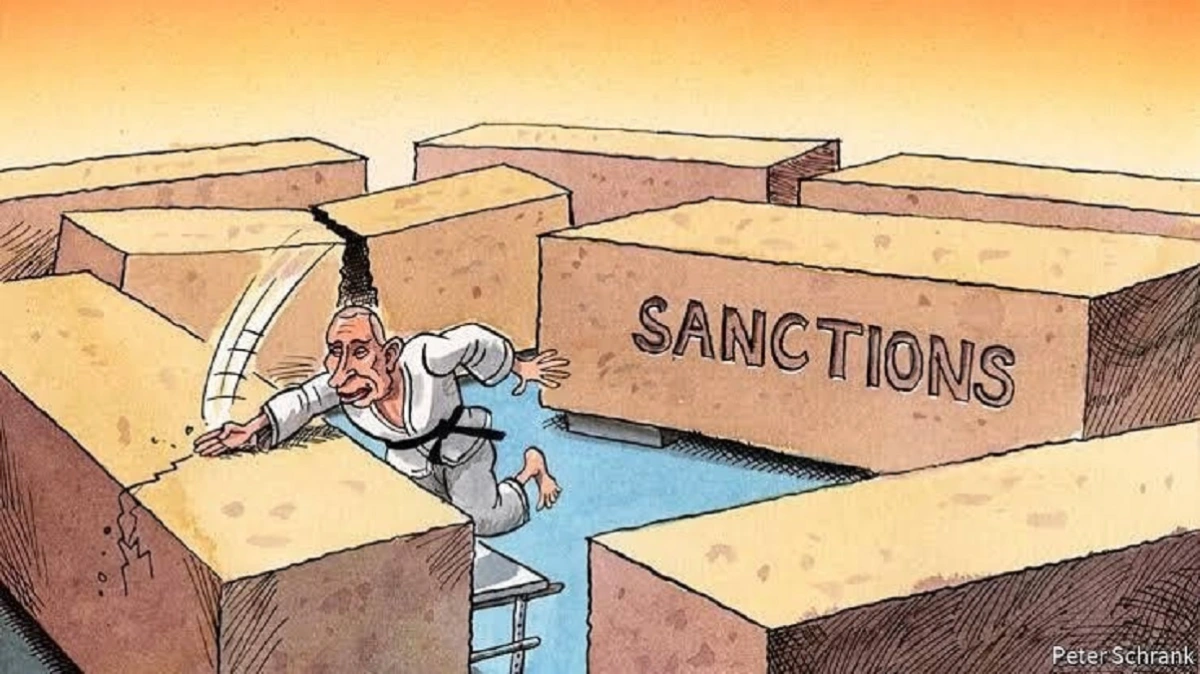
The Ineffectiveness and Brutality of Economic Sanctions

The recent coup orchestrated by the Tatmadaw (military) in Myanmar has attracted deep concerns and condemnation, with countries calling it a “serious blow to democracy.” In the aftermath, Senior General Min Aung Hlaing is in control of the country, civilian leaders have been detained, the internet has been shut down and a state of emergency has been imposed for a year.

In alignment with the US’s long standing policy against authoritarian regimes, President Joe Biden has threatened to re-impose sanctions on Myanmar that had progressively been rolled back by the Obama administration following the initiation of democratic reforms in 2011. This threat is congruent with the popularly hailed western narrative of Myanmar being a “sanctions success” story. However, a closer look at Myanmar as well as other sanctioned regimes highlights the ineffectiveness of sanctions in attaining desired objectives. Additionally, sanctions have also often exacerbated pre-existing human rights situations, leading to more hardships for the people while regimes have stayed intact.

Economic sanctions are instruments of statecraft where there is a use or threat of use of economic capacity by a state or an international organization against another state or group of states to alter behaviors. These behaviors range from  proliferation of nuclear weapons, compromising human rights, harboring terrorism, engagement in armed aggression and  replacement of incumbent repressive governments. The economic threat is imposed mostly through means such as arms embargoes, asset freezes, trade restrictions, visa and travel bans besides others.

The rational logic behind sanctions is that since actors are concerned about economic outcomes, they would be compelled to commit towards certain behavioral norms as a result of expression of official displeasure through sanctions. Yet surprisingly, a landmark study spearheaded by economist Gary Clyde Hufbauer showed the success rate of sanctions at a meagre 34% in the 116 examined cases since 1914. A further reanalysis of the same data by political scientist Robert Pape pins the figure at an abysmal 4%.

The United States first imposed sanctions against Myanmar in 1988 to curb human rights abuses facilitated by the military regime and more sanctions were added via legislations and executive orders over the following decades. Nevertheless, sanctions failed to bolster the Myanmar government’s scores on measures of civil liberties and political rights from 1990-2011. The government continued the usage of torture, murder and disappearance to clampdown on political dissent and recurrent repression of  ethnic minorities throughout the 1990s and 2000s. Extensive sanctions did not prevent India and Pakistan from acquiring nuclear capabilities, nor did sanctions against Russia prevent excesses in Ukraine or the undemocratic annexation of Crimea. Similarly, North Korea had conducted six nuclear tests despite the imposition of multilateral economic sanctions by the US in 2002 and the United Nations Security Council in 2006 with respect to the pursuance of its nuclear program.

Sanctions primarily fail due to the globalized world  we live in. When sanctions lead to  closure of one market, targeted nations have the liberty to shift their economic focus to other markets and trading partners in order to maintain a respectable volume of trade. The big players like the US or the EU imposing sanctions is treated as an opportunity by other emerging yet major economies like India, China, South Korea. The differences in foreign policy among countries has an instrumental role to play in the survival of sanctioned economies. For example,  China’s long-term foreign policy of non-interference in the internal affairs of another state has been essential to the rise of China as Myanmar’s dominant economic ally since sanctions were imposed in the 1980s. World Bank figures indicate that Myanmar does $5.5 billion worth of trade with China each year, constituting 33% of all imports and exports. In stark contrast, the US foreign policy’s incessant emphasis on the spread of democracy has meant that the US is not in the country’s top 5 trading partners. China has also continued to have sizable economic ties with heavily-sanctioned North Korea, with bilateral trade increasing ten-fold between 2000-2015, reaching a peak in 2014 at $6.86 billion.

Barring effectiveness, precedents such as Iraq, North Korea and Iran also bear testimony to the gargantuan humanitarian crises that such sanctions trigger. Owing to prior reliance on imports for two-thirds of its food supply, the punitive financial and trade embargo imposed on Iraq in 1990 due to the invasion of Kuwait led to a price-rise of basic commodities by an astonishing 1000 percent between 1990-1995. This resulted in a 150 per cent increase in infant mortality rate and at least 6,70,000 children under-five died due to  impoverished conditions. Parallelly, the World Food Program estimates from 2019 show that approximately 43.4% (11 million) of the population in North Korea remains undernourished. The report states that the international trade restrictions only exacerbate the pre-existing food insecurity and malnutrition. Although Iranis cited as a sanctions-success story due to the signing of the Iran Nuclear Deal in 2015, the economic burden of these sanctions had already pushed 30% of the population into absolute poverty by 2017-2018. This segment of the population was estimated to be living on $1.08 a day. The Iranian Parliament’s Research Center also estimated that the sanctions-induced inflation will result in nearly 57 million Iranians living in poverty by March 2020.

Sanctions are regarded as an inexpensive and peaceful alternative to war, as a means of enforcing discipline and promoting peace. However, the accompanying  human costs  raise pertinent questions about their feasibility. In an interconnected world like ours, isolationist measures like unilateral or bilateral economic sanctions are bound to fail unless there is widespread international cooperation and consensus. However, distinct approaches to foreign policy have ensured the unattainability of such a consensus. Additionally, isolationist sanctions have inevitably pushed authoritarian regimes into the orbits of other similar regimes as demonstrated by China’s support for the Myanmar military as well as the North Korean government. Considering these consequences, there rises a need for reassessment of the usage of economic sanctions as a disciplinary instrument by the great powers. 

Image Credits: The Economist 

Saaransh Mishra is a graduate in Political Science and International Affairs. He is deeply fascinated by geopolitics, human rights, the media and wishes to pursue a career in the confluence of these fields. In his spare time, he watches, plays, discusses sports and loves listening to Indian fusion classical music.

We publish all articles under a Creative Commons Attribution-Noderivatives license. This means any news organisation, blog, website, newspaper or newsletter can republish our pieces for free, provided they attribute the original source (OpenAxis).

Categories
Issue 7

Farm Bills 2020 and The Future of The Indian Economy

Thousands of farmers, mostly from Punjab, Haryana, and western Uttar Pradesh, have been protesting at several Delhi border points since the 26th of November 2020. Their demands are centred around the repealment of three recently passed farm bills. The bills are namely, Farmers’ Produce Trade and Commerce (Promotion and Facilitation) Bill, Farmers (Empowerment and Protection) Agreement on Price Assurance and Farm Services Bill, and Essential Commodities (Amendment) Bill. Unable to reach a consensus with respect to the terms of these bills, the central government has decided to postpone the implementation of the bill.

The discontent of the farmers and the inability of the government to meet their demands raises several questions about their validity and the causes for grievance. While the protests have received major media attention, this article will endeavour to shed light on the larger impact the bills could potentially have on the Indian economy.

The Indian agricultural sector has been the least efficient sector of the Indian economy. While over  42% of the country’s manpower is employed in the primary sector, it contributes to about 17% of the GDP, making it the most populated and least efficient wing of the Indian economy. Several factors contribute to the inefficiency of the industry, most of which the new farm bills aim to address. 

The Indian agricultural industry has had a grave imbalance over the last couple of years, in terms of surplus production as well as issues with Minimum Support Price (MSP). This imbalance has continued to plague the market. Farmers fear that with the three new laws, the government is signaling its movement away from the current patterns of procurement at MSP. This uncertainty and lack of trust is one the primary causes of the recent protests. 

Surplus stocks of wheat and rice have hindered the agricultural economy in India and also the environment. The continuous wheat-rice crop pattern, especially in North India, has resulted in dead and excess stock lying at FCI warehouses. Most of the surplus is mainly a result of MSP laws that have given farmers a guarantee of purchase at a fixed price. This has allowed farmers from green revolution states such as Punjab and Haryana to grow MSP crops like wheat and rice irrespective of the market demand. As per certain reports, nearly 89% of the rice produced by the farmers in Punjab and 85% in Haryana is procured by the government. Hence, farmers in Punjab and Haryana face no price risk and are incentivised to grow paddy and wheat that are going to waste in FCI godowns. The surplus production at highly subsidised rates leads to increasing government expenditure and wastage of resources. While the government has assured farmers that MSP will continue to be provided, its continued implementation will surely hinder economic growth. 

The APMC Bypass law introduced permits for trade in agricultural produce outside the APMC regulated mandis. Private mandis can be set up across the country where anyone can buy produce from farmers. In addition to this, the bill also includes contract farming laws that facilitate an agreement between farmers and buyers before sowing under which farmers are contracted to sell produce to buyers at a predetermined price. Both the AMPC bypass law and contract farming laws are designed to allow farmers to deal directly with buyers and eliminate middlemen, giving them more choices on whom to sell their produce to. The laws will also allow firms to dictate the crops that the farmers can grow, thereby eliminating the surplus issue and meeting market demands. Crop diversification will allow farmers to contribute more efficiently to the economy and could provide them with greater financial security. In addition to the economic benefits, crop diversification will make farms more environmentally friendly. Planting a variety of crops makes the soil healthier thereby reducing the need to use excessive amounts of fertilizer. It also ensures that crops are more resistant to disease and therefore require fewer pesticides.

If we view these laws through a simple high-school economic lens, they look great as more buyers usually means a better price for the seller. However, that may cease to be the case in a realistic scenario. There is a possibility that these laws may lead to the rise of oligopolies that dictate prices and bulldoze their way with the farmers. This fear of oligopolies controlling the market is a major concern for farmers and a crucial debate made by protestors. The bill in itself doesn’t do much to prevent the rise of oligopolies. It is peremptory that the government regulate these markets to ensure that farmers have a choice in buyers and are not forced to deal in an unfair market.

It is not uncommon for governments to subsidise agriculture.The agricultural industry continues to have the highest subsidies around the world. The government must switch their subsidy allocation. There needs to be a shift from spending money in the MSP system to increasing capital expenditure on infrastructure in machinery and irrigation facilities to help Indian farmers be more competitive in local and global markets. The solution to the economic and environmental challenges facing agriculture in Indian states points towards a shift from the current system to a revised one. The farmer’s bill while representing the first step towards this economic shift requires a second look to ensure that farmers continue to remain protected. 

Karantaj Singh finished his undergraduate in History and International Relations. He is now pursuing a minor in Media Studies and Politics during his time at the Ashoka Scholars Program. He enjoys gaming and comics in his free time.

We publish all articles under a Creative Commons Attribution-Noderivatives license. This means any news organisation, blog, website, newspaper or newsletter can republish our pieces for free, provided they attribute the original source (OpenAxis).
Categories
Issue 6

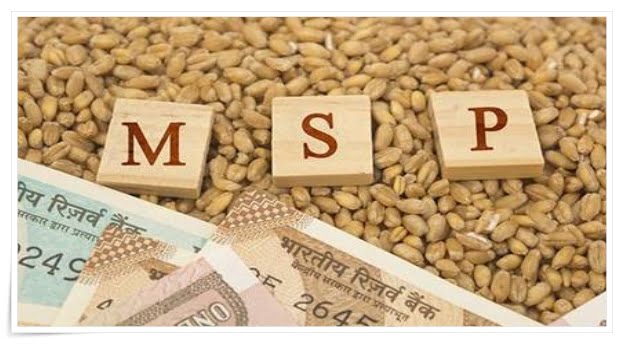
MSP: What has it Meant Historically and What does it Mean Now?

We must keep in mind three  things – 1) price systems are symptoms, not solutions 2) all group interests have sub group interests, which further disintegrate to individual interests and  3) agricultural political economy is shaped by history. So when someone calls farmers protesting  “khalistani”, not only is that horrible behaviour but also a disservice to the nation & detrimental for national interest.

Recently, the parliament passed three bills that were hailed to be both anti farm and farm liberating. This led to widespread protests throughout the country, more so in north india. The main summary is – farmers can sell their produce outside the government controlled mandis, they can get into contracts with agents as they prefer. When and  how depends on  their judgement & capacity.

During the 1960’s owing to war, and political instability, India suffered a food shortage which made the idea of “High Yield Variety” seeds attractive in order to ramp up agriculture. The MSP, or Minimum Support Price was hence brought in, to a) Incentivise  crops like wheat, rice & b) to create a sense of agricultural stability. 

In 1965 an Agricultural Price Commission (renamed as CACP now) was set up to estimate and advise the price policy. It is a price floor, under which the government ensures all the listed crops. Since it is a five decade old policy, scrutiny is natural. Normally there are around two  dozen crops under it. It was after all, , a temporary reform to boost production..

The APMC or Agricultural Produce Market Committee formed by the government . has two major roles – tackling exploitation coupled with  fixing power asymmetry between farmers & bigger agents and reducing farm to retail prices. By dividing states into geographical spots it runs mandis where there are charges and licenses for participation. Now many mandis have been brought to online mode of operation like e-mandis through digital means & token systems. All MSP procurement is not through APMC either. There are other ways like through the arhatiya (agents) who are generally powerful figures.

The next major economic reforms came in 1990, needless to say, bypassed the farm.

Our focus is primarily on the MSP. Is it a right? Is it a solution? In my opinion, it is not. Price assurance isn’t belling the cat, it is rather negotiating with the cat at the expense of another cat, with heavy consequences. Prices are indicators of the market, they are a product of people’s preferences. They cannot arise out of legislation. The birth of MSP took place to boost certain crops. Today it leads to overproduction (and wastage) of these crops at the expense of the taxpayer. Another important concern is the diversion of resources. Since MSP makes these crops attractive it leads to diversion of resources that could be used for growing other suitable crops (only where MSP is accessible). 

At best, the MSP is a symptom of inefficiency and need of a safety net, not a solution to it. It distorts the market in the promise of safe outcomes. The FCI currently stocks more than twice the buffer stock requirement (97mt in 2020 vs 41 mt req.). This is not just overproduction but dead capital. Other concerns are the inequality in the policy itself. A small number of farmers concentrated in a few states are beneficiaries of the scheme e.g. Punjab, Haryana, MP vs Odisha. Therefore farmers do not benefit equally from it. In fact there are large inequalities which are reflected in the outcomes. Smaller farmers in states like Odisha (which in fact produces 1/10th of rice) depend on public welfare, not  price insurance.  There are also information barriers as not many small farmers are even aware about the MSP, let alone derive their income from it. It is quite possible that this policy makes rich farmers richer and poor ones poorer. An average farming household in Punjab enjoys 1.2 lac per annum in subsidy, 2.5 times of national avg. More importantly, by definition, the government . cannot “predict” prices, it will most certainly predict it wrong. 

APMC’s hurt both the freedom of selling and the freedom of movement as per one’s wish. There is excessive cartelization and barriers to entry and trade. In that sense there’s fundamentally nothing revolutionary about these bills as the government claims while they may be more freedom enabling. They do little to address the broken system. The fear or misconception that the private sector will consume the farmers is not exactly true. Firstly it is a fact that agriculture, which is heavily state regulated is ironically one of the largest private sectors in the country. It runs on trust, contracts, promises and so on, much of which are informal. Mark that only about 6-7 percent of total farmers have access to MSP. More than 90 percent are doing trade in their personal capacities voluntarily in local markets, through agents and supply chains which are private sector transactions. If the government starts buying all the production of all MSP crops, it will go broke. Moreover the govt claims the MSP isn’t going anywhere. Neither are the mandis. Though if people find better opportunities by this increase in freedom, they will become obsolete. The bigger question is how many farmers have the resources to deal directly?  The blame towards the “middlemen” is unwarranted as they play a crucial role in any supply chain.

Another misconception is that farmers are driven by other politics and belong to certain states. Such claims aren’t well founded either. The reason is simple. Even though the protests are widespread, Punjab & Haryana have  been at the forefront of agro movements, historically. They were the biggest beneficiaries of the Green Revolution and they’re biggest beneficiaries of MSP and mandi systems. Wheat & Rice contribute to huge parts of agri-revenue. They have bigger and more connected unions unlike say Odisha. Punjab has avg land holdings of 3.7 hectares vs national avg of 1.08 hectares. Involvement in states such as Bihar (avg 0.4 hectares holding) isn’t very wide spread as they have already abolished APMC

The point is whether they’re aware about how good/bad the alternatives (which haven’t been tested) are or they realise the trade-offs which may come at the expense of someone else. With these bills some speculations are obvious. What about the price support? What about volatility without it? Are there not going to be any mandis anymore? It is only natural that we dissent. With these bills that will supposedly “liberalise” agriculture, some sections might suffer losses too and then move from farming to manufacturing or other productive sectors as most developed nations do. But are there enough opportunities ? How smooth is this transition? Will this lead to alienation of traditional occupation? What about power asymmetry, negotiation and information barriers? These are genuine questions and the government response to them have been lacklustre and opaque. The problem of agriculture is two fold – productivity and accessibility. The removal  of APMCs in themselves does little to solve either. However it is worth pointing out that most parties protesting or disapproving of the bills demanded similar reforms. Some even included them in their manifestos.

Almost all countries protect their primary sector and so should India. But not through price supports where there is overproduction. Incentives to increase productivity and shift to other beneficial crops, transition to farm entrepreneurship etc.The alternative should be to have a more universal, decentralised and direct support e.g. an income support. A Universal Basic Income could be on the cards but it is still a long long time away. Some policies that have delivered results the Rythu Bandhu scheme or the Kalia scheme by the Odisha govt. Welfare is a tricky, slippery slope and old policies must be tested and retested before they get politicised. Farm prosperity must be the priority, even if it comes at the cost of knee jerk decisions. The image of a poor farmer representing the country seems patronising and representative at the same time. But it must go.

Amlan is a final year student at Ashoka University who hails from Odisha.

Image credit: https://palpalnewshub.com/india-news/the-minimum-support-price-msp-is-causing-uproar-what-is-that/

We publish all articles under a Creative Commons Attribution-Noderivatives license. This means any news organisation, blog, website, newspaper or newsletter can republish our pieces for free, provided they attribute the original source (OpenAxis).

Categories
Issue 6

Book Review: How to Make the World Add Up by Tim Harford

In How To Make The World Add Up, Tim Harford, presenter of BBC’s radio show More or Less and an economist by training, writes a compelling case for the field of statistics. Through the course of the book, Harford explores how statistics can help us understand the world around us in clear and simple ways. He also addresses scepticism about statistics, and tells us why it shouldn’t be dismissed as a means of masking lies and spreading misinformation. 

Harford tells us ten simple rules that we can follow, to better understand the facts and numbers that are presented to us through media. He uses several relevant anecdotes, from the pages of history books to the ongoing pandemic, to tell us how and why we should dig deeper into the information that we receive. Throughout the ten rules and the book, there exists a recurring theme – to be curious. Whether it’s rule 1, that asks us to pause and consider our emotional reaction to a piece of news, or rule 4, that prods us to look for comparisons and context to put a claim into perspective, Harford ultimately urges us to be smartly curious about everything we consume. 

While the book does not draw on technicalities from the field of statistics (don’t worry, there are no mentions of p-value or R-squared here!) it urges the lay reader to consider what statistics professors regularly tell their students. For instance, rule 3 asks us to reflect on the labels of different data components, in newspaper data diagrams and academic papers alike. Similarly, rule 5 explains why looking at the source of data collection (and consequently, the motives and limitations of the data collectors) is necessary. While these rules are mostly straightforward, they are rarely followed by consumers of media. Harford recognises that it is not feasible to ask a reader to judge all the media that they consume through these ten rules. Instead, he proposes the use of these rules as a tool to form a “preliminary assessment” of a news source. If there is no effort made by the author to define terms or give the source of the data, there may be a reason to doubt their claims. At the very least, it should urge you to do a quick Google search to validate the information. The simplicity of these rules can help us easily dig deep into dubious claims made on our social media newsfeeds and television news channels.

The book also delves into specific problems around us, such as algorithmic bias and political polarisation, and tells us how we can figure a way out of it. Without giving too much away, Harford asks readers to appeal to their curiosity to question the types of media they choose to consume and believe in. While statistics might help us establish a correlation between a person’s political belief and the kinds of news channels they follow, Harford gives us a way out of our echo chambers. As he explains in rule 6, we need to develop a skill to recognise what data is being obfuscated or left out in the articles we read and the videos we watch. If we put our political beliefs on pause for a while and analyse our news sources, Harford believes we might come away with more information than we possessed before.

Harford also uses several interesting anecdotes throughout the book to keep the reader engaged. These include controversial studies, where statistics played an important role in establishing credibility. One such study links smoking cigarettes to lung cancer – a contentious claim made by Richard Doll and Austin Bradford Hill in 1954. Harford explores how the response by the tobacco lobbyists is a tactic that is used by several politicians: namely, raising doubts about the statistical procedures used in the study. The author helps the reader realise the importance of statistics in understanding consequential matters around us by providing many such case studies.

Overall, the book is a relevant and useful read in a time when we are constantly bombarded with more numbers and data analyses than we know what to do with. Harford urges us to rethink the bad name that statistics has been given over the years––a way to come up with dubious studies and clickbait news headlines––and consider it as a magical way of breaking down the hordes of incomprehensible numbers we receive in everyday media. Over time, if we manage to apply even a few rules out of the given ten to the media we consume, we might be able to better understand the nuances and complexities packed in the underlying research. In this manner, the book lives up to its name and truly helps make the world add up.

Samyukta is a student of Economics, Finance and Media Studies at Ashoka University. In her free time, she enjoys discovering interesting long-form reads and exploring new board games.

We publish all articles under a Creative Commons Attribution-Noderivatives license. This means any news organisation, blog, website, newspaper or newsletter can republish our pieces for free, provided they attribute the original source (OpenAxis).