Categories
Issue 20

Inventing Anna: Everything Is True Except the Parts That Are Fake

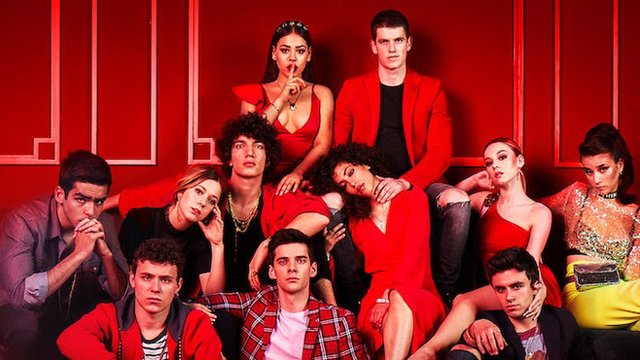
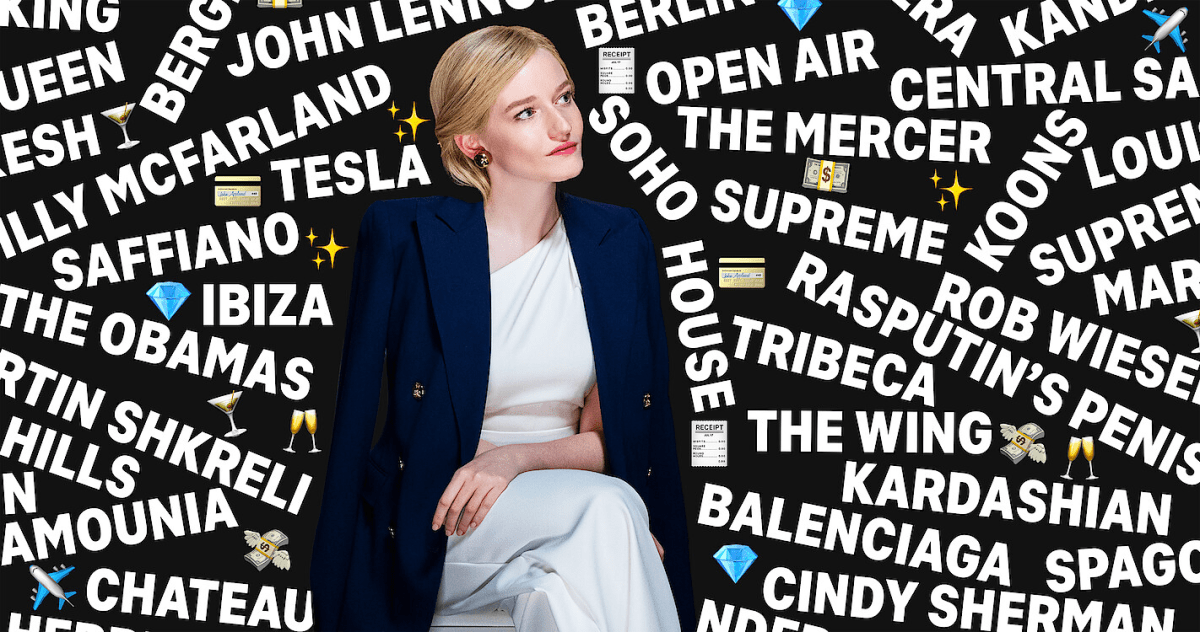
New York high society. Art galleries, fashion designers, and gorgeous locations. An influencer heiress eager to make her name in social circles. Netflix’s latest trending release Inventing Anna has all the right elements to keep you hooked until the very last episode. While the setting of the show in upper-class Manhattan is familiar (from shows like Gossip Girl), the show offers a breath of freshness to the city via the lens of faux-heiress Anna Delvey and the people in her life. Based on a 2018 New York Magazine article, the show is successful in portraying the twenty-something from Russia as a brilliant scam artist, rather than as a woman scorned and out to get the men around her. Neither is she represented as a Robin Hood-esque figure, out to help those less wealthy. Anna is inventing herself, and only herself- and boy, does she do a good job. The show instead offers an insightful perspective into the psychology of relationship building and connections, branding oneself as a commodity in a capitalist society, and most importantly, the frivolity of money. 

Jaidev Pant is a student of Psychology and Media Studies at Ashoka University. He is interested in popular culture and its intersections with politics, gender, and behavior. 

Image Source: Netflix

We publish all articles under a Creative Commons Attribution-NoDerivatives license. This means any news organisation, blog, website, newspaper or newsletter can republish our pieces for free, provided they attribute the original source (OpenAxis).

Categories
Issue 20

It’s Complicated: How the Pandemic Changed My Relationship With the Outside World 


It’s the early days of March, and I can see the first buds of the fiery red Gulmohar tree outside my window begin to bloom. The receding winter leaves behind glorious sunny afternoons with rich blue skies. The third wave of COVID-19 too has rapidly begun to ebb, and there seems to be no better time to step outdoors. Throughout the pandemic, one spoke endlessly about an urgent need to step into the outside world. However, something about slipping out of my flip-flops and printed shorts into heavy sports shoes and pants makes me want to dive deeper under the covers. Stepping outside the door is no longer as simple as putting on acceptable clothing and heading out. It requires hefty preparation and assessment. The preparation of being masked for hours, engaging in conversations while maintaining distance, mapping out the number of people around you — going out as we once knew is no longer the same. Safe to say, my relationship status with the outdoors is, well, complicated. 

I remember after the first wave of the pandemic, various groups of friends and family began carefully venturing out to have small picnics. With reports that increased ventilation can lower the chances of contracting the virus, public parks transformed into the ultimate meet-up spot. Not only public parks but also national parks, hill stations, and destinations with vast open spaces become increasingly popular. However, one had to carefully plan their dates with the outside. Elaborately planned outings with detailed menus, color-coordinated outfits, and picnic blankets were chalked out weeks in advance, as every Sunday afternoon transformed into an opportunity to host extensively curated picnic brunches. 

What was missing from all these events though, was the spontaneity that once made them unique. The thrill of entering a crowded marketplace and discovering a delectable meal at new unexpected restaurants was replaced by arduous research on limited open-air eateries. Bumping into forgotten friends at gatherings was marked by questions of their vaccine status, awkward elbow bumps, and warm smiles hidden behind masks. Even with all these precautions, I could not help but be paranoid about those around me being potential virus carriers. I came to prefer being far from the crowd, alone in my corner, observing the masked faces around me. 

Recent investigations from Emory University have found that the pleasure center of the brain, the nucleus accumbens, reacts more strongly to unexpected events rather than expected pleasures. Human beings love being surprised. However, it seems that the pandemic has changed our ability to be surprised as often as we may like to be, which perhaps hampers how rewarding our fully pre-decided outdoor experiences may be. 

There is something rewarding about being in naturalistic settings, a kind of peace and solace that no amount of Zoom conferencing with your friends and family (or therapist, in my case) can bring. Immersing yourself in nature and spending time in natural environments has been proven to yield uncountable physiological and psychological benefits such as improved cardiovascular function, enhanced energy, and reduced negative emotions. Even though the emerging conversations around mental health were a welcome addition to the discourse around the impact of Covid, for me it was my body that struggled more. After the first month of Youtube workouts and morning Surya Namaskars, I was craving stimulation from being outdoors. The unpleasant blow of stepping into muddy patches, trying to befriend a fidgety squirrel, or simply just watching the clouds change form – being in nature made me feel alive like nothing did. 

Right before the nationwide lockdowns were imposed, my friends and I had grand plans of going on a week-long tour of South India and discovering new tourist attractions. After endless months of moping and anxiously pondering about what travel in the future holds for us, it’s safe to say none of us could have anticipated a travel experience as we underwent. Visits to grand hotels with international crowds were out of the question, and sitting in an airplane with layers of protective equipment did not seem like an attractive option. Our grand touring plans were reduced to a road trip around Rajasthan and short stays in AirBnbs and homestays. 

This is similar to global trends of tourists flocking to Airbnbs and rented homes. Vacation homes which were a short drive from home were the go-to solution for people who were desperate for a break, but erring on the side of caution. Such short getaways with small, intimate groups align with the general idea of people wanting to invest their time in stronger relationships rather than risking their health by meeting distant acquaintances. 

While staying in AirBnbs allows us to have a break from long-drawn isolation, it lacks the interaction one had with other visitors. The joy of observing new people from various parts of the world, smiling at children running around at breakfast, waving at the person at the front desk when returning after a long day- these were all crucial elements to traditional ‘vacations.’ Images of hotels being turned into quarantine centers, and management staff in protective kits, however, were enough to disconcert me from engaging in any kind of socialization. 

As I write this article, one week before my university resumes fully offline operations, I cannot help but reflect on the complexity of this relationship. There is a sense of excitement, but a hint of apprehension weighing me down as well. Am I ready to share my outdoor spaces with scores of other students? Or is having completely uninhibited access to the outside world going to make me want to curl up indoors again? 

Jaidev Pant is a student of Psychology and Media Studies at Ashoka University. He is interested in popular culture and its intersections with politics, gender, and behavior. 

Picture Credits: Mark Cocksedge

We publish all articles under a Creative Commons Attribution-NoDerivatives license. This means any news organisation, blog, website, newspaper or newsletter can republish our pieces for free, provided they attribute the original source (OpenAxis).

Categories
Issue 20

Copy & Paste: Originality and Plagiarism in Popular Culture

Artists are often inspired by life and take inspiration from creative people around them. James Joyce’s Ulysses and Margeret Atwood’s Penelopiad are based on Homer’s The Odyssey. Taylor Swift wrote Tolerate It after reading Daphne De Maurier’s Rebecca, and Lucy in the Sky with Diamonds by The Beatles was inspired by Lewis Caroll’s Alice in Wonderland. Whether in art, literature, or popular culture, there are elements of the past that amalgamate with the ideas of the present. 

Taking ideas from existing pieces of work and creating something new can be done through adaptation, sampling and spin-offs. An adaptation is when a play or a movie is based on a novel or short story. The film Burning, directed by Lee Chang-dong, is based on Haruki Murakami’s short story Barn Burning. Ramesh Sippy’s Sholay was inspired by The Magnificent Seven, which was based on Akira Kurosawa’s Seven Samurai. Sampling is when a portion of a sound recording is reused in another recording. The catchy instrumental in Jimmy Jimmy Jimmy Aaja by Parvati Khan and Bappi Lahiri was inspired by T’es OK by Ottawan, and was later sampled in M.I.A.’s Jimmy. A spin-off is when a TV show, film, or any other popular entertainment focuses on a few characters or ideas from an already existing work. In 2022, the popular game Wordle inspired many spin-offs such as Nerdle, which had the same rules as the original but was slightly modified. Bollywood uses spin-offs as its “golden goose” and has produced an innumerable number of them, such as Naam Shabana and Bob Biswa. Through these mediums, one can see that it is indisputable that art is not stagnant, and popular culture runs on the creativity of the past. 

Popular culture is known for its “popularity”, and therefore, it’s no surprise that when something gains the attention of many, other artists instantly look towards it for inspiration. The media and art are meant to be provocative and evocative, and it is clear that art influences art. However, when influence merges with copying, the word plagiarism becomes operative. In March, Tiger Shroff was accused of plagiarism when his latest single Poori Gal Baat’s lyrics and style held a striking resemblance to K-pop star Kai’s Peaches. Shroff has stated that he appreciates Kai as an artist, however, people were quick to call him out for not giving due credit. In 2021, Olivia Rodrigo was accused of copying various artists when her debut album Sour garnered global success. She was blamed for plagiarising Taylor Swift and Paramore– even though her album cites credits to Taylor Swift and later, to members of Paramore too. Elvis Costello, while responding to claims that Rodrigo had borrowed from his track Pump It Up, stated, “It’s how rock and roll works. You take the broken pieces of another thrill and make a brand new toy. That’s what I did”. If everyone is making a brand new toy with existing work, where does originality lie? People are quick to judge whenever one piece of work remotely resembles another, and the question arises: are we imposing originality on popular culture?

The latest trend of TikTok (or reels) is one of the mediums where originality both flourishes and perishes. Various audios, dance moves, and jokes become “trends” that everyone on the platform copies. Some put their own twist on it, whereas some directly imitate. It is in this wildly popular phenomenon that the mark of originality and plagiarism gets even more confusing. Is it fair to “cancel” every TikTok that may resemble another? In January, “you’ve gotta put ME first” audio from the television show Empire became a viral trend on TikTok. Who owns this trend? Does it belong to the creators of the show, the creator of the meme, TikTok, or no one at all? Some may view this situation as a plagiarism or copyright issue. However, it also shows the inherent beauty in popular culture. Someone has taken a sample from an existing work and has created something new that has not only influenced many but has also made them laugh. 

The Beatles, Elvis Costello, Lee Chang-dong, Greta Gerwig, Ramesh Sippy are few among many who have taken inspiration and have created something that has lasted in time. It has made a mark, and perhaps years from now, someone might even see the everlasting impact of the trends on TikTok. In a day and age where attention is few and fleeting, art and popular culture remains that which unites and creates. So, perhaps, there is no need to impose originality on popular culture. However, it is important to note that this is in no way an argument for a lack of copyright protection or not safeguarding artist’s rights. Plagiarism is still extremely wrong and those who have worked hard and authentically should always be given credit for their artistic expression. Rather, this is a call for not being so harsh on those who create content that may resemble or be inspired by previous work. As long as the artists are respectful and acknowledging, they should be appreciated and not incessantly compared. The consumers of popular culture need to remember the nature of art is to influence and inspire – not stifle. 

Shree Bhattacharyya is a student of English literature and Media Studies at Ashoka University.

Picture Credits: Shree Bhattacharyya

We publish all articles under a Creative Commons Attribution-NoDerivatives license. This means any news organisation, blog, website, newspaper or newsletter can republish our pieces for free, provided they attribute the original source (OpenAxis).

Categories
Issue 20

A Drink With the Spanish Elite

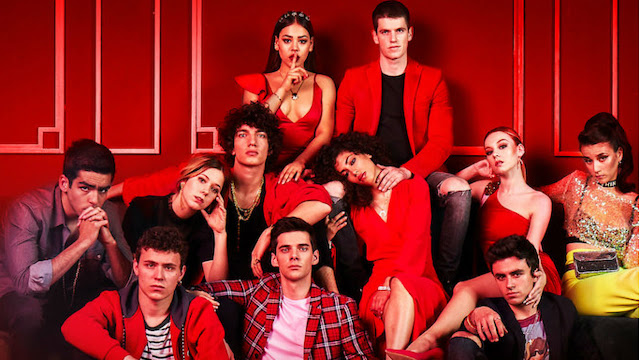
A thriller series with murder, lies, parties, drugs, and drama, Elite hits all the right spots. The series deals with a high school, Las Encinas, and the elite students who come to study at this palace-like building. The series jumps between timelines in every episode, and adds up the suspense to the point where we are ready to burst. The entire story unfolds in the eighth episode of every season, and the character development and diversity throughout the four seasons is phenomenal. The casting will sweep you away from your feet and you will come back for every episode. The series is available on Netflix and is renewed for season 5 which might drop in the summer of this year. So what are you waiting for, Ready Set Elite!

P.S. (No Spoiler Alert) The writer’s favourite episode is S3E8, where he simply was overwhelmed with the amount of emotions this series made him feel.

Picture Credits: PopBuzz

We publish all articles under a Creative Commons Attribution-NoDerivatives license. This means any news organisation, blog, website, newspaper or newsletter can republish our pieces for free, provided they attribute the original source (OpenAxis).
Categories
Issue 20

What is Ukraine’s Best Bet?

In a brazen show of utter disregard for a democratic country’s sovereignty, Russia’s aggression against Ukraine will go down as a dark moment in modern history, remembered for times to come. 

Over the last few months and amidst the current escalation, seasoned experts have incessantly been speculating regarding President Putin’s primary motivations behind launching this invasion. There is no clear answer. There is no dearth of historic and contemporary political explanations to contextualize these developments. To be fair, the reality could be congruent with any of these developments, or a combination. While it is surely important to understand the roots of this decision, pragmatically, the major concern right now is Ukraine defending itself against an indisputably mightier Russia. So, what exactly is Ukraine’s best bet? 

Realistically, the Russian defense forces are exponentially stronger and have a significantly larger endowment than Ukraine. Russia has 8,50,000 active personnel in the armed forces, as compared to Ukraine’s 2,00,000. Additionally, the Russian paramilitary size of 2,50,000 is five times that of Ukraine’s. Starkly in contrast to Russia’s military spending of $62 billion in 2020, Ukraine’s stood at a measly $6 billion in the same year. This certainly lends Russia the means to possess an edge through cyberwarfare, missiles, heavy weaponry, fighter planes, warships, and other kinds of ammunition. These factors comprehensively dwarf Ukraine’s ability to put up a resilient fight or so has been perceived. Expert opinions indicated that Putin thought this invasion was going to be relatively smooth, owing to Russia’s unquestionable dominance over its timid neighbors that failed to act decisively in 2014 when Russia annexed Crimea. 

However, the reality has unfolded rather harshly for Russia. With many more years of combat experience since 2014 and the continued supply of sophisticated arms and ammunition by the West, Ukraine was significantly more equipped for an unprecedented resistance. Leading by example, President Volodymyr Zelenskyy has rallied a large number of fervent men of the fighting age to sign up for the frontlines as well. 

Consequently, Russia’s endeavors to attack the country on three fronts; Kyiv in the North, Kharkiv in the northeast, and Kherson in the south, has intensified. Reportedly (and rather unexpectedly), hundreds (some reporting thousands) of Russian soldiers have been killed along with scores of the Ukrainian military and civilian casualties, the numbers of which are very hard to verify given the persisting violence. 

At face value, Russia still has an upper hand in this conflict with its mammoth military dominance. The most the west can do is supply aid and ammunition, which it has been providing relentlessly. Ultimately, the deciding factor boils down to the fight that Ukraine can put up with the resources at its disposal. This is exactly what Ukraine seems to be doing. 

Militarily, Ukraine has scant chances of victory. Thus, the only way forward is to fortify the resistance that would prolong this war, and inflict an endless number of economic repercussions on Russia. This strategy would be effective for a variety of reasons. 

Firstly, the sanctions announced by the west are expected to apply immense pressure on the Russian economy. As a punitive measure, the United Kingdom, United States, and European Union have cut off major Russian banks from financial markets in the west, thereby prohibiting dealings with the central bank, state-owned investment funds, and the finance ministry. These restrictions have sent the ruble crashing for Russia. The country’s vast foreign reserves of $630 billion, accrued from soaring oil and gas prices are also under threat, given that a lot of this money is stored in western currencies like the dollar, euro, and pound. 

Secondly, while the reserves are large enough for one to think that Russia would withstand the effect of sanctions, it is noteworthy that the Russian economy has already been hit by sanctions post-2014. Even though these sanctions did not have as much impact as was intended owing to Russia’s favorable domestic financial systems, they did shrink the economy to an extent. 

Third, Ukraine’s sternness is expected to cost Russia even more money than the previously estimated billions of dollars, which was already a hefty amount to expend on a war in pursuit of an unclear and vaguely defined end goal. Moreover, Russia has spent billions of dollars on wars in the middle east, wars that are far from concluding and constitute recurring expenditures. As a result of its deep involvement, Russia cannot abruptly withdraw from these wars. 

Russia’s military might does not overpower the economic pressures from all quarters. Although this cannot be asserted with surety, a long, resource-depleting war in Ukraine, in addition to the aforementioned factors could compel the country to change its course. Interestingly, these economic costs for Russia will not end if it can capture the whole country, topple the Ukrainian government, and establish a pro-Russia regime (in case this is what Russia wants). This scenario could give way to a long-drawn insurgency fighting that would entail more costs for Russia in the long term.  

While these recent happenings could technically be construed as a war between Russia and the West, the military exchanges will happen only between Russia and Ukraine. Unless Russia decides to attack any of the NATO powers, which would legally oblige the west to engage militarily, Ukraine, with only western help, has to fight a war that has always been way beyond its reach. Strategically, it has to devise ways to increasingly impose costs on Russia as a discouraging factor from wreaking further havoc. 

Saaransh Mishra is a Research Associate with the Observer Research Foundation (ORF) and writes on foreign policy matters.

Picture Credits: PA Media

We publish all articles under a Creative Commons Attribution-NoDerivatives license. This means any news organisation, blog, website, newspaper or newsletter can republish our pieces for free, provided they attribute the original source (OpenAxis).

Categories
Issue 20

The Veil of Spirituality


Faith, a word so important to human history and society, it is virtually sacrosanct. People claim their lives are incomplete without faith, and those who seek power over others weaponise and leverage the faith of devout believers for their own personal, political or financial gain. 

The constant tension between believers and rationalists came to the fore once again in recent weeks. Sparked this time, by the controversy at The National Stock Exchange. 

Chitra Ramakrishna, the CEO of NSE, put her trust in a Himalayan ‘sage’  who was supposedly “mentoring and guiding” her through the tedious process of running the country’s largest stock exchange. She exchanged inside information with this ‘sage’ until the news leaked, and another ‘baba’ scam came to the limelight. According to SEBI as reported by India Today, The Queen of Bourses, shared the exchange’s board agenda, financial projections, and business plans. This entire situation can possibly land her in jail as the Delhi High Court refused her anticipatory bail application

This is not the first time faith in spiritual leaders has cost people much more than they anticipated. Asaram Bapu, Ram Rahim, Rampal, Narayan Sai, and many more… have manipulated, harassed, and assaulted people in the name of Faith. But why does Faith have such a stronghold on us? Why does it shroud our reason, logic, and rationality? The American Psychological Association believes that Faith, or religion, in particular, is a byproduct of our tendency to find order among chaos, to look for discipline in our lives. Chitra Ramakrishna, like most people in the world, sought to Faith and was allegedly tricked by Anand Subramaniam. A woman who ran the largest stock exchange could not have been naive or senile, yet her Faith got the better of her. Faith, therefore, has this power of blinding rationality, which has been proved, time and time again. Her faith in this so-called sage, led her to make executive level appointment decisions as per his commands

The ever-growing cases of people being defrauded in the name of Faith, superstitions being upheld (sometimes at the cost of somebody’s well being), and the rising hostility in the name of Faith, calls for a discussion on rationality. How can we strike a balance between logic and belief, wit and virtue? We need to understand the complexities of Faith, to what extent it is healthy and where it becomes a sin. People need somebody to believe in, somebody to hold accountable, somebody to complain, and somebody to hope from. Faith, in general, and spiritual leaders, in particular, play on these emotional needs. To top it all, the dynamic of pain/pleasure is always at play. Society conditions us to think that following religious duties leads to positive reinforcement while giving up religion makes us sinners. To escape this loop and avoid falling into a pit hole, we need self-awareness.

Self-awareness, in this context, means being alert when common sense stops making sense. The Art of Living says alertness and faith are complementary. We need to bring this complement to the table. Faith may be helpful, but blind faith can be dangerous. There is nothing wrong with seeking help by having faith in people and religious institutions. However, one needs to be cognisant of what they are sharing, and how authentic is the advice they are receiving. Leaning on somebody is not wrong, it makes us human and as humans, we are bound to make mistakes. We need a self-check measure, before following the advice of such leaders. We also need to keep a check on the authenticity of such leaders and sages in the era of cyber-crime. Chitra Ramakrishna was scammed over email, an electronic tool. Most religious and spiritual sites have a web address, email address, and web payment portals. This substantially increases the chances of getting involved and robbed in a quest for spirituality.

But is it spirituality that we all are after? Or is it the perks that the popular notion of spirituality offers? In this hustle world, everybody is after success in all its forms. After all, who does not like a high paycheck, a beautiful home, a healthy relationship, and mental peace. My logic gives me a red flag at this stage itself, I cannot have everything, one or the other thing has to be sacrificed. The spiritual leaders, often, promise all these with the additional bonus of spiritual peace. The realization of these promises, however, is less certain and more unrealistic. Human nature, however, falls for these pretenses and a veil of spirituality is cast over our minds which bars rationality from seeping into consciousness. 

This does not imply that we must give up our entire faith on spiritual leaders and spirituality, but we must be smart enough to not get veiled. We need to use the same logic of rationality i.e., rational decision making that we follow before enrolling in schools, colleges, or universities. The same double-checks we do before going to a hospital or for a regular check-up. Moreover, when somebody advises a particular institute we do not blindly enrol ourselves or our near ones in it. We analyse our own situation and background, the same way we analyse an institute. If we begin applying the same logic in following spirituality, we will follow a safer path. Moreover, if we understand that we have to work for whatever we need, then we will fulfil the dual goals of spiritual peace and safety.

Lakshya Sharma is a first year undergraduate student at Ashoka University. He is an economics and media studies student. Apart from his academic interests, he has keen interest in writing and fashion.

Picture Credits: Daily Pioneer

We publish all articles under a Creative Commons Attribution-NoDerivatives license. This means any news organisation, blog, website, newspaper or newsletter can republish our pieces for free, provided they attribute the original source (OpenAxis).