Categories
Issue 2

Sitting inside the black mirror and peeking at the world beyond

Social media is all around us. One can argue that the very way in which we communicate today and conceptualize interactions with the world at large, has been fundamentally altered by social media. Television shows such as Black Mirror or the Netflix Documentary Social Dilemma have drawn public attention to the ramifications of human-computer interactions.  While there is no denying that social media has made staying in touch with friends and family, no matter where they are a breeze, as well as aided technological progress, there is unfortunately, a flipside. The problem is twofold —  one, we often believe our social media feeds an accurate representation of reality. And second, we spend too much time on our devices, which makes problem one worse.

To understand why we keep spending increasing amounts of time with our smart devices is tied to how internet companies such as Google, Facebook, Instagram etc. make money while providing services for free.   

A company, by definition, exists to generate a profit. That holds true for internet companies as well. While we are not charged for Facebook, Instagram and the likes, they monetise through ad revenues. This, therefore, makes them depend on their algorithms to detect patterns in our browsing behaviour, so that they can match us to the best possible advertisers, and if we look at an ad long enough, we might be prompted to spend money.

Two corollaries further follow: 

First, better accuracy of the algorithm in predicting our patterns of behaviour on the internet allows the company to better tailor its content for our feed. 

Second, the longer time we spend on our screen, the more ads we see, the more money the company makes by charging the vendors. 

To achieve the first goal, one of the main strategies companies use is AI based smart algorithms. Machine learning means you give the algorithm a goal and then it’ll figure out how to achieve it by itself. AI is also only as good as the data that it’s trained it on. Companies like Google and Facebook have huge data sets at their disposal, because of the vast number of their users from different countries spending lots of time online. This amounts to an unfathomable quantity of data. Modern algorithms accurately tailor social media feeds based on these patterns. By showing content we like frequently, they ensure we stay on the devices longer. Knowing this is very important, because this prevents us from believing that our social media feed is an accurate representation of the world. Once the false belief system takes hold, it makes us more partisan — to the level we cannot even consider having a discussion with people harbouring contrarian viewpoints. The lack of will to engage rationally with the other side is dangerous for public discourse. This is at the centre of exclusion, discrimination, hate speech and hate crimes based on gender, class and caste, ethnic and religious minorities. 

Additionally, most of the social media apps are designed based on the psychology of persuasion and more dangerously, addiction. In the 1930s, B.F. Skinner showed what we describe today as “operant learning”- animals repeat behaviours and learn a task when given a reward.  They don’t do this when the reward is taken away. However, when Skinner started to change the schedule of reward delivery, he found something striking.  When reward delivery follows a varied ratio interval (food pellet delivered after an uncertain number of lever presses), i.e. when the animals expect without knowing when they will be rewarded, they learn to repeat the task behaviour fastest. More importantly, even if the rewards are stopped entirely, they keep on pushing the lever. It showed that this type of learned behaviour is extremely difficult to extinguish. This is exactly the principle on which gambling and slot machines work: they keep the gambler on tenterhooks of expecting a win and in the process, they keep them playing and continue betting.

Both the brain pathways and the neurotransmitters that underlie such addictive behavior have been characterized in detail over the years.  Deep in our midbrain and brain stem sits a group of neurons that release dopamine, the pleasure chemical. This area is the Ventral Tegmental Area (VTA). VTA neurons talk to another set of neurons hidden under the cerebral cortex- the nucleus accumbens, which in turn talks to the frontal part of the brain, where most important executive controls and decision making reside. Any natural rewards, such as food, pleasurable sex, or satiety, result in dopamine release at the Nucleus Accumbens, which through the cortex, causes the sensation of pleasure and reward. This is why we like to repeat what makes us feel good. Addiction hijacks this pathway, whether it is a chemical addiction such as cocaine or a physical addiction like gambling. These behaviors cause a massive upsurge in dopamine, much larger than physiological dopamine release. In seasoned addicts, the anticipation of reward releases twice as much dopamine than the actual reward. This biological phenomenon makes it hard to successfully abstain from addiction. 

Image Courtesy: drugabuse.gov

This is the mechanism that has been targeted by most tech companies. As the time spent with the devices is directly proportional to the ad revenues the companies earn, it favours the companies’ interests to make social media usage addictive. Hence, most elements of app design now use endless notifications, personalizing our feeds better everyday, and building in features like the answering bubble with moving dots when someone is replying. Most apps did not have this before. This is a classic example where the dopamine upsurge of anticipation is utilized. If this is a person of romantic interest or a recruitment manager, the anticipation of the reward can be more addictive than the reward itself. 

The fact that you pick up your phone and 25 minutes whoosh past isn’t random; it isn’t you. The anticipation of receiving curated content is arguably similar to a dopamine rush a gambling addict would get.

If this sounds far-fetched, take a simple test. Go device free for 24-48 hours. Lock them away. Track your mood changes, craving and general wellbeing and distress in this time. How irritable or uneasy are you? How much do you fear you are missing out or crave your device? Once you are able to get your device back, chart how long you have used it every day (all smartphones/tablets can tell you how much screen time you have had in a day). Now compare the usage from the 48 hours after abstinence to your regular usage. The mood charting shows how bad your social media habits are. 

 We survived fine till 2007 when smartphones were introduced. While our brains have evolved little over the past millennia, our environment has exploded over the past decades, especially in the online space. Biological evolution cannot keep up with the exponential evolution of technology. Therefore, spending too long on your devices makes you vulnerable to a range of health problems: poor eyesight, postural pains, lack of exercise etc. Also, engaging constantly with deeply disturbing content, even if they are on social justice issues, will inevitably start affecting your mental health and wellbeing. The world around is brutal and unfair. It is rife with discrimination and atrocities. While we should be aware of such inequalities, engaging with news all day can lead to a sense of loss of control over your life. All of these are good reasons to give yourself a periodic detox from social media. 

Given how all-pervasive social media is, where and how do we draw the line? Here are a few tips:

  1. Know that this is a world of your own creation. 

If you subscribe to viewpoint A, the apps curate your feeds with everything that reinforce A and negate all other viewpoints. You gravitate towards atrocities committed by members of anyone who does not subscribe to A and you behave as if the only reality in the world is understood by those who subscribe to A, and all others cannot be debated or even conversed with. Ultimately this makes the society more polarized. Arguably, this world is far more polarized than the world 40 years ago. Falling prey to believing the version of reality on your screens as absolute reality, you open yourself up to be easily manipulated to now indulge in hate speech, insensitivity, and sometimes, physical violence towards people whose views contradict yours. Listen to the contrarian view-points. Don’t allow one ideology to wholly dictate what you trust.

  1. Give yourself a digital detox every now and then. 

 When you’re not busy with work, limit your screen time.  When you go out with your friends for a much sought-after coffee, engage in conversations. Mutually agree to restrict mobile usage to 3-5 photos for the entire duration of the meet. Write physically in a journal every day. Exchange letters. Indulge in hobbies and activities that do not involve screens.  When you are on vacation, switch off your phone entirely. Activate an automatic email reply with the dates when you will return to work and the name of an interim person who can be reached out to if urgent. 

  1. Resist the temptation to document each moment of your life on social media. 

Besides adding to your digital footprint, this leads to unhealthy comparisons. Most people put their best foot forward on social media. Everyone posts pictures where they are doing something fun. Very few people post unhappy pictures on Instagram or write when they have a bad day at work on Facebook, yet negative things happen to all humans, every day. If we believe everything we see on feeds to be a true reflection of their lives, we buy into this idea that everyone has a perfect life, except, well, ourselves. This is not true. No one has a perfect life, and what people project on social media is often different from their real lives. So do not compare yourself to anyone on social media. Live your life as you want, without telling everyone about every moment of it. The “likes” only activate those short dopamine loops that provide instant gratification and are addictive. No amount of likes determine self-worth. So actively stop tying notions of self-worth with the likes and followers on social media. 

  1. Be a conscious consumer and not a prey to the influencer phenomenon. 

Social media can be used constructively. Collaborations, products and partnerships have evolved to its credit. If you are curating your own feed, use this awareness and the powerful AI behind apps to curate a feed that is good for you —  pages and channels that deliver creative content, help amplify positive messaging, promote mindfulness and healthy living. 

In that same vein, be picky about who you choose to follow as their content will make your curated feed, and likely only add similar content. We live in a country where influencers with millions of followers routinely promote misogyny, crass, classist, casteist, and majoritarian views. When you decide to follow an account,  try to determine the veracity of their claims. Do they cite data? What is the source? If you look at the data, does their conclusion make any sense? Never amplify something you have not fact checked before. There is a tremendous amount of misinformation in the post truth era. 

  1. General principles of sensible social media use

 Research has shown that constant social media usage leads to an inability to focus and restlessness. These directly affect professional or educational performance. A slew of productivity-based apps using the pomodoro technique (20 minutes for work followed by a 5-minute break) and restricting social media usage are available on all platforms and can be used for structuring the work day. The break can be used to do any activity that does not involve phones or computers. Outside work hours, make some rules for social media usage and stick to them. Turn notifications off for most apps except your calendar or reminders.  

Another effective rule is the “no phone at dinner and beyond” rule. Do not reach for your phone before sleep and as you open your eyes the next morning. Try holding off at least until after breakfast. These simple rules go a long way to ensure our internet usage stays under control.

While social media can foster a sense of community, it can also take away from face to face interactions which eventually raises a lot of concerns over your physical and mental health. Being conscious of that is relevant, simply because we cannot avoid it.

Simantini Ghosh is an Assistant Professor and PhD Coordinator for the Department of Psychology at Ashoka University.

We publish all articles under a Creative Commons Attribution-Noderivatives license. This means any news organisation, blog, website, newspaper or newsletter can republish our pieces for free, provided they attribute the original source (OpenAxis). 

Categories
Issue 2

Am I my Map? Cartography and Reworking Identity

We live in states as docile citizens and take a lot of things for granted. There are many facets which directly affect our nation that we have never even thought about. Maps are one of them. 

The very creation of a map entails conceptualisation of borders and their representation. That is why maps are called ‘projections’. The idea is to take an orange peel (originally spherical) and spread it flat, it can never fit neatly into a rectangle without stretching, cutting and bending it. When an n-dimensional globe is reduced to a 2 dimensional image on paper, it will lose its precision. We do this exercise with the orange peel on a global scale (quite literally) whenever we make maps. 

We use maps in our daily lives. States use them to assert dominance and demarcate territory. In the process, we implicitly agree that the word ‘projection’ allows for distortions. On top of that, we understand that distortions are acceptable in any form of representation. The question here is exactly which distortions are we willing to accept?  

Knowing this, it is unfathomable that borders are sort of a given. The more robust your border, the more secure your national identity. This is why soldiers get stationed to harsh climates, fight over land which is uninhabitable (as in the case of Ladakh) and countries use their maps to assert influence. The question to ask is why does your national identity depend on a border you have never seen? 

We are all products of different identities– caste, class, gender, race; it’s just a matter of context which identity gets called upon at what time. With the nation state, the identity that gets called upon most often is that of the citizen. As Sankaran Krishna brings up in his work, Cartographic Anxiety, While we don’t relinquish our religious, linguistic or regional identity, they are rendered vestigial, at least for the time being. Cartography creates an ‘India’ on paper while simultaneously conversations, laws and political mechanisms create the ‘Indian’ in our minds. The existence of one serves as reinforcement for the other.

This conversation doesn’t happen in a vacuum; India has experienced threats to its borders from Pakistan, Nepal and China in the past couple of months. These are intrinsically tied to cartographic representation as maps become important for both escalation of conflict and its eventual disengagement relevant in the current context. 

Pakistan’s new map, as explained by Prime Minister Imran Khan, shows the aspirations of its  people as well as the people of Kashmir. For India, these aspirations mean showing the Indian territories of Jammu, Kashmir, Ladakh and parts of Gujarat as disputed. The new map came as a response to India’s inclusion of areas like parts of POK and Gilgit-Baltistan in its own November 2019 map. While Pakistan claims to stand for the Kashmiri cause, India has called this battle of the maps “an exercise in political absurdity.” The map here is defining the state’s position but it’s also defining what national matters are because it defines where the nation begins and ends quite physically in a political imagination. 

In the case of Nepal, the new issue of the Indian map of November 2019 was exacerbated by another issue– the virtual inauguration of a road to Lipulekh by the Indian defence minister in May 2020. Nepal claimed that at least 17 kms of this road fell on its land. The issue gained traction in Nepali domestic politics as it saw protests with #BackOffIndia trending on social media. In the following month of June, Nepal’s Parliament approved a revised map showing the disputed areas of Kalapani, Lipulekh and Limpiyadhura as its own.

The root of the Nepal problem can be tied back to different interpretations of the Sugauli Treaty of 1816 which demarcates the origin of the Mahakali river as the natural boundary. The countries differ on the point of origin. We have inherited borders drawn by British colonial powers. India is anxious to cement them in areas such as the western front, and contest them at other fronts. 

India also shares a 3488 km long border with China. It is one of the longest disputed borders in the world. The current standoff at Galwan Valley deals, among other things, in occupying land that the two nations perceive to be theirs. It is a game of perceptions where ground reality matters little, simply because it would mean one side or the other giving up their claim. 

The three instances seen through this lens tell us one thing– there is a connect between military confrontation, people’s stance and map-making. 

Nations can allow their maps to engulf more territories but never to shrink. Looking at India and its neighbours, redrawing the map must be seen in light of people’s opinion and diplomatic arcs. Bookings Fellow Constantino Xavier said in an interview to Scroll “India cannot afford to think of permanent friends anymore in its neighbourhood.”

In conjunction to this question of maps, we need to ask ourselves if we are taking a top-down view of the border. Does the map matter beyond the concerns of the state for border populations, especially in the case of an open border like India and Nepal? While the focus was on India, the conversation around borders and maps is larger. Questions of identity become important in dealing with refugee crises, in camps deliberately placed outside legal boundaries and in treating people as foreign, alien and different.

Many mechanisms are used to reinforce our citizenship. The map is one of them, it imprints a visual image in our mind of where we belong. This is why people in Nepal protest Indian encroachment, and Indians break TVs at a call to boycott Chinese products in the climate of the standoff. Maps show you the state as a natural, ideal entity. By placing troops, defiling natural features and building walls among others, the state seeks to fit this ideal.

Sanya is a student of History, International Relations, and Media Studies at Ashoka University.

We publish all articles under a Creative Commons Attribution-Noderivatives license. This means any news organisation, blog, website, newspaper or newsletter can republish our pieces for free, provided they attribute the original source (OpenAxis). 
Categories
Issue 2

Give Me Liberty, COVID, or Cow Urine

Before 2020 the idea of the world coming together against a large-scale disaster was placed in the distant future, possibly once climate change had an apocalyptic effect. Natural disasters were far more localised, with only parts of the world being affected at any given point in time. The rest of the world stayed unaffected and in a position to provide support to affected areas. COVID-19 changed that. Suddenly, entire countries, and to some extent, the entire world had to come together to successfully control the disease. And we as a society proved our inability to do so. People around the globe continue to deny the dangers and at times even the existence of this virus which has already claimed more than 1 million lives.

Handling a disease at policy and personal levels requires a certain scientific temperament. One needs to accept advice from expert sources and follow safety measures. The basic prerequisite to this is believing in scientific evidence. In the current scenario, one can observe a lack of this temperament with too many Americans openly defying safety measures and even denying the existence of the virus. How do we understand Americans denying the virus even as their country has registered the highest number of COVID deaths in the world?

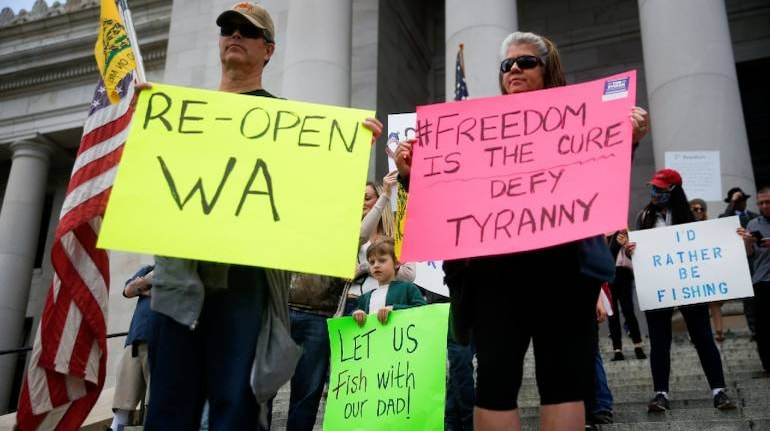
April 2020 saw widespread anti-lockdown protests across America. In Michigan, one of the hardest-hit states, protesters called their Governor a tyrant and compared her to Hitler.  Almost all the protests called for freedom, with slogans like “Give me Liberty or Give Me COVID-19” and “Freedom over fear”. Protestors ranged from those simply wanting to reopen businesses to COVID-deniers and anti-maskers. The general sentiment amongst the protestors was that stay-at-home orders and the closure of businesses were un-American because they did not respect individual choice and liberty and that the economy could not be threatened for public safety.

A common thread among these protestors was their political orientation — they were overwhelmingly conservative. Almost all the protests had Pro-Trump and MAGA posters, guns and confederate signs, and even anti-abortion signs. President Donald Trump praised these protestors, as people who “love our country”. 

Political Psychology may hold the answer to why these people underplaying the crisis were largely conservative. Decades of research on personality types has led to an understanding of conservatives as people who are fearful of change, of unfamiliar people and places. They try to maintain a sense of familiarity and comfort by following rules But by this logic conservatives should be more inclined to following government guidelines for COVID control.

Needless to say, there is a lot more nuance to the connection between our scientific temperament and political ideologies. A 2013 poll found that while liberals believed in the primacy of science during the policymaking process, conservatives were more moderate in their approach towards science. Additionally, there is a divide in the kinds of scientists either sides prefer and by extension the issues on which they will regard scientific advice as important and necessary. Liberals trust scientists involved in areas of regulation, like public health and environmental science while conservatives prefer those involved in economic production — food scientists and petroleum geologists for example. 

These nuances can help us better understand the reaction of conservatives towards COVID-19. ABC News has quoted a Michigan conservative leader as saying “bankrupting the state is not going to cure this virus.” Another protestor is quoted saying “…I don’t think that we need the Constitution suspended in order to be safe.” As we can infer from the studies, conservatives are inclined towards economic interests and are not very trusting of public health experts. They are thus more concerned with protecting their businesses, even when they acknowledge the threat posed by the virus. They are also inclined towards protecting the law and thus extremely protective of their constitutional rights, which they feel are being threatened by impositions of lockdown. It isn’t a case of dismissing science as much as it is a case of misplaced priorities.

The most important factor influencing conservatives is political propaganda. Conservative news outlets, politicians and most importantly President Donald Trump have been consistently underplaying or outrightly denying the virus, touting it as a Chinese or Democrat conspiracy to undermine Trump’s rule by crushing the economy. The virus has become a political issue rather than a scientific one. Human beings have a tendency to think emotionally more than logically. It has also been found that one can be persuaded of anything if the correct language is used, and if exposure to any kind of information is high. When one is exposed to such propaganda, one has an emotional instead of rational response to it and will be prone to believing it if it fits with one’s values. Since conservatives are being told that the virus is a conspiracy to undermine their leader, they believe this over their already weak scientific beliefs. Political propaganda and a desire to fit in has ultimately won over scientific temperament in conservatives.

It is interesting to examine India’s scientific temperament in its reaction to COVID. While American conservatives undermined the virus to align with and protect their political leaders and beliefs, Indians acted in a very different manner for similar ends. In recent times, India has become increasingly conservative with a rise in Hindu-nationalism. These ideas follow from the nationalist ideologies of the ruling political party, the BJP. PM Narendra Modi of the BJP has enjoyed immense popularity in recent years and has gained the support of a majority of conservative and right-wing groups in the country. 

Unlike Trump, Modi insisted on the dangers of the virus and the necessity for a nationwide lockdown. In his speech announcing the ‘Jantacurfew’ in India in March, he asserted, “one step outside can make way for coronavirus into your house” and “Experts are saying that ‘social distancing’ is the only way to tackle coronavirus”. His response created a sense of fear about the virus. His supporters followed his advice, but this had more to do with their trust in him than with their scientific temperament. 

This was apparent in the paranoia that followed. While Modi simply insisted on the importance of following safety guidelines, paranoia around the virus was at its peak despite the number of cases being at a few thousand. There were reports of people denying cremations to COVID patients and ostracising the ones that lived. Doctors and nurses were forcibly evicted by landlords. These behaviours continued even after the government issued notices asking the public to fight the disease and not the diseased. Unlike American conservatives whose fear was expressed through denying the virus, Indians reacted with heightened fear responses.

In addition to paranoia, scientific temperament was challenged by the government promoting traditional medicine. There were countless WhatsApp forwards about alternative medicines claiming approval from the WHO. These ranged from “Kadhas” (broths) of turmeric, honey, black pepper, cloves and every popular ingredient used by Indians to treat common colds. There were claims of methylxanthines, found in tea, declared as a cure by the Chinese doctor responsible for raising alarm about COVID early on in Wuhan. Using the WHO and names of chemicals helped legitimise these myths. Union AYUSH Minister Shripad Naik stated that COVID-19 can be treated by Ayurveda and that 60-70 percent of COVID cases in India were cured by Ayurveda, Unani and Siddha prescribed home remedies. He claimed that Ayurveda would boost one’s immunity and prevent the virus from attacking. A peculiar solution was found in cow urine, which was said to strengthen lymphocytes in the blood and be rich in antioxidants. The cow is considered holy in Hinduism and is being used as a violently nationalist symbol by the Indian right, with a leader claiming touching one helped cure her cancer. COVID gave these groups another opportunity to promote the cow. Thus followed cow urine-drinking parties organised by senior leaders of the Hindu Mahasabha. The consumption of cow urine surged to 6000 litres per day in the state of Gujarat.

Like the cow, Ayurveda and Indian home remedies have also been used as a political tool to claim the supremacy of Indian, specifically Hindu culture and tradition. The BJP and the Indian right have been trying to invoke pride in an ancient Indian history that is rooted in Hinduism, before the “invasion” by Mughals and the British, to increase nationalistic pride.

In the USA, scientific temperament was challenged by a preference for economic stability by conservatives, and by Republicans to protect the reputation of their leader Donald Trump as a saviour of the American economy. The Indian right used traditional medicine as a tool to battle coronavirus and further nationalistic sentiments. Whatever the end goal, the casualty was the same — the death of scientific temperament.

Isha is a student of Psychology, English and Media Studies at Ashoka University.

We publish all articles under a Creative Commons Attribution-Noderivatives license. This means any news organisation, blog, website, newspaper or newsletter can republish our pieces for free, provided they attribute the original source (OpenAxis). 
Categories
Uncategorized

Should India’s environment laws give the State so much power?

By Mansi Ranka

The Union Ministry of Environment, Forest and Climate Change (MOEFCC) rolled out the draft Environmental Impact Assessment (EIA) notification in March 2020 and introduced changes to environmental governance for the country. These changes focus on making environmental clearance a swift and easy process while giving public consultation a backseat.

The draft has led to widespread public concern. About 100 environmental groups and individuals have opposed draft EIA 2020, calling it anti-environment and anti-people. One of the main causes for distress in the new draft is an exemption from prior environmental clearance to about 40 different industries like clay and sand extraction, solar thermal power plants and common effluent treatment plants. This ex post facto environmental clearance puts aside the primary goal of environmental protection to focus on achieving ease of business. In April, the Supreme Court held that such practice would be detrimental to the environment and that development must be approached through an “ecologically rational outlook”.

The other main cause of concern is the dilution of public consultation. The new draft exempts projects from the public hearing, an important opportunity for local communities to learn about the project and demand social obligations from them. This gives the corporations power to officially evade local development needs, which were anyway rarely met. environmentalists have accused the government of using EIA to expand their own political control by favouring corporations by legitimising environmentally degrading projects.

The new EIA draft incorporates systemic weakness into the law, making environmental violations the norm for corporations. The Ministry does not even pretend to see EIA as anything more than a bureaucratic instrument to make environmental clearance (EC) easier. 

Environmentalists have been arguing for the need to strengthen environmental law more than ever, as we are already experiencing climate change in the havoc wreaked by floods nationwide. The letter sent to the MOEFCC also proposes that we go back to the EIA 2006 notification. But in reality, that is not all that better either.

The MOEFCC is currently reviewing the public comments that they have received on the draft. Right now, it is important to think about what it is that will really help strengthen the environmental law in our country. How can the law ensure that big corporate profit does not override people’s welfare and environmental protection?

The state controls the distribution of state-owned natural resources. What is the safeguard against the exploitation of this power? What if the government allocates natural resources in a way that contradicts public welfare?

A similar question was brought up before the Supreme Court, in the 2011 public interest litigation after the 2G scam. The PIL raised questions about the State’s ownership of natural resources and their fair distribution. The judgement clarified the Supreme Court’s position on who distributes natural resources by saying, “Natural resources belong to the people but the State legally owns them on behalf of its people and …  is empowered to distribute natural resources.” So, the State has the power to decide what happens to natural resources. But on what basis does the state decide? The judgement goes on to say, “while distributing natural resources, the State is bound to act in consonance with the principles of equality and public trust and ensure that no action is taken which may be detrimental to the public interest.”

Thus, as long as we trust the Indian State to “act in consonance with the principles of equality and public trust”, we can be certain that it will distribute natural resources for the “common good”. The judgement concludes that the State should be the trustee or guardian of the people in general, and hence be responsible for natural assets.

Trusteeship is a Gandhian socio-economic idea, which holds that wealthy people should be the trustees and ensure the general welfare of the poor people. The theory relies on Gandhi’s conviction that capitalists aren’t beyond redemption and the wealthy could be persuaded to help the poor by becoming more egalitarian.

Now, the Indian State is supposed to act as this trustee and ensure common good. How does the state define this ‘common good’? Historically, the state has not acted in ways that can foster this kind of trust. The state has often wished to ascertain huge profits through corporations by allowing them to monopolise. This is obvious in the draft EIA 2020. The “common” good then becomes economic development by few big players. This is excluding the very people it was supposed to act as trustee for. And yet, the State can claim to handover natural resources for exploitation to a few players in the name of common good and public trust.

Furthermore, the draft EIA is pushing for people to be excluded from participating in this process, making the idea of common good paternalistic. The tilting of the scale to give the trustee unchecked power is possible under this idea of trusteeship. This is because in Gandhi’s theory it heavily relies on subjective goodness in the capitalist, the trustee, to act for general welfare. It is necessary to question this of trusteeship. Can the state function as a true trustee without mechanisms to ensure accountability and transparency?

Mansi is a student of philosophy and environmental studies at Ashoka University. Her other interests include performing arts, politics and octopuses.

We publish all articles under a Creative Commons Attribution-Noderivatives license. This means any news organisation, blog, website, newspaper or newsletter can republish our pieces for free, provided they attribute the original source (OpenAxis). 

Categories
Uncategorized

COVID or Not, The Campaign Must Go On

By Neelanjan Sircar

The upcoming polls, in Assam, Bihar, Kerala, Tamil Nadu, West Bengal, pose unprecedented challenges in election management. Even in the best of times, regulating the behaviour of political actors during elections is nearly impossible. Anecdotally, candidates regularly spend over the farcically low spending limits for candidates (although the official data show otherwise) and all manner of distribution of alcohol and cash occur in the days leading up to the polls. But this year has brought forth even more challenges. In the aftermath of the COVID-19 pandemic, parties will be heavily restricted in hosting rallies or other large public events that are so crucial to a standard political campaign.

But the campaign must go on. I imagine that two campaign activities will be used as substitutes for the traditional campaign. First, in the absence of large public gatherings convened by high profile politicians, parties will have to rely much more on “within village” activities like door-to-door canvassing. Second, outreach to voters — especially from the party elite — will be far more dependent upon social media and other digital media. 

This will likely generate advantages for the Bharatiya Janata Party (BJP), by far the most well-funded party that has invested the most in its social media campaign strategies. For instance, data from the fiscal year 2017-2018 provided from Association for Democratic Reforms (ADR) shows that the BJP received 210 crores out of the total of 222 crores from the controversial “electoral bond scheme” ushered in by the BJP, a staggering 95% of all electoral financing through the electoral bond method. This infusion of money has been crucial to maintaining electoral machinery that swells to impressive proportions during election time. For instance, in the 2019 national election, the BJP fielded an army of panna pramukhs (literally page chiefs), who were assigned to keep track of 30-60 voters each. While panna pramukhs were not fielded everywhere, the very fact that they can be fielded over a large swathe of the country indicates both the scale of funding available to the BJP and its commitment to building dense ground-level machinery during election time.

The existing investment in ground-level campaigning will be a huge asset for the BJP. In a time when movement is restricted due to the COVID pandemic, the ability of ground-level workers to mobilize and bring people to the polls is likely to have a greater impact. Furthermore, these same restrictions will make bureaucratic monitoring of elections and campaign behaviour more difficult, perhaps emboldening ground-level actors to use quasi-legal means to mobilize voters.

The BJP also has consistently demonstrated its proficiency in reaching voters through social media. The BJP of Narendra Modi and Amit Shah may not have been unique in their political appeals with respect to religion and caste, but it has been an innovator in campaign methods. Outside of the Congress, the (regional) parties that grew out of the 1990s built their campaigns in a particular manner that was labour-intensive and dependent upon the control of ground-level leaders that often had caste credentials. The BJP realized that if it had to spread beyond its traditional bases of support, it would have to develop a method of directly reaching the voter in places where it did not carry favours with local elites. The development of a strong social media campaign has created a direct channel between the central leadership, and Prime Minister Modi in particular, with the voter. This was a strategy that was effective, for instance, in the 2019 national elections in West Bengal.

Google search data provides a suggestive data point for BJP’s dominance in social media campaigning. While it is true that users of Google are likely to be younger, wealthier, and more educated than the general population, the recent spread of cheap smartphones in the countryside has significantly broadened access to the platform across India. In Google searches about politicians over the 2019 election period, an extraordinary 75% of searches were about Narendra Modi, compared to just 12% about Rahul Gandhi. Of course, this is only the tip of the iceberg. The BJP purportedly has extraordinary advantages in most social media and peer-to-peer campaigning through platforms like Whatsapp. 

Here too, the challenges of monitoring and auditing party behaviour are likely to be significant. During the elections, the Election Commission of India (ECI) has significant policing powers, regulating the content of campaigns and policy promises. As communication with the voter decidedly shifts towards social and digital media, where the content is less visible to third parties, the ECI is compromised in being able to regulate campaigns.

The 2019 national election exposed concerns about the impartiality of the ECI. A number of observers felt that, in the process of regulating content, the ECI showed biases towards the ruling BJP. This was in stark contrast to the narrative of the ECI that had started in the 1990s under TN Seshan and continued by subsequent heads of the ECI — which was seen as aggressively maintaining a level playing field for candidates and parties. The consequence of a level playing field was the democratization of the electoral space with new parties and new kinds of electoral appeals entering the system. 

The real threat to democratic norms today is not a momentary shift in campaign tactics due to the COVID pandemic. Rather, it is the fear that new forms of campaigning that are effective in skirting regulatory norms will get locked in, particularly when the ECI has shown little interest in innovating to meet these challenges. For all of its pathologies, the Indian electoral system showed that simply allowing parties to compete on equal footing generating high turnover in ruling parties at both the state and national levels.

Today, as the very basis of equal political competition is being challenged, we must wonder if brute force and money are all that is required to win elections.

Neelanjan Sircar is a Senior Visiting Fellow at the Centre for Policy Research and Assistant Professor at Ashoka University. His research interests include Indian political economy and comparative political behavior .

We publish all articles under a Creative Commons Attribution-Noderivatives license. This means any news organisation, blog, website, newspaper or newsletter can republish our pieces for free, provided they attribute the original source (OpenAxis). 

Categories
Uncategorized

When should I stop watching the news?

By Siddhartha Dubey

The simple answer to that question is now. Like, right now, today. 

There will be two immediate advantages. One, you will save money and two you will be better informed. 

TV News is rubbish. Right from the fake news and opinion infested Republic to the boring and increasingly shallow NDTV. You will be better off reading broadsheets and consuming your news online. I don’t need to tell you what’s online and the great multimedia content that is created every day by teams at the Wall Street Journal, Vice and so many others.

There is so much online, to the point that there is TOO much. Hundreds and thousands of dollars are being spent on digital newsrooms around the world. New hires must be able to report, edit, shoot, produce and naturally write.  

Photo Credits: Mike Licht

My basic issue with television news (in India) is that it has (largely) become a platform for lies, half-truths, reactionary and dangerous opinions and a place where the government and its militant supporters are able to get their views across without being questioned.  

The quest to curry favor with the rulers of the nation and Dalal Street means ‘whatever you tell us, we will air.’ This translates into advertising rupees, government favors and protection. 

The race for television ratings or TRPs is a discussion for another day. 

So, what we have is a system geared to do anything but inform you, and analysis or even sensible commentary. 

So NO, Times Now did not have its hands on a “secret tape” given to the channel by “security agencies” of two prominent political activists criticising the Popular Front of India.

The recently aired recording was from a publicly available Facebook Live. 

And NO, the banknotes which were printed after 500- and 1,000-Rupee notes were made illegal in early November 2016, did not have microchips embedded in them so as to ‘track’ their whereabouts at any given time. 

Yet television news teams and program hosts spent days vilifying the social activists and comparing them to terrorists out to destroy India. Or in the case of demonetization, championing the government’s “masterstroke” against corruption and undeclared cash.

There is a monstrous amount of fake news swirling around the airwaves and invading your homes. And a large part of it comes from bonafide TV channels which employ suave, well-spoken anchors and reporters. 

Given the commissioning editor of this piece gave me few instructions on how she wanted this article written, I am taking the liberty of writing it in first person. 

I don’t own a TV because I hate the news. I get angry really easily. Calm to ballistic happens in seconds and the trigger more than often are clips posted on social media of Arnab Goswami from Republic TV, or Navika Kumar and her male clone Rahul Shivshankar of Times Now. 

My friend Karen Rebello at the fact-checking website Boom News says “fake news follows the news cycle.”

Rebello says the COVID pandemic has given rise to an unprecedented amount of lies and half-truths. 

We see so many media houses just falling for fake news. Some of it is basic digital literacy.” 

Rebello says very few news desks, editors and anchors who play a strong role in deciding what goes on-air question the source of a video, quote or image.

And then there are lies and bias such as Times Now’s “secret tapes” or supposed black magic skills of actress Rhea Chakraborty. The story around the unfortunate suicide of Sushant Singh Rajput is a veritable festival of un-corroborated information released by (largely male) news editors and personalities committed to destroying the character of Ms. Chakraborty. 

I am not on Twitter. 

I used to be. 

But took myself off it as I became so angry that I become stupid. 

So, I don’t know what hashtags are trending right now. 

Guessing there are some which link drugs and Bollywood, Muslims and COVID and Muslims with the recent deadly communal riots in Delhi. Oh yes, I am sure there is a happy birthday prime minister hashtag popping up like an orange in a bucket of liquid. 

Hashtags are sticky, ubiquitous and designed for a reason. Often, they act like an online lynch mob; a calling to arms around a particular cause or issue. And often they are not such as the simple #PUBGBAN.

What a hashtag does is put a spotlight on a particular issue and that issue alone. 

So, when a hashtag linking Ms. Chakraborty with illegal drugs is moving rapidly around the Internet and TV news channels, people quickly forget that quarterly economic growth in India is negative 24 percent, or new data shows over six and a half million white-collar jobs have been lost in recent months. 

Get it? Check my new lambo out, but ignore the fact that I mortgaged everything I own to buy it. 

Thanks for reading this and for your sake, don’t watch the news!

Ends.

Featured Image Credit: SKetch (Instagram: @sketchbysk)

Siddhartha Dubey is a former television journalist who has worked with in newsrooms across the world. He is currently a Professor of Journalism at Ashoka University.

We publish all articles under a Creative Commons Attribution-Noderivatives license. This means any news organisation, blog, website, newspaper or newsletter can republish our pieces for free, provided they attribute the original source (OpenAxis). 

Categories
Uncategorized

Here’s the Truth: We Believe Misinformation Because We Want To

By Pravish Agnihotri

On September 14, Buzzfeed News published a leaked memo from a former data scientist at Facebook Sophie Zhang revealing Facebook’s deep and muddy entanglement in manipulating public opinion for political ends. “I have personally made decisions that affected national presidents without oversight, and taken action to enforce against so many prominent politicians globally that I’ve lost count”, Zhang said. 

This memo follows a piece by the WSJ, where Facebook was blamed for inaction in removing inflammatory posts by leaders of the ruling party BJP, fanning the flames of a deadly riot targeted against Muslims in Delhi. As the upcoming Bihar election campaign goes online, social media platforms and their ability to moderate hate speech and misinformation would come under further scrutiny. A look at past events does not bode too well. 

In March, videos of Muslims licking currency, fruits, and utensils were circulated online blaming the Muslim community in India for the coronavirus outbreak. Health misinformation also abounds on social media where a variety of unfounded treatments like cow urine and mustard oil are being claimed as possible cures of the coronavirus. Along with the rise in misinformation, we are also seeing a rise in a parallel, albeit much smaller group of fake news debunking news organisations. Misinformation, however, remains rampant. 

Why does misinformation spread, even in the face of hard evidence? Interactions between our socio-historical context, our psychology, and business models of social media companies might hold the answer. 

The Context

The dissemination of information was once a monopoly of states and a few elite media organisations. Information flowed from a top-down hierarchy with the state at the apex. Naturally, the media reflected elite interests. Information was scarce and its sources limited, thus it was trustworthy. This changed with the arrival of the TV and completely revolutionised with the arrival of the internet. Waves of information explosions not only changed how it was distributed but also how much information was trusted. In his book, The Revolt of the Public, Gurri argues, “once the monopoly on information is lost, so is our trust”. The shift from mere consumers of scarce media to hybrid creator-consumers of exponentially abundant information meant that every piece of information in the public domain became an object of scrutiny. In a world where everything could be false, anything could be the truth. It is in this context that we begin to understand misinformation. 

Historian Carolyn Biltoft terms this new context the dematerialisation of life. Under this context, beliefs are no longer formed on the basis of individual experience, but are constantly challenged by heavily circulated new information. Additionally, believing new information calls for larger leaps of faith, especially when related to science, technology, or the suffering of a distant community. Spiritual beliefs, beliefs in the superiority of a race, gender, or a form of family, all of which were strong sources of belongingness are now under question. 

The Individual

Individuals increasingly find themselves unable to explain the world around them, unsure of their identity, and unable to look at themselves and their social group in a positive light. It is precisely this condition which makes these individuals vulnerable to misinformation. Various studies have found that people are more likely to believe in conspiracies when faced with epistemic, existential, and social dilemmas. Misinformation allows them to preserve existing beliefs, remain in control of their environment, and defend their social groups. 

One might expect that once presented with evidence, a reasonable individual would cease to believe in misinformation. Psychologists Kahneman and Haidt argue that the role of reason in the formation of beliefs might be overstated to begin with. Individuals rely on their intuition, and not their reason, to make ethical decisions. Reason is later employed to explain the decision already taken through intuitive moral shorthands. 

How are these intuitions formed? Through social interaction with other individuals. Individuals do not and cannot evaluate all possible interpretations and arguments about any topic. They depend on the wisdom of those around them. Individuals who share beliefs trust each other more. Formation of beliefs, hence, is not an individual activity, but a social one based on trust. 

The ability of one’s social networks to influence their beliefs has remained constant. The advent of social media, however, now provides us with the ability to carefully curate our social networks based on our beliefs. This creates a cycle of reinforcement where existing beliefs, informed or misinformed, get solidified. 

Even in homogeneous societies, one is bound to encounter those who disagree with their belief. Although these disagreements can be expected to prevent misinformation, studies have found that they can actually have the opposite impact. Olsson finds that social networks who agree with each other increase the intensity of their belief over time, and in the process lose trust in those who disagree with them. A study also finds that correction of misinformation can actually backfire, leading people to believe misinformation even more than before. Our instinct to learn from those we trust, and mistrust those we disagree with creates a wedge between groups. Engagement becomes an unlikely solution to misinformation. 

Our socio-historical context predisposes us to misinformation, its social nature strengthens our belief in it, and makes us immune to correction. Social media then, acts as a trigger, to the already loaded gun of misinformation. 

The Platform

The misinformation epidemic cannot be attributed to human biases alone. Social media companies, and their monetisation models are part of the problem. Despite coronavirus slashing ad revenues, and an ad-boycott by over 200 companies over its handling of hate speech, Facebook clocked in $18.7 billion in revenue in the second quarter of 2020. Twitter managed to rake in $686 million. Advertising revenues constitute the largest part of these astronomical earnings. 

The business model for all social media companies aims to maximise two things: the amount of time users spend on their platform, and their engagement with other individuals, pages and posts. All this while, these companies collect a host of information about their users which can include demographics, preferences, even political beliefs to create extremely accurate personality profiles.

A recent study found that computers outperform humans when it comes to making personality judgements using an individual’s digital footprint. According to the study, the computer models require data on 10, 70, 150 and 300 of an individual’s likes to outperform their work colleagues, friends, family members, and spouses respectively. These models are sometimes better than the individual themselves in predicting patterns of substance abuse, health, and political attitudes. This data is then used for customising content and advertisements for every individual, creating echo chambers. In another study, Claire Wardle finds that humans regularly employ repetition and familiarity in order to gauge the trustworthiness of new information. If an individual’s beliefs are misinformed to begin with, these algorithms can further strengthen them through sheer repetition. These models can also predict what an individual finds most persuasive, and then ‘microtarget’ them with content, legitimising misinformation in the consumer’s eyes. 

As Facebook’s revenue shows, public opinion can be an extremely valuable commodity. It determines what you buy, what precautions you take (or don’t) in a global pandemic, even who you vote for. By arming those with vested interests in public opinion with accurate and effective tools of persuasion, the business models of social media companies end up facilitating the spread of misinformation. 

The truth is often nuanced, resists simplification and — if it disagrees with your beliefs — off-putting. This doesn’t necessarily make the truth worthy of going viral. Misinformation, on the other hand, tends to be reductive, sensational and perhaps most dangerously, easier to understand. It also relies on emotion to make the reader believe in it. This makes misinformation more likely to spread throughout the internet. A study conducted by MIT corroborates this claim. Falsehoods on Twitter were found to be 6 times faster in reaching users than truths. 

The ultimate goal for social media algorithms is to maximize engagement. As engagement with a post with misinformation increases, algorithms can expand its reach due to its likely popularity. Further, microtargeting ensures that such posts are shared with individuals who are more likely to agree with the information, and share it themselves. When controversial content leads to higher engagement, misinformation becomes profitable. Economic reasoning alone can lead social media companies to condone, and in worse cases, actively promote its dissemination. 

Our unique context, our instincts and biases, and the business models of social media platforms interact endlessly to create layers upon layers of reinforcing mechanisms that spread misinformation and make us believe in it. Artificial Intelligence is now being called on to fight and weed out misinformation from social media platforms. However, for any solution to be effective, it would need to address the interactions between the three. 

Pravish is a student of Political Science, International Relations, Economics and Media Studies at Ashoka University.

We publish all articles under a Creative Commons Attribution-Noderivatives license. This means any news organisation, blog, website, newspaper or newsletter can republish our pieces for free, provided they attribute the original source (OpenAxis). 

Categories
Uncategorized

Phones and Guns to Phones with Guns: Am I a Soldier?

By Sanya Chandra

Do you ever think how many ways the state is in your home, or on your phone, quite literally hugging your person? Do you think your means of entertainment are detached from diplomatic posturing? If the answer is yes, you are wrong.

A writer and producer of a videogame company was invited to join a panel advising on the future of modern war. This is Dave Anthony, a creator of Call of Duty: Modern Warfare 3 whose expertise the Pentagon evidently thought could benefit US conceptions of real warfare.

The video game, part of the larger Call of Duty series, features Europe dependent on American forces for liberation after having been invaded by the Russians. How and why did a game developer have enough currency to advise on matters of international warfare? Purely because modern war videogames deal in authenticity. To create his product, manufactured and sold to you, Anthony engaged in conversations with war veterans to give it a life-like character.

Making the game gave Anthony the skills to comprehend, create, and also think of possible solutions to complex real-life problems. Playing them does the same to you, as you’re dealing with situations veterans have partly provided. This is just one example of how politics shapes popular culture and is in turn shaped by it. The fact is, that this is not the only example out there.

Indians today would have noticed the announcement of the videogame FAU-G (Fearless and United– Guards) on 4th September, a couple of days after the game PUBG Mobile was banned. FAU-G is Fauji Hindi, meaning soldier. Released by a prominent actor, Akshay Kumar, it is a prime example of what is generally termed as the Military-Entertainment Complex.

The idea goes to show that actions of private companies and the domain of diplomacy overlap. While no state will go as far as to produce its own games or movies, political events create the context under which are accepted,  thereby motivating their production.

Akshay Kumar’s tweet announced FAU-G, specifically in support of the Indian government’s AtmaNirbhar Bharat Abhiyan. It is a movement to make India self-reliant, in terms of economy and infrastructure, among others. 20% of FAU-G revenues will be donated to BharatKeVeer, a trust set up by the Office of the Home Minister. Donations to this trust are also exempt under the Income Tax Act. The ‘Atma Nirbhar’ scheme came in the wake of global disruptions in Chinese led manufacturing supply chains because of lockdowns and travel restrictions caused by the Coronavirus Pandemic; and exacerbated by military tensions between India and China in Ladakh’s Galwan Valley, provoked by Chinese attempts to claim the territory as its own. As troops are eyeball to eyeball, India’s response has been to boycott over 118 Chinese apps including PUBG’s mobile version. The tweet ends with “Trust #FAUG”, a sentiment often echoed in the Prime Minister’s addresses.

The entire episode reflects a symbiotic relationship between the military and popular industries. Military videogames, by that logic, establish both your national identity and the context itself. They see you as the crusader for justice and they posit the context that a hostile environment is threatening you. You become Rambo, a soldier who fights enemies to protect his country’s interests. While this may not be overt or even intentional, it creates the scene in which warfare becomes palatable for the general audience.

In addition, videogames are set in a military warfare setting. They rule out the possibility for negotiation to ‘fix’ the hostile situation. Negotiation is a key part of most exchanges between two nations; when games and movies tell stories they seek to entertain. Situations where threats have existed and a successful response has been military are precisely that– entertaining.

Drawing back on the Call of Duty example, another edition of the game imagines a second cold war set in the year 2025. Hence, while some games draw on the past and attempt lessons from history, others cultivate preparedness for war in the future.

The same logic flows through movies as well. We are now seeing Chinese assertiveness widely called ‘Wolf Warrior diplomacy’ after a 2015 nationalist film and its 2017 sequel of the same name. This phrase is used both by Chinese and international media. The cinematic Wolf Warriors are soldiers in the People’s Liberation Army.

China is actively constructed as a nation under attack. Seeing itself as uniquely vulnerable, the tagline begins to make sense– “Even though a 1000 miles away, anyone who affronts China will pay.” This is linguistically evident, especially in the case of the Twitter allegations by Chinese diplomat Zhao Lijan. The tweets were a response to international criticism of Chinese ill-treatment of Muslim minority group, Uighurs, in Xinjiang province. Lijan’s response– a criticism of racial segregation in the United States capital.

This aggressive stance comes with the LAC clash and importantly, the enactment of China’s new security policy towards Hong Kong which depicts the willingness of Chinese leadership under Xi Jinping to openly assert and consolidate its power. The pandemic of course looms like an ever-present threat which first originated in Wuhan. According to career diplomat Shyam Saran, the pandemic question has caused a sense of “deep insecurity” to Chinese leaders.

Insecurity is dangerous, popular culture tries to replace self-doubt in your country with a degree of surety. You are after all Rambo, Fauji, Warrior. This perfectly complements national leadership’s pleas to support unequivocally the actions of the armed forces. In addition, popular culture feeds the attempt to justify actions as you, the citizens, have carried out the same actions, albeit virtually, from your phones. Your actions, games, and movies have no direct consequences, but they serve as testing grounds for belligerence.

We have seen two tangible instances of the link from popular culture to war and diplomacy– the USA and China. The link is mediated between theoretical reflection and the lived dramas of everyday life . With the coming of a new videogame, will India follow suit?

Sanya is a student of History, International Relations, and Media Studies at Ashoka University.

We publish all articles under a Creative Commons Attribution-Noderivatives license. This means any news organisation, blog, website, newspaper or newsletter can republish our pieces for free, provided they attribute the original source (OpenAxis).