Categories
Issue 9

Evaluating the Implications of Privatization in India’s COVID-19 Inoculation Drive

Though India’s vaccination drive began in mid-January, the distribution of vaccines among target populations has effectively been slower than anticipated. Contemplating the introduction of the private sector in vaccination distributions turned into concrete action in late February, with a formal announcement that private hospitals would be allowed to administer the vaccines at the price of Rs. 250. The introduction of private players in the mammoth task of inoculating the Indian population has gathered advocates as well as critics. How will privatizing vaccine distribution affect the healthcare sector – and what precedent does this move set for the future of medical programs in the country?

Privatization of vaccine distribution provides several solutions to the government’s woes at the surface. The production and distribution of vaccines can scale up monumentally faster in the presence of privatising channels. This move also brings about immense benefits by its way of immediately reducing the sole burden of vaccine distribution on governmental bodies as well as the healthcare sector. This can compensate for shortages faced in public healthcare and provide a relatively lower overall cost of vaccination to citizens since the vaccine is now being mass produced. 

However, it is important to evaluate how privatization can adversely affect the long term growth and function of the public healthcare sector in India. Firstly, opening up private channels for vaccine distribution creates an opportunity for frivolous vaccine candidates to gain entry into the market, partake in false advertisement and compromise public trust in vaccine science. This can lead to the persistence of the burden of risk and pressure in the healthcare sector, completely negating the positive effects of vaccination drives. Secondly, it is crucial to note that with the private sector involved, the market is essentially what is determining the production and distribution of vaccines. For instance, Adar Poonawala had stated last year that the Serum Institute of India will be shifting resources from the production of other vaccines to free up capacity for the production of a COVID-19 vaccine. This can lead to a coexistence of shortages of high demand essential vaccines and a glut of low demand new vaccines in circulation. In essence, by large scale privatisation of vaccine distribution, the government will be surrendering a crucial public health responsibility to a capitalist market where companies are competing for larger market shares and higher profits possibly at the expense of public health priorities. 

Though the government has pushed for ‘Atmanirbharta’ or self-reliance to enable Indian firms to become major global players, there should also be a more careful consideration of self reliance in the public sector. India must begin addressing the shortages that plague the country’s public healthcare system and revitalise the capabilities of the public sector in vaccine production and vaccine technology. 80% of the Indian government’s vaccination needs are met by private firms in India and abroad. This has increased the prices by up to 250% as compared to the public sector, pushing India’s vaccination budget up 7 times in just 5 years. Moreover, the government also must be cognizant of the notion that the privatization of vaccines propagates.

While larger accessibility and reach has been cited as a popular reason to support private vaccine distribution, ideally public health systems should be meeting these standards themselves. Though the vaccine is being offered at a relatively low price, it must be questioned as to why it is not being administered by the government at a nominal rate that suits the interests of all sections of society. These questions call for a critique of public health systems in India, and demand an evaluation pertaining to how they can be improved. 


Moreover, the push for privatizing vaccine distribution must be carefully analyzed in terms of how it fits into the larger picture of vaccine development and distribution. Given that the coronavirus has mutated repeatedly already,  R&D units and vaccine production and distribution agencies are critically attached to one another. R&D facilities must continuously identify new strains and develop updated vaccines for them, and vaccine production and distribution must follow through. In a situation where private players are allowed to develop vaccines, as well as produce and distribute them, several questionable effects can emerge. 

Firstly, private sector activities are also often dictated by the aims of conserving patents and intellectual property rights along with profit making. This could affect how private firms choose to invest in R&D, as well as cherry picking between vaccine candidates. Secondly, in a situation where there is a possibility that established vaccines may become ineffective due to mutating strains, the incentives for private distributions cannot be predicted. The cause of private interest in vaccine production and distribution is profit-driven. How these firms react in response to mutating strains will depend on the value of the product in question – the vaccine. While the government can pay these firms for their services in case of any losses, it will represent a government expenditure that could have been avoided.

Moreover, since the vaccine would become a product under a private distribution set-up, it is also important to consider how private companies will react to any misinformation about viable vaccine candidates – and whether such events would affect their distribution among the masses. Instances of widespread misinformation pertaining to vaccine candidates’ safety in the face of reliable scientific evidence could provide private firms with enough reason to reduce or cease their distribution in the face of public mistrust. Navigating such situations will be complicated – with public health interests bearing the brunt of it all. Such gaps will be less likely to emerge in a system where the government will be involved at each step. 

While privatisation of vaccine production and distribution might help curb the spread of the virus, increase reach of vaccination drives and lessen the heavy burden on the healthcare system in the short run, it is crucial in the long run to empower the public sector for it to become cost effective and dependable. The bid for privatizing vaccinations needs to be approached with care – by the government, as well as the private companies involved in the same, for any misstep could have grave consequences for the future of medical treatments and private interventions in India.

Anjana Ramesh is an Economics and Finance student at Ashoka University.

We publish all articles under a Creative Commons Attribution-Noderivatives license. This means any news organisation, blog, website, newspaper or newsletter can republish our pieces for free, provided they attribute the original source (OpenAxis).

Categories
Issue 9

Caste (In)Justice: Inadequacies in Addressing Gender and Caste Violence

On February 17, three minor Dalit girls were found lying unconscious in their family farm in Unnao district of Uttar Pradesh. Two of them died by the time they were taken to the local hospital while the third girl luckily survived the ordeal. The family alleged that the girls were found tied up in the fields; the forensic report revealed traces of poisoning and the police claimed that the motive behind the crime was revenge by the accused for facing rejection of his unwarranted advances towards one of the girls. Several activists and journalists foregrounded the Dalit identity of the girls as being crucial to understanding the nature of the crime as was the case with the Hathras rape incident and the Unnao rape incident previously. This narrative of caste-based violence received immense backlash from the state. On the face of it, the February 17th incident did seem like one of plain vengeance. However, the shame of rejection stemming from the difference in the caste identities should not be ruled out as an integral cause of this crime.

Law, as a tool of governance, has attempted to legislate against the patriarchal and caste structure that has existed since thousands of years. However, the law and its machinery do not exist in a vacuum.  The law is brought to life by the human hand that upholds and implements it. If the human hand continues to be governed and conditioned by these structures of patriarchy and caste, then it is impossible for the law to be effectively applied in letter and spirit. How can such a law ever be just and fair?

From police authorities who investigate caste and gender crimes to the state governments that sanction such investigations and the judiciary responsible for adjudication – the positions of power and authority in all of these systems are over-represented by the upper caste heterosexual men. As the direct beneficiaries of a patriarchal, casteist polity, men in such positions of power operate with deep rooted biases that tend to maintain the status-quo of their privilege and dominance. Legal authorities deliberately refuse to label crimes like the Unnao incident as caste violence and instead look to other explanations that are blind to the intersection of gender, sexuality and caste. As a result, violence against marginalized genders and caste is not simply afflicted through crimes in the society but also through the passivity of the legal mechanism. 

While we have dedicated legislations like the Scheduled Castes and Scheduled Tribes (Prevention of Atrocities) Act, 1989 for protection of Dalits and Constitutionally mandated reservations for representation of Dalits, we cannot mitigate systemic caste and gender violence without proper implementation of such laws. It is imperative that there is space created for marginalized voices to appear in local panchayats, police, judiciary and state governments. It is only when Dalits are adequately represented in the public sphere, the role of the caste identities in gender crimes will find space in public discourse of justice.

It is no secret that crimes against women in the country have been rising consistently over the years, especially towards scheduled castes (SCs) and scheduled tribes (STs) (Crime in India Volume I, NCRB 2019). The burden of honour and shame placed upon women’s bodies and sexualities becomes the very reason for the violence against them. In this, the Dalit woman, who is the most vulnerable and silenced member of the society, is further condemned to an inevitable fate of violence by the upper caste men. From crimes of kidnapping, murder to sexual abuse and rape – dominant castes, with the aid of state impunity, exert their caste hegemony over Dalits in the society. 

In cases like the Unnao poisoning incident, we dwell upon the particularities of facts to recreate timelines, motives and scene of crime to ensure that the accused is proven guilty without a doubt. The State and the society make unequivocal calls to clear the collective conscience of the society and speed up the process of justice. Yet, there is never a discussion on the collective guilt of asserting the dominant caste privilege. The intent of the accused is broken down to its finest point while the audacity of the accused is never questioned. As the patriarchal and caste structure stands unwaveringly strong, no Dalit woman ever gets to live or die in a just manner. 

The question of the hour then is what we, as privileged individuals who condemn the inadequacy of the legal mechanism, make out of such horrendous incidents. For decades and especially after the Nirbhaya rape incident, we have been amplifying the need for more inclusive laws instead of stricter punishments against sexual violence. We demand for gender neutral laws, inclusion of marital rape and acknowledgment of rape in communal violence. We also point out the paternalistic and moralistic views of such laws and the lawmakers. We even recognize the intersection of gendered violence with caste. But we don’t go as far as to acknowledge that caste encompasses gender in the Indian context. One’s caste is assigned even before their birth with no possibility of deviation from the norm. Whereas, genders that deviate from the heteronormative impositions have managed to create some space for themselves through their ongoing struggles. The apathy towards such caste and gender complexities necessitate that Dalit woman and Dalit queer folx be at the forefront of our conversations on legal reforms. For inclusive justice to initiate, our fight against the violent structure of patriarchy cannot be won without speaking of the violent caste structure in the same breath.  

Shreyashi works as an Assistant Manager at CSGS. She is trained as a lawyer with litigation experience on issues of gender violence. Prior to joining the Centre, she studied as a Young India Fellow. She continues to volunteer with Just Justice, a Teach for India initiative to increase legal literacy among the underprivileged communities. Alongside other things at the CSGS, she is enthusiastic to focus on the questions raised by the entanglements of law with gender and sexuality. Most of her free time is spent running after her mischievous pup, Orwell.

We publish all articles under a Creative Commons Attribution-Noderivatives license. This means any news organisation, blog, website, newspaper or newsletter can republish our pieces for free, provided they attribute the original source (OpenAxis).

Categories
Issue 9

India’s Fight Against a Pandemic Leads to an ‘Infodemic’ Targeting Minorities and the Poor

The tackling of the Coronavirus pandemic in India — book-ended by the announcement of a stringent lockdown in March 2020, and now an ambitious nationwide vaccination plan in January 2021 — has laid bare social, economic, religious, and cultural fault-lines across the country. Fears and restrictions compounded pre-existing challenges in a country where an estimated 70 million people live in congested slums with little access to water, sanitation, and healthcare. For half of India’s population, ‘social distancing’ was a luxury they simply couldn’t afford. As a result, rumors and misinformation around their hygiene levels swirled in both real and virtual communities, feeding the vast Indian middle class’s apparent need for an enemy in the ‘war’ against COVID-19. Structural inequalities and institutional, inherent class biases fueled fear and stigma in India’s middle class against an ‘underclass.’

The number of domestic workers in India ranges from official estimates of 4.2 million people to unofficial figures of over 50 million, most of whom are women and girls. Largely illiterate, uneducated, and unskilled, domestic workers are completely dependent upon their employers and have no legal protections as workers under India’s labor laws. The National Domestic Workers Trust estimated that approximately 24 percent of Mumbai’s domestic workers lost their jobs permanently due to middle class India’s paranoia around their congested living conditions and assumptions around both hygiene standards and the rate of infection in their neighborhoods.   

Under quarantine, as fears of COVID-19 skyrocketed, Mumbai’s sky-high apartment complexes and Delhi’s bungalowed neighborhoods shut their gates. Messages circulated in such wealthier communities on WhatsApp groups, questioning hygiene levels of domestic workers living in such slums – many of which were declared ‘containment zones’ and COVID-19 hotspots. Even kitchen appliance manufacturers added to the fear mongering. One such firm advertised a dough kneading machine on Instagram, suggesting that it could replace domestic workers who typically do this manually since their hands ‘may be infected.’ Public pressure forced the manufacturer to pull down the advertisement and apologize.

In the first serological surveys conducted to assess the spread of the Coronavirus in India, two facts emerged. First, even though COVID-19 arrived in India by airplane via wealthier Indians who could travel abroad, those who worked for them suffered the most. The second was that nearly 60% of slum populations had developed antibodies, and that most of the infected were younger, had little or no symptoms, and suffered significantly fewer fatalities than their wealthier employers. This actually brought down overall death rates from COVID-19 in cities like Mumbai.

The worst effects of COVID-19 were suffered by three specific layers of the population. Urban migrant workers were forced out of the city with the imposition of one of the world’s most stringent lockdowns, sprayed with disinfectant as they tried to return home. Domestic workers – cleaners, cooks, and drivers living in congested urban slums who form the backbone of the informal employment sector – fell victim to community paranoia. Worst of all, deliberately crafted disinformation campaigns targeted India’s Muslim minorities, an already vulnerable group targeted by bigoted discourse on many levels in the state and community. Predominantly Hindu, upper caste, and upper class groups were largely insulated from these dynamics and able to take the necessary pandemic precautions without the same kinds of damage.

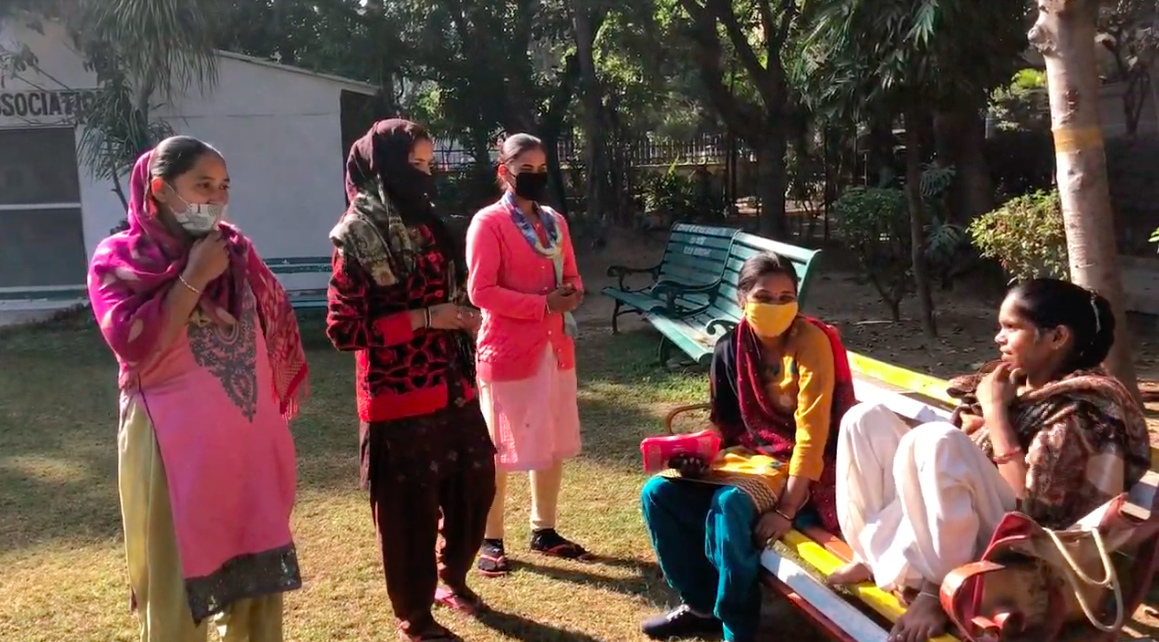
Referring to the residents of an upper middle class South Delhi neighborhood, Guddi, a domestic worker from Uttar Pradesh’s Kasganj district, says “They are being careless themselves. They are going out, traveling around the country; they are calling guests home.” Taking in the capital city’s warm winter sun after a morning of cooking and cleaning, she says, “That’s how the disease is spreading.” Lifelong victims of class and caste-based oppression in Indian society, street cleaners hired by the local government, who are also considered essential workers, were made to stand outside the gates during the summer’s blazing heat, even though the government began easing the March 2020 lockdown in stages. Rinku, who sweeps the streets for a daily wage, says things have improved slowly since 2020’s harsh summer, but the discrimination still continues. “They say they will get the disease [COVID-19] because of us. Everyone in the neighborhood said this.” Several Residents Associations banned all ‘outsiders’ – e-commerce delivery agents, vendors, and domestic workers – from entering their communities. Yet, these restrictions did not apply to those driving through the gates in a car, a ubiquitous symbol of wealth and upward mobility. In spite of eased restrictions that allowed people to return to work in the first phase of India’s re-opening, such associations formalized their own layer of controls. Private security guards, usually empowered to record visitor details, unleashed their newfound authority upon a host of workers coming to earn a day’s wages. “The guards told me I am not allowed to walk down the streets here because I may spread disease. I pleaded with them, but they didn’t listen. Finally, I was forced to call my employer from her home to come and talk to them, and allow me to go back to work,” says Anita, another domestic worker from Karimganj in Uttar Pradesh who works in Delhi.

The worst hit, however, have been those who lie at the intersection of caste, class, and creed – the Indian Muslim community. While insidious caste and class divides dominated rumors and restrictions, there was an ‘infodemic’ accusing Muslims of deliberately spreading a ‘corona jihad’. The Delhi government’s decision to segregate COVID-19 cases in the general public from ones directly linked to a gathering of the Tablighi Jamaat (a proselytizing Muslim religious group) in Delhi in early March 2020 fueled biased media coverage. It emerged that foreign participants from South East Asia were coronavirus carriers, and several other Indian delegates became infected and returned to their hometowns as carriers, unknowingly. Defying data, logic, and empathy all at once, right wing social media rhetoric and reportage around the so-called ‘super spreader’ event amplified the bigotry. Although the meeting had taken place with the knowledge of government and local law enforcement, Islamophobia fed generalizations blaming a single community for the spread of COVID-19.

Yasmin, from Uttar Pradesh’s Badayun district who cleans homes in Delhi, says even though her employers agreed to keep her on, her landlord protested when her poorer relatives came to live with her as the lockdown began. “He said there was no need for them to return. That they were spreading disease,” she says, lowering her voice. Similarly, Mohammed Shamim, a vegetable vendor in Uttar Pradesh’s Mahoba district, was forced to return money to his customers and flee after a group of men threatened him and accused him of deliberately spreading COVID-19 through the goods on his vegetable cart. In Uttar Pradesh, the north Indian state governed by one of the Hindu Nationalist Bharatiya Janata Party’s most strident leaders, the pandemic exacerbated everyday bigotry against Muslims. 

Police officers who tackle everyday misinformation have limited tools at their disposal. Senior Indian Police Services (IPS) officer Rema Rajeswhari in her district of Mahbubnagar in the southern state of Telangana has made a name for herself by actively conducting ‘awareness’ campaigns through ‘town criers’ who debunk myths and rumors, digital literacy workshops to help citizens question what they receive and share on messaging platforms like WhatsApp, and enabling her team of officers to intervene where they feel it will make a difference. People like her, as well as journalists who run fact checking websites, did their best to address misinformation from unrelated or manipulated videos about Muslim vendors spitting on their wares, which spread quickly on social media. Prominent news networks, members of the ruling Bharatiya Janata Party’s ‘IT Cell’ – which has often been accused of designing coordinated disinformation campaigns to target its critics – and many social media users were all complicit in the spread of such misinformation. Rajeshwari says her officers had no choice but to make their own videos to create awareness. Fuzail Ayubi, the Tablighi Jamaat’s lawyer, says things have improved since the summer, but the damage inflicted upon a community already under pressure to prove their patriotism and secularism is irreparable. Cases against hateful media reporting are being heard in India’s Supreme Court.

It would be easy to argue that much of the discrimination was a result of rumors and misinformation that exacerbated the existing wedges within Indian society. Yet, if there is one thing 2020 has taught us, it is this: the prevalence and virality of misinformation is not just about the algorithm that may amplify it, but also the fear and division within society. Addressing the technology that fuels misinformation, without actively improving inter-communal relations and public messaging on the pandemic, is not even half a battle won.

Maya Mirchandani is a journalist, a Senior Fellow at the Observer Research Foundation and Assistant Professor of Media Studies at Ashoka University.

Picture Credits: Maya Mirchandani

This piece was republished from The Soufan Center with permission of the author. 

We publish all articles under a Creative Commons Attribution-Noderivatives license. This means any news organisation, blog, website, newspaper or newsletter can republish our pieces for free, provided they attribute the original source (OpenAxis).
Categories
Issue 9

All Bets Are Off: Trust and Antitrust Among Large-Scale Corporations

Despite the economic turmoil caused by the pandemic, large companies such as Amazon and Facebook have managed to make sizable profits despite ordinary employees having undergone immense financial suffering. These circumstances have increased public interest in the manner of operation of large firms – and the mechanisms by which they become so large in the first place. Emergent questions pertaining to monopoly problems within economic systems are not new – rather point towards a set of laws that lie at the core of the issue – called Antitrust Laws. What are Antitrust Laws – and why are they so important? 

Antitrust Laws were first introduced by the US Congress legislation in 1890 to reduce artificial barriers in economic competition. The idea behind the laws was to make monopolization of power illegal and to ensure free and open markets for trade. It serves to protect the country’s consumers and smaller companies, ensuring a level playing field for all without the dominance of a few or singular businesses in the market share. This is achieved by regulating how companies manage their operations, and preventing large scale profits being made by a handful firms. 

At its core, the enforcement  of  antitrust laws determines the agency that consumers and small businesses possess within an economic system . The stricter the laws, the more difficult will it be for a giant firm to merge and buy over smaller companies or purchase their  competition. Antitrust  laws, hence,  push companies  to depend on earning profits on the basis of their merit, which can only be done by offering consumers quality products at competitive prices. It changes the focus from a single firm dominating the market to research and development on creating better products and services which ultimately will benefit the economy for the whole. 

From the perspective of small companies, the absence of these laws can have three large scale impacts. Firstly, the large firms interfere in the competitive market by suppressing potential businesses by replicating their ideas. For example, Instagram’s integration of Snapchat’s stories and filters has pushed Snapchat to become a secondary app. Secondly, there is no market stability as the control of the industry becomes concentrated in the hands of a few. Thirdly, the smaller company has two ultimate ends: being bought over by the large firm or having no scope for individuality in the project. There is a loss of the patent ownership, which gave the company a creative edge in the market. But once they can no longer compete with the giant, they have to succumb to being bought over due to the losses or eventually die out. 

On the other hand for consumers, there are three major impacts. Firstly, there is a lack of choice. The parent company owning each and every type of brand presents a false sense of choice to the consumers. Secondly, if a single company controls most of the different avenues of the market, chances are that it also has information over the consumers’ data and creating advertising models that are specifically curated, leaving no room for the privacy of data. Thirdly, these companies have the potential of becoming a means for political agendas to be carried out. As the company becomes powerful  due to the concentration of wealth it has accumulated from every sector, it becomes a potential foundation contributing to the country’s Gross Domestic Product. This can lead to the company wielding political influence over crucial policies, which have a considerable impact on the nation’s progress and development. Extending the previous point of privacy, governments can also feel incentivized to involve private firms within its functioning in a manner that allows the use of this data of its citizens.

When it comes to examining the domestic field, India’s first antitrust law, called the Monopolies and Restrictive Trade Practices Act (MRTP), was established in 1969. It came into frequent use after the economy’s liberalisation in 1991 and has been amended since, being replaced by consolidated legislation known as the Competition Act (2002). There is also an established committee to oversee and enforce the Antitrust Laws known as the Competition Committee of India (CCI)  but it has been extremely ineffective since its inception.

Taking a look at India’s industries, a contemporary case in point is that of Reliance Industries Limited. Business Today states that the company has bought major stakes in almost every single avenue. From purchasing the stakes in the Rs. 27,000 crore valued Future Group, it has also invested in Urban Ladder, Milk Basket, Netmeds and Zivame, to name a few. With the coronavirus pandemic crossing bigger numbers everyday, smaller businesses in India have had to succumb to the economic damage due to lack of stability in the market. Moreover, consumption patterns in retail, technology, household products have been changing, making the consumers more reliant on the services provided by a few large scale companies. 

Reliance is planning on rebranding itself from a petrochemical and refining company to a technological consumer based brand. Having sold over 49% shares from its oil section to a British oil giant Petroleum Company, it plans on building a stronger hold in the digital world. This has been clear from its mammoth telecom project, Jio which launched in 2016. Moreover, the company is also planning on becoming a singular social media platform for India, including the functions of Facebook, Amazon, Apple, Netflix, Google and Zoom. This is quite similar to Jack Ma’s Alibaba, which does the same for China. 

Reliance is acquiring additional companies on top of having several footholds in retail, social media, groceries, furniture, medicine, telecommunication, petrochemicals, pharmaceuticals, to name a few. This could be the final red flag for India’s laws regarding Antitrust since the company now holds interests virtually in every sector, leading to the creation of an ultimate monopoly in India. In addition, its political alignments have also been working in the background. When Jio was initially launched in 2016, it was endorsed by the Prime Minister, which played a role in its quick rise to 200 million subscribers. Moreover, the chairman of the Telecom Regulatory Authority of India, who was appointed by the government, changed the rules of what market power entailed when telecom companies objected against the competitive pricing. 

The Indian government with its recent ‘Atmanirbhar’ or ‘self-reliance’ policy is seeking to make Indian firms global players. But in the process of doing so, it should not neglect the rise of domestic monopolies being created. This will only have a negative impact on consumers and smaller firms, leading to a negative impact on long term economic development in the country. Ultimately, amendments to India’s Antitrust laws will determine whether the country’s consumers and small businesses will be protected. 

Gauri Bhawkar is a second year Economics and Finance student at Ashoka University.

We publish all articles under a Creative Commons Attribution-Noderivatives license. This means any news organisation, blog, website, newspaper or newsletter can republish our pieces for free, provided they attribute the original source (OpenAxis).

Categories
Issue 8

Rishabh Pant: The Boy at the Centre of It All

“पाजी, जब ङारूरत पड़ेगी, तो घर से बुला के लाएंगे”

(When they’ll need me, they’ll come home to get me)

This was Rishabh Pant’s response to being dropped from the Delhi Ranji side in 2017. Ajay Jadeja, a veteran of the cricketing circuit, recalls this incident. The sport is usually unforgiving to players with this attitude – it is not about being confident in one’s ability, instead it reflects a sense of गुरूर (pride). Commendably, in the face of all the failures and criticism, this man has never changed and that, ultimately seems to have rewarded him. 

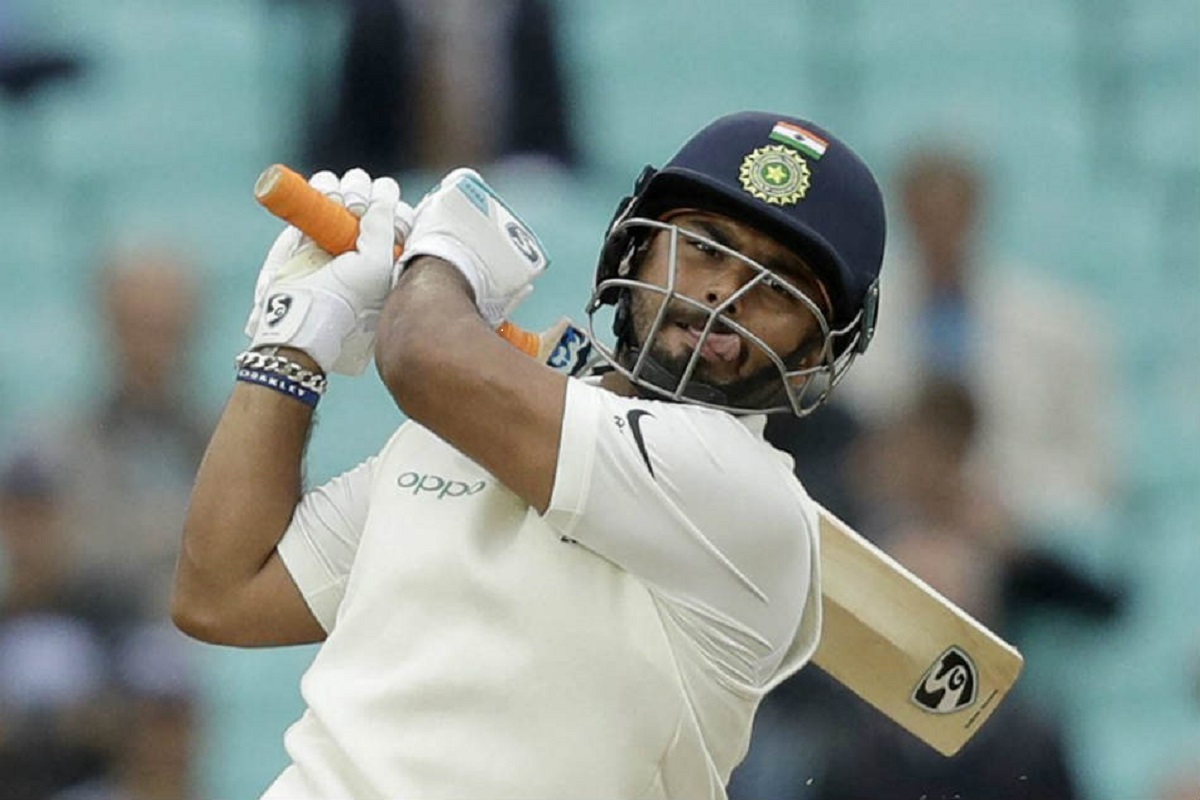
When you come in with a bit of flamboyance about yourself, as Rishabh did, you irk the cricket world. Sachin, Sourav, Laxman and Dravid were instant fan favourites because they were humble. On the flip side, Kohli, Sehwag and Dhoni have that fandom that elevates them to a near-god status (the title of God, of course, is reserved for Sachin alone). While somewhat similar to the latter three, Pant is different. He isn’t there to watch the ball, see new balls out, or even take his front foot to the pitch of the ball. Tumbling away while playing the pull over fine leg is more of his style. 

Anyone’s first memory of Pant has to be the Under-19 Men’s Cricket World Cup 2016. With two standout innings, 111 (96) against Namibia, and a sphincter-tightening 78 (24) against Nepal was what set him apart. Funnily, India was chasing just 170 in 48 overs – an easy chase under all circumstances. Yet, Pant being Pant was in a hurry, hence, a 78 off 24. With the IPL auctions just around the corner, who wouldn’t want to bet on this hard-hitter in the T-20 format!

A large chunk of that U-19 team found takers but Rishabh attracted the dough. The Delhi Daredevils decided to bring him home to try and turn their fortunes around. He had a decent first outing in the IPL, getting 198 in 10 games, and averaging it to 25. However, bigger things were yet to be set in motion. In 2017, Rishabh faces a heartbreak right before a game between DD and RCB – he lost his father who peacefully passed away in his sleep, knowing that he had seen his son register his first cap for India earlier that year. Hastily, Pant travels to and fro, attends the last rites, and makes it back just in time to play an innings that goes down as an ode to his father where he gets a lone warrior’s 57 in a lost Delhi cause. Despite the emotional turmoil, Pant makes 366 runs in 14 games that season, and the world notices this boy who was made of different mettle.

However, it was the next season that got his name on the lips of a billion Indians. In 2018, the Daredevils finished last, once again, but the only feather in their otherwise drab cap was Rishabh. He ended the season with 684 runs to his name in his 14 games, second only to Kane Williamson. He made it a memorable year. His scoop off of India’s premier fast bowlers were nothing short of mesmerizing. Pant had finally merited the world stage. 

His test debut before the ODI perplexed the public. In his 3rd test against England, he achieved a century and the murmurs began. India had already lost the game, and he was getting into a habit of coming good in inconsequential causes. He was also making a habit of throwing away his wicket in games where his team stood a chance. Yet, the selectors are convinced that this boy will cement his place in the Indian team in all formats as the wicketkeeper of choice.

Series after series, Pant becomes a controversial selection with DK, Ishan Kishan, Saha, Samson and even KL Rahul, lurking in the wings for their chances. Sometime before the 2019 World Cup, Pant became a fringe player. He was not selected for the squad that would travel to England to compete on the world’s biggest stage. When he was called up as a replacement player, he carelessly got out after a well-made 32 in the Semi-finals. The popular narrative became about just another talent who had majorly squandered away his time on the big stage. 

Fast forward to the Border Gavaskar Trophy of 2020-21. Pant has lost his place in the ODI and T20 sides to KL Rahul, and it is highly likely that Saha will play the tests. But Rishabh somehow gets a shot. After a valiant 97 in a drawn test match, we set our sights on Gabba, for the potential series-decider. Australia gets 369, India responds with 336, Australia put up a fighting 294, nearing Stumps on Day 4. India starts the day at 5/0, and now needs 324 on Day 5. A tall order on any pitch, much rather Fortress Gabba. And the same day, at 5 am in the subcontinent, our eyes glued to a thrilling finale for this smack-banger of a series, Rohit goes where? and Gill takes the Aussies to the cleaners with a quick 91. Rahane falls cheaply, with Pujara holding up the fort on the other end.

On the famous Gabba day, the Brisbane crowd was absent. There was an eerie silence, and slightest of knicks could be heard till the parking lot. The loudest voices on the day were probably the ones in Rishabh Pant’s head, as he came out to bat.

“He’s not fit enough to play for India”

“Tu Dhoni Banega??” (“Will you become like Dhoni??”)

“When Saha is fit, Rishabh is out of the side”

“Don’t pick him for England at least, this series is over anyway”

“He just got lucky”

“Keeper hoke bhi, catch pakad nahi paata” (“Even as a keeper, he couldn’t catch it”)

We need 161 with 44 overs left in the day. Pujara falls, Mayank, Shardul and Sundar too. It’s up to Pant to take us home and shed the image of unreliability. The norm would be to bat it out and protect one’s wicket but Pant only knows one way to bat; his own way. An innings full of lofted pulls over fine leg, no footwork square cuts past point, and a few ill-timed scoops over the keeper against a daunting Australian line-up culminated in a drive-through mid-off – causing the Indian team rush to the ground in delight, as a billion people watched the victory in awe.

“Fortress Gabba has been breached” made headlines in dailies across the country. An Indian side with enough injuries to fill a whole hospital ward had barraged past a strong Australia. At the centre of it all, as always, a 23-year-old from Haridwar and Delhi, with a proud attitude, and a unique spirit. Long live Rishabh Pant, may you conquer this sport, as you did at Gabba that day. हम तुम्हारे साथ है (we are with you!)

Picture Credits: mykhel.com

Arnav Mohan Gupta is a graduate in Economics and Finance and is currently pursuing a Minor in Entrepreneurship at Ashoka University. He plays cricket and has a keen interest in the world of sport. 

We publish all articles under a Creative Commons Attribution-Noderivatives license. This means any news organisation, blog, website, newspaper or newsletter can republish our pieces for free, provided they attribute the original source (OpenAxis).
Categories
Issue 8

Leading up to the Historic Mahapanchayat: Hindu-Muslim Relationship Since 2013 in West UP

Social media is fuelled with people expressing apprehensions and even anger over all the excitement around Rakesh Tikait who recently extended his support to the protesting farmers at Ghazipur border. Rakesh Tikait is the farmer leader and spokesperson of the Bharatiya Kisan Union (BKU). Most of the public anger stems from BKU’s role in the 2013 sectarian violence in Muzaffarnagar and Shamli districts. 

Source: https://youtu.be/E4l2wCeRXtk

What Followed Was Regret & A Call For Unity

It has been over seven and a half years since that madness engulfed West UP. We saw BKU split while many new factions emerged. The noticeable split was the breaking away of Ghulam Mohammad Jaula, the biggest Muslim leader of BKU, often considered as late Baba Tikait’s right-hand-man. 

Interestingly, once when Ajit Singh (founder and Chief of Rashtriya Lok Dal, political party in West UP), and son Jayant Chaudhry (RLD leader) lost elections in 2014, many older Jats in the region were crestfallen. Many of them sobbed, “humne chaudhary sahab ko kaise hara diya.” Many Jats were always upset with their younger generation for indulging in violence that occurred in 2013. Secretly between those sobs, they’d often say, “hope it’s not too late before our youngsters realize where they’ve gone wrong.” This is not to insinuate that elders from the community were not involved in the violence. But those who had seen the heydays of BKU and RLD understood the futility of the madness. They understood that Muslims of the region were an inseparable part of their existence (within which there are contradictions of caste among Muslims in the region – but that’s another topic of discussion).

Some local level Jat leaders such as Vipin Singh Baliyan among others, have put in their share of effort to undo the Hindu-Muslim rift. Those efforts, while commendable, were small and acted as only a small drop in an ocean of hatred and bitterness that West UP had become. Around five years after the riots, there were, finally joint Hindu-Muslim Kisan Panchayats which were led by people like Thakur Puran Singh, Ghulam Mohammad Jaula etc.

Finally, there was a massive rally led by Rakesh Tikait that came to Delhi with a set of ten demands, just before the 2019 elections. Both Hindu and Muslim farmers particpated in that rally. Many other Unions extended support to the movement. Delhi was again under siege. Even though all the demands had not been met, the rally was called off. Many were upset, and felt that he had been bought over by BJP. After 2019, there were many protests in Muzaffarnagar and Shamli districts led by BKU. What was interesting – the presence of many Muslim farmers in at protest demonstrations. Many were post-holders of BKU as well. It was evident that Rakesh Tikait was trying hard to revive BKU while Naresh Tikait (the current President of BKU and elder brother to Rakesh Tikait) had evidently been sidelined. 

The Trust Deficit

In the 2013 Mahapanchayat where BJP had completely hijacked the BKU stage, it was Nresh Tikait who was seen on that stage with BJP leaders. He continued to make inflammatory statements even after the 2013 violence in the districts. Over the last two-three years, it seems that Rakesh has taken over the reins of the Union and sidelined Naresh because of the communal politics that one has begun to associate him with. Whether this is an ideological clash between the two brothers or a tactical move, only they know. 

Once the anti-farm bills reached the borders of Delhi, eyes were set on borders lining Ghazipur as well. Why wasn’t West UP joining the protests with the same intensity and fervour that their farm movements have been known for in the past? Truth be told, while many farmers were very keen to join the movement, there laid a massive trust deficit with Rakesh Tikait. Many suspected that he was a BJP agent who could flip any minute.

Towards Bridging the Divide

However, the events on the night of 27th January at Ghazipur border changed that perception. A large police contingent was out to remove the protesting farmers from the border. The very emotional appeal by Rakesh Tikait in a video message where he was seen crying has stirred West UP farmers in action. Among the most prominent words he said was the admission of guilt of once having supported BJP, a decision he said will always regret. That night saw thousands of people gathering outside Tikait’s house in Sisauli village in Muzaffarnagar district. Two days later, on 29th January, a historic Mahapanchayat attended by several thousands, took place in the district. 

Among the key speakers at the Panchayat was Ghulam Mohammad Jaula. He minced no words. “The two biggest mistakes you’ve made so far,” he said, “one, you got Ajit Singh defeated, and two, you killed Muslims.” Interestingly, there was no booing, no attempts at shutting him up. A pin-drop silence. Introspection. Other speakers added, “we will never get carried away by BJP again.” A very rare decision taken at the historic Mahapanchayat – to boycott the BJP. Rare for maha-panchayats to publicly disown a political party.

Even today as the groundswell of support from farmers continues to increase at the Ghazipur border from districts like Baghpat, Muzaffarnagar, Shamli, Meerut etc., similar views are echoed. “2013 was a big mistake.” “BJP abused our anger, and we got carried away.” “BJP and SP are responsible for the 2013 situation.” And most importantly, “BJP grew in West UP in 2013 because of Muzaffarnagar riots, it’s downfall will also begin in the same Muzaffaranagar.” The most prominent slogans of BKU, “Har Har Mahadev, Allahu-Akbar,” which echoed through the boat club in 1988 may soon be back.  

The Unanswerable Questions, and Small Steps

Does this easily erase the past? Does this heal wounds of 2013? 

As someone who made a film on the 2013 Muzaffarnagar riots and having witnessed the trauma, destruction and polarisation they had caused, I don’t have an answer. Maybe. Maybe not. Those 60,000 people, essentially Muslims, who were displaced and will never go back to their native villages. Should many, who were responsible for the violence, but today regret the past be given a clean chit? Is this genuine redressal? We don’t have any answers. What we do know is that West UP has suffered enormously in the past. The spiralling effects have been grave. Many continue to suffer.Yogi as the CM wouldn’t have been possible had it not been for 2013, and perhaps Modi as PM as well. What we do know is that the recent events at West UP will go a long way in healing and bringing back some peace in the troubled parts of West UP. Even personal relations between Hindus and Muslims will witness renegotiations. This is not to suggest that this changes everything. But each of these steps count for something. 

While many raise apprehensions about Rakesh Tikait even now, and perhaps rightly so, one needs to approach the situation with patience in these difficult times as such churnings are crucial. The damage that the ruling government has done to India will take long to be amended. Sometimes even fraught with contradictions. Impulsive reactions won’t help anyone. Many fault lines still exist in West UP. Unlike Punjab where militant Farmers’ Unions have been active for many decades, Haryana and even West UP (including BKU) rely on Khaps to mobilize farmers. Feudal attitudes will take time to break down. But the Mahapanchayat on the 29th was a sure, small but significant step towards democratization of that society.  

Image Credits: National Herald

Nakul Singh Sawhney is an independent documentary filmmaker. His notable feature length documentary films include, ‘Izzatnagari ki Asabhya Betiyaan’ and ‘Muzaffarnagar Baaqi Hai…’. He is the founder of a film media collective in West UP, called ChalChitra Abhiyaan. ChalChitra Abhiyaan trains youth from marginalised communities in West UP to make their own videos on relevant issues in the area. These videos have often brought out grassroots news to the public domain on contentious issues when the mainstream media has looked away. The collective also screens their videos and other films (both Indian and international) in various villages and townships of West UP.

We publish all articles under a Creative Commons Attribution-Noderivatives license. This means any news organisation, blog, website, newspaper or newsletter can republish our pieces for free, provided they attribute the original source (OpenAxis).

Categories
Issue 8

Whose language is it anyway? A critique of linguistic imposition by the NEP

The Government of India in 2020 rolled out the National Education Policy with much fanfare, claiming that the reforms would revive the nation’s flagging education system. The need for reforms cannot be denied. An article in The Economist this week, noted, “Only about 55% of the country’s ten-year-olds can read and understand a simple story, reckons the World Bank. The last time India’s children participated in internationally comparable tests, they ranked almost last out of 74 countries.” The NEP seeks to introduce changes at all levels of education, and one way it proposes to improve the level of Education and literacy in India is by stating that “the medium of instruction until at least Grade 5, but preferably till Grade 8 and beyond, will be the home language/mother-tongue/local language/regional language”. As someone who was only educated in English, I was, at first, rather optimistic about such a shift. I had often resented the lack of exposure to the literature of the language most of my family spoke, Hindi. English education meant that I knew neither English nor Hindi very well. To not have to do one, the language that seemed most alien felt like a decent escape from having to struggle through both. But in almost no time, optimism gave way to scepticism, and soon after, to worry. 

The policy advocates for the use of the “mother tongue,” or a regional language, as a medium of instruction wherever possible. In a diverse nation such as ours, the lack of specificity of the term ‘mother tongue’ only leads to confusion. Is ‘mother tongue’ the tongue of a student, or the tongue of a region? Won’t there be situations where the tongue of the student may not be the language of the region? Had the policy been around when I was in junior school, for instance, I would have been educated (‘if possible,’ as the policy notes) in the Kumaoni dialect, since I live in the Kumaon region. However, the composition of my district is nearly entirely native Punjabi speakers, resettled to what we now called Uttarakhand. The languages spoken within 30 kilometres of my home are Hindi, Urdu, Punjabi, and English, each understood by a separate demographic. And my village is not an exception to the rest of India, but it is the rule. Most of India is polyphonic, and like the poet Walt Whitman, can boast of containing multitudes. In the situation that the recognised regional language becomes the official medium of education in a particular school, its usage will only mirror the imposition of English. That is, the hegemony of English will be replaced by the hegemony of another regional language, whichever may be dominant in the area, or in the vogue with a particular government. For a policy aiming to make education more accessible and inclusive, the NEP seems to achieve the opposite.

For the masses, school is where several students are exposed to a new language, especially one like English. For many, learning English is the sole aim of starting school. And whether we like it or not, English does open doors. Most of the vocabulary of Science and Technology is in the language. It has, since the national movement, been a language that has allowed non-Hindi speakers to communicate further. Wouldn’t such a policy end up making opportunities less accessible for the students in government schools? And I stress on government schools here, because for private schools, bypassing such a policy is easy, and the ‘English Medium’ is emphasised. This could widen the gap in the education received at public and private institutions and reinforce class hierarchies amongst those who attend them. For most students, their exposure to their regional languages is through social interactions largely outside the classroom. English is taught to many only in schools. 

What also complicates the NEP is that it does not list English as an Indian language, even though English is constitutionally recognized as a national language. While many Indians may not speak English, it cannot be denied that English is a widely spoken Indian language. Indian writers have made English their own, Indian films and television use English liberally. In an op-ed in the Hindu, K Chidambaram argued that English is an Indian Language and that it is aspirational, useful, and should not be done away with in such a manner. The Poet and translator, Ranjit Hoskote, too, views English as a language that has become Indian, and does not see it as a borrowed tongue. 

Even if everything with the policy is ironed out and every region is given as inclusive a language as possible, the logistics remain complicated. Education is a concurrent subject, legislated upon by both Central and the State governments. Even in college student governments, the shifting of responsibility between hierarchies prevents much work from being done. Between disparate regimes at the Center and states, this may be a recipe for disaster. 

While the importance of including more regional languages in syllabi cannot be denied, we must be mindful of how the Indian languages are taught, and that they are not taught at the cost of one another. The way to promote the regional languages is not to replace English as a medium of education and entirely disregarding its utility, but rather, to include the practice of communication and appreciation of regional languages and literature, to encourage students to be critical by employing the languages they are taught in, and to teach them in a way that the process of education does not make learning more difficult and stressful. This means that for students whose homes are not familiar with English, there is a greater responsibility with their teachers to communicate material with their students in the language they understand. 

To change subject material without altering the pedagogical approach will continue to limit students in one way or another. It may be more freeing to consider ways to incorporate the thinking of Paulo Friere and restructure education or “men and women develop their power to perceive critically the way they exist in the world with which and in which they find themselves; they come to see the world not as a static reality but as a reality in the process of transformation”. This could be done by training teachers to adapt to the needs of polyphonic classrooms, by introducing practices of translation, or by making conversation a greater part of the experience of learning. 

Swati Singh is a student of English Literature and Creative Writing at Ashoka University. They are a member of Sandhi, the languages society at Ashoka University, and are interested in translation. 

We publish all articles under a Creative Commons Attribution-Noderivatives license. This means any news organisation, blog, website, newspaper or newsletter can republish our pieces for free, provided they attribute the original source (OpenAxis).

Categories
Issue 8

Racy Raj Tales: Miscegenation in British India

Despite all romantic notions about love and desire, the choice of a sexual partner has seldom remained just a matter of mutual agreement between two partners. Governments and regimes have, through different time-periods, attempted to control, and channelize people’s sexualities, in the name of ‘social order’. Relationships that do not subscribe to the cultural codes of behaviour, and threaten the patrilineal descent of the race or community, are regarded as aberrations. Such relations do not receive social sanction, as they challenge socially constructed rules, and are thereby labelled as forbidden or ‘illicit’. 

The British Raj in India witnessed several such ‘forbidden liaisons’. The British East Indian Company was particularly preoccupied with the issues of love, sex, and marriage with regard to the sexual health of the sahibs and memsahibs, because of various ‘risks’ that were associated with uncontrolled space of the ‘exotic east’. Victorian codes of conduct were directly antithetical to the unrestricted native morality, and the Indian society was understood to have a more relaxed notion of bodily shame (reflected in the traditional gossamer cotton clothing that barely seemed to cover their bodies), which the British believed indicated at the absence of moral order. According to them, this could lead to the breakdown of the British society stationed in India by encouraging similar patterns of behaviour amongst the sahibs and memsahibs. Moreover, the tropical climate could lead to moral laxity, and ultimately jeopardise the imperial enterprise.  

Before the arrival of the memsahibs in the nineteenth century, the ICS officers of the Company married catholic women of the Portuguese descent. The sahibs also kept bibis, and maintained zenanas, which was far more economical than taking on the expenses of maintaining a European wife. Such arrangements could end if the officer left a particular regiment. If there were children, the sahib was not bound to provide for them. However, even though such alliances were not binding because they were interracial in nature, they had the same status as that of a legally formalised matrimony. Moreover, Bibis were not simply for utilitarian purposes, and the officers often praised the tender and loyal bibis they consorted with. Moreover, such forms of cohabitations were not known as ‘forbidden liaisons’ until the nineteenth century, when they became stigmatised due to the increasing concerns over miscegenation in the Raj. 

Sexual practices in the Raj were quite lenient up until the rise of venereal disease outbreaks amongst British officers, after which the Company was forced to amend the rules regarding sexual health of the white officers. Prostitution was widespread at the time, and while the Company understood the importance of brothels for maintaining order amongst the often-lonely ranks of sahibs, they understood the need to curb infections. Brothel houses came to be closely monitored and regulated to prevent diseases, as the idea of contagion came to be linked with anything related to the ‘Other’, or native. Prostitution was not banned because an active sexual life could ensure the physical robustness of the sahibs and prevent pent up desires and frustrations that could possibly result in under-productiveness. Regiments even had European madams manage brothel houses for their officers. With the nineteenth century, when batches of young women called the ‘fishing fleet’ came in looking for husbands in the Raj, interracial couplings gradually became condemnable, as the Company wanted to prevent the dilution of the white race in India. 

Due to the expansionist nature of the empire, British women’s sexuality was closely governed. Memsahibs were understood to be vulnerable in the native space, due to their susceptibility to tropical illnesses, and due to the added fear of sexual violation. Racist stereotypes surrounding the native man’s carnality buttressed such suspicions, especially in light of the accounts of abuse and violence against British women during the revolt of 1857. Recent feminist historiography has revealed that such rumours stemmed from biases and prejudices rather than actual realities, and were meant to perpetuate the fear of the ‘Other’ among the British officers/community/etc. in India. However, such notions served to deepen the prejudice against interracial marriages. The issue of miscegenation deeply concerned the British administration also because the children of mixed couplings came to be tabooed. The presence of the Anglo-Indian race was a rude reminder of the racial crossings, and the resultant dilution of the white race in India. 

Nonetheless, a number of interracial relationships were borne out of the Raj. Not only did sahibs have children with native women, there are several cases of European women falling in love with and marrying Indian men. Unlike popular perception, the men who courted and wed white women were not licentious natives who fetishized white skin, but devoted husbands who deeply cared for the women they married. Some of the stories of such unlikely matches are extremely tender and romantic, and allow us an insight into fulfilling mixed unions that dispel stereotypes. Yet, the postcolonial imagination continues to fetishize such relationships. A good example is Indian Ink by Tom Stoppard. 

It must be said that during the colonial period, the so-called ‘transgressive’ marriages and subversive liaisons occurred despite the political and social repercussions. Such instances become testament to the fragility of social conventions and orthodox belief systems that attempt to negate sexual agency of the people. While it is difficult to draw direct parallels between the ‘forbidden liaisons’ of the Raj, and what constitutes as forbidden today, in the current political climate, it is not altogether impossible to locate similarity in the regimentalisation of love and desire in contemporary times. The idea of ‘forbidden’ remains rooted in the social divisions, be it class, caste, race, cultures, etc. and relationships that attempt to transcend these boundaries automatically are labelled as taboo or criminal. Interracial marriages during the Raj provoked as much backlash as inter-caste and interfaith marriages do today. 

Indeed, governments since time immemorial have attempted to curtail sexual and romantic desires, to maintain ‘social order’. However, history and literature demonstrate the sheer subversive quality of love as transgressive amours not only take place in spite of societal and political restrictions, but also are also consistently idealised and romanticised. The ultimate ineffectuality of the State or governments in the matters of the heart and soul can serve as a heady reminder of the potency of love and desire across time and culture.

Ipshita Nath teaches English Literature at University of Delhi. She is currently a doctoral candidate with Jamia Millia Islamia, and wrote her thesis on postcolonial representations of memsahibs in Indian literature. Her book of short stories, The Rickshaw Reveries, was published by Simon & Schuster India, in March 2020.

We publish all articles under a Creative Commons Attribution-Noderivatives license. This means any news organisation, blog, website, newspaper or newsletter can republish our pieces for free, provided they attribute the original source (OpenAxis).

Categories
Issue 8

Budget 2021 and Fiscal Deficit: The Good, the Bad and the Ugly

Finance Minister Nirmala Sitharaman presented the Union Budget for Financial Year 2021-22 on 1st of February 2021. Announcements regarding privatization and asset monetization attracted attention while the accounting treatment of fiscal deficit raised eyebrows even as it found approval from experts.

Fiscal deficit is the difference between the government’s total income and total expenditure. More accurately, fiscal deficit occurs when the government’s expenditure exceeds its income. In the Revised Estimates for FY 2020-21, the headline fiscal deficit number was announced as 9.5 percent of GDP. In the previous budget (for FY 2020-21), the fiscal deficit was targeted at 3.5 percent. This steep revision in fiscal deficit estimates for the current financial year (2020-21) as one of the highlights of the Budget. If we take a closer look at fiscal deficit revision and the path the government wants to take in the future, we find three important points to underline.

The Good

The Revised Estimate for fiscal deficit for 2020-21 actually found approval from experts. Why was it so? This was because of the FM’s announcement regarding how food subsidies are accounted for. The Food Corporation of India (FCI) procures wheat and rice from farmers at Minimum Support Price (MSP) and then sells them at a loss through the Public Distribution System (PDS). The loss that the FCI suffers is on account of the food subsidy that the government provides. Ideally, the Union government is required to allocate funds for this shortfall in the budget, but this was not the case so far. For example, while the FCI suffered losses of over Rs 3 lakh crore in 2019-20, the budget only allocated Rs 75,000 cr. The FCI was forced to borrow the difference from other sources like the National Small Savings Fund. This helped the government exclude the actual food subsidy numbers from its accounts and this shored up the fiscal deficit number. However, the problem was that this made the fiscal deficit numbers suspect. With the announcement this year, the FM has made budgetary provisions for payments to FCI for this financial year on account of food subsidy. In return, the actual subsidy numbers are now reflected in the accounts and this is one of the reasons (but hardly the only reason) for the sharp jump in fiscal deficit for 2020-21 in Revised Estimate. This transparency in accounting is a refreshing change and can be called a good thing in Budget 2021.

The Bad

The Fiscal Responsibility and Budget Management Act (FRBM Act), 2003 was introduced to bring transparency and discipline to India’s fiscal policy. The Act stipulated that the Union government will reduce its fiscal deficit to 3 percent of GDP by the end of FY2020-21. Abiding by FRBM rules that have helped the governments over the years burnish their credibility among rating agencies. FRBM Act also provided the government exemptions on account of national security, calamity, etc. While announcing the Union Budget for 2020-21, the FM had invoked one of the clauses in FRBM Act to raise the fiscal deficit target for 2020-21 by 0.5 percentage points to 3.5 percent of GDP. This has now been revised to 9.5% in RE 2020-21. As pointed out by Vivek Kaul, the fiscal deficit as a percentage of government expenditure will be at 53.6% in 2020-21. The budgetary provisions for payments to FCI explain only a part of this sharp jump in fiscal deficit in this financial year. The other reasons are a shortfall in tax collection, much lower than expected receipts from disinvestment, and a shortfall in non-tax revenue. While the transparency in budgetary accounting is good, it does not hide the fact that the fiscal deficit is way above the FRBM target.

The Ugly

The FRBM Act, 2003 did not just have a fiscal deficit as its target. One of the foremost targets of the Act was the reduction and eventual elimination of the revenue deficit. This meant that the 3% target for fiscal deficit would be used to fund capital expenditure only. Revenue deficit is when the government’s total revenue expenditure exceeds its total revenue receipts. Expenditure incurred on payments of salaries, pensions etc. is classified as revenue expenditure while expenditure on building assets like roads, waterways, rail lines, factories, etc. is classified as capital expenditure. 
FRBM Act sought to eliminate revenue deficit so that any deficit would be on account of capital expenditure only. This is because capital expenditure has a 2.5 multiplier effect on the economy while the multiplier effect for revenue expenditure is only 1 (Sukanya Bose and N.R.Bhanumurthy – NIPFP). FRBM Act thus encourages the government to switch from revenue expenditure to capital expenditure. In 2018, the government stopped targeting revenue deficit. Instead of eliminating revenue deficit, the government squeezed capital expenditure to meet the fiscal deficit targets. For example, in BE 2020-21, the Union government’s capital expenditure for FY2020-21 was Rs 4,12,085 crore (Gross Budgetary Support) while the in RE 2020-21, this figure has actually gone up to Rs 4,39,163 crore (Budget at a Glance, Page 8). In RE 2020-21, the revenue deficit is projected to climb to 7.5%. For FY 2021-22 (according to Budget Estimates 2021-22), capital expenditure (Gross Budgetary Support) is projected to increase by 26.2%.

Source: Union Budget 2021

This squeeze on capital expenditure while not targeting revenue deficit as laid down in the FRBM Act is the ugly part of how fiscal deficit numbers have played out over the last few years.

To be fair, the government has increased the budgetary support for capital expenditure for FY21-22 to Rs 5,54,236 crore (BE 2021-22). This would take total capital expenditure for 2021-22 to Rs 11,37,067 crore. To put things in perspective, the revenue deficit estimate (BE 2021-22) is Rs 11,40,576 crore and this situation can hardly be called comforting.

Ankur Bhardwaj is Editor, Centre for Economic Data and Analysis (CEDA.) Previously, he was Associate Editor – Web at Business Standard.

Picture Credits: Canva

We publish all articles under a Creative Commons Attribution-Noderivatives license. This means any news organisation, blog, website, newspaper or newsletter can republish our pieces for free, provided they attribute the original source (OpenAxis).

Categories
Issue 8

(Mis)leading Spotify Chart Toppers: What is India listening to?

A quick glance through Spotify India’s charts will leave you surprised. India’s Top 50, a compilation by Spotify based on the most streamed songs of the previous week features homegrown independent artists, global pop stars and Bollywood artists. “Brown Munde”, a Punjabi song by AP Dhillon, has been a chart topper for nearly three months now. Alongside homegrown artist AP Dhillon is The Weeknd, an American pop artist who is currently #1 in the world based on the number of monthly Spotify listeners, and Bollywood playback singer Arijit Singh. But is this what India is listening to?

What’s surprising is that regional, independent artists like AP Dhillon are finding their place amongst global chart toppers on Spotify even though their exposure and reach do not usually match that of American pop artists or Bollywood singers. Spotify’s editorial playlists which are curated by music experts and genre specialists around the globe provide independent artists a chance to pitch their music to Spotify directly, giving music producers like AP Dhillon a fighting chance against the dominance of Bollywood or globally popular music. The chance to pitch music to Spotify Playlist Editors coupled with Spotify’s algorithms, which assess a listener’s taste and preferences to recommend AI generated playlists to them, gives independent artists a chance to feature in these recommendations. So it would not be surprising to see upcoming RnB/Trap artists like AP Dhillon in a recommended playlist with global sensations like Drake, Post Malone and The Weeknd because of the similarity in genre.

However, Spotify’s algorithmic mechanisms tend to create a deluding image of what is actually trending on the ground. According to a report on Spotify usage by LiveMint, 25-55 year olds in Gujarat are only listening to Bollywood Music, but users in Goa across ages only listen to international music. On Spotify India’s charts, these varying tastes and preferences get compiled into a single playlist, without accounting for regional outliers like Goa and Gujarat. At this point, it is important to examine the role of Spotify’s algorithm, called BART (Bandits for Recommendations as Treatments). 

 BART first analyses the language, lyrics and content of the song that listeners are tuning into. In the second stage, it detects the “vibe” or “mood” of a song and decides whether it’s upbeat, chill, heavy, minimal, instrumental, and so on as part of a mechanism to recommend new music that is similar to the listener’s tastes and preferences. Based on these results, Spotify’s AI technology will curate a playlist for listeners on a daily basis called “Daily Mix”. These algorithms have the power to create a listener’s own musical universe that is solely based on the user’s taste and preferences in music as detected by a software. For instance, if a listener shows interest in Bollywood singer Arijit Singh, then Spotify will recommend artists like Atif Aslam and Armaan Malik in the listener’s daily mix. Which is why unlike other popular Indian streaming platform charts like Gaana and JioSaavn, Spotify India charts tend to be a misleading assortment of musical choices, which are largely influenced by Spotify algorithms. Unless a listener is curating their own playlists without relying on Spotify’s recommendations, there is a low chance that listeners will move out of this musical bubble that they have been pushed into by Spotify.

External factors like Spotify’s market share in India and how listeners in India access their music are also crucial in determining whether we can rely on Spotify India charts to reflect what India is listening to. In the period between 2014-2020, India saw a massive drop in data prices from 270 INR to 11 INR, paving way for India’s digital revolution. Global service providers like Spotify, Amazon Music and YouTube Music have used this opportunity to penetrate the music streaming markets in India which were previously being dominated by Gaana, JioSaavn and Wynk Music. According to a report by INC42, as of September 2020, Spotify had amassed 42.1 million Monthly Active Users (MAU), overtaking Gaana which had 41.1m MAU. JioSaavn with 44.9m MAU was the market leader, followed by Wynk Music at 43.1m MAU. All these streaming platforms curate charts of their own, but they never seem to match. “Brown Munde” does not find itself on Gaana’s “Top Trending Hits”, or on JioSaavn’s “Trending Today” playlist. Even global hit songs like “Blinding Lights” by The Weeknd and “Senorita” by Shawn Mendes, which featured on “Spotify India Top 50”, don’t make an appearance on Gaana or JioSaavn’s chart toppers. Bollywood and regional film music are much more prominent on Gaana, JioSaavn and Wynk Music charts in comparison to Spotify. This indicates that consumers remain largely divided on which streaming platforms they prefer, based on the music they prefer to listen to. Most listeners who prefer Bollywood music, are more likely to use Gaana and JioSaavn, and the reasons for this could be multiple. For instance, these platforms might offer a better collection of Bollywood music as opposed to competitors, or the price of these platforms could influence consumer preferences as well. Spotify, being a new entrant, might not have penetrated the market to its full potential, or users who have been long time users of other apps prefer familiarity as all streaming platforms have different user interfaces which are hard to get accustomed to at first. 

It would be wrong to assume that Spotify’s charts are an accurate representation of what India is listening to. While this might be true to Spotify, the music streaming market in India is still growing and largely nuanced in terms of consumption. Spotify however is a special case that still needs examination because it is run by algorithms which are much more advanced than other streaming platforms. This is simply because the app recommends music based on multiple factors through BART, a luxury that is uncommon amongst other platforms. At this point of time, it can be speculated that different factors affect the way in which songs place themselves in the charts across platforms. In the future, even when all these streaming platforms reach complete market potential, Spotify India charts are still likely to differ in their charts from other service providers. For this, only the algorithm can be blamed.

Rohan Pai is a Politics, Philosophy and Economics major at Ashoka University. In his free time, you’ll find him singing for a band, producing music and video content.

We publish all articles under a Creative Commons Attribution-Noderivatives license. This means any news organisation, blog, website, newspaper or newsletter can republish our pieces for free, provided they attribute the original source (OpenAxis).