Categories
Issue 4

The 5G Conundrum: Can we achieve carbon neutrality?

On 13th October 2020, Apple unveiled its new lineup of iPhone 12 phones in its virtual Special Event. Like other Apple release events, this too garnered great attention. But this time, fans were divided over Apple’s decision to not include the charging brick and earphones from further on. 

Apple’s website claims that the company’s decision to revamp its packaging and not include the charging block and earphone is one step among many towards their goal of making all products carbon neutral by 2030. But the introduction of 5G into its devices raises an important question. Is the company really contributing to offset carbon emissions, even beyond its sale to the consumer?

These new iPhones will be the first smartphones from Apple that feature 5G connectivity. Samsung released its first all-5G smartphone in March this year. Companies like Google and Nokia followed suit. As technology continues to rapidly progress, in the next few years or maybe even sooner, mid-range and low-end smartphones from other companies will surely include 5G.  Like Apple, these companies will also advertise their phones’ 5G feature. Assuming that the use of 5G will be widespread, it is pivotal that we look at how sustainable it is.

According to an International Telecommunication Union (ITU) report, 53.6% of the global population or more than 4 billion people use the internet. From sending emails to searching, all of our actions on the internet result in carbon emissions. To allow data transmission on such a large scale, enormous amounts of energy is required to operate servers, cloud services and run data centers. The carbon footprint of this, along with what results from the usage of our devices, results in colossal units of greenhouse gas emissions. BBC reports this amount to be almost 1.7 billion tonnes every year. 

Conversations around carbon emissions rarely examine the effects of internet data centres. According to a 2019 Greenpeace report, the internet conglomerate, Amazon, backtracked from its commitment to using 100% clean energy to operate its data centres as it expanded. It was found that Amazon’s data centres in Virginia were powered by only 12% of renewable energy. When WIRED reached out to Amazon for comments, it received no reply from the web service giant. 

Events like these create anxieties for a world that has been ravaged by several disasters due to global warming which has been a direct consequence of exorbitant levels of carbon emissions. 

The dilemma posed by the need to have more technologies is concerning not just for big companies and environmental organizations but also to the average person. In June 2018, CBS reported that wireless companies in the US would have to install 300,000 new transmission antennas for the rollout of 5G connectivity. The reason for this is because the higher frequency requires antennas to be closer for optimum usage. This was alarming to some residents in Maryland, as they were concerned that increasing the number of transmission towers would drive down the property values in their neighborhoods. While this was the prime concern, residents were reluctant to have these towers installed in front of their homes also because of possible health risks these towers posed due to radiation, although most studies found no correlation. 

It would not be pragmatic for us to look at only one end of the internet consumption chain. Much of the onus to create a sustainable internet also falls on the consumer. 

Our addiction to social media, video streaming, tending to notifications and other habits online necessitate faster connections. For instance, in the last decade, online video streaming has shifted from a standard 480p quality format to much higher resolutions. These require considerable bandwidth. A study found out that online video altogether spawns 60% of the world’s data flow and emits more than 300 million tons of carbon dioxide annually. 

Important stakeholders in terms of video streaming are Over-the-top (OTT) media services like Netflix. Such streaming platforms have revolutionized the way we have been consuming media. The releasing of television shows at one go allows for people to binge-view content. Much like social media, it is incredibly easy to get addicted to Netflix. 

Such consumption has impacts on the politics of everyday life. Cultural anthropologist Grant McCracken’s research on the nature of spoilers of TV shows suggests that spoiling shows by revealing plots has shifted from being a faux pas to giving one social power. It can be deduced from this that people would not want to miss out on popular TV shows because of the cultural capital it allows one to have, and also, they would want to consume it as soon as possible so that they have the upper hand when it comes to spoilers. 

Since OTT platforms have supplanted itself as a prominent cultural fixture in these past few years, it is not surprising that 5G connectivity will provide greater convenience for the consumer to access a multitude of shows anytime, in high resolutions, across several kinds of devices including Apple’s new 5G iPhones. The demand will be fueled by more popular content and people will want to get in on it. The ramifications will include a much greater carbon footprint. 

Along with our subsequent shift to virtual reality, the coronavirus pandemic has exacerbated our internet habits. The carbon emissions from our internet use have skyrocketed due to this. It would be incredibly ignorant to overlook the implications of our internet use on the environment. The consumer is responsible to cultivate green internet habits and reduce their carbon footprint as much as possible. With companies like Apple pledging to be carbon neutral, governments and environmental organizations need to check whether they are actually achieving these agendas. As the 5G technology expands its reach, all stakeholders must assess whether it would really make a difference before signing up for new subscriptions. While Apple’s new packaging might be a step in the right decision, the company, along with other manufacturers, still have work to do in order to reduce carbon emissions. 

Nirvik Thapa is a student of Sociology/Anthropology, Media Studies and International Relations at Ashoka University. Some of his other interests include music, pop culture and urbanism.

We publish all articles under a Creative Commons Attribution-Noderivatives license. This means any news organisation, blog, website, newspaper or newsletter can republish our pieces for free, provided they attribute the original source (OpenAxis). 

Categories
Issue 4

OTT Platforms: What controls the content we watch?

You sit in your bed, scrolling through the internet, looking for the next series to binge-watch. You switch tabs from Netflix to Amazon Prime Video to Disney+ then to Hotstar. You’re probably still confused about what you want to watch. The entire time, however, your choices feel seemingly limitless. You acknowledge tacitly that this was not the case a couple of years back. 

Over-the-top (OTT) platforms have expanded over the past 8 years. From only two platforms in 2012, India now has over 30 streaming service providers. Increasingly, television broadcast service providers have started giving customers the option to watch live TV online. A 2018 report by The Boston Consulting Group based its analysis off a consumer survey and predicted the Indian OTT market to reach $5 billion by 2023.

The reach of such platforms has been exacerbated by the pandemic as movies that would have otherwise released in theatres have now debuted on online platforms. An instance of the same is the somewhat controversial film Laxmii which is set to release on Hotstar later this month. While this doesn’t mean that theatres will shut for good, with different states opening up film theatres as early as November 2020, this does speak of the trend that the biggest platforms are racing to create libraries of content. This is indicative of an imagination where the OTT isn’t an adversary to film, rather a much-needed ally.

In this vast plethora of content, some questions remain. Do you choose what you are going to watch? Can someone influence your content choices? Netflix confirmed that it was testing a ‘shuffle play’ option for its users where the platform can suggest a title for you to watch based on your viewing preferences. One can, in light of this, think of online content as a basket of goods. While your screen time and interests may determine the exact good you choose from the basket, the entire basket differs from country to country. You’re provided with the content that will sell in your specific context as companies curate the content that you are likely to watch. 

Although companies are curating content for you, these are in themselves diverse. The bottom line is this– the singular power has gone out of the hands of big film studios’ now. At the box office, timings and screens are dependent on financial capacity. This problem shrinks in the online space. Filmmaker Anurag Kashyap, in an interview with the Hindu, spoke of his experience of not being strapped for money and concerns of audience reaction to the work he was doing. At the same time, the online space, like everything, isn’t free of problems. 

Even though the power to determine content isn’t concentrated in a few hands, the potency of the question stands, perhaps more as a ‘what’ question– what determines the content you consume? The answer is binge-worthiness which in part, determines the type of content that is created by production houses. That is why crime and horror are popular genres. Entire seasons are released in a single go contributing to the binge-watching trend. The goal for these platforms seems to be achieving the ‘endless scroll’, a constant updating of content. Coupled with the endless scroll, it is also important to acknowledge that the goal of binge-worthiness can go hand in hand with increased freedom to the creator.

This is true not just for the multinational names like Netflix, Amazon’s and Disney. Indian platforms like ALTBalaji, Voot and ZEE5 operate according to the same logic where the quest is to find content that appeals to the largest possible audience. These are also more pocket-friendly for different demographics. For instance, the Basic subscription for Netflix for a month is Rs. 499 as compared to ALTBalaji which costs Rs. 300 for a year.

Whatever be the cost, OTTs are often seen as competitors or add ons to film and television. There is a distinction in the entertainment content they provide. This difference or rather diversity of perspectives is perhaps seen most vividly in the comparison between one subsidiary of a TV company and the network itself– Balaji Telefilms. The ALT or alternative seems to have become a recourse from the regurgitated material we see on TV. A prime (pun intended) example of this is Balaji and ALTBalaji. While the former, meant for TV reproduces stereotypes; the latter, a mobile app and website sets out to challenge them. It pushes boundaries in showing queer romance, and central woman characters among others. While it does have its limitations, this content is far from Indian TV soaps, as mentioned by the Chief Marketing Officer himself.

A factor contributing to the success of ALTBalaji is its employment of erotic content. OTTs are free from the Central Board of Film Certification and hence several censorship rules. However, the formation of an adjudicatory body, the Digital Content Complaint Council (DCCC) was announced in February this year. This is coupled with a push for self-regulation. This is a salient distinction as it comes hand in hand with the individuation of the viewer experience. Some scholars see censorship as the adoption of a patronising attitude by the state. Online viewing is highly individualised with its focus on the smartphone and hence the assumption is of maturity on the part of the viewer, provided that details around appropriateness are provided. So the effect doesn’t start and end at erotic content but in general more freedom to the creator, as mentioned earlier. According to Kashyap, the topics “that matter to me: sexuality, religion and politics. These are the three big nos for the cinema experience. But Netflix doesn’t shy away from that.”

It would seem that the OTT platform provides more space for experimentation–both to the content creator and the receiver. That being said, it might not be the time to junk the TV completely, or at least junk it with the understanding that consumption of online content comes, at least in the Indian subcontinent, with a class dimension. While the idea of ‘selling content’ may work for entertainment channels, it is somewhat tricky territory when considering another category of content such as news which in itself is a public good. The question to ask then is who has the resources to invest in what essential are additional sources of entertainment? While data is a cheap commodity, with companies like Jio entering the market with highly affordable plans, viewing online content comes with the ability to pay for a subscription as well as pay for an uninterrupted internet experience. 

Sanya Chandra is a student of History, International Relations, and Media Studies at Ashoka University.

Image Credit: Licensed under the Creative Commons Attribution-Share Alike 4.0 International

We publish all articles under a Creative Commons Attribution-Noderivatives license. This means any news organisation, blog, website, newspaper or newsletter can republish our pieces for free, provided they attribute the original source (OpenAxis). 
Categories
Issue 4

A Vaccine isn’t The End – Distributional Challenges Lie Ahead

On Monday (9th November 2020), Pfizer announced that its COVID vaccine proved to be 90% effective against coronavirus in its early test results sparking hopes for the arrival of a vaccine before the end of the year. Adar Poonnawala, CEO of the Serum Institute of India also said that a vaccine might be available in India as early as January 2021. As of November, 11 vaccine candidates are in their third phase of testing, all hoping to be available by early to mid-2021. Although the approval of a safe and effective vaccine would be a breakthrough in our fight against COVID, its distribution will continue to be a major challenge, especially in India. 

A worldwide consensus has emerged that the distribution of the COVID vaccine would be done in stages, with those that are most at risk being the first to be vaccinated. However, with extremely limited vaccine supply, the implementation of this consensus becomes murky. The Union Health Secretary, Rajesh Bhushan said in a press briefing that India plans to vaccinate 30 million frontline health workers in its first phase. However, the plan includes only health workers and does not apply to essential workers, who are also at a pronounced risk of contracting the virus. Moreover, the plan also excludes those over the age of 65 and those with comorbidities. If these numbers are taken into account, the vaccines required for those considered the most vulnerable would far outweigh its availability. CDC’s Kathleen Dooling projected that the number of healthcare personnel, essential workers, people above the age of 65 and people with high-risk medical conditions account for more than half of the US population. Once approved, the demand for a vaccine would skyrocket, making vast quantities of doses difficult to obtain. In such a situation, it is unclear how the decision of who gets the vaccine first will be taken. 

Vaccines can only be shipped at tight temperature ranges in order for them to remain effective. The Moderna and the Pfizer vaccines would require a shipping temperature of -20 degrees Celsius and -70 degrees Celsius respectively. The Oxford-Astrazeneca Covishield vaccine and Bharat Biotech’s Covaxin need to be stored at 2-8 degrees Celsius. Efficient widespread distribution of a vaccine would thus require a high-capacity, well-oiled cold supply chain with last-mile connectivity. 

India, under its Universal Immunisation Program, already transports other vaccines at 2-8 degrees to newborns and their mothers. Every year, around 400 million doses of vaccines are administered under the UIP through the help of the existing cold supply chain. Although the government has already begun mapping out cold storage facilities, India would need to significantly ramp up its cold supply chain if it aims to vaccinate its population against COVID-19 along with the existing vaccinations under UIP. Along with sizable government investment, private cold storage facilities and existing food cold chain supplies will also need to be tapped for the distribution of the vaccine. Further, erratic power supply in most parts of India exacerbates the problem of low cold chain capacity. 

Pravish is a student of Political Science, International Relations, Economics and Media Studies at Ashoka University.

Categories
Issue 4

Reforming Antitrust Law To Regulate Big Tech

On November 10, 2020, there were two landmark events in the universe of antitrust law – China drew up its first set of antitrust laws to address anti-competitive practices in tech firms, and Europe laid out its first charges against Amazon for abusing its position as an e-commerce giant. Just last month, the United States filed a case against Google, alleging that it abused and furthered its position as the dominant search engine by unlawfully impeding its competitors. Google has also faced similar charges in India over the past three years. These include abuse of dominance across the search engine market, Android smartphone market as well as the Google Flights service. 

These cases bring to the forefront a larger structural problem at the intersection of technology, economics and the law: how can traditional competition law, which was designed to ensure free markets for brick-and-mortar stores, be reformed to include firms in the digital economy? 

Firms in the digital economy here refer to tech platforms like Google, Amazon, Facebook, ride-hailing apps such as Uber and Ola, and food-delivery apps like Swiggy and Zomato. They have gained an increasingly larger market share in recent years, and have faced few to no competitors. Here’s where regulating competition among them becomes tricky: these firms rely on the principle of network externalities, where an increase in the people using the service improves its quality. One can argue then, that the firm can only succeed when the number of people using it increases. So then, is regulating competition and ensuring the reduced market share of a firm really the best move, especially when these firms have provided services to customers at low rates? A counter-argument to this can be made regarding predatory pricing, which refers to cutting prices below cost in order to increase market share. This is considered to be anti-competitive as it drives competitors out of the market since they cannot keep up with such low prices. 

Concerns such as predatory pricing are similar across firms in the digital economy as well as regular brick-and-mortar stores. However, the unique features of the digital economy, such as network externalities, consumer lock-in effects, and usage of collected consumer data for targeted marketing are new problems that haven’t impacted businesses in the past. This calls for countries to update their antitrust laws, in order to sufficiently address anticompetitive practices among firms of the digital economy.

One way to contextualise this issue is to look at the history of American antitrust law framework, as done by Lina Khan in her seminal paper Amazon’s Antitrust Paradox. She explains how the current laws focus on regulating competition through a consumer welfare perspective which primarily looks at keeping consumer prices down. She stresses the need for restoring traditional antitrust laws that looked to preventing companies with large market shares from exploiting their dominance. 

To do this she suggests two approaches: First, to reform antitrust law in a way that it preemptively prevents a firm from becoming the dominant player in the market. This means making laws against predatory pricing more robust and scrutinising mergers that allow firms to acquire valuable data and leverage it, i.e. introducing a component of data threshold to mergers, apart from existing laws on monetary thresholds. Second, is to accept that online platforms are inherently monopolistic or oligopolistic and regulate them accordingly. This reforms antitrust law such that it allows a firm to become dominant and take advantage of the economies of scale, but neuters its ability to exploit its dominance. This includes ‘public utility regulations’, which allow a firm to maintain business across multiple lines of business while ensuring that it does not unfairly advantage its own business or unfairly gain market power. Another reform is ‘common carrier duties’ which require platforms to ensure open and fair access to other businesses, similar to the argument made regarding net neutrality.

Although Khan’s paper was primarily written in the context of American antitrust law, the arguments made can be applied to Indian competition law as well. To implement such reforms in an Indian context, Shah, Parsheera and Bose look at the Competition Act 2002 and propose certain changes to make it suitable for the digital economy age. 

They propose that the CCI use a “recoupment test” to differentiate between firms that have slashed prices competitively versus those who have done so in an anti-competitive manner (such as predatory pricing). This test checks whether a firm that currently has low prices can sustain these prices in the future and still remain solvent, or whether they would need to increase prices in the future (after having gained significant market share and kicked their competitors out of the market.) This would mean an amendment to the current definition of predatory pricing from being about merely cutting prices below cost to include the recoupment test too. 

Parsheera et al. also suggest that the CCI examine the role of investors, in cases where the same Private Equity fund has invested in the leading firms in a market. Examples of this include Tiger Global investing in Flipkart and Shopclues, ShopBank in Flipkart and Snapdeal, and so on. In such situations, the common investor could determine the level of competition in the market. This could lead to harmful outcomes such as high prices for consumers, as well as reduced quality and types of products.

There have been other reforms suggested by politicians such as Elizabeth Warren, who called for “Breaking up Big Tech.” However, experts like Charlotte Slaiman, a former antitrust lawyer in the US Federal Trade Commission, says that such solutions are unfeasible as it is difficult to determine which parts of a firm belong to which broken off entity. Nevertheless, regulators can take a retrospective look at mergers that they may have given a green light to in the past. In the Indian context, the CCI can reassess previous mergers and antitrust cases with respect to current situations of the market. This can allow for an ex post facto correction of possible anti-competitive mergers.

As Big Tech becomes increasingly intertwined with our everyday lives, it’s important now more than ever, to consider the tradeoffs of its current benefits to future disbenefits. Whether it’s trading data for the ‘free’ service of social media, or getting deep discounts on your Amazon purchases, there are significant downsides. By amending our laws to consider the economics of the digital economy, we can continue to reap the benefits of technology while sheltering ourselves from its potential pitfalls.

Samyukta is a student of Economics, Finance and Media Studies at Ashoka University. In her free time, she enjoys discovering interesting long-form reads and exploring new board games.

Categories
Issue 4

The Infamous Smog: Crop burning and much more

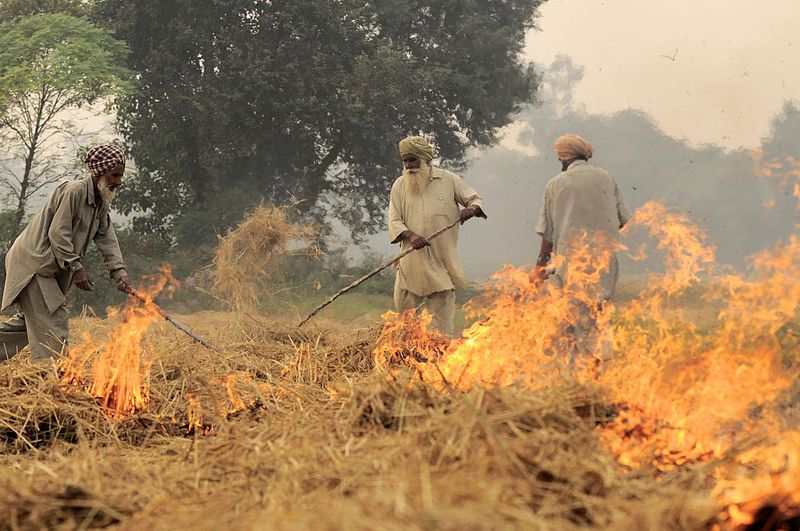
It’s that time of the year when the infamous smog once again chokes the Delhi-National Capital Region (NCR), reigniting old debates on crop-burning and its alternatives. Year after year, almost every newspaper prints scathing columns condemning the smog that settles in the region due to the burning of crop residue. Why do farmers continue to burn crops?

Crop burning occurs during the short period between the harvest of Kharif season and the sowing of Rabi season. This leaves the farmers with around 15 days to harvest their crop and get the field ready for the sowing of seeds. Innovations implemented as a result of the Green Revolution changed agricultural practices. Technological innovations brought in the new mechanized style of harvesting which uses the combined harvester—primarily aimed for rice and wheat—to harvest crops. After running this harvester through the field, the short and stiff residue is leftover.

Upon harvesting the grains, the leftover stubble is cleared. This was cleared manually or by having cattle graze on the field in the earlier days. The leftover residue then provided fuel and fodder for cattle and was used as a source of compost for the fields. Now, as labour costs continue to increase, the work done manually takes more time. Thus, stubble burning, which is a cheap and accessible method of clearing fields for the next season, has become the norm. This has been a major reason for the smog.

But is the smog caused solely due to crop burning by farmers? While there is some truth to the statement made by these columns that condemn crop burning, it remains somewhat simplistic. Unfortunately, this season also happens to collide with Diwali. The already polluted Delhi air is overburdened with the added pressure of multiple field fires, adding insult to injury. But Diwali isn’t the only contributing factor for the decline in air quality. 

As we get closer to winter, the temperature around this time is just starting to drop. We know that hot air, now filled with pollutants, rises. However, as elevation increases, the atmospheric temperature begins to drop due to the thinner atmosphere. At this point, where the temperature starts dropping in the atmosphere, the pollutants remain trapped, creating a shield that prevents the polluted air from rising any further. This causes the pollutants to remain in the air that we breathe, creating smog. The lack of strong winds in the region during this time of the year is also a significant contributing factor and results in the pollutants being suspended in the air.

One can interpret the smog to be the result of the intersection of various unfavourable factors including geography, climatic conditions, industrial and capitalist processes, technology, illiteracy, need, desperation and perhaps, the lack of adequate alternatives.

As a solution, governments have gone from levying heavy taxes on farmers and passing an ordinance for a 20-member committee to tackle air pollution in the NCR. However, stringent laws and harsh punishments rarely, if ever, act as preventive measures. In our present situation, creating committees is simply a redundant act of pushing the burden of accountability on a different set of shoulders.

The recurring smog is battled with feeble water spray machines, air purifiers and masks. In reality, these are all but preventive, and we may have misunderstood the problem at its root for a significantly long time. The introduction of specialized agricultural machines, subsidies and loans along with strict laws are but mitigating factors. None of which consider the long-term health of agriculturists, consumers, soil health, accessibility and soil toxicity—all which are significant and yet not spoken about. To battle pollution arising out of crop residue burning, we must first arrive at a clear understanding of the problem. Dedicated research, trials and increase in government support in agriculture are key to arriving at a robust solution for this problem.

Given these “solutions”, our future seems but a foggier rendition of the present and the past. Policies aimed at diversification of crops grown will help us take a step towards a long-term solution to the adverse effect of the pollution arising from crop burning. However, battling smog does not end here, industrial pollutants demand a more complex approach which is beyond the scope of this article.

A possible solution could be to replace monocultures in favour of polycultures. Diversification of the regions where these crops are grown could also help. Creating policies favouring state-sponsored labour, or perhaps changing the kind of seeds we use. 

Various complexities drive the problem of pollution in India. One may trace the roots back to the green revolution, maybe even condemn it. But the truth of the matter is that we must rethink the industrial model of agriculture that is rampantly in practice today. We must rethink agriculture.

Hiteshi Ajmera is a student of Political Science and Environmental Studies at Ashoka University.

Image Credit: Photograph by Neil Palmer, distributed under CC BY-SA 2.0

We publish all articles under a Creative Commons Attribution-Noderivatives license. This means any news organisation, blog, website, newspaper or newsletter can republish our pieces for free, provided they attribute the original source (OpenAxis). 

Categories
Issue 4

Breathe Again

‘I can’t breathe.” That wasn’t just George Floyd. There were a lot of people who felt like they couldn’t breathe.” 

– Van Jones. CNN commentator/ Former Obama Administration Advisor. Nov. 7, 2020. 

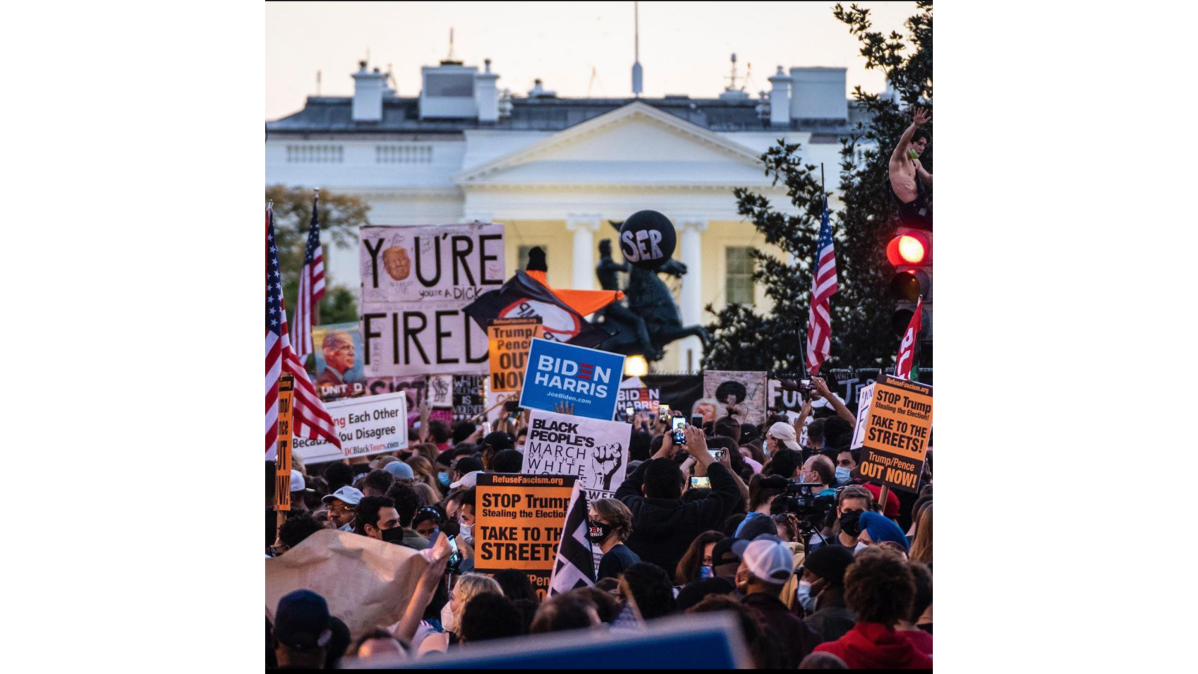
George Floyd’s last words— a rallying cry, and an anthem for those protesting the injustices and discriminations of race and colour in America. Floyd, an African American, was killed during an arrest by the Minneapolis police in May this year, when an officer knelt down hard on his neck for over 8 minutes, suffocating him to death. The incident sparked off a summer of unrest, as racial violence erupted on the streets of major American cities. 

Unable to contain either his relief or his tears as Joe Biden was declared America’s new President-Elect, Van Jones said what was on the minds of 74 million American voters who cast their ballot for the Democratic candidate in this uniquely divisive election, held in the midst of a pandemic. “If you’re Muslim in this country, you don’t have to worry that the president doesn’t want you here. If you’re an immigrant, you don’t have to worry if the president is happy to have your baby snatched away or sent dreamers back for no reason,” Jones elaborated. His emotional response to the election result has gone viral on social media— evidence of the steam that’s been let out of the proverbial pressure cooker that America has been for the months during a tense, vitiated election. 

When Joe Biden launched his presidential campaign, he said he was launching a battle for the soul of America. When he chose Kamala Harris as his running mate he sent a message. Harris, who, with Indian-Jamaican roots identifies racially as Black and is married to a White American Jewish husband is a symbol for all — immigrants, African Americans, racial and religious minorities. And, when Biden accepted the office of President at a rally filled with honking automobiles in the Northeastern state of Delaware on Saturday night, he promised a return to decency in US politics. But how easy will this be to achieve? 

Four years was more than enough to see the divisions sown by an emboldened White Supremacist extreme right-wing rise to the surface of everyday America. Vitriolic campaigns, often dictated by hate-filled propaganda and misinformation have fed economic grievance and fear, created enemies where none existed and propagated the perception of White identity, faith and culture under threat. Trump’s supporters on social media and his allies in the mainstream media further weaponized hate to perpetuate his agenda willfully; discrediting Democrats, political activists, journalists — just about anyone who questioned him — along the way.

From the ban on travellers from six Muslim countries to Neo-Nazi rallies in Charlottesville to antisemitic attacks on synagogues in Pittsburgh, and the most recent incidents of racial violence that sparked a reinvigorated Black Lives Matter movement, to his deliberate characterization of #BLM protests as violence by ultra-left angry mobs, to his targeted campaigns against Joe Biden calling him a corrupt socialist who wanted to take away public wealth from the Whites for ‘others’, America’s spiralling descent into domestic chaos will perhaps be the abiding memory of Donald Trump’s single-term presidency. Even as he threatens lawsuits to challenge the result, Biden’s message to the public is one of unity. ‘We can be opponents, we are not enemies. We are Americans.’ he said. An important message— one that recognizes America’s current political reality. 

In his bestselling memoir, Hillbilly Elegy, conservative author JD Vance exemplified the rightward shift of the poor, white, blue collar American— originally largely Democrat, but one that felt left out of an inclusive politics that he suggests, seemingly prioritized racial minorities. If 74 million Americans voted for Biden, 70 million more chose, unsuccessfully, to re-elect Trump. The underlying message is this—  Trump’s win in 2016 was not a one-off. It is in fact symbolic of deep divisions within American society which is seeing both newer Democrats and newer Republicans push towards the extreme ends of their ideological compasses. 

Decency in politics demands empathy, integrity, courage and tolerance. It demands the ability to listen to your opponent, to live with differences and most importantly it urgently demands an expansion of a middle ground. Sitting halfway across the world, often forced to deal with the aftermath of the follies and misadventures US policy in lands far away from its own shores, one could argue that the soul of America was lost a long time ago, or that the Democratic party’s intentions of speaking for true democratic values are hypocritical. But if you’re in the continental United States, Biden’s pledge to engage and empathize in the wake of social conflict and armed violence in a population known globally for political correctness and liberal principle; and his pledge to rebuild partnerships with traditional allies around the world is an important, necessary step towards  America’s healing— both at home and abroad. 

Maya Mirchandani is a journalist, a Senior Fellow at the Observer Research Foundation and Assistant Professor of Media Studies at Ashoka University.

We publish all articles under a Creative Commons Attribution-Noderivatives license. This means any news organisation, blog, website, newspaper or newsletter can republish our pieces for free, provided they attribute the original source (OpenAxis).