Categories
Issue 20

Copy & Paste: Originality and Plagiarism in Popular Culture

Artists are often inspired by life and take inspiration from creative people around them. James Joyce’s Ulysses and Margeret Atwood’s Penelopiad are based on Homer’s The Odyssey. Taylor Swift wrote Tolerate It after reading Daphne De Maurier’s Rebecca, and Lucy in the Sky with Diamonds by The Beatles was inspired by Lewis Caroll’s Alice in Wonderland. Whether in art, literature, or popular culture, there are elements of the past that amalgamate with the ideas of the present. 

Taking ideas from existing pieces of work and creating something new can be done through adaptation, sampling and spin-offs. An adaptation is when a play or a movie is based on a novel or short story. The film Burning, directed by Lee Chang-dong, is based on Haruki Murakami’s short story Barn Burning. Ramesh Sippy’s Sholay was inspired by The Magnificent Seven, which was based on Akira Kurosawa’s Seven Samurai. Sampling is when a portion of a sound recording is reused in another recording. The catchy instrumental in Jimmy Jimmy Jimmy Aaja by Parvati Khan and Bappi Lahiri was inspired by T’es OK by Ottawan, and was later sampled in M.I.A.’s Jimmy. A spin-off is when a TV show, film, or any other popular entertainment focuses on a few characters or ideas from an already existing work. In 2022, the popular game Wordle inspired many spin-offs such as Nerdle, which had the same rules as the original but was slightly modified. Bollywood uses spin-offs as its “golden goose” and has produced an innumerable number of them, such as Naam Shabana and Bob Biswa. Through these mediums, one can see that it is indisputable that art is not stagnant, and popular culture runs on the creativity of the past. 

Popular culture is known for its “popularity”, and therefore, it’s no surprise that when something gains the attention of many, other artists instantly look towards it for inspiration. The media and art are meant to be provocative and evocative, and it is clear that art influences art. However, when influence merges with copying, the word plagiarism becomes operative. In March, Tiger Shroff was accused of plagiarism when his latest single Poori Gal Baat’s lyrics and style held a striking resemblance to K-pop star Kai’s Peaches. Shroff has stated that he appreciates Kai as an artist, however, people were quick to call him out for not giving due credit. In 2021, Olivia Rodrigo was accused of copying various artists when her debut album Sour garnered global success. She was blamed for plagiarising Taylor Swift and Paramore– even though her album cites credits to Taylor Swift and later, to members of Paramore too. Elvis Costello, while responding to claims that Rodrigo had borrowed from his track Pump It Up, stated, “It’s how rock and roll works. You take the broken pieces of another thrill and make a brand new toy. That’s what I did”. If everyone is making a brand new toy with existing work, where does originality lie? People are quick to judge whenever one piece of work remotely resembles another, and the question arises: are we imposing originality on popular culture?

The latest trend of TikTok (or reels) is one of the mediums where originality both flourishes and perishes. Various audios, dance moves, and jokes become “trends” that everyone on the platform copies. Some put their own twist on it, whereas some directly imitate. It is in this wildly popular phenomenon that the mark of originality and plagiarism gets even more confusing. Is it fair to “cancel” every TikTok that may resemble another? In January, “you’ve gotta put ME first” audio from the television show Empire became a viral trend on TikTok. Who owns this trend? Does it belong to the creators of the show, the creator of the meme, TikTok, or no one at all? Some may view this situation as a plagiarism or copyright issue. However, it also shows the inherent beauty in popular culture. Someone has taken a sample from an existing work and has created something new that has not only influenced many but has also made them laugh. 

The Beatles, Elvis Costello, Lee Chang-dong, Greta Gerwig, Ramesh Sippy are few among many who have taken inspiration and have created something that has lasted in time. It has made a mark, and perhaps years from now, someone might even see the everlasting impact of the trends on TikTok. In a day and age where attention is few and fleeting, art and popular culture remains that which unites and creates. So, perhaps, there is no need to impose originality on popular culture. However, it is important to note that this is in no way an argument for a lack of copyright protection or not safeguarding artist’s rights. Plagiarism is still extremely wrong and those who have worked hard and authentically should always be given credit for their artistic expression. Rather, this is a call for not being so harsh on those who create content that may resemble or be inspired by previous work. As long as the artists are respectful and acknowledging, they should be appreciated and not incessantly compared. The consumers of popular culture need to remember the nature of art is to influence and inspire – not stifle. 

Shree Bhattacharyya is a student of English literature and Media Studies at Ashoka University.

Picture Credits: Shree Bhattacharyya

We publish all articles under a Creative Commons Attribution-NoDerivatives license. This means any news organisation, blog, website, newspaper or newsletter can republish our pieces for free, provided they attribute the original source (OpenAxis).
Categories
Issue 20

A Drink With the Spanish Elite

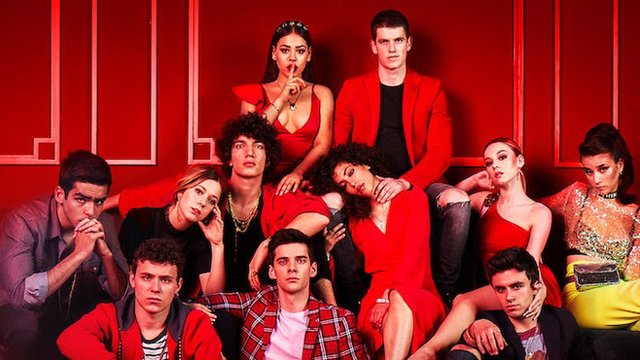
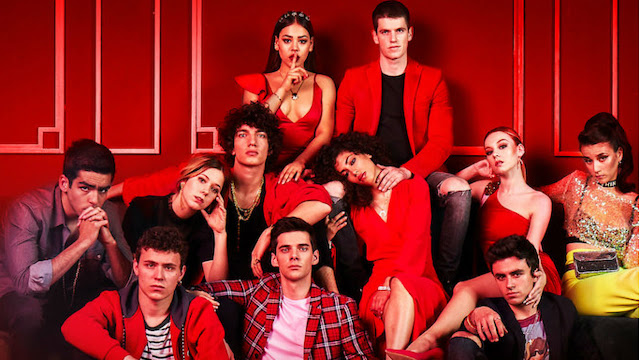
A thriller series with murder, lies, parties, drugs, and drama, Elite hits all the right spots. The series deals with a high school, Las Encinas, and the elite students who come to study at this palace-like building. The series jumps between timelines in every episode, and adds up the suspense to the point where we are ready to burst. The entire story unfolds in the eighth episode of every season, and the character development and diversity throughout the four seasons is phenomenal. The casting will sweep you away from your feet and you will come back for every episode. The series is available on Netflix and is renewed for season 5 which might drop in the summer of this year. So what are you waiting for, Ready Set Elite!

P.S. (No Spoiler Alert) The writer’s favourite episode is S3E8, where he simply was overwhelmed with the amount of emotions this series made him feel.

Picture Credits: PopBuzz

We publish all articles under a Creative Commons Attribution-NoDerivatives license. This means any news organisation, blog, website, newspaper or newsletter can republish our pieces for free, provided they attribute the original source (OpenAxis).

Categories
Issue 19

Lata Mangeshkar: The Sweet Sound of Indian Unity

Lata Mangeshkar, our very own Koh-i-Noor (mountain of light), the Indian Malika-e-Tarannum (queen of melody), will always be one of the brightest jewels in the crown that adorns India’s rich and varied cultural landscape. She lent her voice to generations of actors over a brilliant and magnificent career spanning over six decades. Her repertoire traversed virtually every genre of Indian music, every major Indian language and all possible human emotions.

Lata Mangeshkar’s singing is typically described in hyperbolic terms, but the remarkable feature of her singing abilities is that no number of hyperbolic adjectives seem to adequately capture her musical virtuosity and genius. This is not to be dismissed as a manifestation of adoring, uncritical fandom: this is as true for the millions of her fans as for the connoisseurs. Hindustani classical music maestros have commented on the perfection of her sur (pitch and tone), mastery over laya (rhythm) and her ability to produce very subtle and minute, utterly gorgeous harkats and murkis (quick small variations) that lifted the melody to heights possibly beyond what the music director envisaged. As singers who have attempted to reproduce even a fraction of those subtle touches would know, these movements that sound so easy and effortless in her voice are impossibly difficult. The only singer who matches this talent is her sister Asha Bhosle.

Her individual life story resembles the script of many of the movies she sang for. The tragic and untimely death of her father led her to start working at the age of 13 when most girls are still playing with dolls. She did not attend regular school but learnt to read and write at home. Her attention to language and her perfectionism can be seen in the way she enunciates the lyrics of the language she sang in. She initially tried her hand at acting but did not succeed, possibly because her looks did not fit the standards of conventional feminine beauty of the time. Despite her prodigious talent, her entry into playback singing was not a cakewalk. But after the 1949 super-success of Mahal (for which she sang “aayega aanewala”), there was no looking back. There have been excellent obituaries that capture various aspects of her life and career as it hit stratospheric heights.

Lata understood the exact emotion behind each song and transmitted that very precise sensation to her listeners, who felt as if that song was being sung for them individually, narrating their personal story: the first heady sensation of being in love, the exhilaration of the first kiss, the longing, the waiting, the desire, the romantic banter, rebellion against authority, the heartbreak, the dizzy heights of happiness, the depths of despair, patriotic pride, spiritualism and appeal to the divine, love for nature, philosophical musings, rejecting inequality and injustice – there is a Lata song that expresses all these emotions and states of being.

Her life has been subject to intense scrutiny both during her lifetime and after her death. The internet is rife with all kinds of half-truths and misinformation. She busted many of those myths in her conversation with Nasreen Munni Kabir. Many commentaries after her death were truly bizarre both because they had nothing to do with her music (her most defining characteristic), and because of their extreme self-righteousness that substituted for factual correctness. She was attacked for epitomising Brahmanical privilege, which was odd to say the least, since she didn’t come from a Brahmin family.

Much ink has been spilled over her monopoly power. She was a superstar whose career intersected that of all the male movie superstars, some of whom she outlived: from Raj Kapoor to Dilip Kumar to Rajesh Khanna to Amitabh Bachchan to Shah Rukh Khan. Can anyone seriously argue that her superlative musical talent did not play a role in making their films super successful?

So many of us adore our male superstars but are quick to run Lata down. During her active years, she stood tall like a colossus in a male-dominated world. If we are determined not to discuss her music but other aspects of her personality, why not discuss how she managed to negotiate the very harsh and difficult world of Bombay cinema?

She, like other superstars from sports, industry and Bombay cinema, was friendly with the fiery right-wing Shiv Sena chief, Bal Thackeray. One can (and should) discuss factors that made Shiv Sena so powerful in Mumbai and Maharashtra that it ended up developing alliances with a host of very prominent individuals. Coming to Lata, the question to ask would be this. Did her proximity to the Shiv Sena prevent her from forming deep friendships and bonds with Muslims? Some of her best output has been in collaboration with Muslim artists – actors, music directors, lyricists and poets. For her, they were artists, human beings and her natural collaborators, whom she deeply respected. She never shied away from expressing her respect and love for them publicly. They were as much a part of her personal life as she was of theirs and their families’.

Her universal appeal was evident in the collective outpouring of grief and mourning that the nation plunged into as she left this earth. It didn’t matter that her death was foretold by her recent ill-health; when it actually happened the shock was heartfelt and palpable. It wasn’t just Indians who were grieving as if they had lost a family member. The grief transcended national boundaries.

Lata Mangeshkar sang of harmony and love, and her persona united India across divides — class, caste, religion, gender, linguistic. The despicable attempt to stir up controversy over Shah Rukh Khan’s dua at her funeral was massively rejected. This shows that there is an enormous number of people who refuse Lata’s memory to be tarnished by cheap and ugly gimmicks, and I daresay, by uninformed analyses. As we bow our heads collectively in her memory, we would do well to revive and strengthen the inclusive India which is defined by the sweet sound of her music.

Ashwini Deshpande is Professor of Economics and Founding Director, Centre of Economic Data and Analysis (CEDA) at Ashoka University. She is passionate about Hindi film music and has written occasionally about it, including a long essay on Lata Mangeshkar as part of a debate.  

Picture Credits : Maharashtra Times

We publish all articles under a Creative Commons Attribution-NoDerivatives license. This means any news organisation, blog, website, newspaper or newsletter can republish our pieces for free, provided they attribute the original source (OpenAxis).

Categories
Issue 19

The Pegasus Controversy: Locking the Stable Door

Born of the gorgon Medusa, Pegasus was a winged horse so powerful and valiant that the god Zeus turned him into a constellation, sharing the sky with Leo, Draco, Gemini, Orion, and the like. The flying white horse is a compelling emblem: the Israeli cybersecurity firm NSO Group clearly found it so, naming one of their deadliest systems after it. Their Pegasus was a chimeric attack software, capable of infiltrating the latest and most expensive smartphones. Critically, unlike many others, it did not require a target to make a mistake: you didn’t have to click a dodgy link or download a file to get infected. These were “zero click” attacks, which leveraged vulnerabilities in common software, like Apple’s iMessage.

Pegasus clients could get access to phone data in many ways: if a targeted “spearphishing” email with a link worked, fine. If it didn’t, then they’d use zero-click attacks or other means, including physically getting access to a device and infecting it. The latter was necessary in some cases where the target had reduced their vulnerability to attack by having separate devices which they did not otherwise use. Once installed, it could intercept phone calls, chats, and emails, access photos and videos, grab location data, and even activate the microphone or camera remotely. Finally, it could erase itself, practically without a trace, once access was no longer required.

While the tool has been around for over a decade, it came to public attention in mid-2021, due to a data leak (the irony!). This leak comprised around 50,000 phone numbers that were allegedly targeted by Pegasus. What alarmed the group of journalists analysing the leak was the fact that the numbers included many journalists and activists. In other words, a military-grade cyberattack tool, intended to target terrorists and the like, was being used against innocent citizens.

There are three questions we must tackle: (1) How bad is this? (2) Clearly, some bad things have happened, so who is to blame? (3) What can we do this fix things in the long term, so that such incidents do not occur in the future?

The answer to the first question isn’t as obvious as it first appears, especially in the backdrop of planetary-scale mass surveillance by the US government and many others. The level of utter betrayal involved in things like the Belgacom scandal (where the British government infiltrated a government-controlled Belgian telecom giant) or the Gemalto hack (where the US and the UK together broke into a Dutch company’s systems to obviate the new security systems it was installing on SIM cards) might make this particular case seem banal. It is critically different, however: this is a private company producing military-grade products and should be treated like a missile producer. Worse, unlike a missile, code can be replicated with ease. If Lockheed-Martin sells one Hellfire missile to the wrong client, it is still practically impossible for that client to make more. Not so with this (though, of course, this kind of attack software needs to be constantly updated in a cat-and-mouse game with companies patching their defences). Clearly, there needs to be strong, international regulation of the sale of such systems, with sufficient sanctions built in to prevent misuse.

When it comes to blame, there is a lot to go around. It is important to note that the sale of NSO’s cyberattack software is regulated by the Israeli defence minister, who grants individual export licences, presumably making sure that only vetted, “good” nations get access to it. The leaked data and subsequent forensic analysis, however, indicate that the majority of these vetted nations swiftly reneged on their promises (to use this power to target criminals) and started targeting journalists and activists. This is not to say that the blame lies only with these nations: it beggars belief that NSO and the Israeli defence ministry, both supremely competent institutions, were unaware that their vetted clients were doing bad things. It would appear that they decided to look the other way. In India’s case, we have neither a strong data protection bill nor real public pressure around data security and privacy (along with outdated laws and oversight in this area). Misuse is practically inevitable, especially given that it would be almost impossible to prove in court.

What can be done? Here, I strongly agree with many other experts: laws, technical defences, and good cyber hygiene are all necessary but not sufficient. At the end of the day, the main thing that will stop this from happening in the future is strong and steady public awareness, and anger at such incidents: a government must know that this is an issue that can lose it an election. We do not have anything of the sort in India today: outrage at a privacy breach is a coffee table conversation, and, frankly, not even a heated one. If Shark Tank produces more emotion than Pegasus, don’t expect privacy breaches to be taken seriously. Until that time, the Indian government, among others, will pay only lip service to protecting privacy and security. After all, the government represents its citizens – and we, clearly, don’t seem to care.

Debayan Gupta is currently an Assistant Professor of Computer Science at Ashoka University. He is also a visiting professor and research affiliate at MIT and MIT-Sloan. Debayan’s primary areas of interest include secure computation, cryptography, and privacy.

Picture Credits: Kaspersky Daily

We publish all articles under a Creative Commons Attribution-NoDerivatives license. This means any news organisation, blog, website, newspaper or newsletter can republish our pieces for free, provided they attribute the original source (OpenAxis).
Categories
Issue 19

Downton Abbey: A Must Watch Regal Drama

Let’s be honest, who doesn’t like period dramas? Bridgerton swayed us all away, and we cannot wait for Season 2 to drop. There are, however, many more period dramas out there and one such is Downton Abbey – the regal, elegant, and disciplined house of the Crawley Family, headed by The Earl of Grantham (well actually The Dowager Countess is the one who rules the show). The story spans over six series and fifty-two episodes and a movie, Downton Abbey is a phenomenal work of art. It deals with the stories of characters ranging from the earl’s daughter to maids and chauffeurs. The depth of characters, plot twists, deaths, and Maggie Smith will leave an everlasting impact on anyone who watches it. The series is available on Netflix and Amazon Prime. Thank me later.

Lakshya Sharma is a first-year undergraduate student at Ashoka University. He is an economics and media studies student. Apart from his academic interests, he has a keen interest in writing and fashion.

Image Credits: Amazon Prime

We publish all articles under a Creative Commons Attribution-NoDerivatives license. This means any news organisation, blog, website, newspaper or newsletter can republish our pieces for free, provided they attribute the original source (OpenAxis).

Categories
Issue 19

Mirror, Mirror, on the Wall… What Makes Wordle the Best of All?

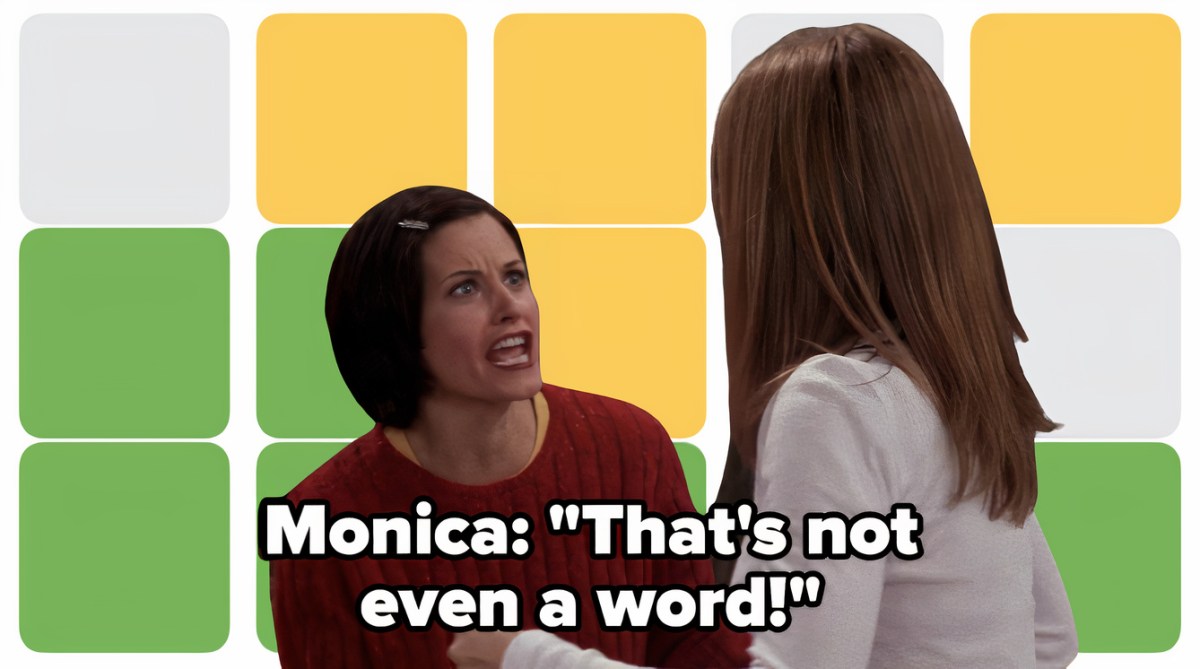
Every day around three million people open Wordle and wrack their brains to think of a five-letter word that will turn the row of boxes green. Wordle is a wordplay game that gives its users six tries to come up with the correct five-letter word. Each guess may result in one or more boxes turning green, yellow, or black. Green indicates that the letter is correct, yellow shows that it is correct but is in the wrong place, and black means that the letter is not there in the word at all. 

The catchy moniker comes from a pun on the founder’s name, Josh Wardle, who invented it for his word-games loving partner. Wordle was released publicly in October 2021, after which the game catapulted into a viral sensation. In January, Wordle became the first Twitter trend of 2022, and it earned a monetary stamp of approval when New York Times (NYT) bought it from Josh Wardle. Wordle’s success is indisputable, but there is one question that everyone is asking (well, other than, can you just tell me the first letter of the word, please?) — what is it that makes Wordle stand out? 

On February 11, Wordle saved a life. A man broke into Denyse Holt’s home in Illinois, U.S.A., and locked her in the basement without any food and medication. Her eldest daughter got concerned when Denyse didn’t text her daily Wordle score, as was the routine. She was finally rescued after her daughter alarmed the neighbours. 

Wordle is now intrinsically tied to our habits and behaviour. Denyse plays the game every single day, much like millions around the world, so much so that a disruption in this pattern meant that something had gone wrong. Wordle is now an essential ritual amidst the pandemic, though its roots go back to the time-tested crossword. For those who grew up solving the crossword or saw their family solving it every day, Wordle has become a nostalgic reminder of previous habits and memories. A routine that is perhaps lost or belongs in the past is now being reinforced through Wordle, adding to its appeal. The sentimentality behind the game is probably why the New York Times rushed to acquire it, and many blame the NYT for infringing on this sentimentality that was – till then – unstained by capitalism. In a matter of few months, Wordle has found its place in our homes and has influenced family ties – as with Denyse Holt. 

In December 2021, Josh Wardle created a share button that generates a spoiler-free emoji grid because he realised that people enjoyed sharing their Wordle scores on social media. Every day, millions itch to share their scores with the entire world. However, a dopamine infused high after winning is something that all games provide, but what sets Wordle apart is that it restricts your chances to win — both in the number of tries and hours between each game. Perhaps it is this all-or-none approach that makes Wordle so addicting. Moreover, Josh Wardle made the sharing button “spoiler-free”: it doesn’t reveal the answer, only the score. It is surprising that there is an unspoken oath against revealing answers to Wordle. Given the current trend of live-tweeting every thought, other internet phenomena seem to be immune to this oath of secrecy. 

Claims that Woordle has become harder since the NYT took over were floated by users on February 17 after a particularly difficult puzzle. Some even raged at the WOTD (Wordle of the Day) with five-letter curse words. Though, even with emotions running high, no one disclosed the word. One tweet even emphasised it in caps,“NO SPOILERS OR BLOCK”. The NYT may be spoiling everyone’s fun by giving hard words, but fellow players never ruin it for each other. Maybe it is this secrecy and loyalty that keeps Wordle interesting – the idea of “we’re all in this together”. 

However, are we all in this together? Wordles of the World (on GitHub) has over 350 entries of Wordle in more than 91 languages, such as Cornish, Portuguese, Urdu, etc. Many have also copied the simplicity of Wordle to suit their niche interests, such as cricket or Taylor Swift. These can be seen as faux-Wordles, but their success still ties back to the craze of Wordle. Even those who were not playing the game were instead busy consuming memes about it. Tweets with coloured boxes that looked like the shared score had captions such as “not wordle, just a valentine’s chocolate” or “not wordle, just fried rice“. Wordle not only managed to rope in players but also meme-ers. Whether it be because of nostalgia, family, entertainment, faux-Wordles, or the simplicity of the game — Wordle makes us believe that we are all in this together. 

Shree Bhattacharyya is a student of English literature and Media Studies at Ashoka University.

Picture Credits: Warner Bros.

We publish all articles under a Creative Commons Attribution-NoDerivatives license. This means any news organisation, blog, website, newspaper or newsletter can republish our pieces for free, provided they attribute the original source (OpenAxis).

Categories
Issue 19

Oops, I Got Influenced Again!

Who thought when Oscar Wilde talked about “immoral influence” or Shakespeare pressed on “heavenly influence” the word would one day change its meaning forever. For them, it meant concepts such as the effect of heavenly bodies on humans or invading someone’s thoughts. Etymologically, the word “influence” comes from the Latin word influere meaning in ‘into’ + fluere ‘to flow’, meaning inward flow. Today, the word is not just a verb but a career, a job description. Influencers have evaded every sphere of our life. Our decisions, choices, and style revolve around their Instagram grids. But who qualifies as an influencer? What does it mean to be an Influencer? 

We can always say that Kylie Jenner and Kim Kardashian are influencers because people adapt their style. But is that all there is to being an influencer, people adapting your style? Influencing today has evolved due to the emergence of social media, especially Instagram and TikTok. Small videos of people doing things that are not that exceptional or unique become hyper-popular within hours, earning them the label of “influencer.” Popularity, then, seems to be an indicator of being an influencer. Popularity, however, is a subjective concept. One can be famous in a particular area but completely unknown in another. In order to tackle this confusion, OpenAxis decided to have conversations with people who are doing the work of social media influencing. Shaina Ahuja (@shainace) is a Fashion Influencer who has worked with famous brands like L’Oreal and Daniel Wellington. She describes an influencer as a person with high-quality content, a decent following, and confidence among many things. Does it mean that anybody with these characteristics is an influencer? No. Shaina goes on to add that Influencing is a career, and not just anyone can turn up and call themselves an influencer. They need to be genuine, committed to their audience and have a positive impact. Influencing comes with a lot of responsibilities– one needs to stand for a cause, push for positive change and engage in brand promotions.

Hiten Noonwal, (@hiten.noonwal) is a gender-fluid performing artist known for their avant-garde style and for being a Fashion educator. They have worked for Ritu Kumar before becoming an independent artist, and for them, being an influencer means self-acceptance, commitment, and being fearless. “You have to love your art and be proud of your work” are their words. Popularity, for them, is not a parameter of being an influencer, instead, it is gaining the right audience. They go on to say that self-validation is the key, and if one cannot influence themselves, they cannot influence others. Influencer then does not have a standard definition. It has layers, levels, and fields. 

“Every new collaboration is an opportunity for me”

Shaina Ahuja 

Shaina tells us that she started her work back when she was in Grade 10 before Instagram was so popular, and TikTok never existed. She began on Facebook and today she can proudly say that her years of hard work has begun paying off.

For Hiten, the work was tougher because of their identity. Being a queer influencer in a heteronormative society is not only tough but dangerous for one’s mental and physical health. People don’t see your work or art, but your gender or sexuality first. They go on to assert, “Queer People are fierce”. To be an influencer one needs to be fierce. People will always criticize your work, art, and job, but you need to rise above those obstacles and emerge successfully. 

“Queer People are fierce”

Hiten Noonwal

Shaina and Hiten both agree on some common elements that one should have for being an influencer but those common elements are not as important as individuality. These common elements include commitment, consistency, quality, understanding (your audience) and above all love for your job. It is not a fairytale, and the amount of hard work required to reach the level one needs to be able to endorse brands and commercialize one’s work is breathtaking. 

The conversations with Shaina and Hiten show the complexities of being an influencer and how the understanding of the word starkly differs from person to person. They both agree that posting thousands of photos, reels, and Tiktoks does not make one an influencer. One needs to understand the marketing industry, have a certain sense of panache, have good taste, and have quality in their work. One must also be ready to accept the responsibilities that are on one’s shoulders once people start following them. Above all, one must be confident, positive, and driven to achieve their goals and have a positive impact on the world.

Lakshya Sharma is a first year undergraduate student at Ashoka University. He is an economics and media studies student. Apart from his academic interests, he has keen interest in writing and fashion.

Image Credits: Thom Bradley

We publish all articles under a Creative Commons Attribution-NoDerivatives license. This means any news organisation, blog, website, newspaper or newsletter can republish our pieces for free, provided they attribute the original source (OpenAxis).
Categories
Issue 19

India Art Fair 2022: Director Jaya Asokan On What to Expect This Year

The India Art Fair is the leading platform to discover modern and contemporary art in South Asia. In anticipation of its upcoming 13th edition – taking place in New Delhi from 28 April till 1 May 2022 – Jaidev Pant has an insightful conversation with Jaya Asokan, the Fair Director.

_

The India Art Fair has become a trademark exhibition for modern art, with people from all over the country looking forward to the event. What can one expect this year? What should audiences watch out for?

The upcoming edition of the India Art Fair will be first and foremost a celebration of the strength and resilience of artists from India and South Asia. From the monumental fair facade being designed by the young Indian artist Anshuka Mahapatra, our pick from an open call we led in partnership with The Gujral Foundation, to a long and diverse list of names being shown within our exhibition halls for the first time, the aim is to give a platform to new talent and to present the bright future of South Asian art. 

Along with the stellar list of 60+ galleries from India and abroad presenting at the fair, an exciting new dimension of this year’s fair will be the unprecedented number of non-profit art institutions, museums and artist collectives. From a large-scale mural celebrating gender and creative expression by Bangalore based transartist collective Aravani Art Project supported by Saffronart Foundation, spotlighting grant-winning projects of Serendipity Art Foundation and Space 118 to incredible presentations by legacy arts organizations such as the Kiran Nadar Museum of Art, Kochi Muziris Biennale, Chennai Photo Biennale and many others, we hope we bring the crucial work being done at the grassroots level in India into focus.

At the same time, we will have an eye to the region’s rich art history, with a newly revamped ‘Platform’ section being led by curator Amit Kumar Jain, and including a selection of masterpieces of Indian living traditions, including Madhubani paintings, primitive bhuta masks and bronze sculptures. We believe in the dynamic cultural scene of India today, the binary classification of folk and contemporary art simply does not hold, and we are pushing to place both at a level playing field.

You can also expect to see important and iconic works by India’s most loved modernist artists from Amrita Sher-Gil to M.F. Husain –– a perfect gateway into understanding and appreciating our art history. At the same time, our public programme of talks, performances, outdoor art projects and artist-led workshops will show off the contemporary voices and presentations, giving audiences an opportunity to participate and take a closer look at the variety of works on display. 

Do you think the rise of NFTs and technology in art has changed what kind of art and artists sell in the market? Will the fair be incorporating the NFT currency or conversations around it in any form? 

The fair is a place to reflect on and give shape to contemporary art world trends. For the 2022 edition, we have invited Terrain.art, a pioneer in this field in India, to present digital and NFT works by young Indian artists like Amrit Pal Singh, Khyati Trehan and Laya Mathikshara in a dedicated space at the fair. We will also have a talk around NFTs through which we hope to shed some light on the blockchain model and how artists are using it. 

I feel modes of circulating and selling art are always changing, and whether it is art that goes through traditional routes or NFTs, ultimately the story and work put into the piece will always be most important, along with the community of people it inspires. We are looking to NFTs as an exciting possibility, the full potential of which has not yet been fully explored, and are keen to lead the discussion in this space. 

Do you think with the pandemic and the consequent shift to mostly virtual art exhibitions and viewings, more diverse audiences are becoming interested in the art world? Or has the digital divide in India further limited who can access art-related events? 

For sure! Digital has allowed art to flourish beyond the big cities, where most galleries are located, as well as become an important means for both collectors and creatives to discover and follow the works and careers of their favourite artists. Although it can never fairly replace seeing and experiencing art in flesh and in person, the power and potential of the online cannot be understated.

Social media especially has become a major medium for sharing and consuming art, and from a market perspective too, it’s having an incredible impact on the art world. Art can be shared, admired and bought all on a smartphone. In very concrete terms, the result is that we are seeing millennials and young buyers buying art online and on social media, without ever having to visit a physical gallery, art fair or auction house.

Galleries have been quick to jump on board too and are using social media and other digital platforms to expand their presence, publish prices and increase exposure for their artists. And both galleries and artists are seeing a growth in art transactions originating online, even among their more traditional “offline buyers”.

I also see digital spaces and communication as an opportunity for knowledge sharing and cross-boundary collaboration. In fact, we recently held a fully virtual international symposium on the future of South Asian art titled ‘Staging the Contemporary’ with Ishara Art Foundation in Dubai, with tremendous results. Artists and practitioners from all across the region from Mizoram and Assam, Delhi, Colombo, Karachi and Kabul were able to come together with a global audience — a feat that is only possible online.

As per you, what kind of art is more popular in the country currently? Are people gravitating towards more traditional artworks and artists or has the modern art space with emerging artists taken over the scene?

Even though there is an active and growing interest in digital art, photography, performance art and so on, the buying we are seeing currently largely remains in the domain of more traditional art forms like painting, prints and sculpture. The fair is the perfect place to discover art, across a range of mediums, styles and price points. Wherever possible, we attempt to push these boundaries and bring in new visions of what art can be to our audiences.

What vision do you have for the Art Fair 5 years from now? Where do you think the art world will be in terms of artists, gallery owners, and consumers?

India’s art market is dynamic with strong domestic demand. The market has been resilient and the pandemic year sales recorded an increase of 57% from the previous fiscal year sales of ₹560 crore / US$ 75 million. 

We’ve seen greater collaboration and curiosity amongst art world players to learn, experiment and adapt to changing audience needs, whether it’s galleries coming together under collaborative digital efforts such as South-South, InTouch and TAP India to sell works, or engaging local audiences under Mumbai Gallery Weekend and Delhi Contemporary Art Week. Auction houses have upped their digital games and artists too, with online sales initiatives such as Art Chain India, and supporting each other through the challenging times. 

As a fair, we are striving to take this upward trajectory further, in terms of continuously bringing not just fresh new artists but also nurturing new and young collectors. The art world can be daunting and opaque, and a big aim of the fair is to open access, whether through the strength of our editorial and social media voice or year-round programming to give local and international audiences an insight into India’s dynamic arts scene. 

Moreover, the boundaries of art are certainly blurring, and we welcome it. A big aim for the future is to build more and more bridges with other creative fields such as design, fashion and architecture — continuously welcoming people into the world of visual art from neighbouring territories and renewing our idea of what art can be. 

Finally, I believe the future of art will be incredibly diverse. I really hope we’re able to broaden our horizons and champion artists across different backgrounds, genders, age groups and abilities. 

Jaya Asokan is Fair Director at India Art Fair, where she is responsible for the strategic and curatorial enhancement of the fair, and increasing its footprint in India and internationally. Bringing over 20 years of experience in numerous creative industries including arts, culture, design, fashion and luxury, Jaya has played an important role in repositioning the fair whilst spearheading international gallery and institutional participation along with overseeing the partnerships and production.

We publish all articles under a Creative Commons Attribution-NoDerivatives license. This means any news organisation, blog, website, newspaper or newsletter can republish our pieces for free, provided they attribute the original source (OpenAxis).

Categories
Issue 19

Another Decade, Another Drama: The Crown’s Controversies

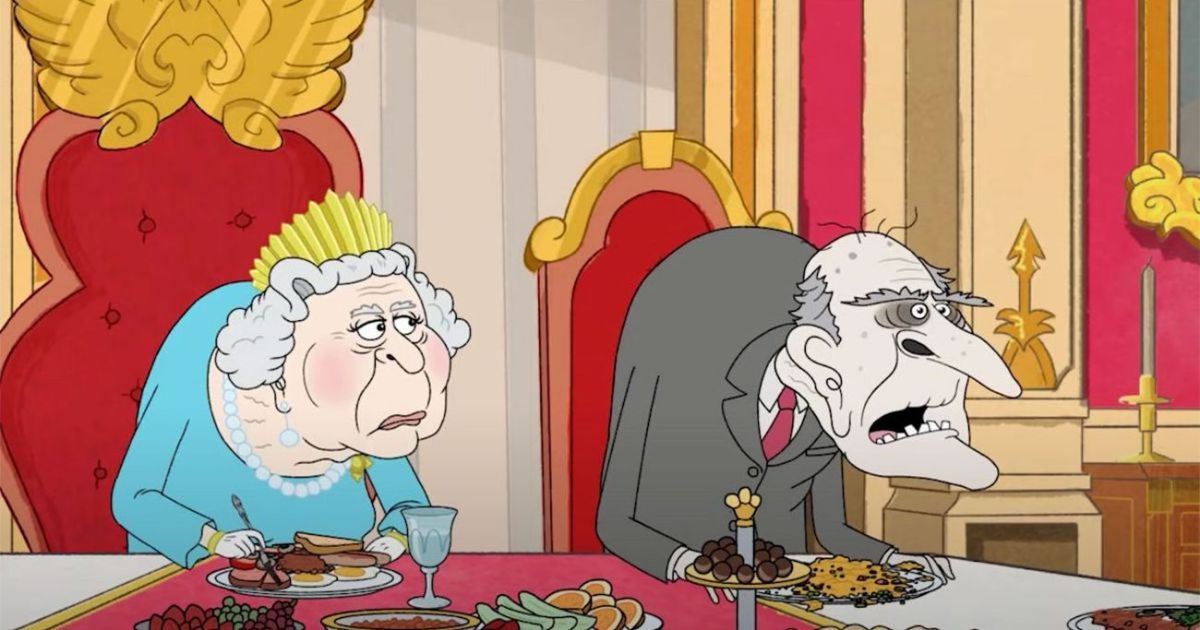
6th February 1952, a woman was vacationing peacefully in Kenya with her husband, free from worldly stress. However, peace and her job never went hand-in-hand, and from that day her long-distance relationship with peace was going to get even more distant. Her father, incumbent to the top office, had died. This young woman had no idea that her dearest father never woke from his sleep until her husband, The Duke of Edinburgh, broke the news to her. She became leader of multiple nations and peoples overnight and in that capacity Her Majesty swore to her job– ‘till death do us part’. 

It has been 70 years since British people have been singing “God Save The Queen”. At 96, Her Majesty has become the longest-reigning British monarch and longest-reigning female monarch in history. Her reign of exceptional growth and development was, however, not free from drama. Who knew even the title of The Queen cannot save you from all this drama, here’s to you a compilation of seven controversies that Our Good Gracious Queen had to endure.

  1. Sister Issues

A lovely, young, and charismatic woman with an excellent sense of humour, HRH The Princess Margaret was absolutely devastated by the death of her dearest father. Life, however, had planned more losses than the young royal would have expected. Her Royal Highness fell in love with Group Captain Peter Townsend shortly after her father’s death, and their affair became public when the princess was seen picking fluff off his coat at her sister’s coronation. Falling in love was not her sin – being a royal was. Peter Townsend was already married to Cecil Rosemary and had filed for a divorce due to her infidelity. The Church of England (The Queen heads the church) strictly prohibited marrying a divorcee. (Sounds like Romeo Juliet, doesn’t it?) Prime Minister Churchill refused to allow the marriage, but the public was in favour and The Queen squished in between. In the end, she was unable to give her blessing and Townsend was positioned in Brussels. Their affair and his banishment made headlines and later caused an amendment in a constitutional article. (A tad more dramatic than Shakespeare, I guess)

  1. When she broke her silence

A finger on your lips is not a punishment but The Queen’s governing principle. Constitutionally, she cannot issue any public political statement. EVER. As a compliant human, she never broke her law. That is until she found a woman who nudged her to break her unbreakable vow — Margaret Thatcher. An exceptionally strong, opinionated, and powerful Prime Minister, she always did what she wanted to do. During the Apartheid Regime in South Africa, the entire Commonwealth agreed to impose sanctions in order to put an end to this inhumanity. Forty-eight countries signed, however, one did not. Guess who? The UK. Baroness Thatcher downright refused to sign any kind of sanction that was against Britain’s economic interests, and the rift caused The Queen to say something she may still regret. Sunday Times published that her majesty believes Thatcher to be “unkind, uncaring”, and that “she was dismayed by her behaviour.” Margaret was furious with the statement and its publication and the palace apologised.

  1. Son gone rogue

Adultery– The church condemns it. The opinion of the Head of the Church is not too difficult to conclude, she condemns it as well. Children, however, usually end up doing what their parents despise the most. Royal children are no different. Charles, The Prince of Wales, never moved on from Camilla Parker-Bowles (née Shand). He admitted to the public about his affair and brought the much needed public disapproval his family needed. This is common knowledge, but what many do not know is that The Boss already knew what her son is up to. According to sources, one of her employees told her about her son’s affair with the wife of a brother officer. The Queen later admitted to Princess Diana that “He is hopeless” (Ouch) so we do know her opinion on infidelity after all. The public acceptance of the affair and the queen’s not so altruistic behaviour brought a lot of negativity for the family.

  1. Diana

Need I say more? The name is itself legendary. Her Royal Highness The Princess of Wales, colloquially, Princess Diana, is a woman who cannot be justified in words. Diana, the people’s princess, was a gift to the public. She was a soft corner among the harsh-cold royalty, the showstopper– but also a trouble-maker. “I follow from the heart” were Diana’s words on her work and actions. Her heart, however, was usually at odds with the royal protocols and the rules of the institution. From writing her own vows to putting family before duty, the beloved princess was a royal rebel. Her fashion and clothing always had some hidden message from the black sheep sweater to the iconic revenge dress. The biggest turmoil on her ledger comes from the famous 1995 interview she gave to Martin Bashir, where she said, “We are three in this marriage, so it’s a little crowded.” The Royal Family’s mistreatment and her death painted the institution in black, forever.

  1. Keeping Up with The Kueen

Long before Keeping Up with The Kardashians aired, Prince Philip hired BBC to create a documentary on how “hard” the family works to keep their dying reputation from crossing to the other side. Cameras were installed, the palace was cleaned and the royals were called. The film emerged as a commercial success in terms of the number of views but was criticised heavily. David Attenborough said the documentary was “killing the monarchy”. The Queen ultimately banned the documentary and it never saw the light of day again. Recently it was leaked on YouTube, however was quickly pulled off. HRH The Princess Royal once said, “I never liked the idea of the royal family film. I always thought it was a rotten idea.” 

  1. The American Influence

May 2018, a fairytale event took place at St. George’s Chapel, Windsor Castle. His Royal Highness Prince Harry married Rachel Meghan Markle, and everything seemed picture-perfect. Though, as they say, too much of anything is hazardous, and too much perfection brought its own fair share of imperfections. The British Media was after Meghan’s life, her colour, moves, words – everything was criticised. History was repeating itself. Prince Harry always blamed the paparazzi and media for his mother’s death, and now his wife was being targeted. The lack of support from his family, images of Diana’s death, and continued molestation by tabloids, ultimately pushed the prince away. They broke precedent, and Prince Harry and Meghan left the family. The decision shook the institution to its core, with The Queen and The Prince of Wales caught off-guard. Additionally, The Oprah Interview became a major cause of trouble for the family, where the Royals faced allegations of racism and of not showing enough support– the latter of which was also a matter in the case of Princess Diana. The Royal Family was put on a public trial after the interview, receiving mixed remarks and judgements.

  1. His Royal Highness Prince Andrew

Virginia Gruffe is a name that Queen Elizabeth will not forget in her lifetime. An American national who was once allegedly assaulted and lent out to powerful men by hedge fund manager Jeffery Epstein, has put forward her charges against His Royal Highness Prince Andrew. Andrew, a friend of Epstein, has been charged with sexually assaulting the woman (as a minor) when she was “lent out” to him by Epstein. Though Andrew denies such allegations, The Queen has withdrawn all of his military and royal titles till the battle prevails. Earlier, he voluntarily stepped down from all his royal duties but the evolving nature of the criminal charges forced the monarchy to withdraw all kinds of support. Andrew might be guilty or not but his actions have caused enough damage to the reputation of the institution and earned him the title of a private citizen. The case got settled on February 15 2022, with Prince Andrew praising Virginia for her bravery.

Lakshya Sharma is a first year undergraduate student at Ashoka University. He is an economics and media studies student. Apart from his academic interests, he has keen interest in writing and fashion.

Picture Credits: Daily Star

We publish all articles under a Creative Commons Attribution-Noderivatives license. This means any news organisation, blog, website, newspaper or newsletter can republish our pieces for free, provided they attribute the original source (OpenAxis).

Categories
Issue 19

Issue XIX: Editor’s Note

As the world recovers from a bruised way of living that a two-year-long pandemic and multiple lockdowns had inflicted upon us, humanity looks for respite. We turn towards our loved ones, we turn towards our communities, and we turn towards art. With art as a symbol of our perspective – one that has been forever altered due to the pandemic – we aspire for art to re-assume the position of being our reference points. Art structures our emotions, passions, and breathes life into our imaginations. Perhaps, it is this characteristic of art that gives it so many forms. Some find art in a canvas, an Instagram feed, or even in a five-letter word. For others, art is found in institutional boundaries, while some find it on the street walls outside those very institutions. However, even with the fervour by which it is created and shared, art still remains vulnerable. It can be destroyed, taken away, or even influenced by politics and power. It is this complexity, the tranquillity and the chaos, that the 19th issue of Open Axis aims to explore.

Artist, academic, and researcher Vishnupriya Rajgarhia lyrically writes “Art is personal, the personal is political, they are social and to most ephemeral” about the birth of the contemporary art world, travelling from the ruins of the Soviet Union to modern art galleries in Central Asia.

In remembrance of the late Lata Mangeshkar, Ashwini Deshpande, an avid listener of Hindi film music, traces the queen of melody’s life through her music, her excellence, and persona that united India across divides.

A legal challenge to marital rape laws has opened up conversations around consent around the country. Shreyashi Sharma explores what our laws on rape actually say and whether they are enough to protect women and their rights.

Debayan Gupta, whose primary interests lie in secure computation and privacy, writes on the controversy surrounding Pegasus and why the public has to be as watchful as governments.

Shree Bhattacharyya dissects the addiction behind Wordle, the word-play game that has become a viral phenomenon in a matter of months.

The India Art Fair has become a trademark exhibition for modern art, with people from all over the country looking forward to the event. In conversation with Open Axis, Jaya Asoka, the director of the India Art Fair 2022, tells us about what one can expect from this year’s rendition.

In a day and age where every entity has an online presence, Jaidev Pant questions whether India is missing an opportunity to upskill its homemakers to run their own businesses.

Meanwhile, Lakshya Sharma goes back to the past and counts down the most riveting controversies for the seven decades that Queen Elizabeth II has been a monarch.

Arunava Sinha, a translator and a professor of Creative Writing, explains the forces behind Amazon’s decision to shut down Westland publishing while examining the larger implications this has on the English language trade publishing business in India.

Influencers impact every aspect of our life, especially on social media. In conversation with two Indian influencers, Lakshya Sharma explores what it means to be an influencer, how it ties into one’s identity, and the impact it has on the world.

Coming to art in the digital world where the definition of what constitutes art is driven by ‘likes’ and ‘shares’ versus technique and skill, Maahira Jain talks about the boons and banes of social media in the art world and the ongoing sanitisation of art.

– Reya Daya, Shree Bhattacharyya, Rutuparna Deshpande & Biblop Kumar Das

Illustrator of cover image: Rutuparna Deshpande