Categories
Issue 7

NPR Tiny Desk Concert: Anderson .Paak and the Free Nationals

Courtesy: YouTube, NPR Music

It’s no surprise that Anderson .Paak’s concert is the most viewed video of the NPR Tiny Desk Concert Series. Backed by long-time collaborators, Free Nationals, .Paak offers stripped down versions of songs from his then released record, Malibu. Intimate, informal and ingenious, the band offers an unmatched dynamism as an R&B four-piece outfit. What stands apart is .Paak’s performance as a singer-drummer. Switching between effortless rap and flowing vocal melodies, .Paak never loses hold of his tight drum groove that is accentuated throughout by Kelsey Gonzales’ bass playing.

Over these laid-back grooves is the perfect coalescence of hip hop and soul music, offering a perfect entry point into rap music for those who tend to drift away from hip hop’s usual associations with old-school gangsta rap, or trap music. Even if the music doesn’t strike a chord with your musical inclinations on first listen, .Paak’s charming smile, the band’s chemistry and humorous banter in between songs will leave you captivated. Throughout the performance, look out for the band member wearing shades, he is undoubtedly the one who stands out from the rest.

We publish all articles under a Creative Commons Attribution-Noderivatives license. This means any news organisation, blog, website, newspaper or newsletter can republish our pieces for free, provided they attribute the original source (OpenAxis).

Categories
Issue 7

Road to Recovery: A Conversation on Covaxin with Prof. Gautam Menon

What exactly do clinical trials for a new vaccine involve? 

The first step after a potential vaccine is developed is to try it out on animals to check that it is not toxic and that it leads to an immune response. If this step is successful, the next stage is to move to human trials, where these preliminary trials are called phase 1 trials.

In such trials, healthy volunteers (typically 20-50 in number) are injected with one of a range of possible doses of the vaccine, to determine the optimal and safe dose, starting from very small doses. Whether the vaccine elicits an immune response is also verified. In phase 2 trials, the immune response is examined further, and questions of side effects and safety are also explored in a larger group of volunteers, typically more than 100.

Finally, phase 3 trials involve administering the vaccine to a much larger group, often tens of thousands of people, selected to be representative of the population. These trials are called “randomized control trials”. In these trials, about half the participants enrolled are given a placebo, something that is harmless to the body, while the other half is given the vaccine. No one knows, not even the doctors administering it, whether the injection contains a placebo or the real thing.

In India, emergency use authorization has been granted to two vaccines: Covishield, made by the Serum Institute of India and Covaxin, made by Bharat Biotech.

Since Covaxin didn’t complete its phase 3 trials and publish them, what can we confidently say about its efficacy? 

At the moment we can say little since there simply is no data yet. In the much smaller phase-1 and phase-2 trials, the vaccine elicited a robust immune response, making antibodies against the virus. The vaccine was also shown to be safe in appropriate doses. It is based on an inactivated whole-virus vaccine platform which is well-understood. However, it is important to understand that efficacy—whether a vaccine works well at preventing you from getting the disease under ideal conditions—is not a simple and immediate consequence of immunogenicity, the ability of a vaccine to provoke an immune response. That is why we need phase 3 trials in the first place.

Is there a broader misunderstanding of immunogenicity and efficacy? What is the difference and why is it important? 

A vaccine should certainly provoke a response from the immune system. That’s central to how vaccines function. But whether it works in preventing people from getting the disease – protective immunity – is a harder question and there are a few things that could go wrong. One extreme case is that getting vaccinated might, paradoxically, increase your chances of severe disease, through what is called ADE or antibody-dependent enhancement. Another possibility is a vaccine-associated enhanced respiratory disease, in which antibodies induced by the vaccine bind with viruses and form immune complexes that clog the lungs. These are possibilities that a phase-3 trial should rule out.

How is Covaxin going to complete phase 3 trials?

What should happen, in principle, is the following: The scientists running the trial will wait till a certain number of people, a number pre-approved in the trial protocol, within the group that received an injection, are diagnosed with COVID-19. They then go back and check whether these people belonged to the group that was administered the placebo or the actual vaccine. If there are many more cases in the placebo group than the vaccine group than can be accounted for by chance, that suggests that the vaccine works in protecting against developing the actual disease.

The problem is that it may take some time to reach this stage of having a predetermined number infected with the disease. Since most people develop no or only mild symptoms of the disease, they may not notice they have been infected.

A second problem is that phase-3 trials are being done in a background where a good number of people have already been infected in the past, so are immune to the disease for at least some time, as far as we know. These people won’t develop the disease even if they encounter an infected person.  

Finally, currently in India, all this is happening in the background of a steadily decreasing number of new cases. This makes it harder to have new infections in the trial group.

Why aren’t people given a choice on which vaccine they would prefer? 

The government, which is, after all, making these vaccines available for free at this point, may have wanted to ensure that they did not appear to be favouring one over the other when granting emergency-use approval. Perhaps there is also an element of national pride in this, in that Covaxin is a fully indigenous vaccine while Covishield is the result of a collaboration with international groups, at Oxford University and the pharmaceutical giant AstraZeneca.

What, according to you, is the biggest health concern with not having any efficacy data on Covaxin? 

Whenever one is administering a vaccine to a healthy person, one would like to know that it has been worth it. Does the vaccine, for example, provide protection against the disease to more than 50% of the population it is administered to? A phase-3 trial, precisely because it is so large and planned as a randomised control trial, is a good way to ask this question as well as to look out for possible rare but serious side-effects of being vaccinated.

Would it have been a better move to rollout Covaxin after phase 3 clinical trial data was published? Why do you think it was encouraged over other alternatives? 

It would have been better to rollout Covaxin after the efficacy data became available, in my opinion. Data demonstrating good efficacy and safety, which could have taken another month or so to obtain, would have spoken for itself.

Of course, these decisions have to be made based on available information as well as projections for what might happen in the future, such as new variants that are more transmissible. There are certainly cases where granting emergency use authorisation might have been justified. This is why scientists as well as the lay public need to understand the basis on which these decisions were made.

The committee that approved Covaxin distribution may have had data that was shown to it that suggested that it was efficacious. We don’t know because neither the names of the committee members nor the minutes of their deliberations are available to us.

Transparency should always be a central consideration in such matters, especially since you will be vaccinating people who are healthy and you don’t want to compromise on safety.

Considering how the vaccination drive is going right now, do you think vaccine hesitancy is slowly eroding and that target numbers will be met? 

Yes, the numbers of those getting vaccinated each day are steadily increasing. That is a good sign. Unlike in the USA and some other developed countries, there is no strong anti-vaccination movement in this country and people are accustomed to large-scale immunization programs, such as the pulse polio campaign.

Do you think the vaccine rollout should’ve been critiqued more or less than it was by the Indian scientific community? What could have been different?

I think the sections of the scientific community that critiqued the Covaxin rollout did the right thing. Prof. Shahid Jameel of Ashoka University and Prof. Gagandeep Kang of the CMC Vellore, in particular, were sane voices in this, pointing out gently, but firmly, the need to stick to established procedure. One has to ensure that the public does not feel that they would be guinea pigs. Several fellows of the Indian Academy of Science also signed a document expressing their concern.

I was dismayed at the counter signature campaign, supporting the Covaxin rollout, from a group of 49 medical doctors and scientists. Their arguments made little sense to me.

Can anything be said about whether the current vaccine candidates can be effectively used for the new strains of the virus?

There is some encouraging news of the effectiveness of some of the international vaccines against the new strains, although perhaps not at the same level. Bharat Biotech has claimed very recently that its Covaxin was effective against the UK variant of the virus. Our understanding is rapidly evolving.

Do you think that the overall vaccine development process has changed in the course of the global effort in formulating a COVID-19 vaccine?

Absolutely. I thought, as many others did, that a period of 18 months to two years would be the minimum time required for a vaccine to be distributed. That we managed to do this in less than a year is a remarkable achievement. Without our ever-improving knowledge of both basic and applied science, this would simply have been impossible. Indeed, it would have been impossible even a decade ago.

I am, in many ways, proud of what India has achieved. The Serum Institute of India, located in Pune, is the world’s largest vaccine manufacturer. Bharat Biotech, the manufacturers of Covaxin, has a manufacturing plant that is the largest of its kind in the Asia-Pacific region. It is a respected company which exports therapeutics and vaccines across the world. India itself produces 60% of global vaccines. The Director-General of the WHO commented recently that “…the production capacity of India is one of the best assets the world has today”.

As an Indian, this does make me very happy.

Gautam Menon is Professor of Physics and Biology at Ashoka University as well as Professor of Theoretical Physics and Computational Biology at the Institute of Mathematical Sciences in Chennai. He works in biophysics as well as in, more recently, the modelling of  infectious disease.

We publish all articles under a Creative Commons Attribution-Noderivatives license. This means any news organisation, blog, website, newspaper or newsletter can republish our pieces for free, provided they attribute the original source (OpenAxis).
Categories
Issue 7

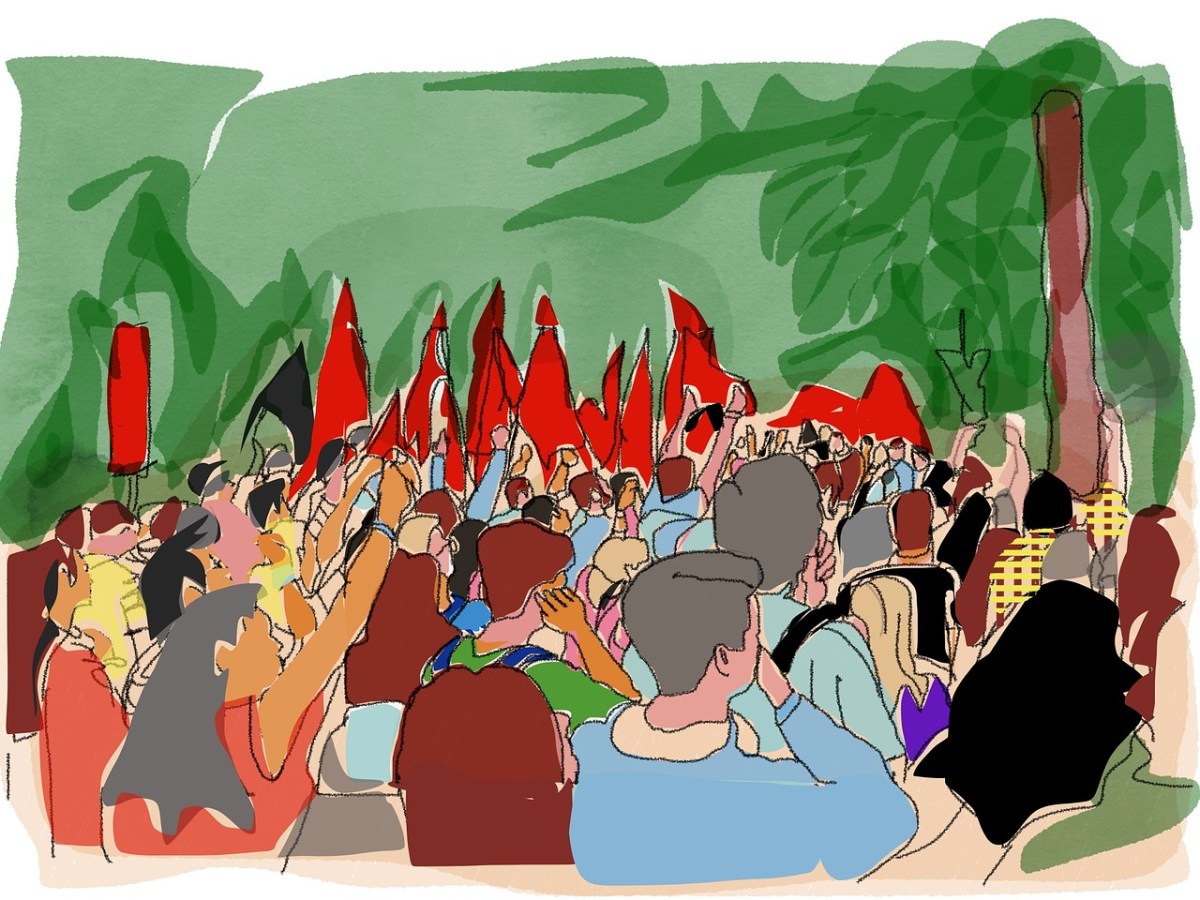
Activity, Art and Activism: Anjali Dalmia’s Experiences as an Environmental Activist

Anjali, why did you choose the environment over everything else that might have come your way?

I have realized over time that this question of why did you choose to work in the environment is actually a privileged way of thinking about it. We are privileged to be apolitical. And it’s the same thing with social or environmental work – social and environmental justice, in general, is very tied together. I would say in that perspective, it’s not a choice, it’s something that we all at this point need to be working towards because it is impacting everyone yet only a handful of people are working for it.

You talked about environmental justice and that brings me to my next question: environmental justice and sustainability are terms that are often thrown around. If you were to define these terms, how would you do so?

I don’t want to say that I have a very strong definition or a complete understanding of either of them. To address them or to start de-tangling them is like reorganizing the entire world from scratch. I think that’s why they are loaded terms. 

The way I have been trying to navigate environmental justice for the past few months has largely been tied to social justice. Who is the justice actually for? What does it mean for different communities? The term justice itself is very subjective – it means extremely different things to different people. For example, certain communities’ rights over the Commons is justice for them, but when you look at it from a caste angle, Commons are a place where there’s a lot of caste discrimination against Dalits. That is not justice in that case.

Overall, if I were to think of the term, it would largely mean local governance and self-determination of how people would like to use their surroundings, their resources and how they would shape their community. Another important part of environmental justice is looking at our economic structure, which is left out very often but it’s very much a root of our behaviours and the way the world functions right now. Looking at human desires and behaviour is also, I think, a very important part of environmental and social justice. That’s how I would begin navigating it, I wouldn’t say that’s a definition. 

When it comes to sustainability, it’s a term that I am trying to figure out because it brings into question – what it means to sustain and at what level does that sustenance happen? Sustenance for different groups of people are different, depending on their socio-economic, cultural background etc. and in many ways, I do feel that sustainability is a large buzzword. For example, sustainable development is another term to make ourselves feel good about the development that we are doing. I am not a hundred percent convinced by the word, so I don’t prefer to use it that often. It’s the bare minimum that we do to feel like we are working towards something, which is also good.. I think sustainability works at a largely individual level to that extent but it doesn’t address the fundamental socio-economic – class, caste differences. 

What motivated you to start Yugma Network? How is it different from other organisations working for environmental justice?

Yugma wasn’t something that any of us ever intended to start. The Environmental Impact Assessment Movement that we undertook is really what set off the plan for Yugma. We worked towards translating information and discussions into local languages with the help of young people in different regions, to have a broader reach. We realized the dearth of environmental organisations in local Indian languages since most of them are in English and only reach a small section of society. We met amazing people that genuinely wanted to contribute to the environmental movement and we decided to continue working even after the EIA movement. For us, the goal is always to bring out the voices of those people who are directly affected by a lot of the projects that are happening. 

To answer your second question, I think it goes back to the model of scaling-up versus scaling-out, not in the sense of within the organizations but as collaborations. I want to move back to doing things smaller within the community, forming strong bonds with people who are also doing related work. That is a value we try to imbibe in Yugma.

Mobilisation by youth organizations to ensure environmental justice has significantly increased over  time. What do you think inspires these movements?

One part of it is the community spirit. Secondly, I think a lot of it is awareness –  that motivates young people, especially because they feel they’re making a difference. The biggest thing for me and a lot of young people is the concern for the kind of world that we are going to grow up in. When you start internalizing it, it does get scary sometimes. There lies this concern for our rights, our present as well as our future, for other humans and non-humans both. Especially in recent times, I think a lot of movements have been shaped by a gradual disappearance of democracy in the country and I think there’s a lot of anger around the way that our rights are slowly being taken away; it has led people to mobilise and act on it. 

Why do you believe people look at the environment as an ‘issue’ distanced from their daily lives?

I think people fail to see the connection between their human conditions and the environment.I think a lot of it is shaped by common discourses, media and marketing in general. 

In people’s minds, cutting a forest is much more of an environmental issue than for example, destroying a wetland. And it’s just because we have grown up seeing the forest or the tree as a symbol of the environment. Even though destroying a wetland may have way more of an impact perhaps on the local ecology of that area. To answer what is an environmental issue, you also have to ask the question of, whose perspective are we looking at? Who is defining this issue? Discourse is shaped by those directly affected by it, and by what the media itself chooses to focus on. 

Yugma Network recently became a member of YAStA (Youth Action to Stop Adani), which had largely declared the week (27th January – 2nd February) as the Global Week of Action. Could you tell us a little bit about how Yugma got involved in the project?

Yugma was part of one of the organizations who conceptualised YAStA. The larger message that we are trying to address is the general corporatisation of our lives, resources and livelihoods. It privatizes a lot of what used to happen out of goodwill or through a community. It ties into the way our economic structure is tied to environmental and social justice because it gives a lot of power to a handful of people who are accumulating a lot of profit and that becomes their main motive to do things. Our reason for joining YAStA was to raise our voices against this injustice and this taking away of our rights. Despite communities not wanting certain projects, corporates go ahead with it. Coming from an urban space, I think we do have the privilege of having access to a lot of resources and tools which we can help to put out a lot of this information.

This Global Week of Action has listed down concerts and webinars as part of the programme. How do events like this and ‘Pass the Mic’ contribute to the movement?

Sessions of music, films, and art are mediums that make it easier for people to engage with issues that might seem daunting  at first.  The other thing is that art and culture bind people together and create a community, just like protests and movements do. 

I think it’s really important to pass the mic to those who are affected by these issues. The point is to let those who are working towards the issue, or are directly affected by it, talk about what they are facing and are working towards. That is largely what we mean by passing the mic. If we have the means to create a platform, we would like to create and share that platform with other stakeholders. 

Why do you think art and activism is the way to go about it when there are already various laws enacted and jurisdictions in the direction of environmental protection and conservation?

I would say the first question to ask is do we even have laws and jurisdiction to protect the environment. When I say environment, I am including communities, people, rights, everything in this. Because if you look at a lot of our laws, for example, the EIA, it is there to assess the impact that something might have on the environment and the local community. But the purpose with which the law was put out was to ease things for businesses. Unfortunately, that’s the case with a lot of laws in India –  they’re poorly formulated, go unrecognised by many, and are rarely upheld by courts. 

The other thing is that a lot of these environmental laws are built within the economic system. So they are looking at how to 5 acres of land so that we can use the 15 over there for something else. This is where art and activism become so important. It’s the way to hold these authorities accountable. I think activism is very often taken in the wrong way that it’s just holding up signs and protesting or marching to places, but I would say that even education is a part of activism, state policies are a part of activism, even having conversations is part of activism. Activism just means being an active citizen. From that perspective, art and activism can bridge that gap in our environmental laws right now. Is looking out for our surroundings and other humans and non-humans, only the states’ job? We can’t just say “it’s in the laws, so everything will run smoothly”. As individuals, we have a large part to play in ensuring that we have environmental and social justice. Even if the laws were good, I would say you still need activity, activism, and art in any community.

Anjali is a co-founder of the Yugma Network, The Project Amara (sustainable menstruation for all), and PLANT: People’s Living Archive of Native Trees. She also works with SAPACC (South Asian People’s Action for Climate Crisis) Maharashtra & Youth and was the Environment Minister of Ashoka 2020-2021.

We publish all articles under a Creative Commons Attribution-Noderivatives license. This means any news organisation, blog, website, newspaper or newsletter can republish our pieces for free, provided they attribute the original source (OpenAxis).

Categories
Issue 7

Issue VII: Editors’ Note

Straying from a long-standing tradition of burdening the New Year with all our hopes, dreams and expectations, with our first Issue of 2021, we bring you a newfound sense of cautious optimism. Aditya Burra revisits the recent test series between India and Australia to commemorate the heroics of Miya Bhai Mohammed Siraj whose grit paved the way for a historic triumph for India, raising our collective hopes. Nishant Chadha helps break down the Union Budget recently announced to drive Indian economic recovery, also enabling us to question the pitfalls of inequality in the hopeful discussions of a ‘V-shaped growth’. With our vaccination drive well-underway, Gautam Menon offers a much-needed perspective from the Indian scientific community on the controversial rollout of Covaxin. While we finally have reason to hope for a return to the ‘old’ normal with the vaccines, we also explore consent, choice and the state’s role in an ambitious yet rushed inoculation drive. 

As the initially peaceful farmers’ protests gradually erupted into violence, they urged us to not only critique the farmer bills in question as Karantaj Singh does but also reflect on India’s historic relation with non-violent movements and what it means to deviate from it. We also highlight how protests are different this year, with a fresh perspective on rappers that have used their vernacular to mobilise mass support around socio-political issues. This spirit of mobilisation has also translated into the Yugma Network’s Global Action Week which, as Anjali Dalmia describes, combines art and environmental activism to highlight on-ground realities. Moving to our swiftly increasing collective online presence, Debayan Gupta explains the insufficiency of individual-level policies in addressing privacy-related issues. We also raise important questions about creativity on social media, censorship that is slowly spreading its wings over Indian OTT platforms, and the business of news reporting; even analysing the recent TRP scandal through the Netflix show Bridgerton. 

Let us hope as the year goes on we continue in our efforts to heal and regrow, and never shy away from speaking out about what’s important, as we intend to do through our platform.

— Saaransh Mishra, Devika Goswami, Akanksha Mishra, Ridhima Manocha and Muskaan Kanodia