On the occasion of SpaceX’s Texas facility launch in 2019, CEO Elon Musk described how life on Mars would be and spoke of Mars’ city sustenance and the idea of democracy in International space —-all of which was seen as a precursor to Musk’s plan for Martian residence. While Elon Musk at the time described SpaceX’s Mars plan as part of a mission to democratise Mars, create self-sustaining cities on the planet and carry “maybe around 100k people per Earth-Mars orbital sync,” which he mentioned in his tweet. Following these claims Musk also spoke about governance on Mars and the way social structures would function on the red planet. Claiming to land humans on Mars by 2024-26, Elon Musk’s proposed Martian idea stands in conflict with the United Nations’ Outer Space Treaty signed in 1967. While the signatories of the Treaty include the Russian Federation, the United Kingdom and the United States, a closer look at the clauses makes one question whether Musk’s dream could actually turn into reality. A look at the treaty makes one question, whether a private company and its employees along with billionaires seeking to pay for Martian travel and accommodation, actually set up and sustain a city with its own government on the planet, as Musk claimed on Twitter and his speech. The Treaty states that “ the exploration and use of outer space shall be carried out for the benefit and in the interests of all countries and shall be the province of all mankind”, and Musk’s proposed idea for the planet does not yet describe how potential Martians will be selected. Will these be billionaires paying their way to the “fixer-upper of a planet” as Musk calls it, or will they people randomly selected on a lottery?
Further, how the society and governance have to be structured on Mars seems to be out of the hand of the technocrat billionaire, despite his plans and claims for the planet. One of the clauses of the Treaty states that “outer space is not subject to national appropriation by claim of sovereignty, by means of use or occupation, or by any other means”, which stands in contradiction to Musk’s plans wherein he claims sovereignty over the red planet and its resources. Another idea that seems to be a conundrum with regards to space travel, SpaceX’s plans as well as Musk’s aspirations is the Treaty’s explicit mention of state entities, state laws and international laws holding true even in outer space.
An analysis of Musk’s space plans and the UN’s Space Treaty makes one question the future of Martian colonisation, the government therein and the role of private companies like SpaceX in the process. The analysis seeks to question if Musk will rule over Mars by virtue of his expedition, if the Treaty, signed in 1967 will be altered for future space travel and residence, and if governments will have to bow in front of technocrats for the future of mankind. Musk’s plans also make one question how the Earth’s future would be as a planet, who will reside on it and whether Earth would become a waste-dump for Martians if that is to be ‘fixer-upper of a planet’.
Another significant space travel and residence news was released soon after Musk’s tweets and interviews went viral, this was the announcement of the first space hotel, expected to open in 2027. Orbital Assembly Corporation (OAC) recently revealed their detailed plan for Voyager Station, a luxury space station cum hotel that is expected to accommodate over 400 guests. This plan too is one that will determine the future of space travel and inter-governmental as well as private company relations. With a room for the Voyager Station costing approximately $25 million, unlike SpaceX, the OAC makes clear who will have access to space travel and how it will affect the world.
While both of these projects are still in the making, with predictive claims for the future, the presence of these ideas makes one question how society would be structured in the future. These projects also leave room to think about climate change, the future of the earth and who will be offered an alternative planet if this one fails. Furthermore, who will have control over space and will limited laws, signed in 1967 sustain the future of space travel?
Saman Fatima is a third-year History Major at Ashoka University, who is often found sketching or reading for leisure when not immersing herself in mandatory class assignments.
Picture Credits: NASA SpaceFlight.com
We publish all articles under a Creative Commons Attribution-Noderivatives license. This means any news organisation, blog, website, newspaper or newsletter can republish our pieces for free, provided they attribute the original source (OpenAxis).
Politics in India often termed as ‘unreasonable’ and ‘non-educational,’ restricts our perception of a successful education to that of studying science. These professional fields of study encourage students’ engagement with science and development, more than social and political advancements. Moreover, they are not primarily concerned with ensuring social justice or equality. Indian psychologist and social theorist Ashis Nandy refers to science and development as the two new reasons of state besides national security, that have emerged since WWII. Indian elites have treated science “as a sphere of knowledge which should be free from the constraints of day-to-day politics.” As Pratap Bhanu Mehta puts it, confined to mere economic growth and transactional language of goods and service, the term ‘development’ leaves out the ideas of freedom, and democracy. Universities catering to these ideas of freedom and democracy act as influential spaces for student resistance movements, and motivates them to participate in national politics by upholding their liberal stances.
Science Says, “Politics, You Stay Away”
Politics involves the establishment of an egalitarian society and requires a developing relationship with technology to ensure each other’s survival as well as their contribution towards resolving societal ills. However, the Indian middle-class have come to view technology as a “source of legitimacy for science” and as a way of tackling all complicated social and political problems. This perception of technology operating in a political vacuum is termed as technicism, according to Schuurman. It maintains the political domination of the apolitical, technocratic, modern elite upon decision-making processes. This notion of science and technology results in their promotion by Indian elites as apolitical, according to Nandy. At the same time, it marginalizes available social and political solutions, by extremizing their excesses, as well as associating credible politicians, academics, journalists, activists, and students as anti-nationals. Science and technology, therefore, serves as a sole “escape from the dirtiness of politics” for most Indian elites.
Although science and technology are perceived in isolation from politics, the question arises – isn’t politics everywhere – in our personal spaces as well as educational institutions? Educational spaces, especially university campuses in India have allowed for the most expressive manifestation of politics in the past as well as the present. This engagement with leadership within universities encourages students to actively participate in national politics and pursue it as a career. There have been various student leader-turned politicians in India – Arun Jaitley, Prakash Javadekar, Shashi Tharoor and Nupur Sharma, to name a few. Alongside Kanhaiya Kumar who contested the 2019 Lok Sabha elections from Bihar’s Begusarai, Aishe Ghosh, the incumbent President of the Jawaharlal Nehru University Students’ Union stands as a Left-Congress alliance’s candidate in the West Bengal Assembly Elections. She says, “it is a big responsibility, but my politics will remain the same. The issues we fight for in JNU are an extension of what is happening across the country … I will carry these issues that I fought for in JNU to the people of West Bengal.” These narratives of students participating in national politics make one wonder, what is it about university campuses that produce eminent politicians in a country where most families are obsessed with wanting their child to pursue professional careers in science?
Technical Institutions in India: Technology and Social Empowerment?
The debates preceding India’s Independence, between political and scientific players entailed an establishment of a desirable relationship between politics and technology, however, their legacy appears to have been forgotten with time. The establishment of four IITs by the American team in India considered social patterns, political and cultural traditions as mere obstacles in their way, accompanied by the lack of imagination of the era to highlight the intersections of the two fields. Even though Humanities and Social Sciences were integrated into their curriculum, their scope remained limited thus, preventing intellectual culture, and the possibility of links between technology and social empowerment.
The perceived free-of-politics atmosphere of the sciences is not to claim that technical institutions have never participated in national protests. Protests by students of IITs caste-based and religious discrimination is not unheard of. However, the constant monitoring of these spaces by state authorities seems to act as an impediment to their action towards other national issues. The existence of this vacuum is exemplified through a recent example, where a circular released by the IIT-Bombay administration warned its hostel residents against participating in “anti-national … activities.” The director called the Institute that “of eminence, with the primary purpose of producing high-quality engineering graduates and research that could be of help to the society at large.”
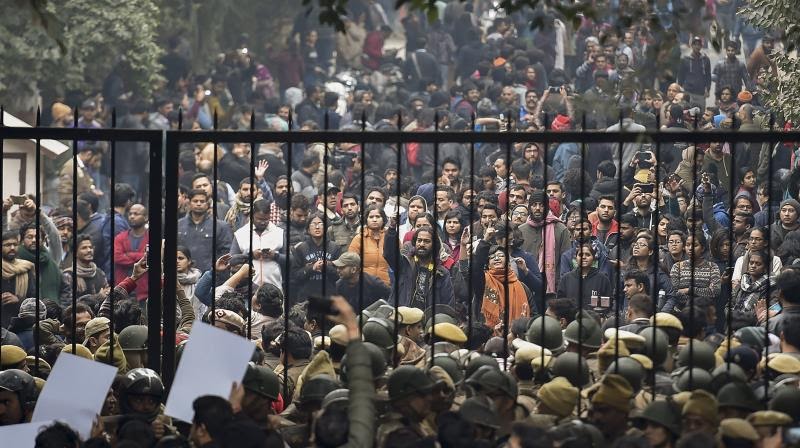
It is crucial to note that these notifications arrived when students were protesting against the controversial CAA-NRC and the violence that occurred on university campuses like JNU, AMU and Jamia Millia Islamia. Concerned about its ‘scientific temper’ coming under scrutiny, the director further asked “its staff and employees to refrain from making statements that could ‘embarrass the relations’ of the institute with the central government.” Moreover, the desperate attempt of the government to control these institutions is evidenced by the news of the HRD Ministry issuing orders to technical institutions to keep a tab on their students’ social media accounts. The point here is not to focus on the legitimacy of this notice, instead, the possibility of its occurrence in the near future, with the most recent lateral surveillance and cyber volunteer programs. This incident marks the reduction of the intellectual agenda of the IITs to that of “suppliers” to the demands of the market economy to suit the goals of development, defined in technicist terms of industry, market and state.
University Spaces As Challenging Hegemonic Structures
Universities either promoting a culture of politics or dismissing them is a consequence of the field of study and the cause that they stand for. Central universities such as Jamia Millia Islamia, JNU, DU, AMU, HCU, Osmania and many more are often under attack for their anti-governmental stances. This attack is not confined to the students alone but is an intimidation process to label them as violent. However, their rigorous curriculum on arts, humanities along with sciences, allows for critical thinking and acts as a space for imagination enables students to engage with social and political subjects perhaps more than what one witnesses in technical institutions. It is these imaginations that lead to knowledge-production, that challenge hegemonic structures and present alternate narratives beyond the binaries produced by the status quo. Universities offering engagement with political science and related branches of study as a part of their curricula cannot survive without the collective aspirations of their students. Students function as enablers of resistance movements and engage with politics beyond socially constructed ideas of the term, furthering research possibilities within academia.
“University works as a form of mediation between theory and practice,” claims sociologist Gaurav Pathania. Additionally, the space of the university acts as an equalizer. That is, it provides equal access to tools of resistance such as technology, digital media, and brings students from diverse backgrounds together within a common physical and social space for registering protests, which also fosters empathy amongst students. Apart from classrooms acting as a formal space for expressing opinions, it is the informal spaces within university campuses where “social education happens.” Hostels, dining halls, chai/dhaba spots, and libraries allow space for both interpersonal as well as ideological conversations. The expression of collective stances through art installations in these areas encourages others to contribute towards the cause at hand.
Pathania claims them to be spaces where “private lives of people come together as public.” That is, where the personal becomes the political. These resistance movements, therefore, necessitate academic freedom in universities. Without the freedom to read and express ideas that do not adhere to the status quo, it is nearly impossible to extend these conversations to the realm of national politics. Understanding the intersectionalities of technology, society and politics, along with interdisciplinarity within academia is crucial to resisting the dominant socio-political structures in one’s daily life. The liberating space of a university complements major global movements, adding to their students’ ability to bring significant change through their political leadership. Instances of students becoming future leaders enhances the credibility of political academia, thus, erasing the notion of commonly associated “dirt.”
Ariba is a student of English and Media Studies at Ashoka University.
We publish all articles under a Creative Commons Attribution-Noderivatives license. This means any news organisation, blog, website, newspaper or newsletter can republish our pieces for free, provided they attribute the original source (OpenAxis).
Maintaining a power structure has historically always involved some level of violence. The British once ruled the largest empire in the world, and violently suppressed revolts and uprisings that took place in their colonies. In North America, as the Atlantic slave trade flourished, men and women who had been free citizens in Africa often rebelled against their masters. These rebellions were also met with violence and death. Today though empires have broken up into nation states and slavery has been abolished, violence is still an important tool in the arsenal of any authority.
According to the World Health Organization, violence is the “intentional use of physical force or power, threatenedor actual, against oneself, another person, or against a group or community, which either results in or has a high likelihood of resulting in injury, death, psychological harm, maldevelopment, or deprivation.” The role and importance of violence in the political order is a long-debated subject. Some, such as Hobbes and Machiavelli, gave violence a prominent role in human affairs. More recently Foucault and Arendt argued against the idea that violence was at the essence of human nature. Realistically, nation states today still center the political order around threatened or actual violence, in keeping with Weber’s definition of the state as that which has a monopoly over legitimate violence
The police and the army as well as any other defense forces of a country enjoy a great deal of power. Ostensibly, they are meant to protect the people of that country from external and/or internal threats. By and large, it is widely accepted that nation states need some sort of protective body with the power to use force, both at the local and national level, and that this protective body ultimately benefits the citizens. It is when the use of force becomes excessive and unjustified that the role of these bodies begins to be questioned. What leads authority figures to abuse their power? What constitutes an abuse of power, especially in places where violence is institutionalized?
If you thought you were in danger, or you needed help, would you call the police? If you answered no, you would be in the majority in India. A survey conducted in 2018 found that only a quarter of Indians trust the police. India has a long and troubled history of police misconduct, and many police practices date back to the days of colonial rule. The Police Act of 1861 allowed police to maintain law and order through the use of brutal violence. It was a way for the foreign rulers of the time to assert their power. Though India is now ruled by a democratically elected government, police brutality continues.
In June 2020, two men were arrested in Tamil Nadu for violating Covid-19 lockdown rules and tortured in custody. They both died a few days later. The incident sparked outrage and led to protests against police brutality, with many likening the incident to the death of George Floyd in the United States. While the episode was deeply disturbing, suspects dying in police custody is by no means a recent phenomenon. According to the National Human Rights Commission, 194 people died in police custody in 2019. It is rare for police in India to be tried and convicted for these deaths, or even questioned. According to the Bureau of Police Research and Development, a body under the Ministry of Home Affairs, no police officers have been convicted of a crime since 2011, while there have been almost 900 deaths in police custody during the same period.
The Indian army, controlled by the central government, has also been accused of undue violence. In 2016, a plea was filed by two NGOs in Manipur, stating that there had been apathy on the part of the central and state governments in investigating the deaths of 1528 people who died at the hands of the Indian army and Manipur police. The Armed Forces (Special Powers) Act has been in force in several parts of North East India since 1958. It was enforced in Manipur in 1980. Under this act, security forces cannot be prosecuted for any action undertaken or said to be undertaken under the powers of the Act, while in service in conflict regions, unless the prosecution is sanctioned by the central government. This exemption from punishment for actions, even those involving lethal force, can create a culture of impunity in areas where the Act is in force. In the 2012 PIL case, the government argued in the Supreme Court that a lack of immunity from prosecution would have a demoralizing effect on the armed forces. Violence is used to reify the state’s sovereignty and allows it to assert its dominance.
Cases of excessive violence, where victims are tortured or killed in especially brutal and violent ways, are what necessitate an investigation into the relationship between power and violence. Thangjam Manorama was killed by the 17th Assam Rifles (a unit of the Indian army) in 2004. A report that was made public a decade after her death describes how she was tortured on her front porch and had 16 bullet wounds on her body when she was found. The original argument for AFSPA, which was meant to be a temporary act, was that state forces needed sweeping powers to deal with terrorism in disturbed areas. While this argument can justify shoot-on-sight orders or arrests without warrants, it does not explain torture and extremely brutal killings. Explanations of this abuse of power must delve into the human psyche, cultures of impunity, and power structures in the modern nation state.
Rujuta Singh is a student of Political Science, International Relations and Media Studies at Ashoka University. Some of her other interests are music, fashion and writing.
We publish all articles under a Creative Commons Attribution-Noderivatives license. This means any news organisation, blog, website, newspaper or newsletter can republish our pieces for free, provided they attribute the original source (OpenAxis).
The gender imbalance in STEM (Science, Technology, Engineering and Mathematics) related jobs in India is apparent even without examining statistics. A quick look at historical leadership positions in organizations allied with STEM such as CEOs of Biotech companies, Chairman of the Indian Space research Organization (ISRO), Director General of the Indian Council of Medical research (ICMR), Director of the All India Institute of Medical Sciences (AIIMS), Presidents of the Indian National Science Academy (INSA), Aeronautics Society of India (AeSI) and Indian Mathematical Society (IMS) to name a few, additionally highlights how stark this gap is among the higher ranks. 40% STEM graduates are women but they share only 14% STEM-associated jobs (PIB, January 2021) and this begs the question of why there is a disproportion between women choosing STEM education but not employment.
Government programs supporting the education of the girl child have had a substantial impact in increasing the numbers of primary and middle school educated girls. Incentives at the level of higher education in the form of reservations or financial support have vastly improved but not equalized the gender imbalance. Studying the gender composition of various disciplines in STEM education reveals intrinsic biases and perceptions of what constitutes a suitable job for a woman. Women receive tacit signals to condition their career choices not based on their own aptitude or interest but the convenience of a work schedule that allows them to fulfil their obligatory duties as care-givers. Thus, teaching-focused careers which usually have fixed and predictable hours are encouraged by parents over research-oriented careers within science. With respect to engineering, computer science is considered eminently more ‘suitable’ and only a few women graduate with degrees in fields like aeronautics, mechanical engineering or civil engineering with this number reducing even further when representation in core engineering jobs is considered.
Are we raising future daughters, sisters, or mothers and not future individuals?
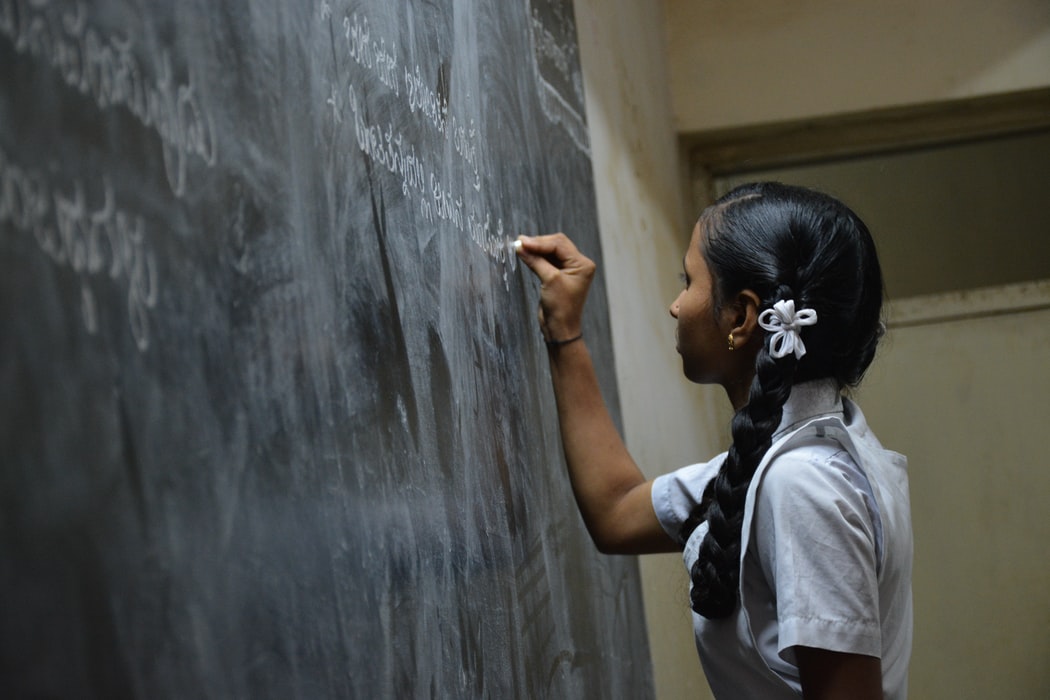
Higher STEM education is often seen as an additional qualification to increase marriage prospects for girls rather than a means to make them financially secure individuals with the ability to make independent, informed choices. Learned behavioral traits that are important for developing STEM career goals in children such as decision making, critical thinking, curiosity and making independent choices outside of care-giving duties are either neglected or actively discouraged in a girl child from a young age. Family chores and activities such as assisting adults with minor electrical repairs, finance-associated tasks, playing computer games, household science experiments, help in the kitchen, cleaning and sewing are segregated based on gender. This fails to nurture interest and even leads to lack of awareness of certain STEM career options in young women. Preconceived notions, archaic attitudes (“girls are bad at mathematics”; “boys are better at engineering”, “biology needs a lot of memorization which suits girls”, “girls are caring so should become nurses”, “women can’t be surgeons, they are too delicate/emotional”) condition and limit a certain STEM expertise or profession with a gender. This conditioning may not always be obvious even to the most educated among us and may unintentionally trickle down to those we have influence over.
Science, Technology, Engineering and Mathematics and not diamonds are a girl’s best friend!
Encouraging gender equity in STEM careers needs diverse approaches at various levels but the foundation has to be laid early on. The thinking that gender is not a limiting factor for a career choice should be encouraged from a young age in all children using real-life role models and literature centered on the idea. Awareness about the current existence of implicit or obvious situations of gender bias and discussions about specific situations should be a part of education at all levels. Women from all socio-economic backgrounds should have free, accessible avenues to learn about the various career options in STEM through workshops, community initiatives and CSR endeavors. The latter will ensure that they themselves can either be inspired, bring awareness to people under their influence, not participate in gender bias themselves and help create a support system that bridges the gender gap in STEM careers.
Rama Akondy is an Associate professor of Biology in the Trivedi school of Biosciences. She received her PhD from the National Institute of Immunology (New Delhi, India) and worked at Emory University (Atlanta, USA) first as a post-doctoral researcher and then as junior faculty. Her primary area of interest is understanding immunological memory in humans by observing how our immune system reacts to viruses, vaccines and tutors. Her proudest moment has been when a figure from her paper made it to a textbook! (Plotkin’s Vaccines).
We publish all articles under a Creative Commons Attribution-Noderivatives license. This means any news organisation, blog, website, newspaper or newsletter can republish our pieces for free, provided they attribute the original source (OpenAxis).
Recently, the shortage of water in Delhi prompted the Delhi Jal Board (DJB) to approach the Supreme Court against the Haryana government. Raghav Chadha, Vice-Chairman of the DJB, cited the rising ammonia levels in Yamuna and its falling water levels when there is a necessity for higher water supply in the upcoming summer months, as reasons for the shortage in Delhi’s water supply. Chadha claimed that despite notifying officers concerned of the Haryana government on a daily basis, no concrete action had been taken and there had been no improvement towards restoring any normalcy, pushing him to take up the inter-state matter with the apex court. While the Supreme Court has decided to hear the DJB’s plea against Haryana over the looming water crisis on March 25, the Delhi-Haryana water dispute is an age-old tale that needs immediate resolution.
Haryana supplies water to Delhi through the Carrier-Lined Channel (CLC), Delhi Sub-Branch (DSB) and the Yamuna. There is a regular fall in the level of Yamuna, especially during summers, affecting the quantity of water received at Wazirabad Pond. The normal level of the Yamuna near Wazirabad Pond should be 674.50 feet but it has dropped to 670.90 feet, failing to observe the Supreme Court order of February 1996, which stated that the pond level in Wazirabad has to be kept full.
The drastic fall in the water level at Wazirabad pond has affected water production at Wazirabad, Okhla and Chandrawal water treatment plants which supply drinking water to central, north, west and south Delhi. To add to these problems, Haryana through CLC canal is supplying only 549.16 cusecs against 683 cusecs and Delhi Sub-Branch canal is supplying 306.63 cusecs against 330 cusecs. While the quantity of water supplied to Delhi by Haryana is diminishing, the quality of the water has not met the necessary standards either. This is a recurring issue that is still seeking addressal as the rising level of ammonia and other industrial waste in Yamuna has made it unsuitable for water treatment.
At the surface level, the Delhi-Haryana water dispute might seem like a problem with a straightforward solution, but in reality it is riddled with legal and political baggage that pose a serious threat to the availability of water for Delhi in the future.
LEGAL HISTORY: Punjab, Haryana and Delhi
The reorganisation of the state of Punjab in 1966 set the ball rolling for a series of legal interventions that would dictate the water-sharing agreements between Punjab and Haryana. Considering the fact that Haryana is not a riparian state that is largely dependent on water due to 70 percent of the population being involved in agriculture, it was important for Haryana to claim a water supply channel from Punjab. However, by 1976, the failure to reach any mutual agreement on water-sharing led to the central government passing an order for the construction of the Sutlej Yamuna Link (SYL) Canal, which would divide the Ravi-Beas surplus water in favour of Haryana, at 3.78 : 3.26 Million Acre Feet (MAF).
Even though the matter should have been resolved here, Punjab’s non-cooperation led to the slowing down of the construction of the canal. Through repeated interventions, such as the 1981 agreement which stated that the construction be finished in two years, the 1990 SC order which stated that the construction be finished in a year, and the 2004 SC order which stated the same, the state of Punjab failed to live up to its obligations. In turn, the Punjab government passed The Punjab Termination of Agreements Act, 2004, which rid them of all these aforementioned obligations.
It is no surprise, therefore, that Punjab’s non-cooperation with Haryana on water-sharing agreements have resulted in repercussions for Delhi. In a report for the Firstpost in June 2018, Pranav Jain reports, “Even though the Delhi government paid for concrete lining of the Munak Canal in order to avail benefit of water saved from wasteful leakages, the Haryana government often plays truant, and routinely diverts water from the Munak to multiple off-shoot regular canals downstream, a little before the Delhi-Haryana border”, indicating how the Haryana government is forced to play foul with regard to its water supply to Delhi.
While legal tensions are responsible for elevating the water sharing disputes between the three states, the growing political differences between the Centre and State governments in Delhi are making matters worse.
POLITICAL TURMOIL: BJP vs AAP
Raghav Chadha’s move to take the dispute to the top court is not the first time in the recent past when an AAP party member has made an attempt to resolve the inter-state issue through legal means. In May 2018 as well, the DJB chaired by Arvind Kejriwal had moved the Supreme Court, Delhi high court and the NGT regarding the reduced quantity and quality of water supplied from Haryana. What followed was a war of words between lieutenant governor (L-G) Anil Baijal and Kejriwal regarding how the issue was handled, with the LG citing that attempts should have been made to resolve the water dispute through negotiations and dialogue rather than through confrontation in court. As reported by Pranav Jain, it is no secret how the BJP has constantly made use of the Lieutenant Governor (L-G) office in crippling the efforts of the AAP government in Delhi.
However, in response on May 31, the BJP-led Haryana government assured supply of water until the monsoon season, but under the condition that the DJB and Delhi government withdraw all the cases filed. The AAP government responded to these demands swiftly, succumbing to the political pressure that was evidently overruling these decisions. Dinesh Mohaniya, then vice-chairman of the DJB, claimed on June 01, that the Supreme Court case had been withdrawn as the court directed them to approach Upper Yamuna River Board (UYRB). Similarly, the NGT case on pollution and excess ammonia flowing in raw water, was withdrawn as it “was no longer the case”. Given the additional bureaucratic procedures that the Delhi government is forced to take in shifting the case from the SC to the UYRB, and the regulations that need to be put in place by the Haryana government to resolve the release of industrial waste into the Yamuna, it is surprising how these issues were deemed as resolved within a day’s time.
Clearly, there is a growing misrepresentation between what is happening at the ground level in comparison to what is being agreed upon in these water-sharing disputes. The AAP government’s decision to withdraw all cases momentarily in 2018 indicates the lack of foresight that was present when dealing with the grave circumstances of water shortage. This has hampered the progress that could have been made in resolving this issue, but the crisis continues to loom over Delhi’s future even today. If the Centre and State government do not work in tandem to resolve these legal and political disputes, Delhi, Haryana and Punjab could be facing a water crisis in the near future with no immediate answer. Environmental concerns can only be addressed once these internal disputes are overcome, and it is the need of the hour for elected representatives to avert any emergencies in the foreseeable future when it comes to the provision of a basic necessity such as water.
Picture Credits: Tribune India
Rohan Pai is a Politics, Philosophy and Economics major at Ashoka University. In his free time, you’ll find him singing for a band, producing music and video content.
We publish all articles under a Creative Commons Attribution-Noderivatives license. This means any news organisation, blog, website, newspaper or newsletter can republish our pieces for free, provided they attribute the original source (OpenAxis).
New Delhi: With 50 women candidates, or 17% of the 291 seats from where it is contesting a heated assembly election in West Bengal, Mamata Banerjee’s Trinamool Congress (TMC) has once again taken the lead amongst states that offer the largest space for women’s representation in politics.
In the outgoing assembly, 14% are women, well above the 8% national average across Vidhan Sabhas, though slightly below the 14.6% in Parliament and significantly below the 24% worldwide average presence of women in elected assemblies.
When Mamata declared ahead of the 2019 Lok Sabha elections that 41% of her party’s tickets would be given to women candidates, she translated her commitment to women’s participation in politics into action. If the rationale behind the “magic figure” of 41% appears unclear, it could simply have been that the “percentage was based on the number of women already in her shortlist”, said Tara Krishnaswamy of Shakti, a non-profit organisation that works to enable and increase women’s participation in electoral politics.
Of the 23 women who ran on a TMC ticket, nine got elected—the second highest contingent of women parliamentarians in the Lok Sabha, after the ruling Bharatiya Janata Party (BJP). That said, data suggest that while the TMC sails ahead of its opponents on this issue, the relatively higher participation of women in Bengal politics is part of a longer trend of gradual inclusion to which more than one party has contributed.
An examination of the profile of TMC women candidates over time also indicates that their inclusion in the party could well be the by-product of an instrumental approach to ticket distribution, rather than from the adhesion to a normative principle of equality that would prevail over electoral strategy.
TMC party members suggest that the inclusion of women in the party may be incidental to a selection strategy that does not consider gender to be either a particular advantage or an impediment to the party’s electoral prospect, even though Mamata has come out publicly in favour of women’s quotas.
“She is already committed to 33% reservation, but Mamata Banerjee has always tried to consider 50% women candidates,” said Dola Sen, the TMC MP in the Rajya Sabha, who has spent the last three decades as a trade union leader in West Bengal, and been a part of Mamata’s own efforts to develop and consolidate women’s solidarity into concrete electoral gains since the Nandigram and Singur movements.
Gradual Inclusion Of Women In State Politics
Since 1962, only 238 of the 4,119 individuals elected into the West Bengal State Assembly have been women.
Until the late 1980s, women barely made 2% of all legislators, a state of affairs to which both the Congress and the Left contributed equally. But starting in 1992 with the 73rd Amendment, which set up a three-tier panchayat system, women’s representation has risen steadily among candidates.
In the 2001 election, which took place after the split with the Congress and the formation of Mamata’s Trinamool Congress, women accounted for 9.5% of the members of the state assembly. From 1991 onwards, the percentage of women candidates has increased by about 1.5% in every election.
However, data gathered by the Trivedi Centre for Political Data shows that besides the TMC, other parties, especially the Left have also contributed to that rise.
For instance, even if the old generation of the CPM and its allies did not feel the need to extend their egalitarian views to women, the Left’s newer generation, led by Buddhadeb Bhattacharya, was more inclined to include women among their candidates. In 2011, the state’s Left combine, including Communist Party of India (Marxist), Communist Party of India, Forward Bloc and Socialist Unity Centre of India, gave 49 tickets to women candidates–higher than the 32 given by the TMC. And, significantly higher than the national parties: Congress has not given more than 10% of its tickets to women candidates to date, and the BJP, which has been fielding more women recently, increased its number of women candidates from 23 in 2011 to 32 in 2016.
Mamata Banerjee addressed a public meeting at Nandigram on 18 January 2021/ALL INDIA TRINAMOOL CONGRESS
As it opened the door to a greater inclusion of women in politics, the TMC took the lead in the past three elections. The party has also received considerable publicity for its inclusiveness–perhaps by virtue of getting many more women elected than its opponents. Sixty-two women from the TMC have been elected in the past 15 years; the Left has managed only 111 women in 54 years.
Profiles In Diversity
In the patriarchal world of politics, women politicians get easily stereotyped. While much of the media focus is on the five actresses fielded this year by the TMC, few are paying attention to the 46 other women contesting.
An examination of incumbency data reveals that men and women politicians in the TMC share the same turnover.
It is still early to make pronouncements about the 2021 candidates, but an examination of the 2016 women candidates reveals that the TMC recruits a diverse lot of women candidates. In 2016, only two of the party’s 45 women candidates were film or television stars; 17 belonged to political families (mostly wives of politicians); and 14 got elected.
In terms of occupation, 14 were self-declared housewives; the occupations of the rest were split between education (nine), social service (11) and business (six), among others.
That Banerjee consistently manages to identify such a large number of women candidates in the first place also must mean that she assiduously scouts for talent and sends out feelers to find the right women to offer tickets to, Krishnaswamy said.
As far as we could determine from the 2016 candidate list, only three of the women had any prior experience in local municipal bodies. A few others also seem to have emerged from the party’s organisation or familial connections while 18 ran for the first-time. Another 22 had already been elected twice or more times.
The TMC’s 2016 women candidates were also varied in terms of caste: 19 upper castes, 13 in SC-reserved seats and two in ST-reserved seats. There were only three women candidates from a backward class background, while nine were Muslims. It is worth noting that the TMC is probably the one party that offers the most representation to Muslim women in India. Like their male counterparts, most of the party’s women candidates were highly educated (24 graduates and above, while two were 8th pass candidates).
One cannot conclude that the TMC recruits “a certain type” of woman candidate, nor can we reduce their inclusion among the party’s candidates to a publicity stunt. But it is evident that the party chief believes that celebrity and star power help win seats.
Banerjee has “good equations with youngsters not only from film but also TV stars. She goes to their marriages and celebrations, spends time with them,” said political journalist Jayanta Ghosal. As a result, she has developed strong personal attachments with ‘Tollywood’, he said.
But could the candidature of these celebrities appear exploitative at times, especially in constituencies where strong local female politicians have been overlooked in spite of years of grassroots work?
While giving tickets to celebrities is a formula that has generally worked well for the TMC in the past (especially in heavily contested seats where inner party rivalries are at work) it also raises questions about whether this is a deliberate strategy to keep complacent old-timers on their toes and balance whatever power challenges they may throw her way with newcomers who will be loyal.
Like all political leaders, Mamata, too, puts a premium on personal loyalty. “People who are new, have the least expectations. Most candidates talk about the party, Mamata’s achievements and schemes. No one is campaigning on the strength of their own work,” said Krishnaswamy.
Compared to most other parties, the TMC stands out by making women political actors rather than mere figureheads for electoral mobilization. Unlike other women chief ministers who work in a quasi-exclusively male environment, Mamata has surrounded herself over time with women contributing to party work or to the cabinet.
Five of her 42 ministers are women, some holding several important portfolios or portfolios not immediately connected to women’s issues, like agriculture, fisheries, SMEs or land reforms.
Her party’s organisation includes large numbers of women office holders, and many women play a prominent role in campaigns.
That Mamata has consistently supported strong women in politics and led by example, is no secret. Nor is the fact that the TMC is one of the only parties on India’s political map that seeks to consolidate women as a powerful vote bank through political participation, rather than sops.
Her genuine desire for inclusion of women in politics is evident, and her supporters say a result of her own political struggles. “Unlike so many other Indian politicians who are women, Mamata Banerjee never had a man helping her – with due respect to others, she is no one’s daughter, wife, widow or girlfriend,” said Dola Sen.
“Look at me, for example,” she said, “We are independent, efficient and competent politicians with or without reservation!”
Gilles Verniers is assistant professor of Political Science at Ashoka University and Co-Director of the Trivedi Centre for Political Data.
Maya Mirchandani is assistant professor of Media Studies at Ashoka University and senior fellow at the Observer Research Foundation.
Niharika Mehrotra, an undergraduate student in the Political Science major, assisted with data collection
This piece was republished from Article 14 with permission of the author.
We publish all articles under a Creative Commons Attribution-Noderivatives license. This means any news organisation, blog, website, newspaper or newsletter can republish our pieces for free, provided they attribute the original source (OpenAxis).
Atypical is a show on Netflix about 18-year-old Sam, a boy on the autism spectrum, navigating his way through life and becoming more independent. Well, yeah, the show is brilliant, the writing is immaculate, the actors are phenomenal and the story is gripping, but, what stands out is the way all the characters have their own stories and struggles, yet their lives are completely intertwined. Not once do Sam’s struggles overshadow the other characters’ in the show and that’s what makes Atypical so captivating.
This book written by comedian, actor and former host of The Late Late Show Craig Ferguson features some of his most witty and thoughtful writing till date—narrated in a Scottish accent no less. If you’re a huge fan of his hilarious yet poignant late night show stint, with his trusty skeleton robot sidekick Geoff, then this book is the natural next step. If you’re unaware of The Late Late Show then do yourself a favour and jump down your nearest Youtube rabbit-hole of old interview clips from the show for a good laugh. I’m biased towards his interview with the late Robin Williams, which features just two good friends, who also happen to be incredible comedians, catching up.
That’s what most interviews on his show felt like: just fun conversations without any of the glamour, pretence or hyperactive games in late night TV today but plenty of self-awareness and just a hint of self-loathing. This book is also like a conversation with an old friend: about his childhood crush and the huge pimple he sported one school-day, his brush with alcoholism and his sobering experience of rehab alongside tidbits from his comedy career and a brutally honest tell-all of certain American television networks. There’s an emphasis on the audiobook because there’s something oddly calming about a Scottish American cursing and recounting his past experiences to you as you run errands, do some laundry, or peacefully fall asleep.
We publish all articles under a Creative Commons Attribution-Noderivatives license. This means any news organisation, blog, website, newspaper or newsletter can republish our pieces for free, provided they attribute the original source (OpenAxis).
The number of times a day that you encounter the word ‘vaccine’ has probably gone up a lot in the last five months. There is a barrage of news articles, viral videos and unverifiable claims from our family Whatsapp groups coming our way each day. In this moment, understanding how vaccines work and getting rid of misconceptions has a huge impact on our personal lives but can be frustratingly difficult. What are the differences between all the Covid-19 vaccines out there? Why does the Pfizer vaccine have to be stored at -70 degrees Celsius? Is it true that Covaxin can give you Covid? What are vaccines, anyway? This article explains how the immune system actually works, how vaccines confer immunity and why the new mRNA vaccine technology is important.
The Immune System is a Mad Genius
High school biology tells us of this supernatural-sounding, sophisticated defense mechanism residing in the body of each human being –– the immune system. Indeed, your immune system can fight against millions of pathogenic microorganisms that you constantly come in contact with. But how does it accomplish this feat? The immune system has two crucial abilities that protect you from diseases. First, it can recognize substances that are unwelcome in your body: pathogens such as bacteria and viruses. This is more complicated than it sounds, because our bodies are made up of cells that are similar in many respects to bacteria and viruses, and there are no well-defined rules that neatly separate healthy cells from pathogens. Second, the immune system can use biological pathways to destroy the recognized pathogens. The immune system can also recognize toxins such as dust particles –– the reason we sneeze and have a runny nose if it’s dusty or polluted. However, in this article we will focus on the interaction between the immune system and biological pathogens.
The first function of the immune system is like a text editor that recognizes incorrect grammar. We’ve all been caught red-handed while typing grammatically incorrect sentences in MS Word (quite literally –– MS Word informs us of this with a frustrating squiggly red underline). MS Word does this by using pre-defined grammar rules and checking whether sentences satisfy these rules. Now consider this. If the text editor in question operated like the immune system, it would literally construct every possible grammatically incorrect sentence, and then check each new sentence it encountered against this enormous library of incorrect sentences. Well, naturally, this system is much less efficient than verifying a few grammar rules. But remember, there aren’t any analogous rules that the immune system can use to distinguish pathogens from healthy tissue. So, it does what it can…
Right now, floating around in your body, are approximately one trillion immune cells, each sporting a unique ‘antibody’ (for context, the human body has roughly 30 trillion cells). These antibodies are made of small bits of protein, combined in arbitrary ways (the way our inefficient text editor would make up wrong sentences by combining random words). Each of these antibodies ‘fits’ a particular molecule that your body might encounter on a pathogen. If that pathogen molecule happens to enter your body and encounter the corresponding antibody, the antibody will lock into place and trigger an immune system cascade that will either neutralize (i.e., make unable to function) or destroy the pathogen. If you’re paying attention, you would have guessed by now that everyone in the world is currently walking around with a Covid-19 antibody in their system.
The natural question that follows is, why does anybody ever get sick? The answer is that it’s a numbers game. The likelihood that a single pathogen molecule will come into contact with its matching antibody in your body is very, very low. This likelihood gets higher as the pathogen replicates and produces copies of itself. Once the antibody-pathogen match occurs, your immune system starts producing many more of that particular antibody and starts destroying the pathogen copies. From there, it’s a race to see which group of cells (the pathogen or the antibody-containing immune cell) can replicate faster and conquer the other.
Vaccines: Leveraging the Fantastic Memory of the Mad Genius
Once your immune system has recognized a pathogen and raised antibodies against it, it does something amazing –– it memorizes the pathogen by always keeping a bunch of the relevant antibodies handy. So the next time you encounter that pathogen, the likelihood of it matching up with its antibody is much higher, the process of triggering the destructive immune system cascade is much faster and you are much less likely to fall sick. This is where vaccines come in. Vaccines are modified pathogens that don’t cause disease but are still recognized by the immune system as a foreign object. When the vaccine is injected into the body, the immune system generates and maintains an army of the relevant antibody; when the real pathogen shows up, these antibodies fight for you and you are immune to the disease. The commonly held notion that vaccines ‘trick’ the immune system into raising antibodies is subtly incorrect. The immune system is functioning as intended when it produces antibodies against a vaccine, but it’s simply getting a leg up because the vaccine can’t actually cause the disease.
How does one modify a virus to make a vaccine? The most commonly used and well-established technique is to inactivate it by heating it or exposing it to chemicals that denature the proteins that make up the virus (similar to what happens when you boil an egg). Covaxin, produced by Bharat Biotech, is an example of a whole-virion inactivated virus. Another common method is to take a different virus that is harmless to humans, and genetically modify it to produce a few proteins from the virus you want to vaccinate against. The harmless virus, when injected into the body, replicates and produces many copies of the proteins that were introduced into its genome. The immune system raises antibodies against these proteins that confer immunity against the harmful virus. Examples of such ‘viral vector’ vaccines are the Oxford-AstraZeneca Covid-19 vaccine and the Johnson & Johnson Covid-19 vaccine. The advantage of viral-vector vaccines over inactivated virus vaccines is that there is no chance of the vaccinated person contracting the disease due to incorrect inactivation of the virus.
The Covid-19 pandemic has fueled advances in a new type of vaccine that does not require a virus at all. You may remember from high school biology that proteins are made from mRNA, which is made from DNA (the genetic code in your body’s cells). These non-viral vaccine delivery systems make use of DNA or mRNA fragments that encode proteins from the virus that you want to vaccinate against. The DNA or mRNA fragments are packaged in such a way that makes them appear non-foreign (basically, they are coated with the same oily molecules – lipids – that form the surface of our healthy cells). When the lipid-coated genetic material is injected into the body, it is taken up by immune cells which use it to produce the virus’ proteins. In this case, you actually are tricking the immune system into doing something it ordinarily isn’t supposed to. Once there are enough of the virus’ proteins floating around, the normal function of the immune system kicks in and it starts making antibodies against the virus.
Both the Pfizer and Moderna vaccines are mRNA vaccines. Their advantages are that they are more amenable to quality control and can be designed and manufactured in a short time scale. However, mRNA is much more chemically unstable than protein or whole virus, and so it needs to be stored at much lower temperatures. Another disadvantage is that since these mRNA vaccines have not been around for long, there is no data on potential long-term side effects.
There are currently 12 different Covid-19 vaccines that have been approved, with loads more in the pipeline. As we race to get enough people vaccinated in time to achieve herd immunity, it is vital that we all participate in the effort by getting vaccinated ourselves and encouraging our close friends and family to do the same. I hope this article will help you navigate the debates and discussions with more confidence.
Amrita Singh has a B. Tech in Biological Sciences and Bio-Engineering. She is currently pursuing a PhD in neuroscience at Janelia Research Campus in Virginia, USA.
We publish all articles under a Creative Commons Attribution-Noderivatives license. This means any news organisation, blog, website, newspaper or newsletter can republish our pieces for free, provided they attribute the original source (OpenAxis).
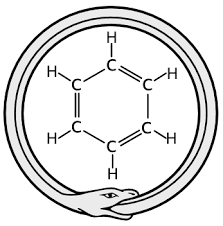
In his address for the German Chemical Society in 1890, renowned chemist August Kekule recounted how the idea of linking atoms came to him one day when he fell asleep by his window and dreamt of gambolling atoms. Twinning and twisting, the atoms morphed into a snake seizing its own tail and this image inspired Kekule’s structure of the Benzene molecule.
Seen as divine instructions, spiritual communication and an expression of our innate desires and fears, dreams and the unconscious mind have always fascinated human civilizations. With advanced technologies in the field of neurobiology and Oneirology (i.e. the scientific study of dreams) at our disposal, modern scientists have been able to stray away from mere theories and get an actual glimpse into our dreams. A study published in the journal Science Direct On 18th February 2021, illustrated how for the first time, scientists were able to communicate with participants while they were lucid dreaming (a form of dreaming wherein the dreamer is aware that they are in a dream state and can actively participate in their dreams, interact and engage with and even modify their environment). Using electrophysiological signals, people were able to perceive questions from an experimenter and provide answers to basic yes-and-no questions and even solve elementary math problems.
This is a major breakthrough for the scientific community as we have finally been able to get an insight into the dream state, a state of unconsciousness that has inspired many scientific discoveries like The Theory of Relativity, Theory of Evolution, The Periodic Table, etc. Srinivasa Ramanujan, the eminent, self-taught Mathematician, claimed that his formulas were presented to him in his dreams by the Hindu Goddess Namakkal. He would see visions of flowing blood (the symbolic mark of the Goddess), followed by a hand that would write various elliptic integrals. He dedicated his work to proving these theorems which led to the discovery of the infinite series, elliptical functions, the analytical theory of numbers, continued fractions, and more than 3000 mathematical theorems.
In her book, The Committee of Sleep, Deirdre Barrett arrives at a simple explanation for why so many scientific and artistic discoveries have been inspired by dreams. It turns out when the mind intakes data while awake, it can later synthesize it and process it in an extremely efficient way while it is in an unconscious state. That’s why sometimes the best solution when facing a difficult problem is to just sleep on it.
Sigmund Freud’s psychoanalytic theory of the Id-Ego-Superegoalso helps substantiate Barrett’s theory. Although Freud’s theories have been widely contested, his ideas can still help us conceptualise the complex aspects of our conscious mind. In his essay, Beyond the Pleasure Principle (1920), Freud established that our conscious mind is made up of three elements – namely id (which is the primitive, instinctual part of the mind), ego (which is the realistic part that mediates and controls the desires of id) and the superego (which is our moral conscience). In an unconscious state, the id comes to life in the form of dreams, expressing our innate desires and primal fears, while the ego and superego are suppressed. Since there is less concern about social and moral values, dreams can often feel irrational and nonsensical, bizarre. But at the same time, this state of unconsciousness, allows us to freely explore our ideas in a new reality unbound by conventional logic and reasoning and unconstrained by rational, realistic thinking. Thus, enabling us to come up with creative solutions to complex real-life problems by providing us with the necessary conditions to look at our problems from an entirely new angle.
Operating on the same principle as the Committee of Sleep theory, the use of psychedelic drugs have also shown a similar increase in creative thinking and problem-solving skills. Drugs such as LSD, Psilocybin, Peyote, etc. dissolve our ego and help us create new neural networks (by establishing new pathways and increasing connectivity throughout the brain). This phenomenon, known as “ego death”, is an experience that changes the way we perceive ourselves, our personalities and how we look at the world around us. As people tend to lose their sense of self-identity they can dissociate themselves from worldly concerns and events.
Research conducted by International Foundation for Advanced Study has shown that with the use of LSD, an astonishing number of subjects were able to achieve significant breakthroughs in their work and showed a significant improvement in three conventional creativity tests. Although there are risks associated with consuming these drugs (such as suffering from hallucinations or having a bad trip), these risks can be minimised if the drugs are taken in a controlled setting and administered under the supervision of an expert.
Inspired by Aldous Huxley (the English writer English and philosopher), who noted his experience with psychedelic drugs in his book, The Doors of Perception, many scientists began micro-dosing on psychedelic drugs to enhance their thinking. Nobel laureate Dr Kary Banks Mullis claimed that he ‘seriously doubted’ if he would have been able to invent the PCR (i.e. a technique that facilitated easier isolation and testing of DNA) without using LSD. Other prominent scientists such as Francis Crick, the Nobel Prize winner who discovered the double-helix structure of DNA and Physicist Richard Feynman have also been known to use psychedelic drugs. Even Steve Jobs said that using LSD was “one of the two or three most important things he had done in his life.”
Hence it is evident that there seems to be some correlation between the exhibition of higher levels of problem-solving and creative thinking skills, and our unconscious mind in the absence of ego, rationality and the laws of our reality. Although, it may take us a while before we are able to gather new and advanced empirical evidence. Psychedelic drugs defined the 1970’s era, and later, became integrated with the anti-Vietnam War movement. This led to the demonisation and stigmatization of psychedelic drugs and resulted in an immediate drop in funding for research related to psychedelic drugs.
However, in 2020, 5 states in the U.S. legalized marijuana and this change in attitudes is credited to multiple reasons such as a decline in religious affiliation, punitiveness, and a shift in media coverage for the same. Today, organisations such as the Beckley Foundation are actively working towards conducting more research in order to understand the implications of psychedelic drugs on our minds and integrate their use in modern society. The new research projects in the field of neuroscience and the effects of psychedelic drugs, coupled with the recent breakthroughs in Oneirology, thus, hold tremendous potential for expanding our understanding of the unconscious mind and our ability to induce creative thinking.
Ashana Mathur is a student of Economics, International Relations and Media Studies at Ashoka University.
We publish all articles under a Creative Commons Attribution-Noderivatives license. This means any news organisation, blog, website, newspaper or newsletter can republish our pieces for free, provided they attribute the original source (OpenAxis).









 OpenAxis